Viewing 1 - 10 of 10 Results
View Filters
New Arrival
Sale
Curved Dark Brown Curio
5 stars (1 reviews)
$1099.99
$1,199.99Save $100
Sale
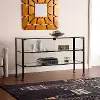
Onyx Black Display Cabinet
0 stars (0 reviews)
$949.99
$999.99Save $50

#myrcwilleyhome

See how real customers are transforming their spaces with RC Willey. Get inspired, share your style, and create a space that's Your Home. Your Way.

Explore Now

Contemporary Curio Cabinets and Display Cabinets — Show What Matters

A curio cabinet is one of the few pieces of furniture that does something no shelf, no credenza, and no media console can — it makes the things you love worth looking at. The right lighting inside a well-designed cabinet transforms a collection of meaningful objects into a display that defines a room. A contemporary curio cabinet does this without the ornate carved wood detailing and formal presence of traditional designs — using clean lines, seamless glass fronts, warm wood or metal frames, and integrated LED lighting to create a display piece that suits the way homes look and live in 2026.

Contemporary curio cabinets and display cabinets have had a genuine resurgence in interior design — not the dusty, overstuffed traditional version, but the curated, thoughtful, architecturally clean version that makes a room feel considered rather than collected. They suit living rooms where a display focal point anchors the space, dining rooms where a display cabinet replaces a traditional china hutch, home offices where meaningful objects deserve better than a standard bookshelf, and entryways where the first impression of a home is set by what's on display.

RC Willey carries contemporary curio cabinets and display cabinets in freestanding, corner, and wall-mounted configurations — in the clean finishes, warm materials, and lighting-integrated designs that suit today's contemporary interiors. Browse contemporary furniture at RC Willey and explore our full curio cabinet collection to find the right display piece for your space.

What Is a Contemporary Curio Cabinet?

A contemporary curio cabinet is a glass-fronted display cabinet with clean lines, minimal ornamentation, and a design language that suits modern and contemporary interiors rather than traditional formal spaces. Where traditional curio cabinets use carved wood frames, ornate hardware, and decorative glass pane patterns, contemporary curio cabinets use seamless or minimal-frame glass fronts, warm wood or powder-coated metal frames, and integrated LED lighting that illuminates displayed items without visible bulbs or hardware.

The defining features of a contemporary curio cabinet are the same as any contemporary furniture piece — clean proportions, materials that show their natural character without heavy applied decoration, and a design that reads as current rather than period-specific. In practice, this means a contemporary curio cabinet can anchor a room as a deliberate design statement rather than sitting in a corner as a functional afterthought.

Contemporary display cabinets extend this category — they typically offer a mix of display shelving and enclosed storage in a single piece, making them more versatile than pure curio formats for rooms where both display and storage functions are needed simultaneously.

What Is the Difference Between a Curio Cabinet and a Display Cabinet?

This is one of the most consistently searched questions in this category — and the distinction matters practically when shopping.

A curio cabinet is specifically designed for maximum display visibility — glass on the front and often the sides, glass shelves, mirrored backs that reflect displayed items from multiple angles, and interior lighting that spotlights the collection. Curio cabinets prioritize seeing the displayed objects from every direction over enclosed storage. They're purpose-built display pieces.

A display cabinet is a broader category that balances display and storage — typically with glass-front upper shelving for display and solid lower doors or drawers that provide enclosed storage for items not meant to be seen. Display cabinets suit rooms where both showing beautiful objects and hiding practical ones is the goal.

In contemporary styling, both terms are often used interchangeably for glass-fronted cabinet pieces — the practical distinction matters most when evaluating whether the piece needs to provide storage alongside display or pure display only.

Are Curio Cabinets Still in Style?

Yes — and contemporary curio cabinets are a meaningful part of why. The traditional curio cabinet's reputation for feeling overstuffed, formal, and dated came from the style of the piece and the approach to filling it — not from the display function itself. A contemporary curio cabinet with clean lines, a well-curated display that leaves adequate empty space on each shelf, and LED lighting that gives displayed objects visual presence is a genuinely current and effective design statement.

The shift in curio cabinet styling toward contemporary formats has been significant — seamless glass fronts replacing paned designs, warm wood and metal frames replacing heavily carved wood, LED strip lighting replacing incandescent interior lights, and a curatorial approach to filling the cabinet that treats display as intentional composition rather than accumulation.

For homes that want a focal point piece that personalizes the room and gives meaningful objects the presentation they deserve, a contemporary curio or display cabinet is one of the strongest furniture choices available — provided the approach to filling it is as considered as the cabinet itself.

Types of Contemporary Curio and Display Cabinets

Freestanding Contemporary Curio Cabinets

Freestanding contemporary curio cabinets stand independently on the floor — the most common and most flexible configuration. Tall freestanding curios — typically 60 to 80 inches in height — create a vertical focal point that draws the eye up and gives the room architectural presence. They suit living rooms, dining rooms, and home offices where a freestanding piece on a wall can anchor the room without requiring installation.

Contemporary freestanding curio cabinets are available in full-glass or mixed constructions — full-glass front and sides for maximum visibility, or glass front with solid wood or metal sides for a more architectural silhouette that reads as a design piece from the front while maintaining the visual privacy of solid sides from the angle.

Lower-profile freestanding display cabinets — 36 to 48 inches tall — suit rooms where a tall floor-to-near-ceiling piece would feel overwhelming, or where the display cabinet needs to sit below artwork or a window without competing with it. These proportions also allow items to be displayed on top of the cabinet as an extension of the display.

Contemporary Corner Curio Cabinets

A contemporary corner curio cabinet is specifically designed to fit into a 90-degree corner — using floor space that most furniture configurations leave empty and creating a display presence in the corner without blocking traffic flow or taking up wall space that a flat-profile cabinet would require.

Corner curio cabinets are available in angled and curved front profiles — angled fronts create a more geometric, contemporary silhouette while curved fronts soften the corner and create a smoother visual transition between the two adjacent walls. For rooms where a corner is currently dead space and a display focal point is needed without a large floor footprint, a contemporary corner curio is one of the most effective furniture solutions available.

Contemporary corner curios range from compact 72-inch configurations that suit smaller rooms to full 80-inch versions that create a substantial display presence. Most include the same LED lighting, glass shelving, and mirrored back features as their freestanding equivalents.

Wall-Mounted Contemporary Display Cabinets

Wall-mounted contemporary display cabinets attach directly to the wall — no floor footprint, completely clear floor space beneath, and a floating aesthetic that suits minimalist and contemporary interiors where furniture touching the floor feels heavier than desired. They're a strong choice for rooms where floor space is limited, for hallways where a freestanding piece would narrow the circulation path, and for any space where the floating visual quality of wall-mounted furniture suits the design direction.

Wall-mounted display cabinets require wall anchoring into studs or with appropriate wall anchors — more involved installation than freestanding pieces but rewarded by the clean, architectural result. Most contemporary wall-mounted display cabinets include LED interior lighting and glass or acrylic front panels.

Low-Profile Display Cabinets and China Cabinets

Contemporary low-profile display cabinets — wide and horizontal rather than tall and vertical — serve as a display-forward alternative to a credenza, sideboard, or media console. The lower profile allows artwork to be hung above, the top surface to be used for additional display, and the overall piece to read as a horizontal design anchor rather than a vertical focal point.

These pieces suit dining rooms as a contemporary alternative to a traditional china hutch or buffet — the glass-front upper section displays meaningful objects, dishware, or decorative pieces while the lower enclosed section handles the practical storage a dining room requires. They also suit living rooms where a lower piece beneath the television creates a horizontal display band rather than a vertical interruption in the room's sightlines.

Contemporary Curio Cabinet Features to Look For

LED Interior Lighting

Interior lighting is the feature that most dramatically affects how a contemporary curio cabinet performs as a display piece — and LED is the clear standard in current production. LED strip lighting or puck lights positioned above each shelf illuminate displayed items evenly without the heat output of older halogen or incandescent interior lights that could damage heat-sensitive collectibles. Look for cabinets with lighting that illuminates the full shelf depth rather than just the front edge — and that allows individual shelf lighting control where possible for more flexibility in highlighting specific display sections.

Mirrored Backs

A mirrored back inside a contemporary curio cabinet multiplies the visual depth of the display — creating a reflected view of displayed items that makes the cabinet appear larger and gives three-dimensional objects visual presence from all angles simultaneously. In a contemporary curio, a mirrored back also reflects the interior lighting back into the display space, amplifying the illumination effect without requiring additional light sources.

Adjustable Glass Shelves

Adjustable shelving is a practical necessity in a display cabinet where the height of displayed items varies significantly. Fixed shelves limit display flexibility — if you acquire a taller vase or a larger decorative object, fixed shelves may not accommodate it. Adjustable glass shelves allow the cabinet's interior to be configured to the specific collection it's displaying rather than the collection adapting to the cabinet's fixed increments.

Tempered glass shelves are the appropriate safety standard — look for shelves at least a quarter-inch thick for adequate load-bearing capacity without deflection under the weight of ceramic, glass, or metal display objects.

Frame Materials

Contemporary curio cabinet frames are available in warm wood — oak, walnut, acacia — powder-coated metal in black or brushed finishes, and mixed wood-and-metal constructions. Warm wood frames suit contemporary interiors with organic, natural material palettes. Metal frames in black or brushed finishes suit more industrial, minimalist, or cool-toned contemporary directions. Mixed wood-and-metal frames are one of the strongest contemporary curio directions currently — combining the warmth of organic material with the visual precision of engineered metal.

Door Styles — Hinged vs. Sliding

Contemporary curio cabinets are available with hinged doors that swing open fully for unrestricted shelf access, and sliding glass doors that eliminate the door-swing clearance requirement — making sliding-door configurations better suited for rooms where the space in front of the cabinet is limited. Hinged doors typically provide better visual access to the full interior when open. Sliding doors are the more practical choice for tight spaces and rooms where the cabinet sits close to adjacent furniture.

Comparing Contemporary Curio Cabinet Features

Feature Option A Option B Visual Impact Practicality Best For
Interior Lighting Built-in LED lighting No built-in lighting LED – significantly higher display impact LED – no retrofit needed Built-in LED for primary display pieces – retrofit for secondary rooms
Back Panel Mirrored back Standard wood or painted back Mirror – multiplies depth and reflects light Similar – mirror adds visual complexity to cleaning Mirrored back for maximum display presence
Door Style Hinged glass doors Sliding glass doors Similar – hinged allows full opening Sliding – no door-swing clearance required Hinged for full shelf access – sliding for tight spaces
Shelving Adjustable glass shelves Fixed glass shelves Similar Adjustable – significantly more flexible for varied display heights Adjustable always preferred for display versatility
Frame Material Warm wood – oak, walnut Powder-coated metal – black or brushed Wood – warmer, more organic Metal – more durable finish surface Wood for warm contemporary interiors – metal for minimalist or industrial directions/td>
Frame Material Mixed wood and metal Single material Mixed – adds material depth and contemporary layering Similar Mixed for design-forward contemporary – single material for cleaner minimalism
Glass Construction Seamless glass front Paned or divided glass front Seamless – reads as more contemporary Similar Seamless for contemporary – paned for transitional or traditional directions

What to Put in a Contemporary Curio Cabinet

What you display inside a contemporary curio cabinet is as important to the result as the cabinet itself. The contemporary approach to curio cabinet display emphasizes intention and curation over accumulation.

  • Leave empty space. A well-curated contemporary curio display leaves at least 30% of the shelf space visually open — negative space that allows individual displayed objects to be seen and appreciated rather than competing for attention in a crowded arrangement.
  • Anchor with visual weight. Place heavier, larger, and darker items on the lower shelves. Lighter, more delicate, and smaller items go toward the top. This creates a visually stable arrangement that reads as grounded rather than top-heavy.
  • Create a consistent material or color thread. A contemporary curio display that reads as intentional rather than eclectic typically has a connecting element across displayed objects — a consistent material like ceramic or glass, a color range that stays within two or three tones, or a thematic connection that gives the collection coherence.
  • In contemporary curios, you'll often find: Monochromatic ceramic vessels in varying heights and textures. Art glass and sculptural glass pieces. Small sculptures and figurines in stone, resin, or metal. Curated book collections with coordinating spines. Meaningful travel objects and personal artifacts. Framed miniature art and photography.

Comparing Contemporary Curio Cabinet Configurations

Configuration Floor Footprint Height Best For Key Consideration
Tall Freestanding Standard – against wall 60 to 80 inches Living rooms, dining rooms, home offices Needs wall space – confirms proportion to room
Corner Curio Corner placement – triangular 72 to 80 inches Rooms with unused corner space Door swing or curve direction must suit the corner
Wall-Mounted None – wall-attached Varies Limited floor space, minimalist interiors Requires secure wall anchoring into studs
Low-Profile Display Wide and horizontal 36 to 48 inches Dining rooms, media rooms, below artwork Top surface available for additional display

Let's Talk Through the Details

  • Do I need to anchor a tall curio cabinet to the wall? Yes — any freestanding cabinet 60 inches or taller should be anchored to the wall for safety. Tall, top-heavy pieces with glass doors and glass shelves loaded with objects are a tip-over risk in households with children, pets, or on uneven floors. Most contemporary curio cabinets include anti-tip hardware — a strap or bracket that secures the top of the cabinet to the wall stud. If the cabinet doesn't include anti-tip hardware, use a universal furniture anchor strap before loading any shelves.
  • How much weight can glass shelves in a curio cabinet hold? Quality tempered glass shelves in contemporary curio cabinets are typically rated for 20 to 40 pounds per shelf depending on thickness and span. A quarter-inch thick tempered glass shelf handles most standard display objects comfortably — ceramic vessels, glass art pieces, small sculptures, and framed photos. For heavier objects like dense stone sculptures or large ceramic pieces, distribute the weight across multiple shelf positions and avoid concentrating heavy objects at the center of the span where deflection is greatest.
  • Can a contemporary curio cabinet work in a small room? Yes — particularly a corner curio cabinet or a wall-mounted display cabinet. A corner curio uses dead corner space without taking any wall space that a flat-profile cabinet would require. A wall-mounted display cabinet adds display presence without any floor footprint at all. For small rooms, the key is choosing a configuration that works with the available space rather than against it — and keeping the display itself well-curated and not overcrowded, which makes the cabinet feel like a considered design element rather than additional visual weight.
  • What is the best room for a contemporary curio cabinet? Contemporary curio cabinets suit any room where a meaningful display focal point adds to the room's design character. Living rooms are the most common placement — the cabinet anchors a wall and gives personally meaningful objects the visibility they deserve. Dining rooms benefit from a display cabinet as a contemporary alternative to a traditional china hutch. Home offices suit a lower-profile display cabinet that shows meaningful objects without dominating the workspace. Entryways use a smaller curio or display cabinet to set the visual tone of the home from the first step inside.
  • How do I light a curio cabinet if it doesn't have built-in lighting? Battery-operated LED puck lights are the most practical retrofit lighting solution for curio cabinets without built-in illumination — they mount inside the cabinet with adhesive or small screws and provide directed lighting for displayed objects without requiring electrical installation. LED strip tape — applied along the front edge of each shelf — provides a more even wash of light across the full shelf surface. Both options are available at hardware stores and online. When adding lighting to an existing cabinet, choose warm white LEDs rather than cool white — warm tones complement displayed objects more naturally and suit the contemporary interior palette more effectively.

Frequently Asked Questions

  • What is a contemporary curio cabinet? A contemporary curio cabinet is a glass-fronted display cabinet with clean lines, minimal ornamentation, and a design suited to modern interiors. Unlike traditional curios with carved wood frames and paned glass designs, contemporary curio cabinets use seamless glass fronts, warm wood or metal frames, and integrated LED lighting to create a display piece that reads as a deliberate design statement rather than a period furniture reference.
  • Are curio cabinets out of style? No — contemporary curio cabinets are actively growing in popularity as interior design has moved toward curated, personal display rather than minimalist bare-wall aesthetics. The traditional curio cabinet's dated reputation came from its ornate styling and overstuffed approach to filling it — not from the display function itself. A contemporary curio cabinet with clean lines and a well-curated display is a genuinely current and effective room anchor.
  • What is the difference between a curio cabinet and a display cabinet? A curio cabinet prioritizes maximum display visibility — glass on front and sides, glass shelves, mirrored back, interior lighting — designed for showing a collection from every angle. A display cabinet balances display and storage — glass-front upper shelving for display alongside solid lower doors or drawers for enclosed storage. In contemporary styling both terms are often used interchangeably.
  • What do you put in a contemporary curio cabinet? Contemporary curio displays favor monochromatic ceramic vessels, art glass, small sculptures in stone or resin, curated books with coordinating spines, travel objects and personal artifacts, and framed miniature art or photography. The contemporary approach emphasizes intention over accumulation — leave at least 30% of shelf space visually open and create a consistent material or color thread across the display.
  • How do you style a contemporary display cabinet? Leave adequate negative space — at least 30% of each shelf empty. Place heavier and darker objects on lower shelves and lighter, more delicate pieces higher up. Create a unifying thread across displayed objects through material, color, or theme. Use LED interior lighting to give objects visual presence. Avoid overcrowding — a well-curated display of fewer objects is significantly more effective than a full cabinet of unrelated pieces competing for attention.
  • What size curio cabinet do I need? Measure the wall or corner space available first — then confirm the cabinet's door swing clearance for hinged-door models. For living rooms and dining rooms, a tall freestanding curio of 70 to 80 inches creates a strong vertical focal point. For smaller rooms or spaces below artwork, a 36 to 48-inch low-profile display cabinet suits the proportions better. For unused corner space, a corner curio of 72 to 80 inches uses the footprint effectively without requiring dedicated wall space.
  • How do you arrange items in a curio cabinet? Work from bottom to top and from heaviest to lightest. Place the largest, heaviest, and darkest objects on the lowest shelf to anchor the display visually. Move to progressively lighter, smaller, and more delicate objects as you go up. Leave at least one third of the total shelf space empty — negative space is what allows individual objects to be seen and appreciated rather than lost in a crowded arrangement. Group objects in odd numbers — threes and fives — rather than pairs, which read as more dynamic and less formal. Step back and evaluate the full cabinet from the distance a viewer would see it from — the display reads differently at six feet than at arm's length.
  • How much does a contemporary curio cabinet cost? Contemporary curio cabinets span a meaningful price range depending on size, material, construction quality, and features. Entry-level contemporary display cabinets — typically smaller wall-mounted or metal-frame units — start in the $200 to $500 range. Mid-range freestanding contemporary curios with LED lighting, adjustable glass shelves, and quality frame construction run $500 to $1,200. Premium solid wood floor-standing contemporary curios with full LED systems, mirrored backs, and quality glass construction reach $1,200 and above. Corner curio cabinets typically fall in the mid to upper end of these ranges due to their specialized geometry and construction requirements. RC Willey's curio cabinet selection covers the full range — browse current inventory for specific pricing on available configurations.
  • Can a curio cabinet be used in a bedroom? Yes — and it's one of the more underused placements for a contemporary display cabinet. A low-profile display cabinet in a master bedroom or dressing room provides a dedicated display space for jewelry, meaningful personal objects, and decorative pieces that deserve better presentation than a standard dresser top. A wall-mounted contemporary display cabinet above a dresser or beside a full-length mirror adds a curated display element to the bedroom without consuming floor space. For bedroom use, a cabinet with LED lighting and a mirrored back creates a warm, jewelry-box quality display that suits the personal character of a primary bedroom particularly well.

Find Your Contemporary Curio Cabinet at RC Willey

A contemporary curio cabinet is where the things that matter most to you get the presentation they deserve — properly lit, carefully curated, and displayed in a piece that adds to the room rather than sitting in it. RC Willey carries contemporary curio cabinets and display cabinets in freestanding, corner, and display configurations — in the clean lines, warm materials, and lighting-integrated designs that suit today's interiors. Browse contemporary furniture at RC Willey and explore our full curio cabinet collection to find the right display piece for your home.