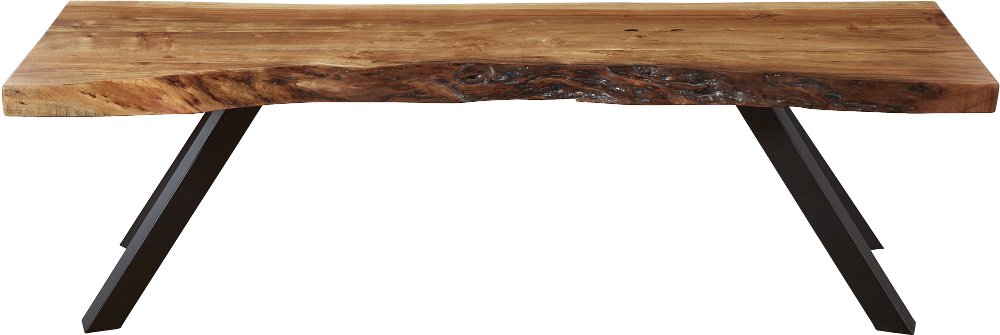
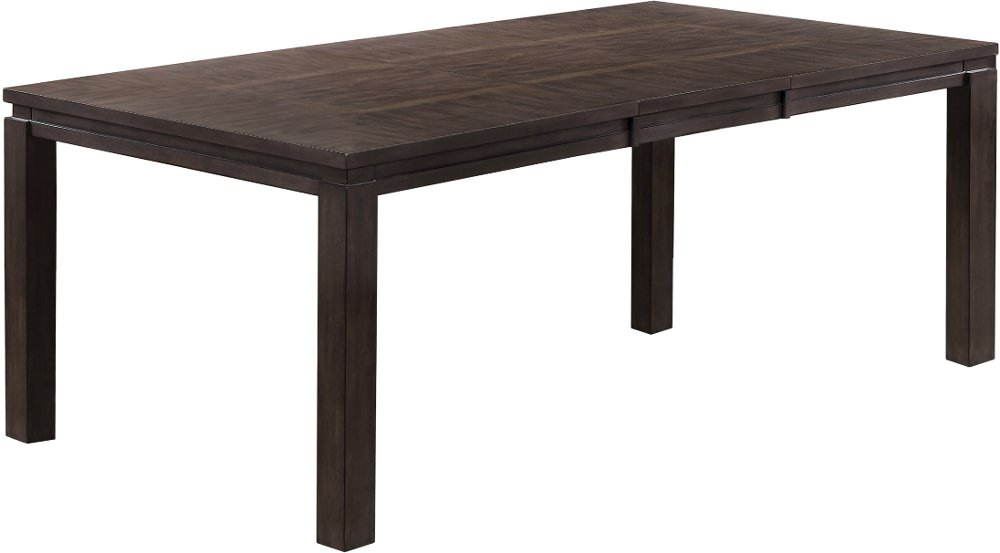
Acacia dining tables bring distinctive wood grain and everyday practicality to the place where meals, conversations, and family routines come together. Acacia is a hardwood used in furniture for its strength, density, and expressive appearance. Depending on the species, boards, and finish, its coloring can range from pale honey and golden brown to deeper reddish or chocolate tones, sometimes within the same tabletop. Contrasting streaks, flowing grain, and occasional knots give the wood a varied look rather than a perfectly uniform surface. That natural character makes an acacia wood dining table an inviting centerpiece in a room with simple walls, upholstered chairs, or a favorite collection of pottery. A clear or lightly tinted finish can highlight those variations, while a darker stain can create a more consistent overall color without completely hiding the grain. Construction matters as much as appearance: solid acacia components, acacia veneers over a supporting core, and mixed-material designs have different characteristics, so the material description deserves a close look. A table described as acacia may use the wood for its top while incorporating metal legs or other materials elsewhere. Solid wood can expand and contract with changes in indoor humidity, while a veneer’s performance depends partly on its underlying core and construction. Neither description alone tells the full story of a table’s quality; sound joinery, a stable base, and a suitable protective finish also contribute to dependable use. Many furniture-grade acacia woods offer good resistance to everyday dents and wear, but no wood dining table is scratchproof or waterproof. The surface finish plays an important role in how well the top handles daily meals and cleanup. For households that want visible grain and a substantial feel, acacia offers a welcoming balance of character and durability. It can look equally at home beneath a simple pendant light in a breakfast area or as the focal point of a separate dining room.
The right acacia dining table fits both the room and the way people gather in it. A rectangular table works naturally in a long dining space, with room to arrange place settings along each side and serving dishes down the middle. A round table can make conversation feel easy in a smaller dining area, while an oval top offers some of a rectangle’s length with curved ends that soften its outline. A square table often suits a compact, similarly proportioned room, especially for a small household that regularly shares meals together. Seating capacity depends on more than the tabletop’s length. As a useful starting point, allow about 24 inches of table edge per person, with additional space for wider chairs or a more relaxed arrangement. Roughly 36 inches between the table edge and a wall or nearby furniture generally gives diners room to move chairs; closer to 42 to 48 inches is more comfortable where people need to walk behind occupied seats. Measuring with chairs pulled out helps reveal whether a sideboard, doorway, or kitchen island will interrupt movement. Most standard dining tables stand about 28 to 30 inches tall, but chair seat height, arm height, and the apron beneath the tabletop all affect comfort. A chair that looks well proportioned beside a table may still be awkward if its arms won’t slide underneath. Leg placement deserves the same attention. Corner legs can limit seating near the ends, a trestle base may affect footroom, and a pedestal can free up space around the perimeter while still requiring room for feet at its base. An extension design can suit households that usually seat a few people but occasionally gather a larger group, provided the room accommodates the expanded top and any removable leaves have a suitable storage spot. For a table that doubles as a homework station or a place to spread out a puzzle, a smooth surface and comfortable seating matter just as much as the number of dinner plates it holds.
Acacia’s visual warmth gives dining spaces plenty of styling flexibility without requiring every piece of furniture to match. A straight-edged top with slim legs can feel clean and understated, while a thicker top and substantial base create a more grounded presence. Live-edge designs follow the wood’s natural contour, bringing an organic outline to the room; the usable depth can vary along that edge, so comfortable place settings still deserve consideration. A textured or distressed surface can complement relaxed interiors, though deeper grooves may collect crumbs and make writing on a single sheet of paper less convenient. Upholstered dining chairs soften the look of a strongly grained tabletop, black metal accents create contrast, and wood chairs in a related tone keep the setting cohesive without demanding an exact color match. In an open living and dining area, acacia wood coffee tables can carry similar grain and warmth into the seating area while allowing each space its own proportions and purpose. Keeping that wood looking its best usually starts with simple habits. Follow the manufacturer’s care directions for the particular finish, wipe up spills promptly, and use a soft cloth that’s only lightly dampened when cleaning is needed, followed by a dry cloth. Coasters, placemats, and trivets help protect against moisture rings, abrasion, and hot serving dishes. A protective mat is especially useful beneath art supplies or a laptop setup that shares the dining surface. Avoid dragging heavy bowls or rough-bottomed ceramics across the top, and use only cleaners or conditioning products approved for its finish; furniture oil isn’t appropriate for every sealed surface. Prolonged direct sunlight and placement beside heating vents can also affect wood and finishes. Because acacia tables can be substantial, check dimensions, delivery access, and product weight before planning a move, and lift rather than drag when repositioning. With a size that supports daily routines, construction suited to its intended use, and straightforward care, an acacia dining table can provide a comfortable gathering place for everything from a quiet breakfast to a full table of friends.
Read More