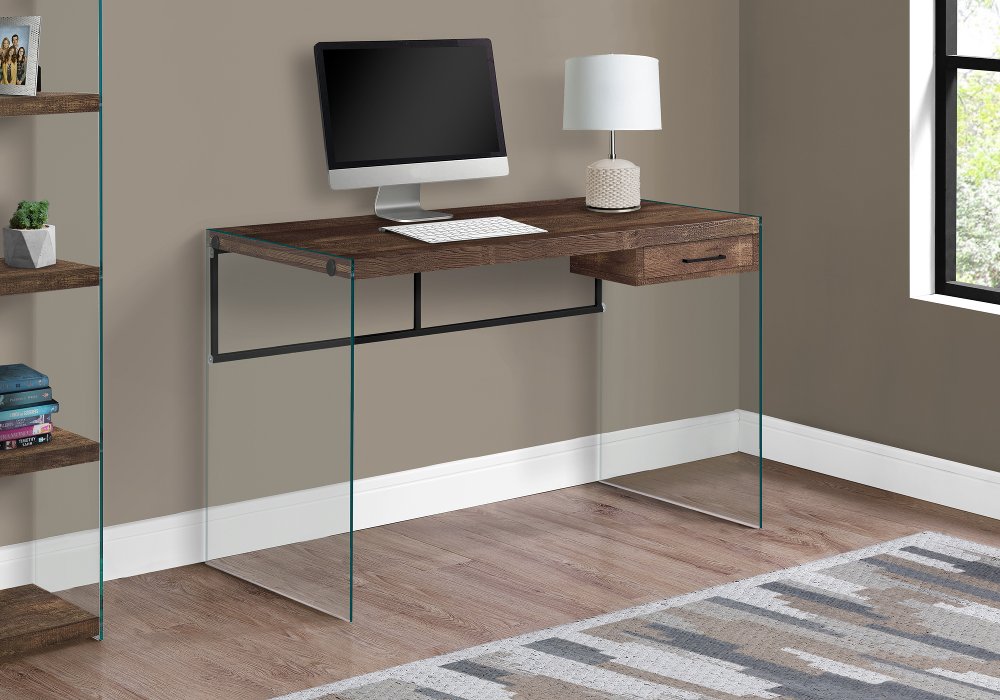
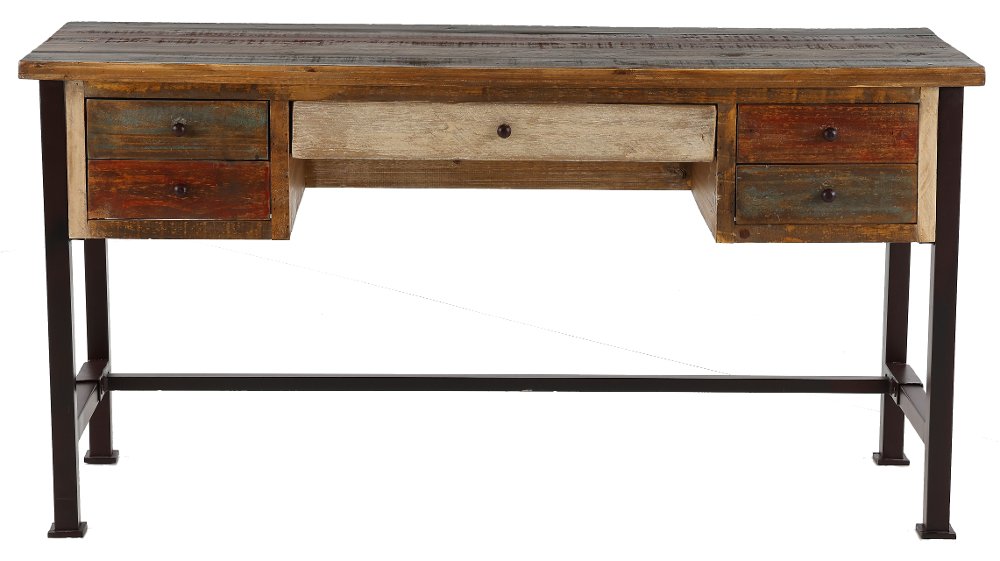
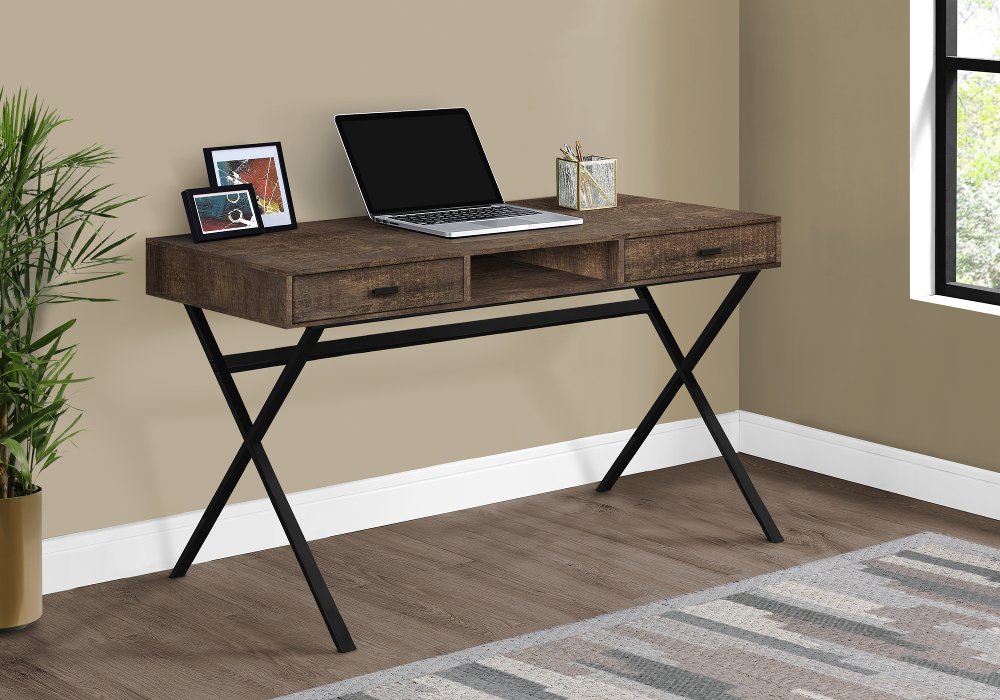
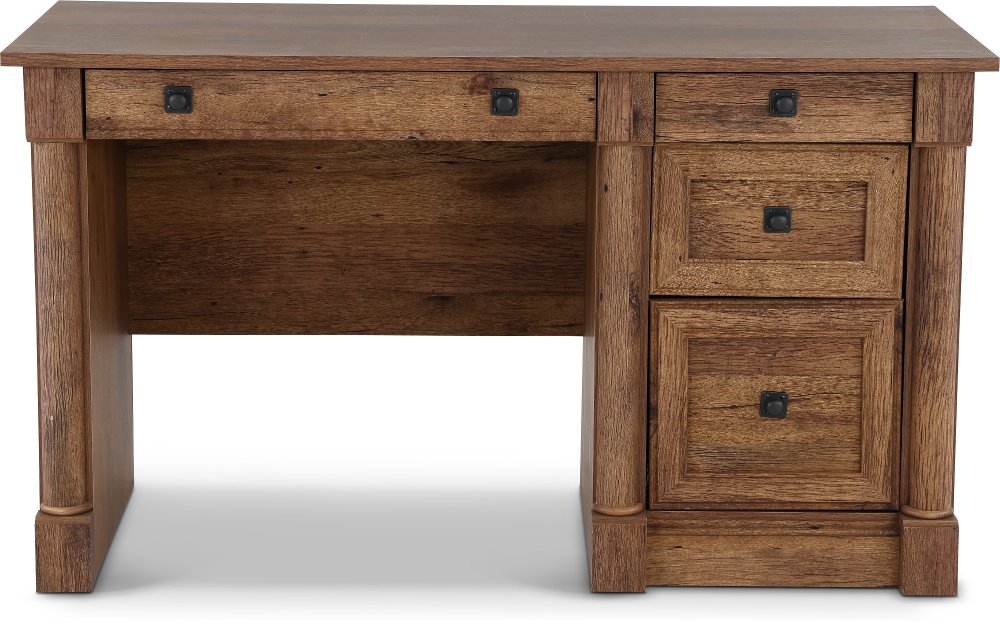
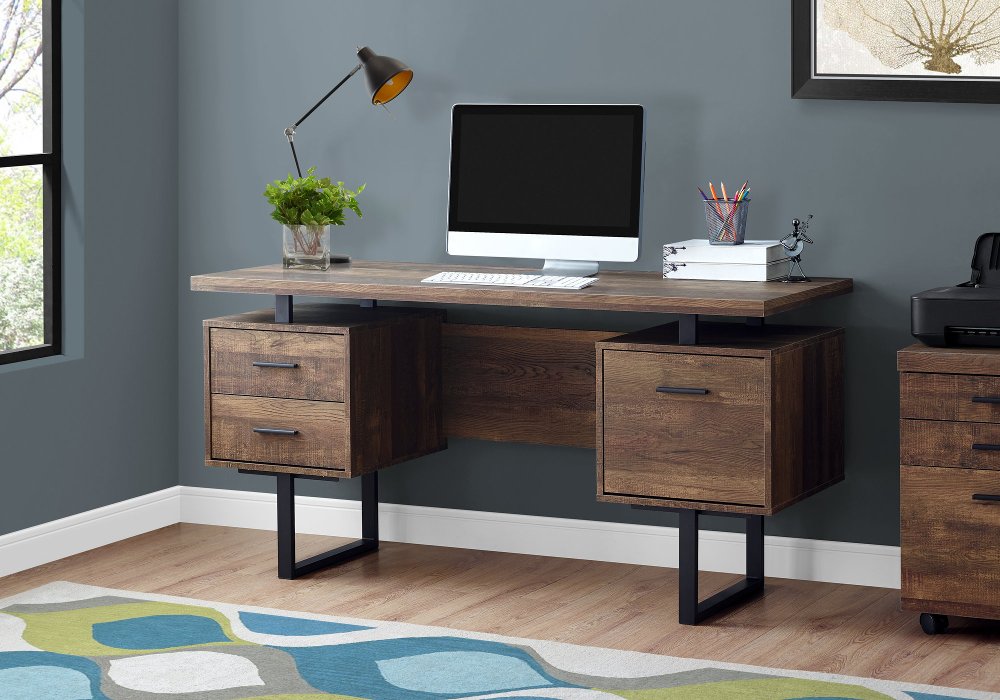
Brown office desks bring the warmth of wood tones to a workspace while giving everyday essentials a dedicated place. Their appeal reaches beyond a traditional study: a light brown writing desk can blend into a living room, a walnut-toned desk can complement a mid-century setting, and a deep espresso finish can anchor a more formal home office. The shade makes a difference. Honey and caramel browns often feel relaxed alongside cream upholstery and woven accents, while darker brown finishes create a stronger contrast with pale walls and light rugs. Visible grain adds character without requiring extra decoration, making a desk feel like part of the home rather than equipment tucked into a corner. Brown also works well with mixed materials, including black metal legs, brushed hardware, and upholstered office chairs. A rustic brown desk with a textured surface has a different presence from a smooth, tailored desk with recessed drawer fronts, even when both occupy the same amount of floor space. For a sharper contrast with surrounding furniture, Black Office Desks offer another direction. Material descriptions help clarify what sits beneath a brown finish. Solid wood can show natural variations in grain and color, while wood veneer provides a real wood surface over a supporting core. Engineered wood with a laminate surface can offer a consistent appearance and practical everyday care, depending on its construction and finish. A walnut or oak color name doesn’t necessarily mean the desk is made from that wood species, so the material details matter as much as the color description. Durability comes from the whole design, including secure joints, a stable base, dependable drawer hardware, and a finish suited to the intended use. A heavily used workstation needs more than an attractive top; it needs to stay steady when someone types, opens a drawer, or reaches for a reference book.
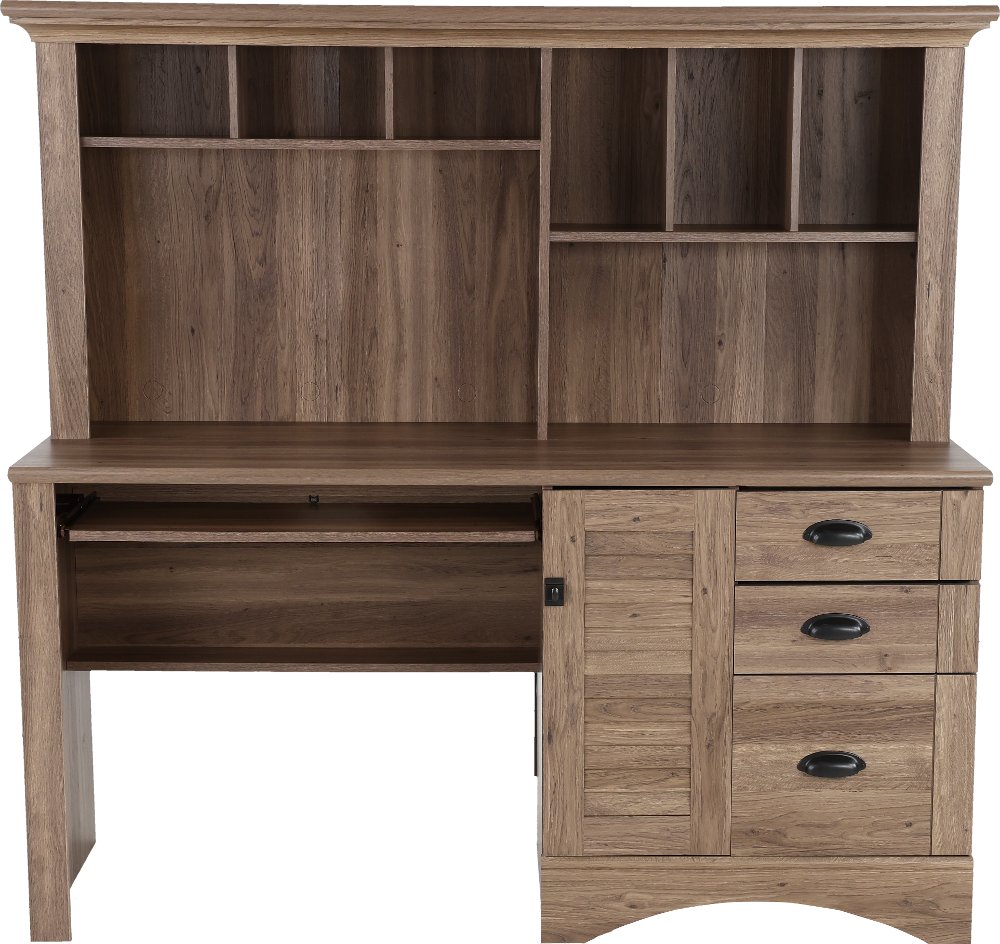
The most useful brown office desk is one that fits both the room and the work happening there. A compact writing desk suits a laptop, notebook, and lamp, making it a natural choice for occasional remote work, homework, or managing household paperwork. Its simpler silhouette can also sit comfortably in a bedroom or multipurpose space without making the entire room feel like an office. A larger computer desk offers room for a monitor, keyboard, mouse, and the papers that tend to spread out during a busy day. Desktop depth deserves as much attention as width: a wide but shallow surface may still feel crowded once a monitor stand and keyboard are in place. For someone who compares documents, uses two screens, or keeps a drawing pad beside a laptop, an L-shaped brown desk can separate digital work from hands-on tasks. That extra surface also requires thoughtful placement, especially around doors, windows, and nearby cabinets. Some L-shaped layouts have a fixed return, while others allow different configurations; that detail determines which corner or wall arrangement will work. Executive-style desks generally have a more substantial footprint and may provide enclosed storage, while open-leg designs can make a small office feel less visually crowded. Physical clearance still matters with either style. The chair needs space to pull back, armrests need room beneath the desktop or apron, and drawer pedestals shouldn’t crowd the user’s knees. Measuring the desk’s footprint with painter’s tape can make these relationships easier to picture before the furniture enters the room. Include the area needed to open drawers and move past the chair, not just the desktop dimensions. Placement near an outlet can simplify cable routing, and positioning a screen away from direct window glare can make daily work more comfortable. When a desk will stand away from a wall, a finished back and discreet cord management help it look intentional from every angle. An adjustable chair can improve the fit of a fixed-height desk, but desk height, legroom, and screen position still need to work together.
Storage and small functional details often determine how comfortable a desk feels after the first few days. Shallow drawers give pens, charging cords, and sticky notes a home without letting them take over the desktop. Deeper drawers can hold larger supplies, while file drawers need the right dimensions and supports for the folders being used. Open shelves keep frequently reached-for books close, though they leave their contents visible and need clearance for anything stored there. A student may value room for textbooks and a laptop more than filing space; someone working from home all day may need sturdy drawers, a clear writing area, and a place to route several device cables. Brown office desks with cable openings or integrated power features can help organize a technology-heavy setup, but the number and type of connections should match the equipment. A charging port isn’t automatically suitable for every device, and a monitor arm needs a compatible attachment area and a desktop that can support the load. These practical details are worth checking alongside overall dimensions and assembly requirements. Care should follow the desk manufacturer’s instructions, since solid wood, veneer, and laminate surfaces can respond differently to cleaners and moisture. In general, a soft cloth handles routine dusting, spills deserve prompt attention, and coasters help protect the finish from drink rings. A desk pad can reduce wear where a mouse, keyboard, or handwritten notes see daily use. Avoid dragging equipment across the surface, and protect the top from heat, harsh chemicals, and prolonged direct sunlight that may affect its appearance. Textured finishes and decorative grooves may need a little extra attention to remove dust, while smooth surfaces tend to be easier to wipe clean. With the right balance of surface space, storage, and comfortable proportions, a brown desk can support everything from a focused workday to an evening study session. Its warm finish helps that hardworking space feel connected to the rest of the home, whether it occupies a dedicated office or a quiet stretch of wall.
Read More