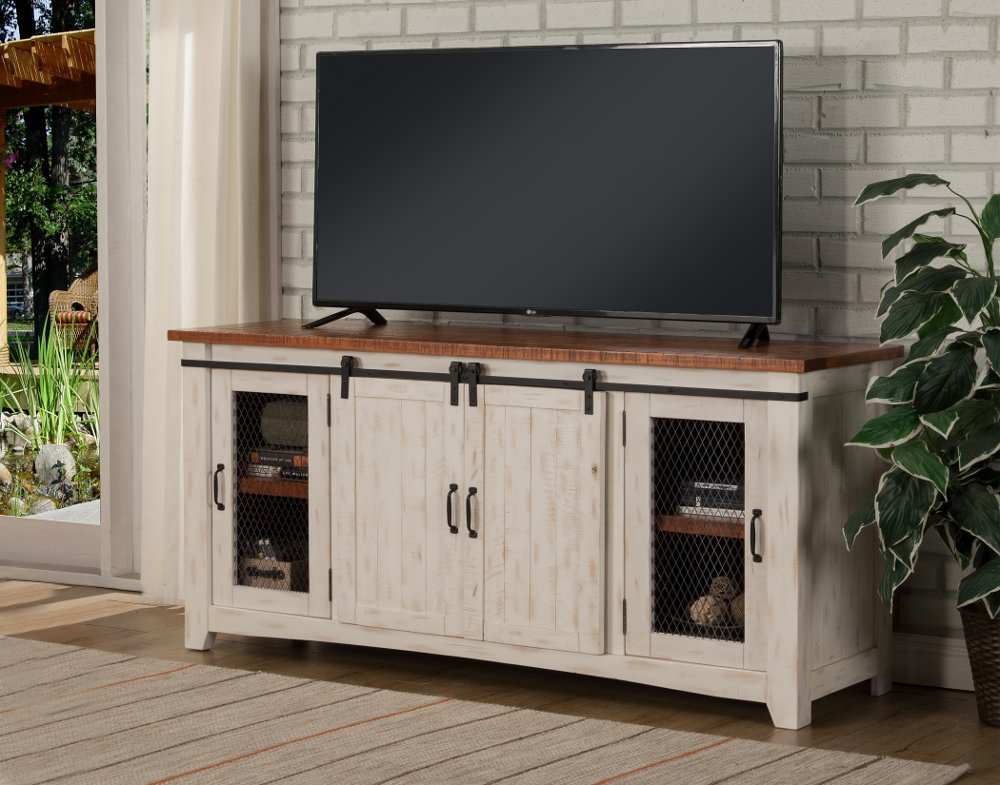
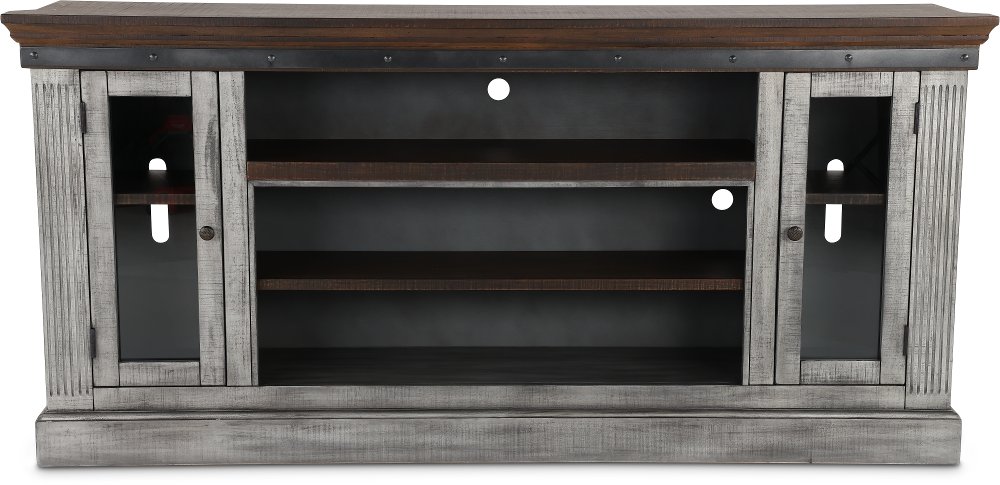
Coastal TV stands bring a relaxed, light-toned look to the living room while giving your television, media equipment, and everyday essentials a practical home. The style often combines pale wood finishes, soft whites, woven textures, and simple silhouettes, creating a focal point that feels welcoming rather than heavy. A whitewashed finish can soften the appearance of a wide cabinet, while natural oak tones add warmth alongside cream upholstery, blue accents, or a textured area rug. Details make a difference: reeded doors introduce subtle vertical lines, cane panels add an open weave, and framed cabinet fronts lend a familiar cottage feel. Coastal entertainment centers don’t need seashell hardware or nautical decorations to establish the look. Understated finishes and natural-looking textures can carry the theme, making these pieces easy to mix with contemporary, traditional, or casual furniture. For a cleaner interpretation, straight legs and flat door fronts keep the profile streamlined. For a more collected room, visible wood grain and lightly distressed finishes offer character without overwhelming surrounding furnishings. Construction varies across the category, from solid wood components to engineered wood frames, wood veneers, and combinations of materials. A wood veneer provides a real-wood surface over a supporting core, while painted engineered wood can create a smooth, consistent appearance. Woven accents may use natural rattan, cane, or synthetic materials, so the material description matters when comparing texture and care needs. These distinctions are especially useful when choosing furniture for a frequently used family room rather than a quieter sitting area. A coastal media console can anchor a large seating arrangement, make an apartment feel more pulled together, or give a guest room useful storage beneath a television. The appeal is as much about everyday comfort as appearance: a substantial surface for the screen, a place to tuck away clutter, and a finish that works comfortably with the rest of the room.
The right fit starts with the relationship between the television, the cabinet, and the space around them. TV screen sizes are measured diagonally, so that number alone won’t tell you whether a television fits a stand. The television’s actual width, the distance between its feet, its front-to-back footprint, and its weight all matter. Both feet should sit fully on the supporting surface, and the stand’s stated size compatibility and weight capacity should suit the television. A console that extends beyond the screen on either side often creates a more balanced arrangement, but the full furniture dimensions still need to work with nearby doors, walkways, and seating. Depth deserves particular attention in smaller rooms, where a cabinet can look appropriately narrow from the front yet project too far into a passage. Height also affects everyday comfort; the television should sit at a comfortable viewing level from your usual seat rather than forcing an upward gaze. Beneath a wall-mounted screen, a coastal TV console can provide visual balance and storage without supporting the television itself. Open shelves are handy for frequently used components, while closed cabinets keep controllers, extra cables, and game cases out of sight. A household with several gaming systems may benefit from adjustable shelves and generous equipment compartments, whereas a simpler streaming setup may leave more room for books and baskets. Soundbar placement calls for its own measurements, including clearance that keeps the speaker from blocking the screen or interfering with the television’s remote sensor. Cable openings help route cords neatly, but equipment also needs the ventilation its manufacturer recommends. A woven door panel shouldn’t be assumed to provide sufficient airflow or allow every remote signal to pass through. Likewise, a cabinet that looks roomy may not accommodate a receiver once plugs and cable bends are included. Thoughtful storage makes a difference during ordinary evenings: controllers stay easy to find, a streaming device has a dedicated spot, and the surface remains clear enough for the room to feel settled.
A coastal TV stand earns its place through dependable construction and manageable upkeep, not just an attractive finish. Secure joints, properly fitted hardware, smooth drawer movement, and doors that align evenly all contribute to furniture that feels comfortable to use. Adjustable hinges can help maintain a tidy appearance, while shelf weight limits clarify where heavier components belong. Solid wood, veneer, and engineered wood each have different characteristics, so overall construction and the manufacturer’s care instructions matter more than a single material label. Natural wood grain and woven panels may show variations that give the piece character; a painted finish creates a more uniform effect but can still need protection from scratches and spills. For routine care, a soft, dry cloth is a sensible starting point, with any additional cleaning method matched to the finish. Gentle dusting helps keep grooves and woven details clean, and a soft brush attachment may be suitable where the care instructions allow it. Excess moisture, abrasive cleaners, and dragging equipment across the top can damage surfaces. Protective pads beneath decorative objects and prompt attention to spills help preserve the finish without making daily use complicated. Stable placement matters, too, especially in homes with children or pets. Assemble the cabinet as directed, observe load limits, and use the recommended anchoring or anti-tip hardware for both the furniture and television. Once the practical details are in place, coordinating the room can stay simple. Coastal Living Room Table Sets can help connect the entertainment area with nearby seating through related wood tones, shapes, or textures. Exact finish matches aren’t essential; a shared undertone or repeated woven detail can create a cohesive look without making every piece identical. Leave enough clear space around the console for cabinet doors to open comfortably, and keep decorative accents selective. A ceramic bowl, a few favorite books, or a small framed photograph can personalize the arrangement while letting the stand’s texture and proportions remain part of the room.
Read More