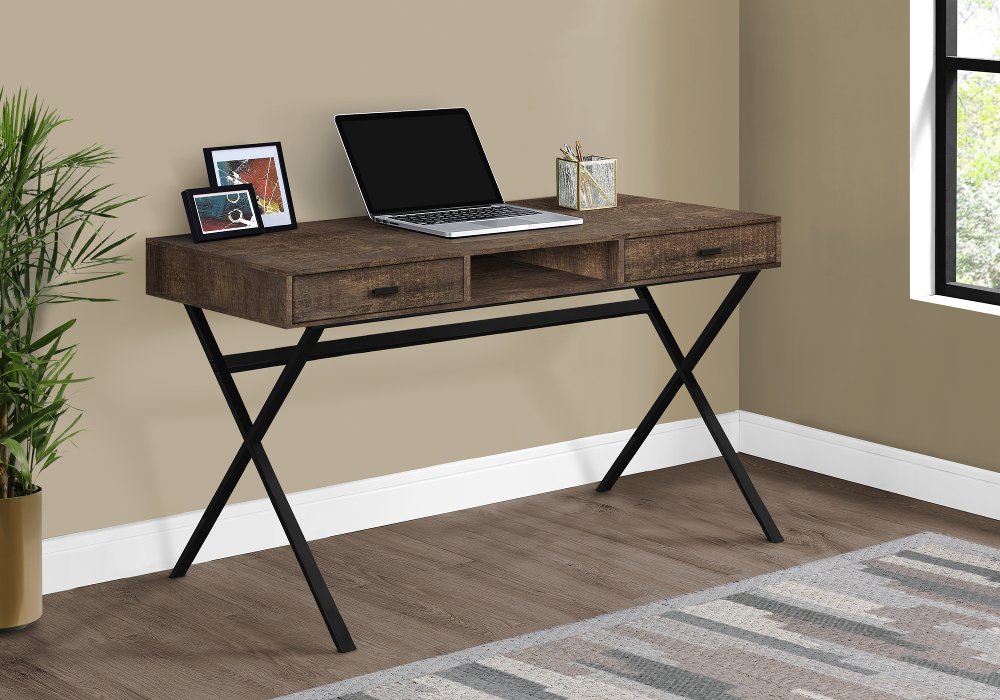
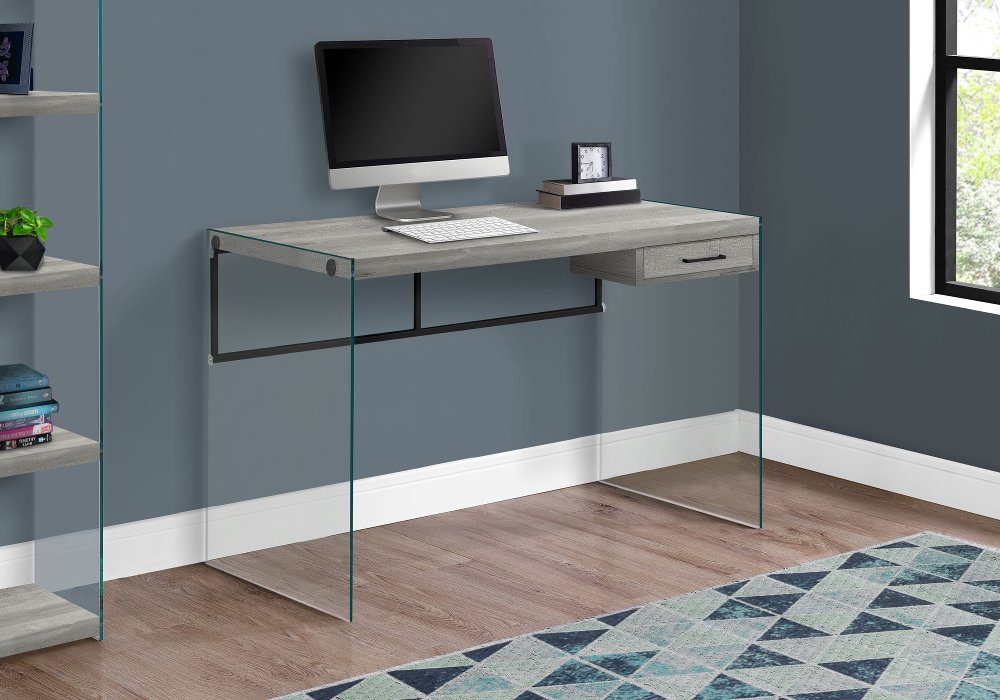
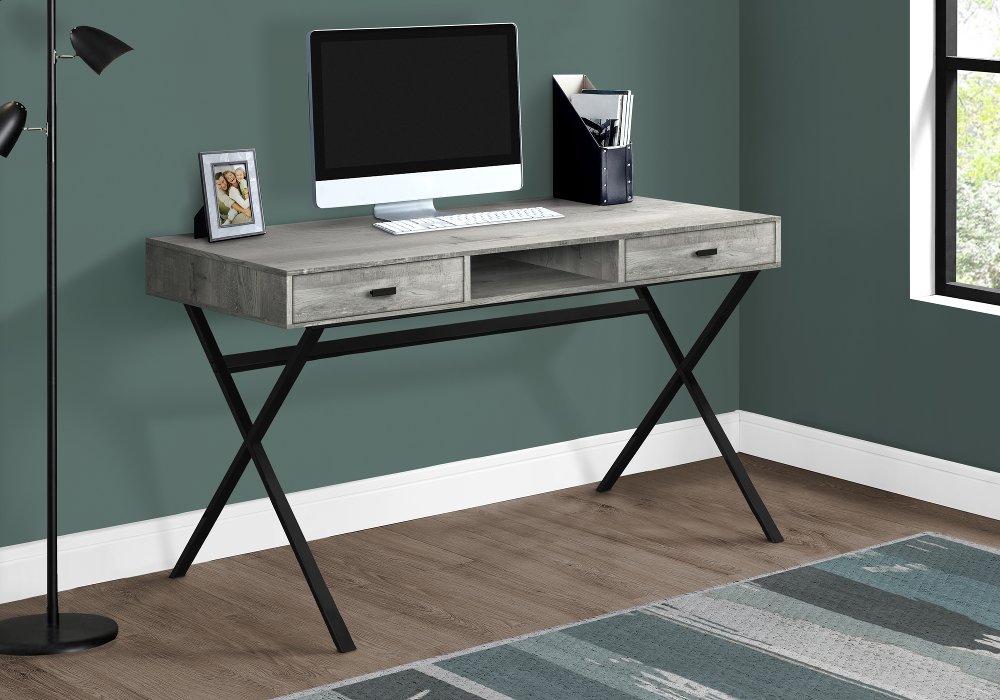
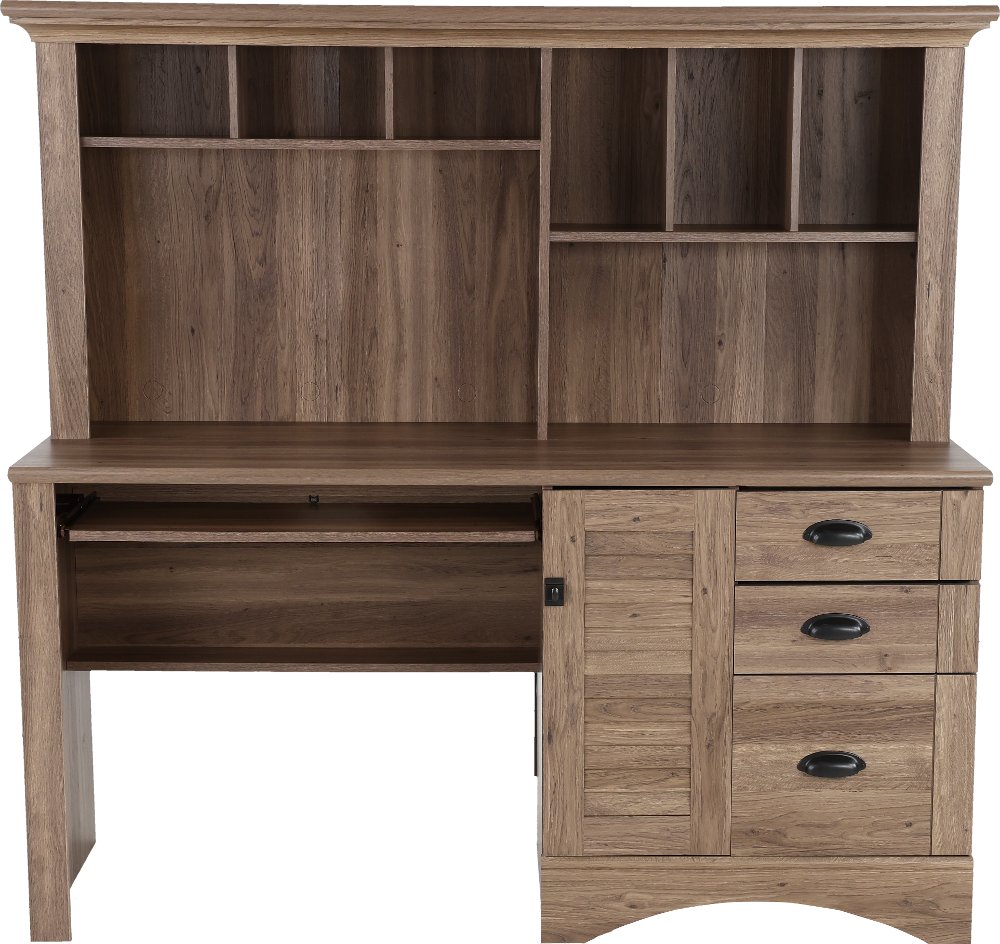
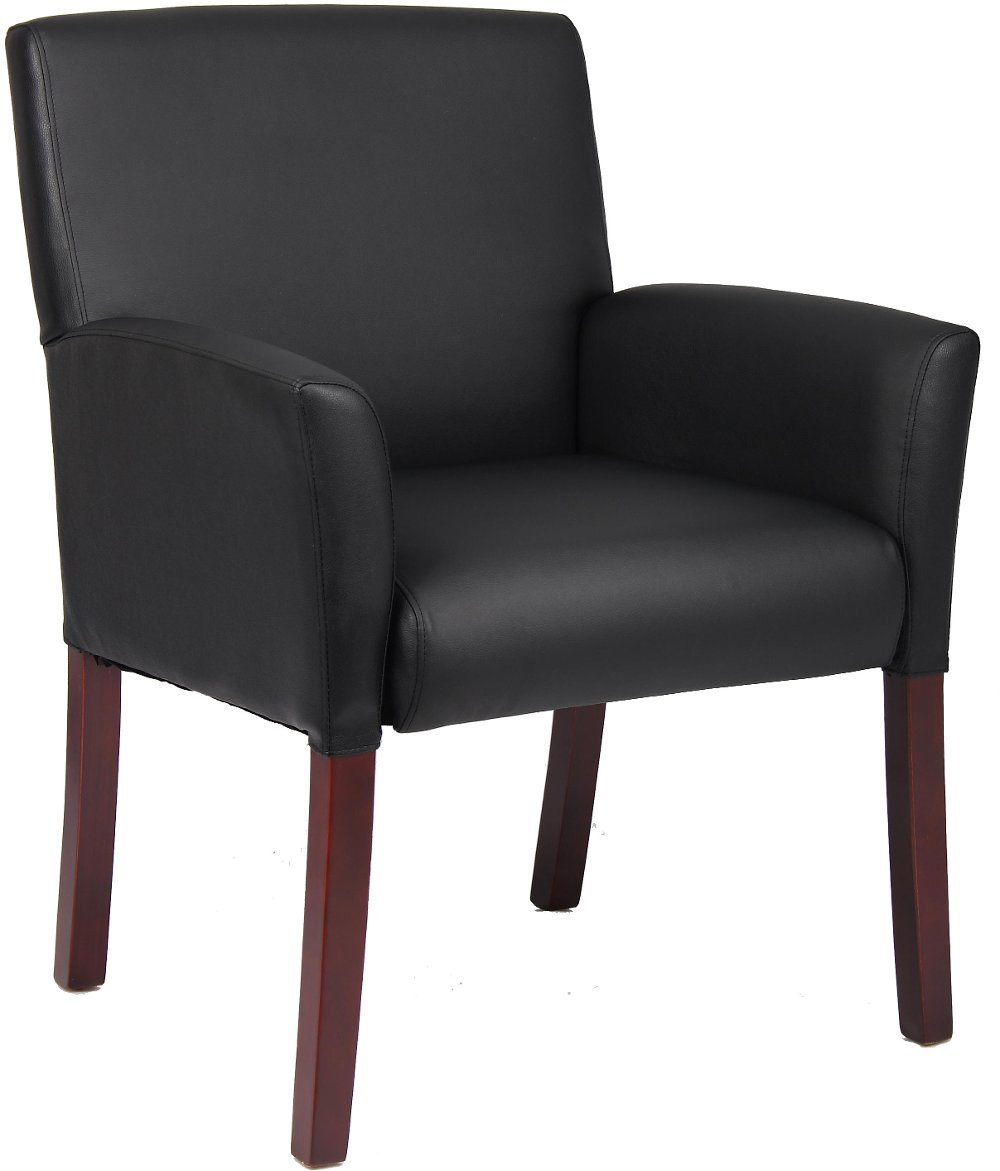
Desk furniture includes writing desks, computer desks, L-shaped desks, standing desks, and the seating and storage that help make a workspace comfortable and useful. The right combination depends on what happens at the desk, whether that’s a full day of remote work, an evening of homework, or a few minutes spent sorting mail. Writing desks typically have an open work surface with limited storage, making them a practical fit for laptop use, journaling, and smaller rooms. Computer desks often provide more space for monitors, keyboards, and accessories, with some designs including cable openings or dedicated equipment storage. An L-shaped desk creates two connected work surfaces, giving you room to keep a computer on one side and spread out notes or paperwork on the other. That extra surface can be especially helpful for someone who moves between video meetings and hands-on projects. Height-adjustable standing desks allow the work surface to move between seated and standing positions; manual and powered mechanisms offer different ways to make that adjustment. Larger executive-style desks generally provide a substantial work surface and built-in storage, while compact desks keep a workspace from overwhelming a bedroom, apartment, or shared living area. A desk with a hutch uses vertical space for books, supplies, and display pieces, although the shelves need to leave enough clearance for your screen. Style matters, too, particularly when the workspace sits in plain view. Warm wood tones can sit comfortably alongside living room furniture, while simple metal frames and streamlined surfaces suit a more minimal setup. A finished back is worth considering when a desk faces into the room rather than toward a wall. For students, a dedicated desktop can separate study time from meals and relaxation. For creative work, a broad, uncluttered surface leaves room for sketches, reference materials, and tools. In a shared household, separate drawers or storage compartments can help each person keep track of everyday essentials without taking over the entire desk.
Materials influence how desk furniture looks, feels, and holds up to daily use. Solid wood brings natural grain and variation, and its character can work well in both traditional and contemporary spaces. Wood can respond to changes in indoor humidity, so consistent conditions and care suited to the finish help protect it. Wood veneer places a thin layer of real wood over a supporting core, offering natural grain while using a different construction method than solid wood. Engineered wood with a laminate surface can provide a consistent appearance and a surface that’s generally easy to wipe clean, though scratch and moisture resistance vary by construction and finish. Sealed edges matter, especially around a desktop where spilled coffee or water could reach the core. Metal frames can provide sturdy support with a visually lighter profile, but overall stability also depends on the joints, fasteners, and desk design. Glass desktops have an open look that can keep a compact room from feeling crowded; they also tend to show fingerprints and need cleaners appropriate for the surface. For a desk that will hold multiple monitors or heavier equipment, the stated weight capacity matters more than appearance alone. A thick-looking desktop doesn’t necessarily indicate how much weight it can support. Drawer construction and hardware deserve attention as well, since a file drawer filled with paperwork places different demands on its slides than a shallow drawer holding pens. Smooth operation, secure connections, and a stable base all contribute to everyday usability. Care starts with the manufacturer’s instructions, followed by simple habits: wipe up spills promptly, use a coaster, and place a desk mat beneath writing materials when needed. Avoid dragging equipment across the surface, and keep cords from pulling against ports or catching in moving parts. When moving a desk, empty the drawers and lift it with appropriate help rather than pushing it across the floor. Those small steps help preserve both the finish and the structure.
Fit goes beyond finding a desk that matches the width of an empty wall. The full setup needs room for a chair to pull back, drawers to open, and people to pass without squeezing between furniture. Measure the desk’s depth as well as its width, particularly if a large monitor or a separate keyboard will share the surface. A shallow desk can suit a laptop, while a deeper surface may provide more flexibility for screen placement and writing space. Check knee clearance beneath drawers and support rails, and consider how chair arms will fit under the desktop. With an L-shaped desk, the longer side and the direction of the return affect how the piece fits around doors, windows, and other furniture. Delivery routes matter, too; doorways, stair turns, and hallways can limit what will reach the intended room. An adjustable office chair helps you set up for supported sitting, with feet resting comfortably on the floor or a footrest and shoulders relaxed while typing. For a standing desk, consider both the height range and the total load of the desktop equipment, and leave enough cable slack for the surface to travel safely. Built-in grommets, cable trays, and clips can help keep cords organized, but access to outlets still needs to make sense for the layout. Storage works best when it reflects what you actually keep nearby. A small drawer can handle charging cords and pens; file storage needs to accommodate the paper size you use. A mobile pedestal offers flexible placement, provided it doesn’t crowd your legs. In a shared room, closed storage can keep paperwork out of sight at the end of the day, while open shelving keeps frequently used books within reach. For ways to coordinate a desk, chair, and storage with the rest of your space, explore Office Furniture Ideas. A well-proportioned setup gives each task a place without asking the room to become something it isn’t.
Read More