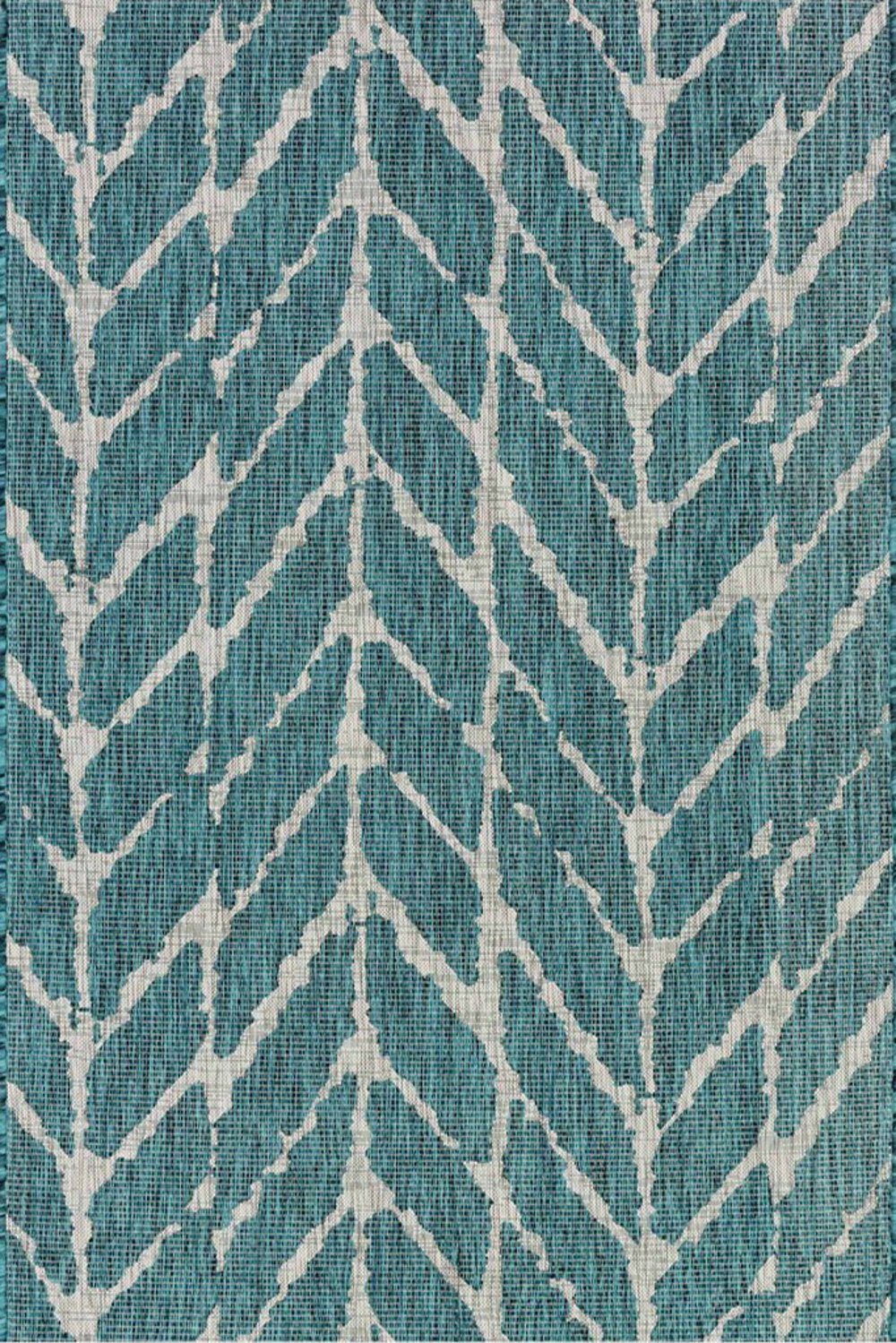
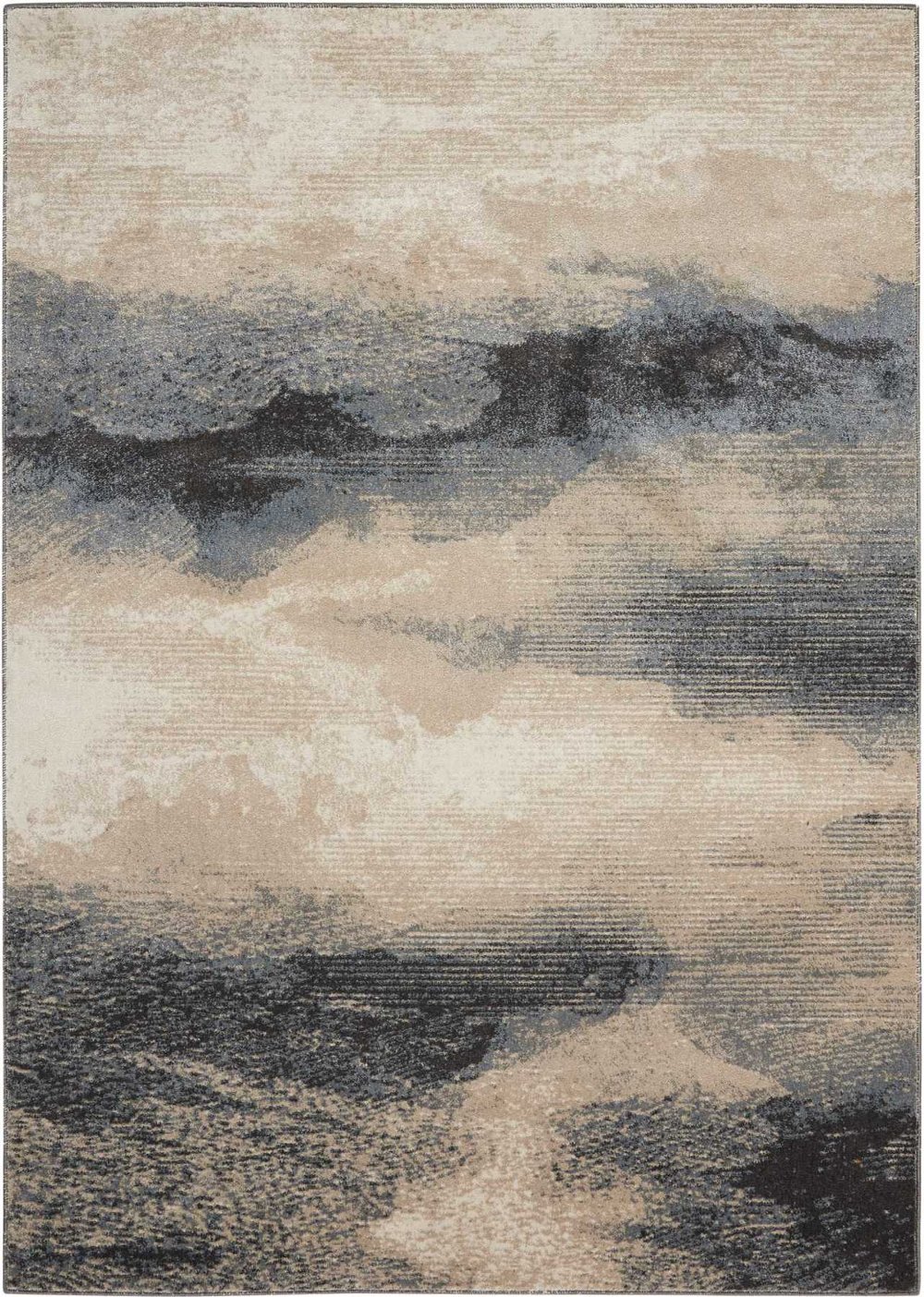
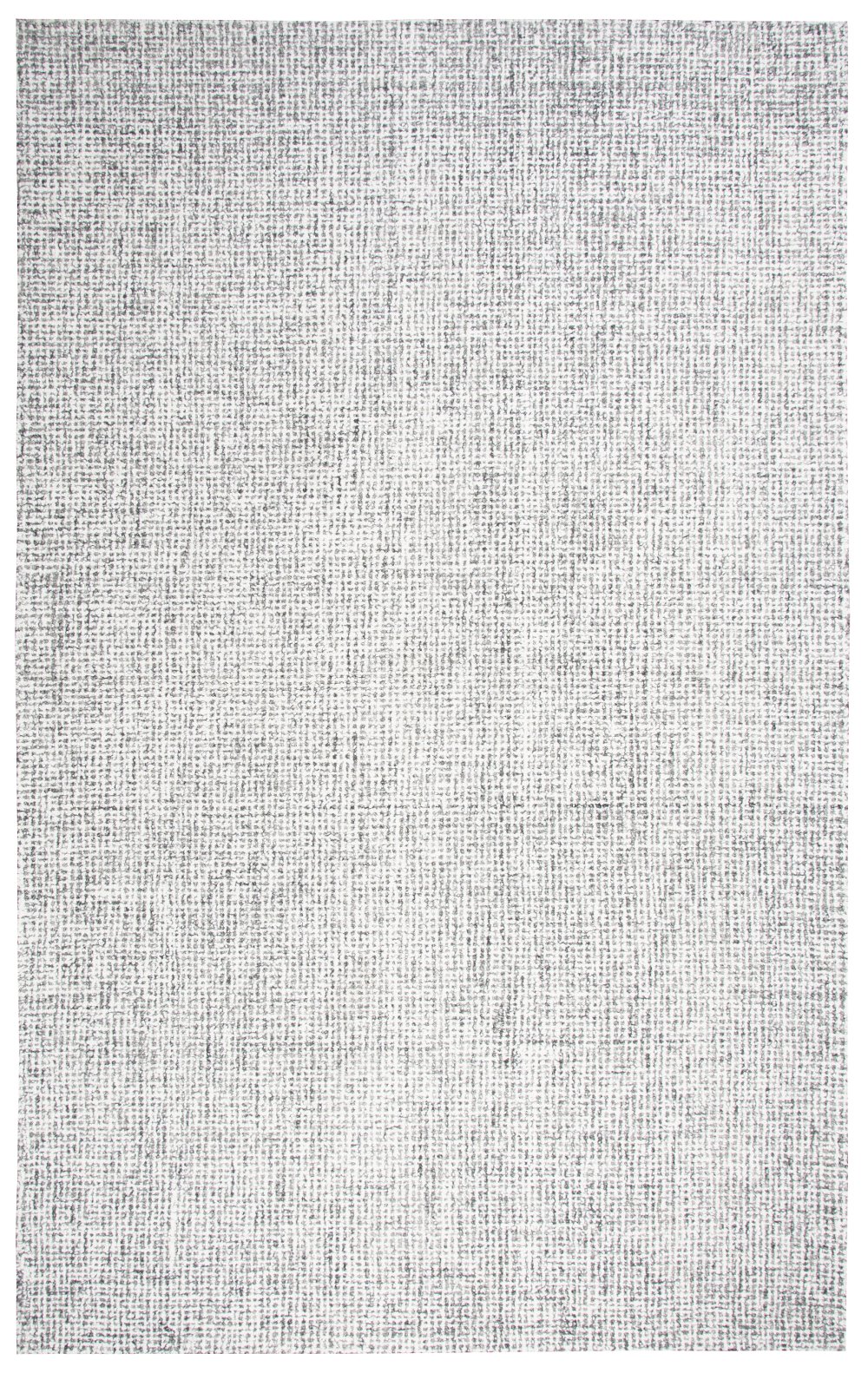
Geometric outdoor area rugs bring pattern, color, and a sense of order to patios, decks, porches, and balconies. Their repeating diamonds, interlocking shapes, angular lines, and graphic borders give outdoor furniture a defined place to gather, making an open stretch of decking feel more like a comfortable living space. A rug beneath a conversation set visually connects the chairs and sofa, while one under a dining table helps distinguish the eating area from nearby lounge seating. The pattern can do as much or as little as your space needs. Broad ivory lines against a charcoal background create a crisp foundation for simple furniture, while small-scale patterns in sand, gray, or muted blue offer a quieter look alongside patterned cushions. Diamond motifs pair easily with woven seating, and grids or broken-line designs complement furniture with clean metal frames. Curves, circles, and overlapping arches soften arrangements with lots of straight edges without losing that geometric character. Pattern scale makes a noticeable difference, too: Large shapes tend to read clearly across a spacious patio, while finer repeats add detail to a compact sitting area. When furniture covers the center of a rug, a patterned border can still frame the arrangement beautifully. Color connects the rug with its surroundings, whether that means echoing the warm tones of brick, picking up the gray of concrete pavers, or balancing dark furniture with a lighter ground. Midtone colors and varied patterns can make everyday dust and small bits of debris less noticeable between cleanings, although no pattern replaces regular care. For households that use outdoor spaces for everything from quiet reading to casual meals with friends, a geometric rug offers a practical decorative foundation. It adds visual texture beneath a coffee table, gives a pair of balcony chairs a shared setting, and helps a larger patio feel thoughtfully arranged rather than scattered with furniture.
Materials and construction determine how an outdoor rug feels, performs, and fits into everyday life. Polypropylene is a common choice for geometric outdoor rugs because the synthetic fiber absorbs little moisture and generally resists staining. Many outdoor-rated rugs also feature UV-resistant materials or treatments that help limit fading, though prolonged sunlight can still change their appearance over time. Polyester appears in some outdoor constructions as well, offering color versatility and a softer feel depending on the weave. Fiber content alone doesn’t establish suitability for outdoor use; backing, dyes, finishes, and the rug’s overall construction matter, so an outdoor-use designation is important. A tightly woven, low-profile surface works well beneath dining furniture because chair legs can move across it more easily than across a thick pile. That flatter construction also gives crumbs, leaves, and dust fewer places to settle. Rugs with raised geometric details offer more dimension and a textured feel underfoot, but those textured areas may need extra attention during cleaning. Woven plastic constructions can provide a lightweight option for casual spaces, and some designs are reversible, giving both sides a finished appearance. Reversibility, washability, and resistance to moisture or fading vary by rug rather than applying to every outdoor design. For a covered porch used mostly for reading, comfort and texture might lead the decision. On an open deck that sees frequent foot traffic, a low-profile weave with straightforward care requirements may be the better fit. Families with children, pet owners, and frequent hosts often appreciate surfaces that make routine cleanup manageable, but outdoor-rated doesn’t mean chew-proof, snag-proof, or maintenance-free. Natural-fiber looks can offer the relaxed character of sisal or jute in synthetic constructions intended for outdoor placement. Actual jute and many other absorbent natural fibers generally suit dry indoor settings better, so appearance shouldn’t be the only consideration. The most useful combination is a pattern you enjoy, a texture that suits your activities, and construction rated for the exposure it will receive.
Size, placement, and care help a geometric outdoor area rug feel like a natural part of the space rather than an afterthought. In a seating arrangement, a rug large enough to sit beneath the front legs of the main pieces usually creates a more connected look than a small rug floating under the coffee table alone. For outdoor dining, allow roughly 24 inches of rug beyond each side of the table when space permits, then check that the chairs remain on the rug when pulled out for sitting. Actual chair depth and movement matter more than a standard measurement. A narrow balcony benefits from a footprint that accommodates furniture while keeping doors and walkways clear; a large deck may work better with separate rugs for dining and lounging. Rectangular shapes follow the lines of most sofas and dining tables, while round rugs can echo a round table or soften a square seating area. For spaces where a straight-sided shape best suits the furniture layout, Rectangle Geometric Area Rugs offer another way to explore shape and pattern, with outdoor suitability checked separately for each design. Before placement, measure the usable floor area, account for door swing, and check both the rug and flooring manufacturers’ recommendations. An outdoor-compatible rug pad may help reduce shifting, but it should also suit the underlying surface and allow appropriate drainage. Routine care often starts with sweeping, shaking out loose debris when manageable, or vacuuming with a setting appropriate for the weave. Some outdoor rugs can be rinsed with a garden hose or spot-cleaned with mild soap; follow the care label rather than assuming every construction tolerates the same treatment. Let the rug and the surface beneath it dry thoroughly, since moisture can collect underneath even when the fibers resist water absorption. Periodically lifting the rug helps with cleaning and checking for trapped debris. Store it clean and fully dry when extended nonuse or harsh conditions call for protection. With the right fit and manageable upkeep, geometric pattern becomes an easygoing part of a well-used outdoor room.
Read More