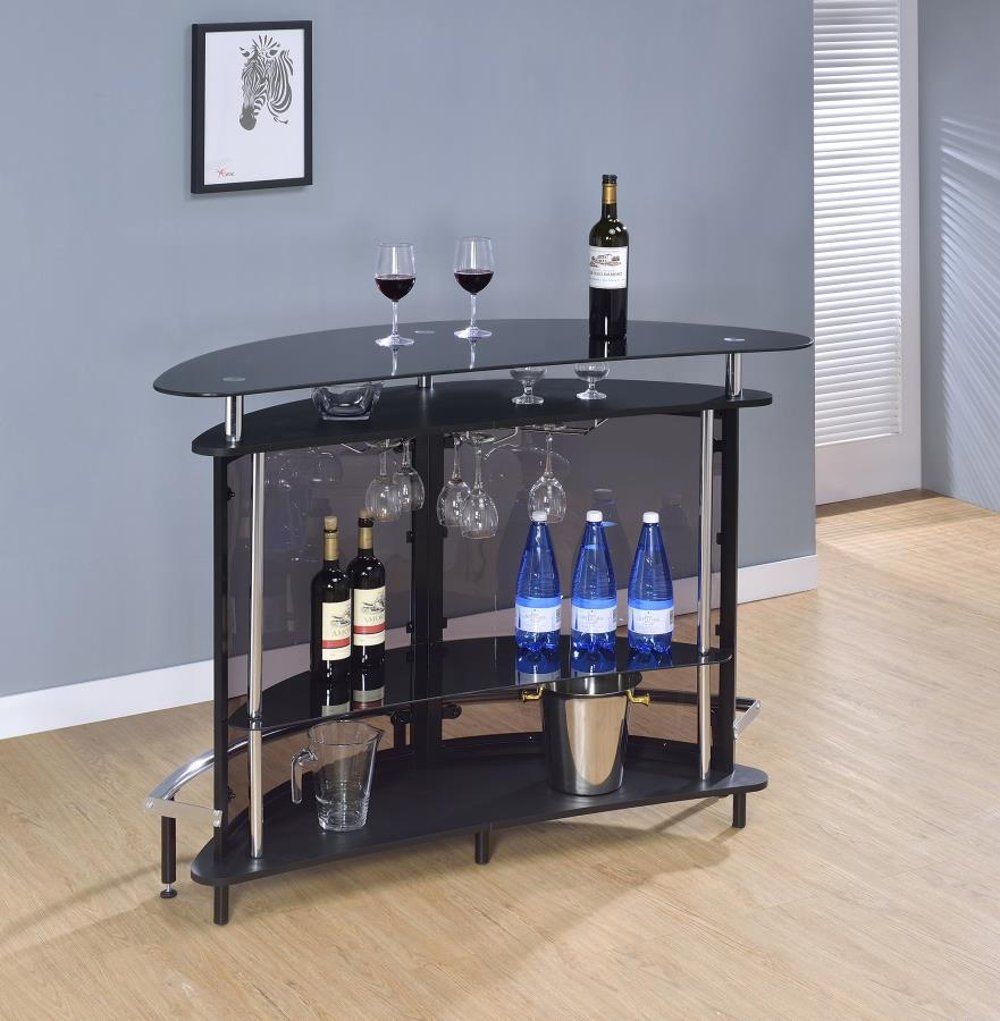
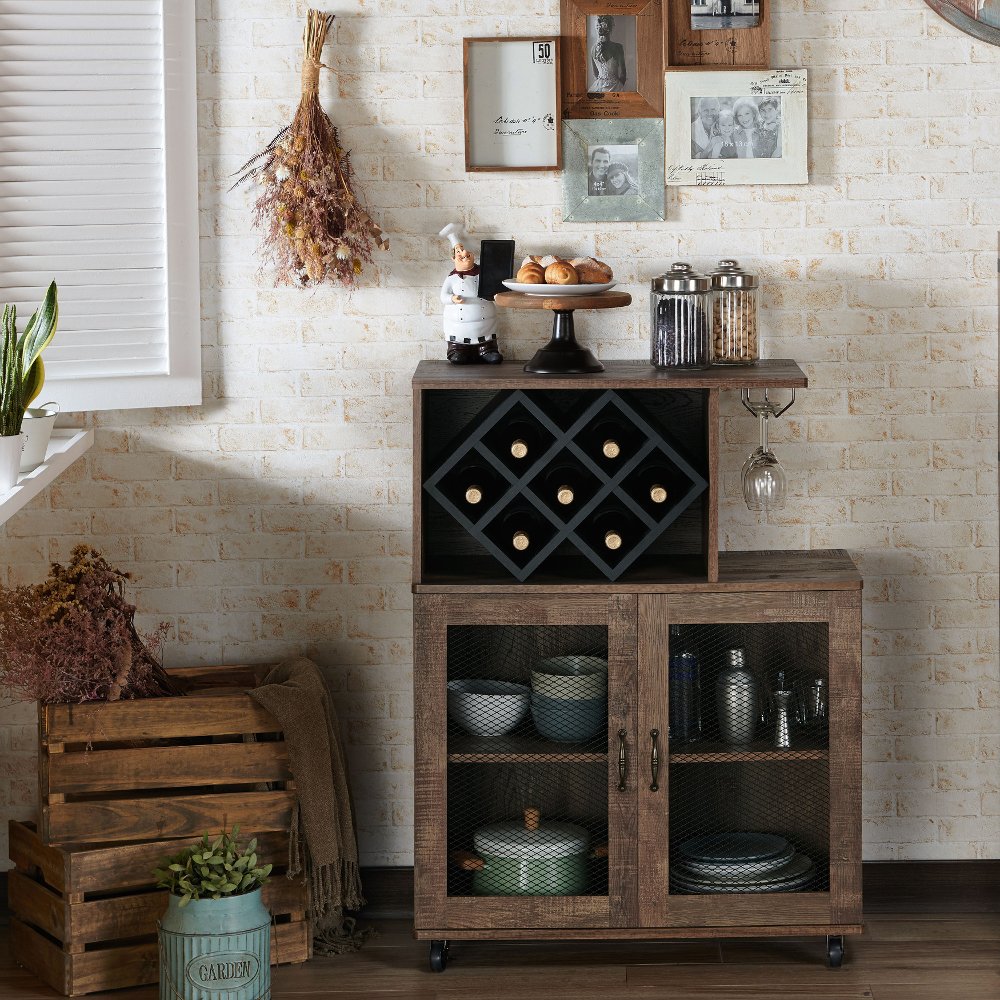
Glass bar carts combine glass shelves with a supporting frame to create an open, light-reflecting place for drinks, glassware, and serving essentials. They bring useful storage to a dining room, living room, or entertaining area without the visual weight of a solid cabinet. Clear glass keeps the look airy and lets the frame, bottles, and accessories stand out, while mirrored glass adds reflection and gives a small display more presence. Shelf construction matters as much as appearance: tempered glass is stronger than standard glass and breaks into small pieces rather than long, sharp shards, but it can still chip or break and needs careful handling. A mirrored shelf isn’t necessarily tempered, so the material details deserve a close look. Metal frames provide structure in a range of styles, from slim, straight lines to rounded profiles with decorative rails. Brass-tone and gold-tone finishes bring warmth, chrome and polished silver-tone finishes create a crisp look, and black frames give clear shelves a defined outline. A brass-tone finish describes the appearance, not necessarily solid brass construction. Acrylic supports can make a cart feel especially light and unobtrusive, while wood accents introduce texture alongside the smooth glass. These combinations work across different rooms: a curved frame can soften an arrangement of straight-lined furniture, and a simple rectangular cart can sit comfortably beside a tailored sofa or dining sideboard. Glass also allows a patterned wall or rug to remain part of the scene rather than disappearing behind another substantial piece of furniture. The wider Bar Carts category offers a useful way to compare the character of glass with other materials. For a coordinated room, echoing one nearby finish, such as a lamp base or cabinet pull, usually feels more natural than matching every metal surface exactly. The result can be polished enough for guests and relaxed enough for everyday use.
A glass serving cart works best when its footprint and storage layout suit the way the room gets used. Overall width, depth, and height tell only part of the story; handles, projecting wheels, and decorative rails can extend beyond the shelf edges. In a compact dining area, a cart should leave enough room for someone to pull out a chair and walk behind it comfortably. Beside a sofa, the top shelf should be easy to reach without blocking a side table, outlet, or doorway. Round carts can soften a corner, while rectangular designs often make efficient use of space along a wall. Shelf spacing determines whether tall bottles, a pitcher, or a decanter will fit upright, and usable shelf area matters more than the outside frame dimensions alone. Two tiers can separate serving space from stored supplies; additional tiers may offer more organization but deserve a close check for vertical clearance. Built-in bottle racks and stemware holders can keep a display orderly, provided their dimensions accommodate the bottles and glasses intended for them. Raised edges or guardrails add a useful boundary, though they don’t make loose glassware secure during movement. For a rolling glass bar cart, caster quality and handle placement affect how comfortably it moves between rooms. Locking casters help keep it parked during serving, but they don’t prevent tipping or replace a level floor. Rugs, thresholds, and floor transitions can interrupt an otherwise smooth route, so a cart intended mainly for display may need different features than one moved regularly. Follow the stated weight limits for each shelf and the cart as a whole, distribute weight evenly, and place heavier bottles low when the design allows. Remove fragile and loose contents before relocating the cart, and use its designated handle rather than pulling on a shelf or rail. A sturdy frame, secure shelf supports, and properly attached wheels all contribute to dependable everyday use; glass thickness alone doesn’t establish how much a cart can safely hold.
Glass bar carts can serve much more than cocktails. A dining room setup might hold sparkling water, tumblers, and a carafe, leaving the top shelf open for pouring. In a living room, a small arrangement of favorite glassware, a covered snack bowl, and folded napkins can make guests feel welcome without crowding every inch. For a coffee station, shelf clearance, access to an outlet, and the appliance manufacturer’s ventilation and surface requirements matter; glass isn’t automatically suitable for heat-producing equipment. An insulated carafe and a few cups can offer a simpler serving arrangement. Keeping part of the top shelf clear gives hands somewhere to set a glass, and grouping small accessories on a tray makes the display easier to tidy. Care is straightforward when it follows the shelf and frame manufacturers’ directions. A soft, lint-free cloth helps maintain clear glass without adding scratches, and a compatible cleaner applied to the cloth rather than sprayed across the cart helps limit moisture around joints and metal finishes. Mirrored shelves need particular care at their edges, where moisture can affect the reflective backing. Wipe up spills promptly, dry surfaces after cleaning, and use coasters or protective pads appropriate for the shelf finish beneath bottles and serving pieces. Abrasive pads can scratch glass or damage a coated frame, while harsh cleaners may dull metal or acrylic components. Avoid setting hot cookware directly on a shelf or exposing glass to sudden temperature changes. Periodic checks of fasteners, wheels, and shelf supports help catch looseness before the next gathering. For households with young children or active pets, placement away from busy play areas and secure storage for alcohol and fragile glassware are important considerations. A glass bar cart can also be a thoughtful housewarming or wedding gift for someone who enjoys hosting, especially when its size and finish reflect their home. Its appeal comes from that balance of display and purpose: favorite serving pieces stay visible, everyday supplies stay organized, and a welcoming drink has a place to land.
Read More