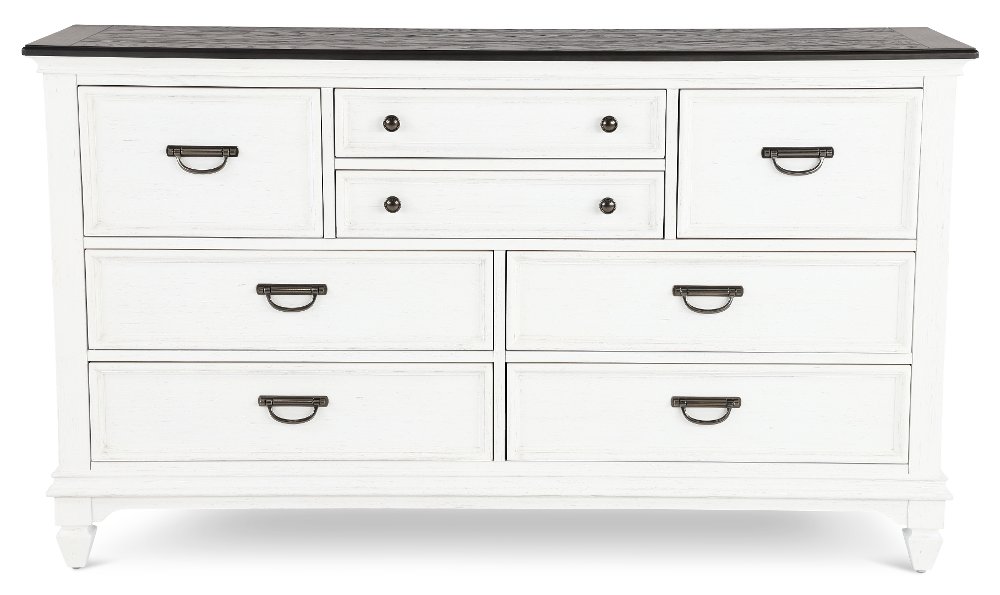
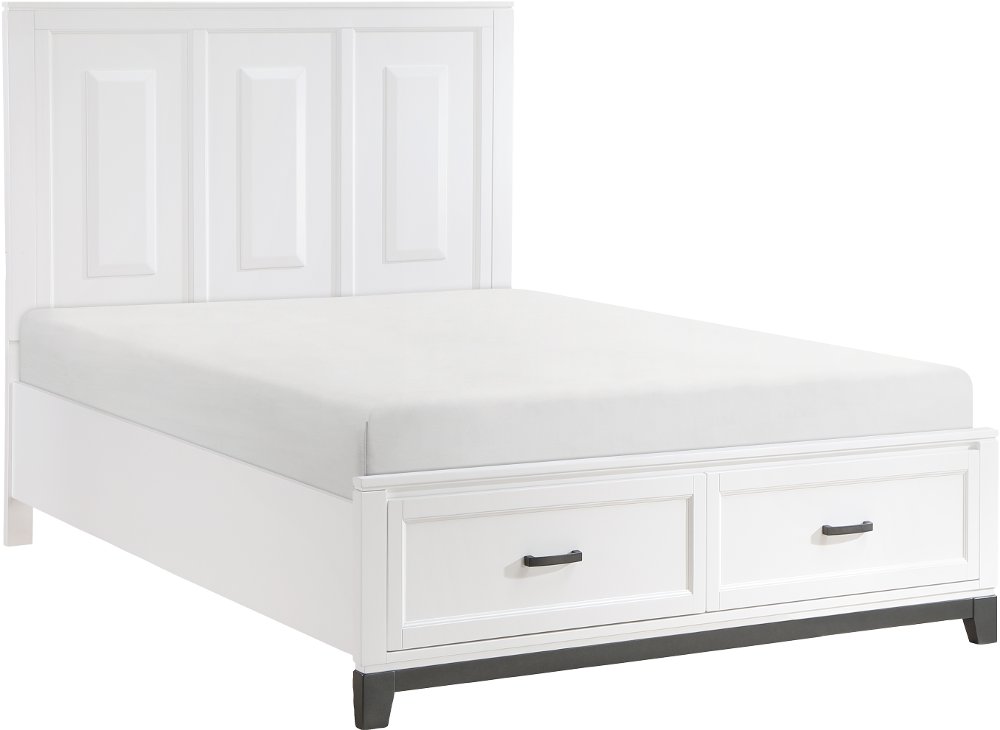
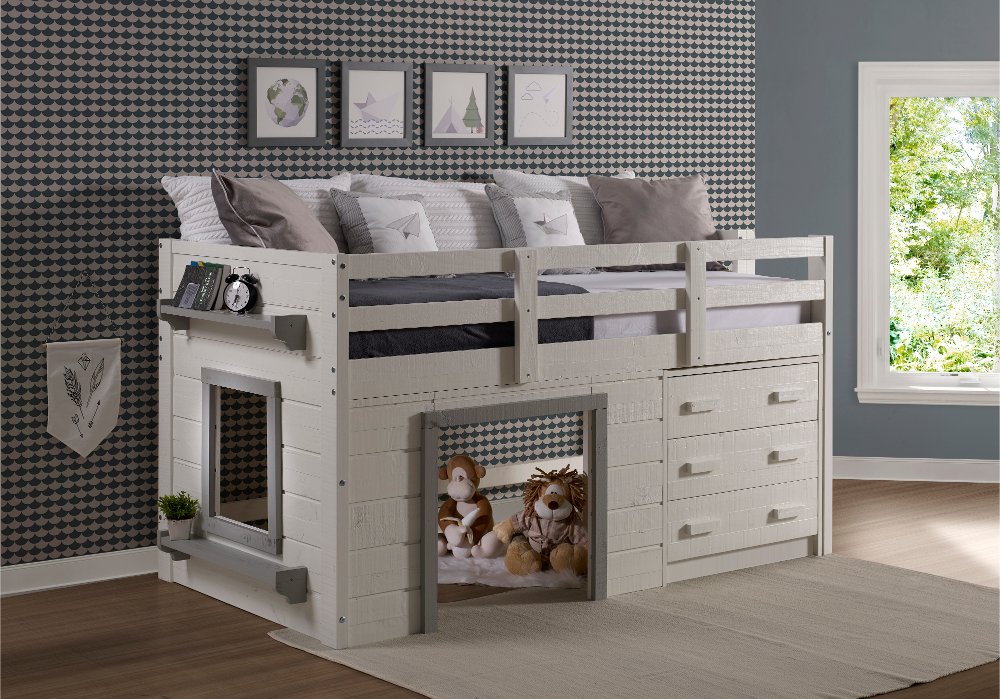
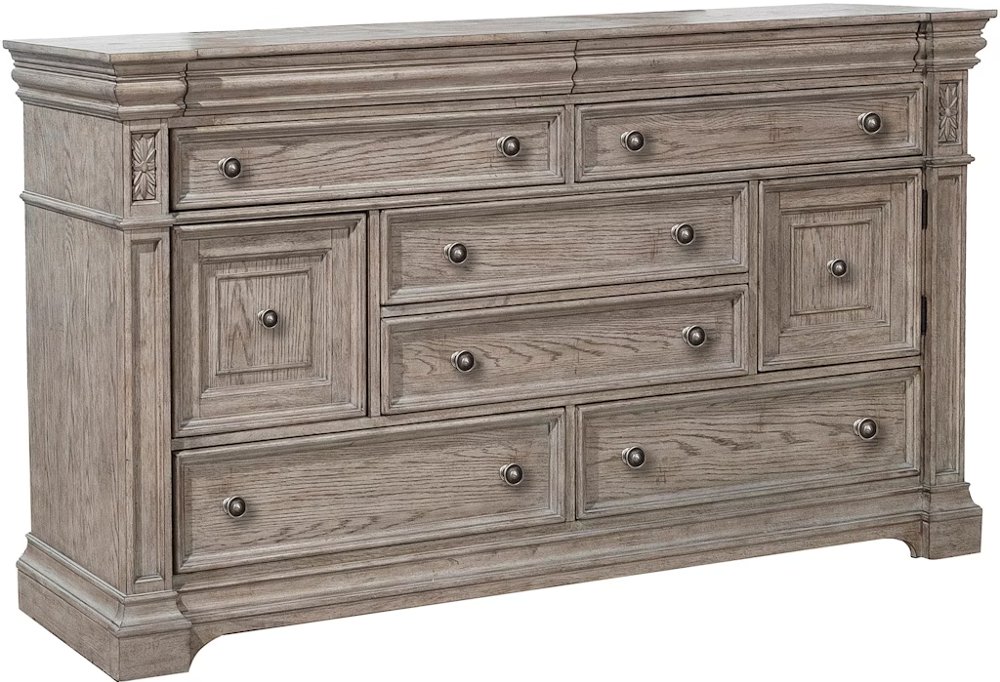
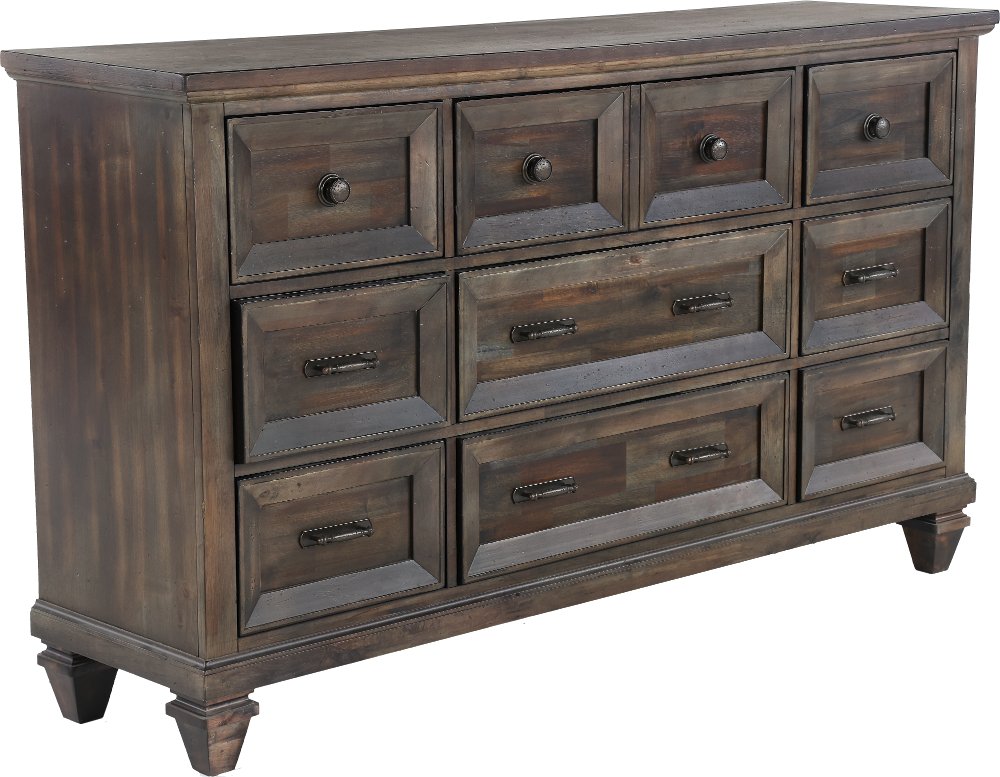
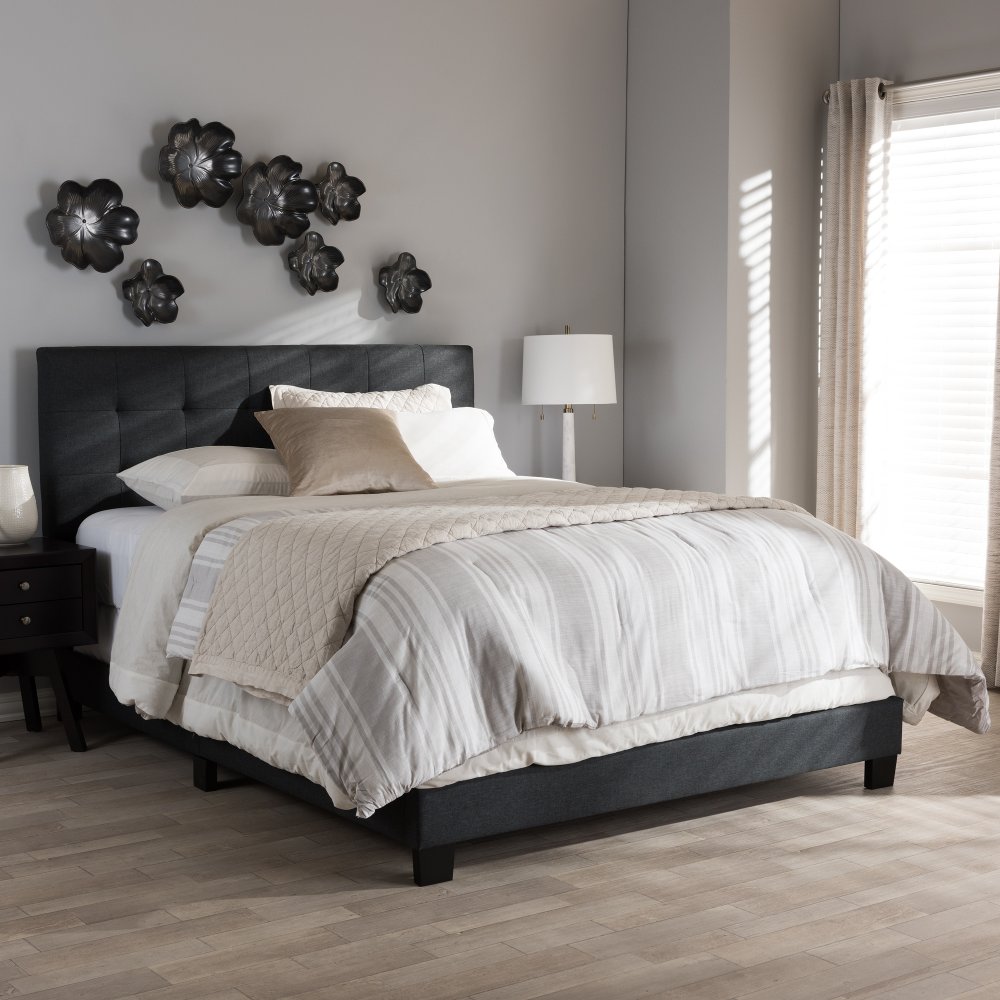
Gray and white bedroom furniture combines two versatile neutrals for a clean, balanced look that can feel modern, traditional, or comfortably in between. White finishes create a light backdrop, while gray adds definition through a bed frame, upholstered headboard, dresser, or nightstand. The contrast can be subtle, with soft dove gray beside creamy white, or more pronounced, with charcoal drawer fronts set against crisp white frames. Neither color has to dominate. A white bed with gray bedside storage feels different from a gray upholstered bed surrounded by white dressers, but both combinations leave room for personal touches. Straight lines and simple hardware suit a contemporary bedroom, while framed drawer fronts, turned legs, and gently curved headboards bring a more traditional character. Distressed finishes and visible wood grain introduce texture without requiring a busier color scheme. Two-tone bedroom furniture can tie the palette together within a single piece, especially when gray tops or drawer faces repeat a shade found elsewhere in the room. Undertones matter as much as contrast: a warm gray with beige notes generally feels more connected to ivory or antique white, while a cooler gray can sit comfortably beside a brighter white. Wall color, flooring, and lighting affect how those finishes appear, so finish samples viewed in the room can help clarify the combination. Pairing Gray Bedroom Furniture with white storage pieces also gives you flexibility to adjust the balance without making every piece identical. For a primary bedroom, this palette provides a quiet backdrop for colorful artwork or patterned bedding. In a guest room, it feels welcoming without depending on a particular decorating theme. A teenager’s room can keep the same neutral furniture as tastes change, with bedding and wall decor doing more of the personalizing. Natural wood accents, woven textures, and a small amount of black hardware can keep the finished space from feeling too uniform.
The right combination of gray and white bedroom furniture supports the way you actually use the room, from getting dressed to keeping a book within reach at bedtime. Beds establish the main proportions, but the full frame dimensions matter more than mattress size alone. A wide upholstered headboard, substantial footboard, or projecting side rails can take up considerably more space than a simpler frame built for the same mattress. In a compact bedroom, a low-profile bed and narrower nightstands can leave clearer paths around the sleeping area. In a larger room, a taller headboard and wider dresser can give the furniture enough presence without requiring extra pieces just to fill space. Storage beds make practical use of the area beneath the mattress, although drawers need enough clearance to open beside walls, rugs, and neighboring furniture. Platform construction and foundation requirements vary, so the bed’s specifications should align with the mattress and its required support. Bedside proportions deserve similar attention. A nightstand near the height of the mattress surface keeps a lamp, phone, or glass of water easier to reach, while a drawer provides a place for small necessities that would otherwise collect on top. Dressers offer a broad surface and accessible clothing storage; taller chests use less floor width when wall space is limited. Drawer depth and interior dimensions help determine whether storage suits folded sweaters, smaller clothing, or spare linens. A shared bedroom may work best with separate bedside storage and clearly divided drawers, even when the finishes coordinate. Matching sets create visual consistency, while mixed gray and white pieces allow more flexibility in width, height, and storage capacity. Doorways, hallways, stairs, and tight turns also affect whether furniture can reach the room. Within the bedroom itself, comfortable access to closet doors, outlets, and fully extended drawers helps the layout feel settled rather than crowded. Those practical details make a coordinated room easier to enjoy every day.
Materials and construction shape how gray and white bedroom furniture looks, feels, and holds up to regular use. Solid wood can bring natural grain and variation, even beneath some stained finishes. Wood veneers place a real-wood surface over a supporting core, while engineered wood can provide a smooth base for painted or laminated finishes. Each construction type has its own characteristics; the material name alone doesn’t tell the whole story. Secure joints, stable bases, well-supported bed slats, and drawers that move smoothly all contribute to dependable everyday function. Drawer stops and firmly attached hardware matter in frequently used storage pieces, and dressers and chests should be anchored according to the manufacturer’s instructions to help prevent tip-over injuries. Upholstered gray headboards introduce a softer surface and can make sitting up to read more comfortable, depending on their shape and padding. Tightly woven fabric tends to look different from velvet or textured upholstery, and fabric care requirements are worth considering in homes with children or pets. White painted surfaces offer a crisp appearance but may show scuffs, while darker gray finishes can make pale dust more noticeable. A light distressed finish may make small signs of wear less conspicuous, though its appearance won’t suit every room. Routine care is usually straightforward when it follows the instructions for the particular finish. A soft cloth helps remove dust, spills should be addressed promptly, and drinks belong on coasters rather than directly on a nightstand. Harsh cleaners, abrasive pads, and excess moisture can damage furniture surfaces, including painted edges and veneer. Upholstery needs cleaning methods suited to its care code; a product intended for wood shouldn’t be used on fabric. These neutral finishes also make furniture easier to carry into a different room or decorating scheme over time. A dresser chosen for a child’s bedroom may later suit a guest room, while coordinated bedside pieces can remain useful after bedding or wall colors change. With proportions, construction, and care suited to your household, gray and white furniture offers a lasting foundation for a bedroom that feels personal and comfortable.
Read More