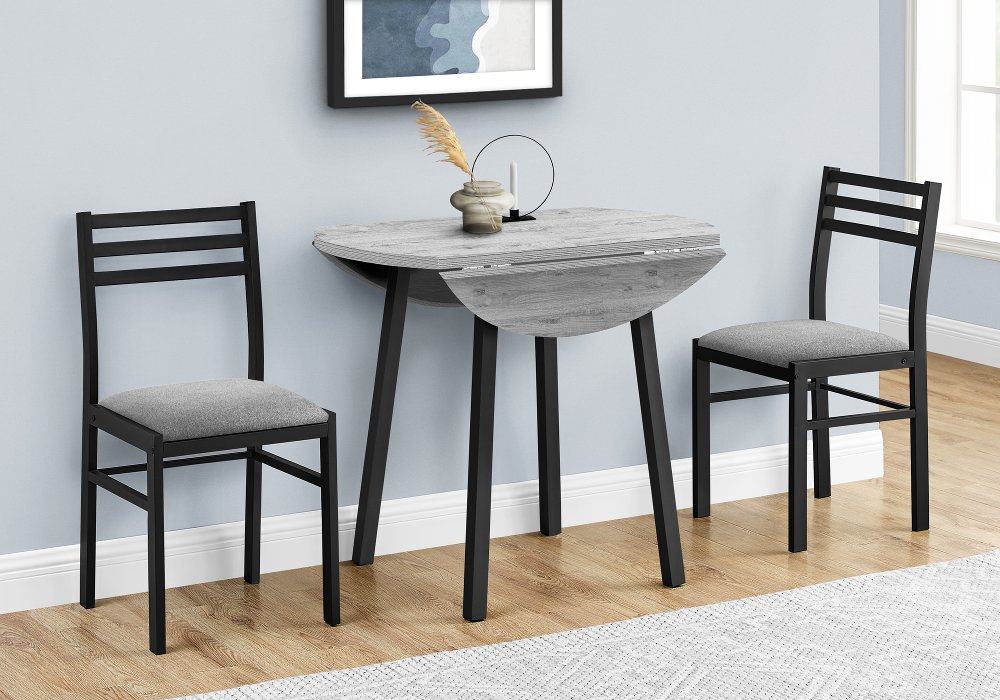
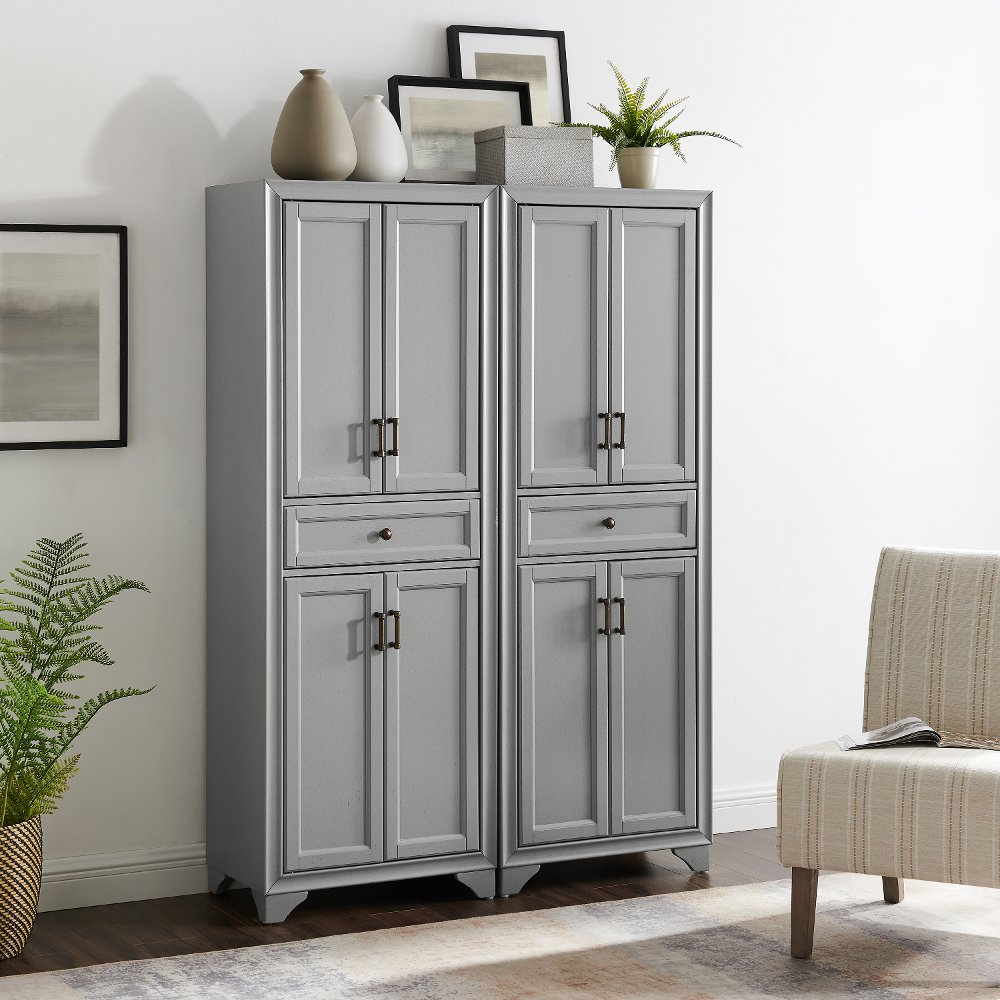
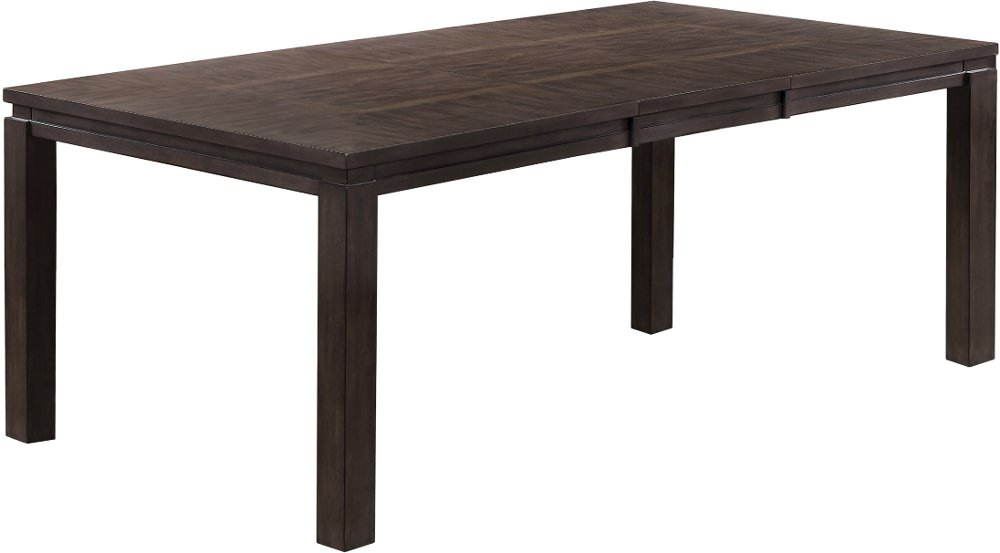
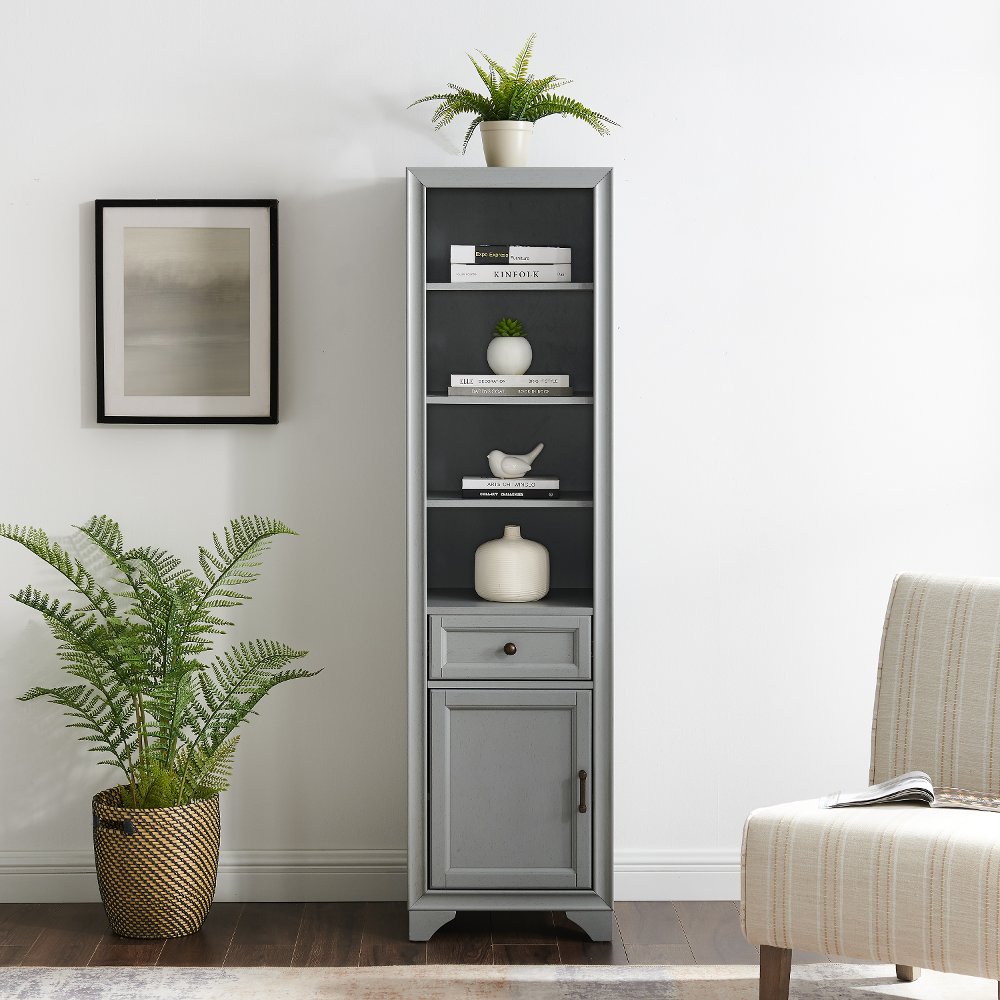
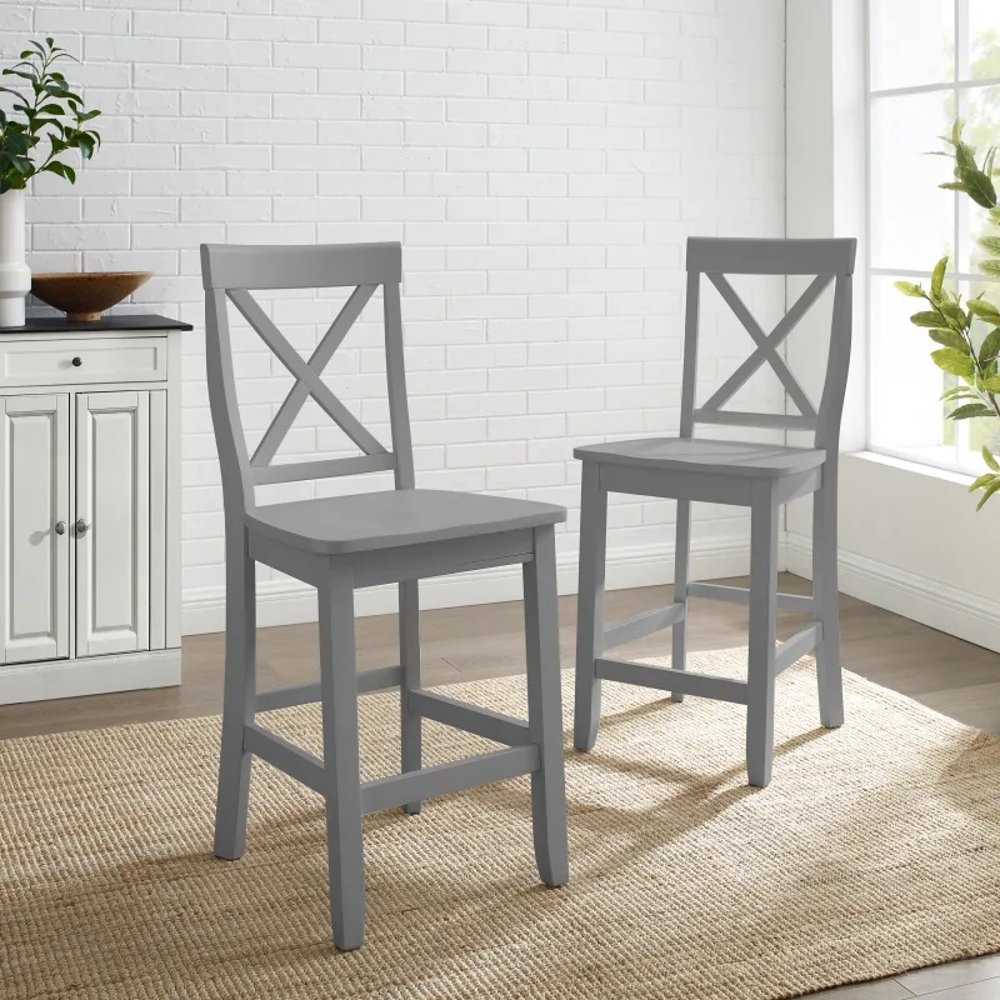
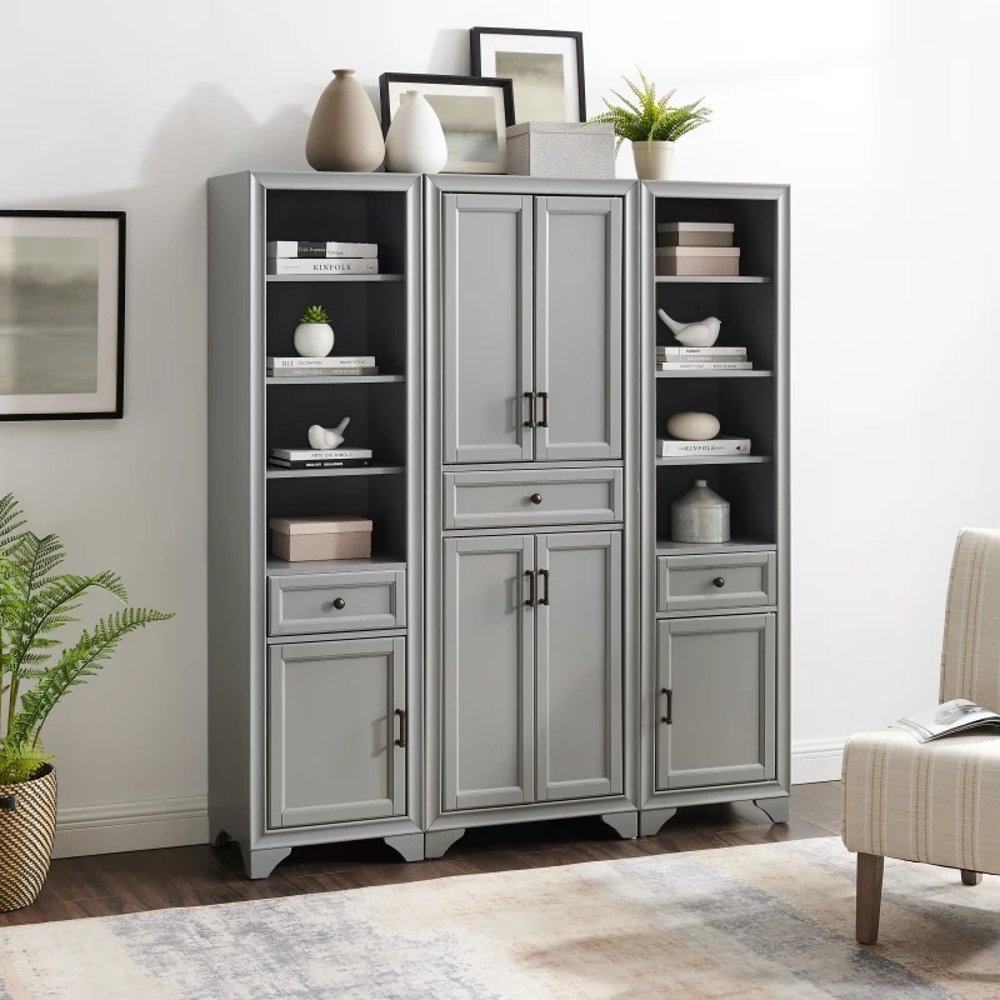
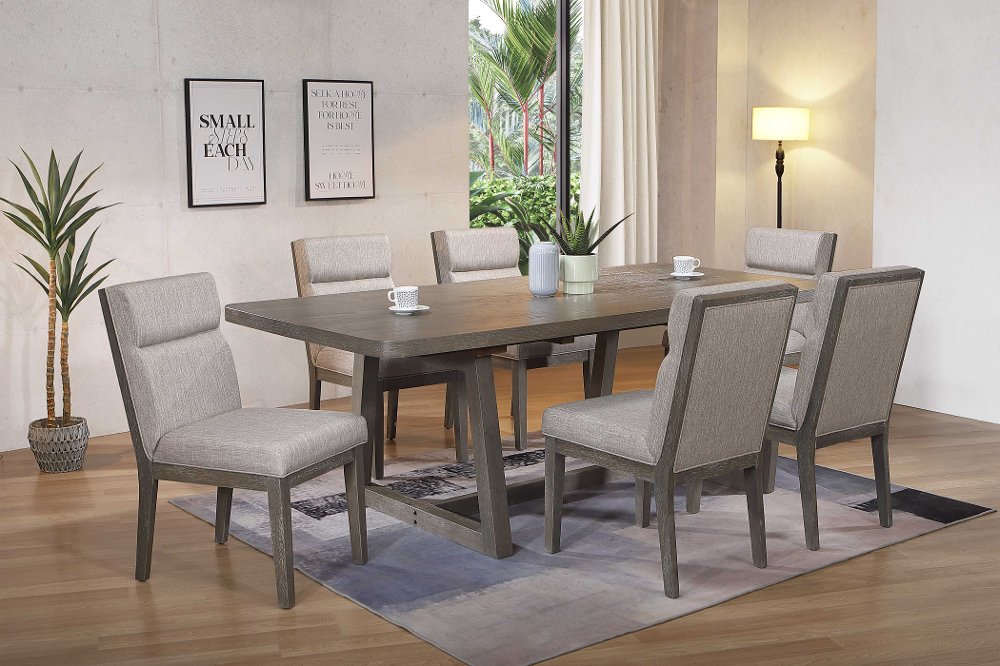
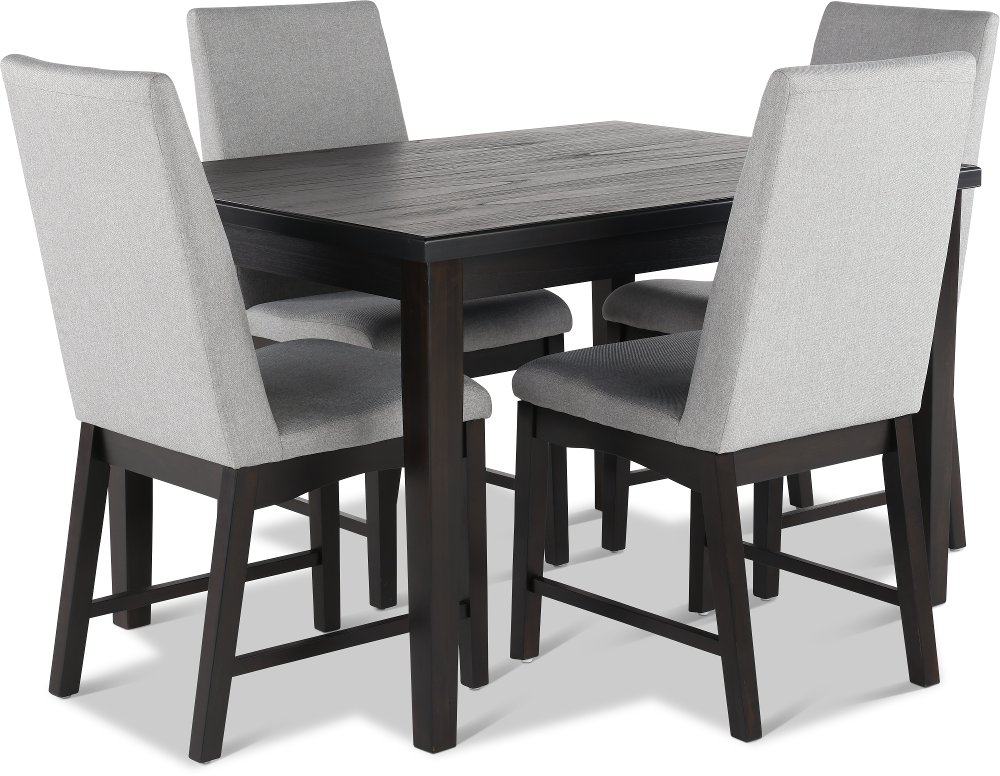
Gray kitchen furniture gives the busiest room in your home a comfortable, pulled-together look without asking every finish to match. A soft dove gray can sit quietly beside white cabinets and pale stone, while charcoal adds definition against light walls or natural wood floors. Between those ends of the spectrum, warm grays with brown undertones feel especially at home with oak, cream, and brass; cooler grays often pair well with crisp white, blue, and stainless steel. Those subtle differences matter because a finish that looks neutral on its own may appear slightly blue, green, or taupe beside your cabinetry. Looking at finish details alongside the surfaces already in your kitchen helps create a room that feels intentional rather than almost coordinated. Gray kitchen tables, chairs, stools, and storage furniture can support anything from a quick breakfast nook to an open kitchen where dinner, homework, and conversation share the same space. A painted pedestal table brings a different character than a gray wood-grain surface on slender metal legs, even when their colors are similar. Shape, texture, and proportions do as much work as color. Distressed finishes and turned legs lean relaxed and traditional, while smooth surfaces and simple frames create a cleaner, more contemporary impression. For visible grain that connects kitchen seating with nearby dining or living areas, gray oak furniture offers a related look worth considering. Matching every piece isn't necessary: gray chairs around a natural wood table can feel balanced, and a darker storage cabinet can give a pale room a welcome focal point. Repeating one detail, such as a wood tone, leg shape, or metal finish, helps different pieces feel connected. The result can be polished enough for company but still comfortable for toast at the counter and a stack of mail waiting to be sorted.
The best fit for gray kitchen furniture starts with how people move through the room, not just how much floor space a piece occupies. A table may fit neatly between two walls yet leave little room to pull out a chair or carry a plate past someone who's seated. Allowing roughly 36 inches between a table edge and a wall or obstruction is a useful starting point, with more space needed along busy walkways. Nearby refrigerator doors, dishwasher doors, drawers, and cabinet swings deserve attention, too. In a compact kitchen, a round table can soften tight corners, while a rectangular table often makes better use of a long, narrow nook. A pedestal base may offer flexible seating, though its footprint still needs to leave comfortable room for feet. Benches can keep a breakfast area visually simple, but guests should be able to get in and out without an awkward shuffle. For counter seating, seat height matters more than the stool's overall height. Most counters pair with seats about 24 to 26 inches high, while taller bar surfaces generally call for seats about 28 to 30 inches high; checking the actual dimensions is more dependable than relying on the name alone. Around 10 to 12 inches between the seat and the underside of the surface usually leaves comfortable legroom, although thick aprons and support rails can reduce that clearance. Backrests and footrests make a difference when a quick snack turns into a longer conversation, and arms need enough clearance to slide under the counter. Gray kitchen islands and carts can add preparation space and storage where built-in cabinetry falls short. Their value depends on the details: shelves that hold everyday bowls, drawers suited to utensils, or a cabinet that keeps serving pieces tucked away. If a cart has casters, locking mechanisms help it stay put during use, and the top's care instructions should confirm whether it's suitable for food preparation. A movable surface is most helpful when there's a practical place to park it.
Materials and construction help determine how gray kitchen furniture handles the everyday rhythm of meals, spills, and frequent use. Solid wood brings natural variation and may respond to changes in indoor humidity, while wood veneer places a thin layer of real wood over a supporting core. Engineered wood construction varies, so protective finishes, well-sealed edges, and intended use deserve as much attention as the material name. A gray finish can be opaque and painted, lightly washed to reveal grain, or layered for a worn-in appearance; each creates a different visual texture. Pale finishes may make dark scuffs more noticeable, while deep charcoal can show dust and crumbs. Visible grain or a gently varied finish can make small marks less conspicuous, though no color takes the place of good care. Metal frames offer a crisp contrast to wood and upholstery, and secure joints, steady legs, and protective floor glides all contribute to a piece that feels dependable. Upholstered gray kitchen chairs can make lingering at the table more comfortable, especially when that table doubles as a place for reading or working. Fabric texture, cleaning instructions, and any stated performance features matter in a room where coffee and pasta sauce are part of daily life. Performance upholstery isn't necessarily stainproof, and cleaning methods should always follow the manufacturer's directions. Wipe-clean seats may be a practical fit for households with young children, while contoured wood seats offer an easygoing alternative to cushions. For most finished surfaces, promptly blotting spills, using coasters and trivets, and avoiding abrasive cleaners helps preserve their appearance. Wood-look tops aren't automatically cutting surfaces, and hot cookware needs suitable protection. Storage pieces benefit from evenly distributed weight and anti-tip hardware whenever the manufacturer specifies it. Whether the room serves one person's morning routine, a couple's casual dinners, or a household gathering around snacks after school, thoughtfully chosen gray kitchen furniture can make daily tasks feel easier. Comfortable seating, useful storage, and finishes that work with your home create a space that's ready to be lived in, not just looked at.
Read More