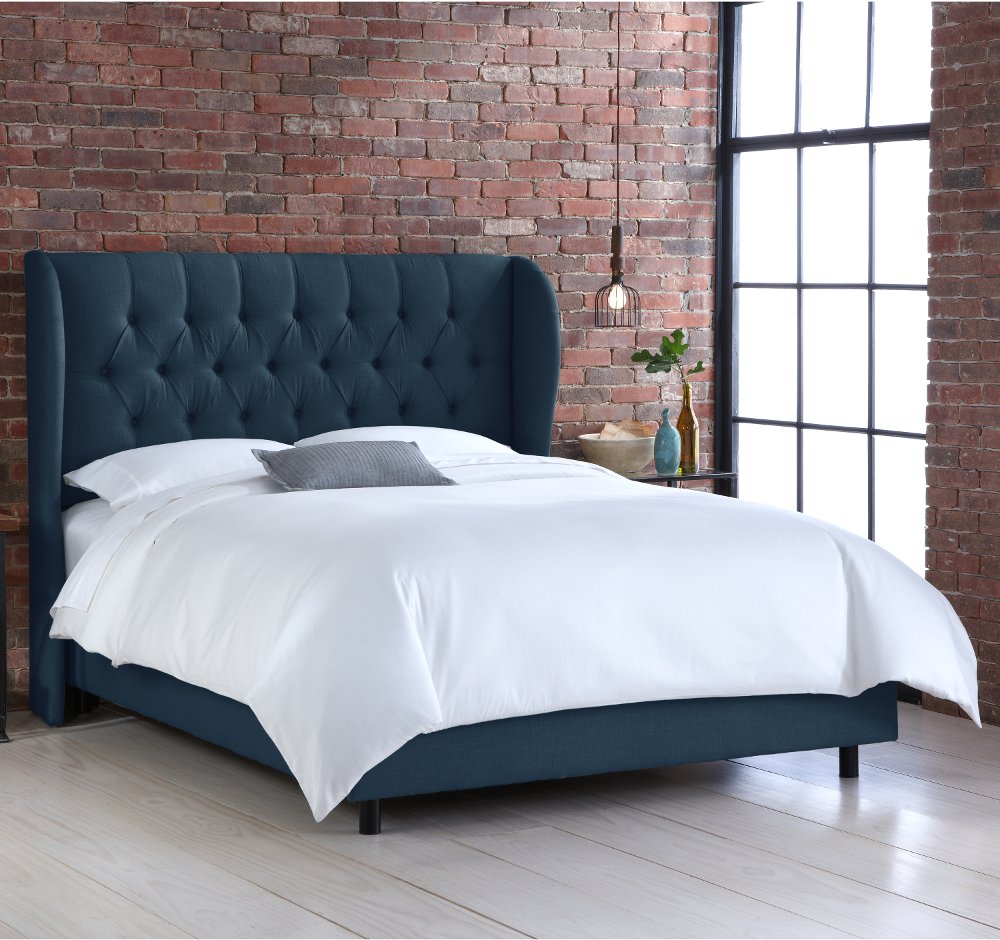
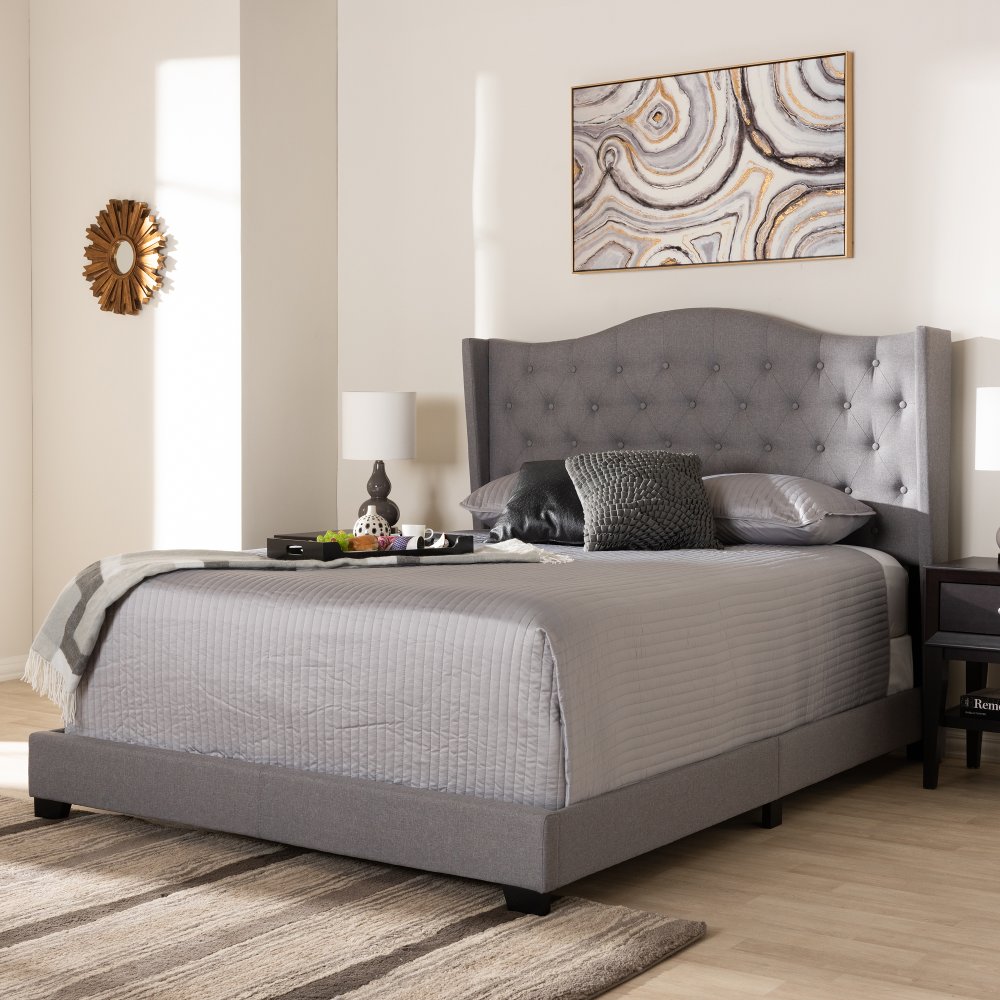
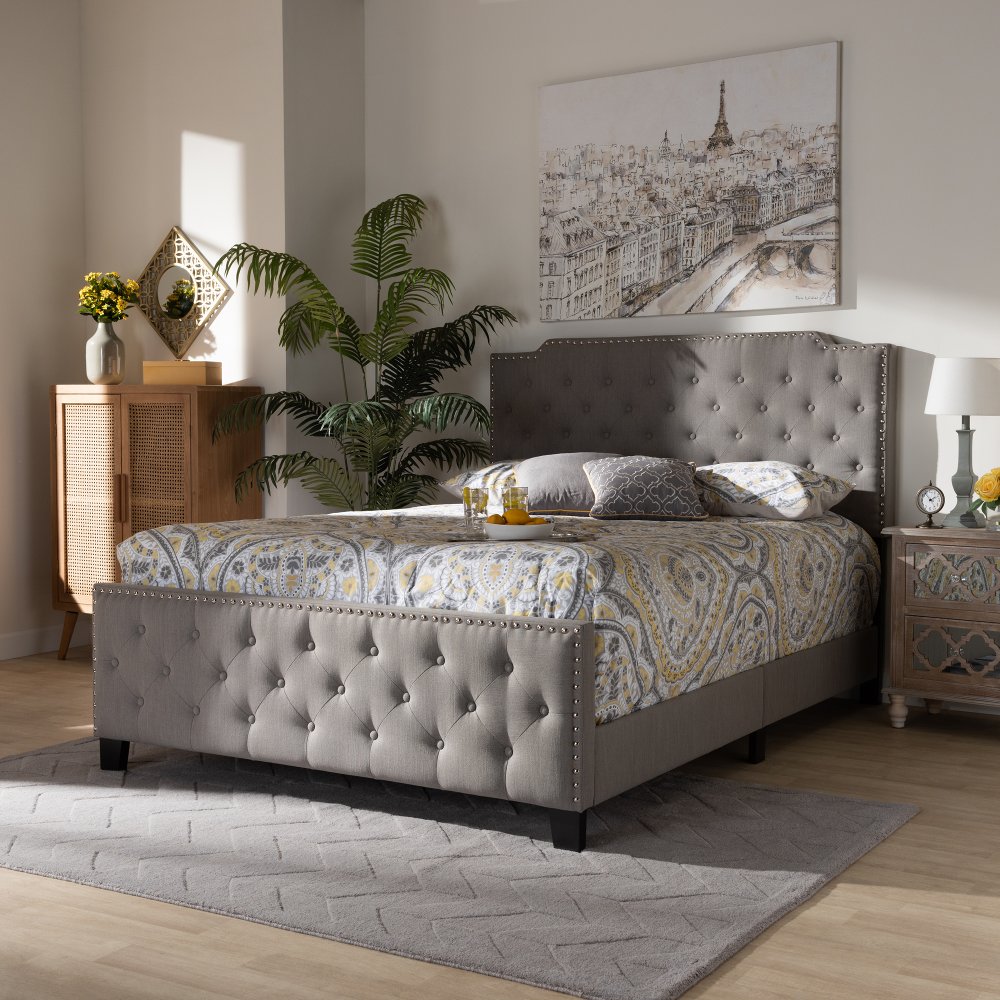
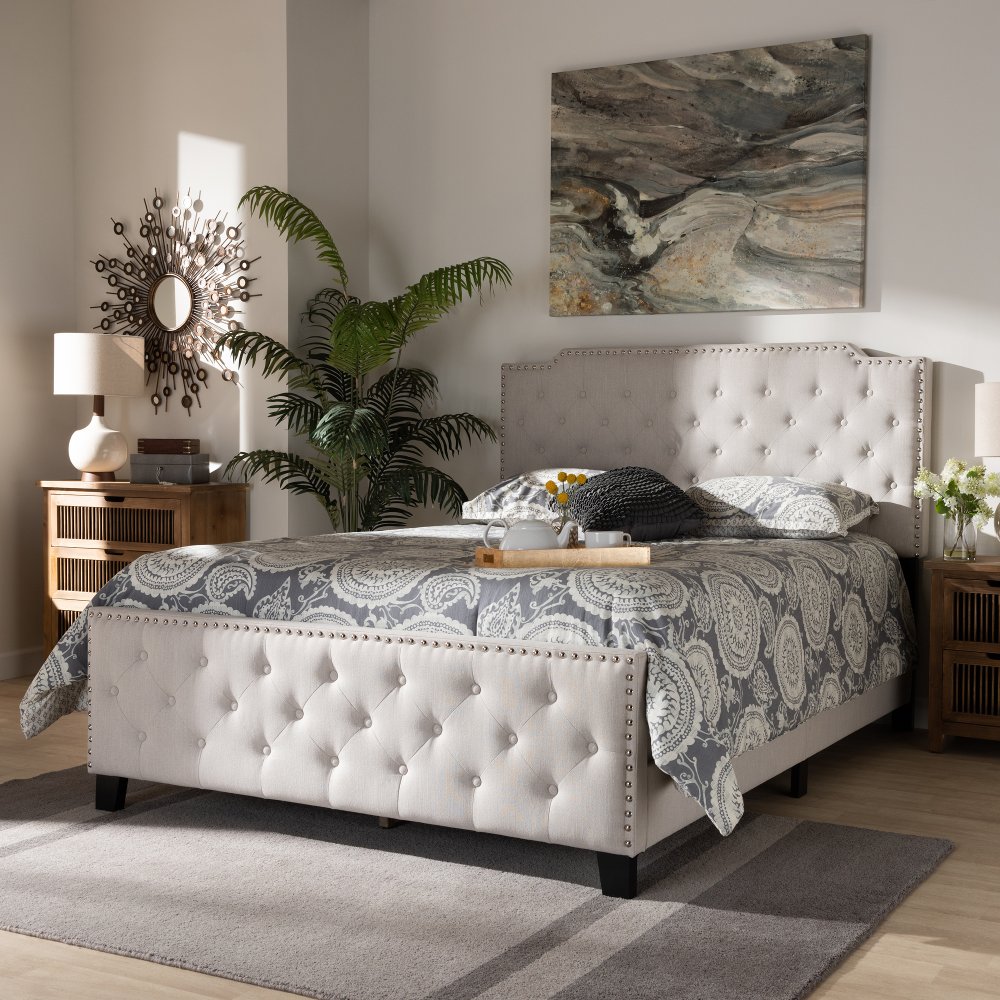
King tufted headboards pair the generous scale of a king bed with padded upholstery and recessed detailing that gives the surface depth and texture. Tufting draws upholstery inward at repeated points, often using buttons or stitching, to create a patterned face rather than a flat panel. The result can feel tailored, traditional, or comfortably relaxed, depending on the fabric, shape, and spacing of the tufts. As part of the broader family of king upholstered headboards, these designs bring a soft backdrop to bedding while giving the bed a clear visual anchor. Deep diamond tufting creates a plush, dimensional look that pairs naturally with layered quilts and substantial nightstands. Shallow square tufting feels more restrained, especially with a straight top and simple edges. Button details, curved corners, wings, and nailhead trim can each change the mood, so the silhouette matters just as much as the color. A tall, winged headboard can make a spacious primary bedroom feel more intimate, while a lower rectangular profile keeps the wall feeling open beneath artwork or near a window. Neutral shades such as ivory, oatmeal, gray, and taupe make it easy to change duvet covers without reworking the whole room. Deeper upholstery colors create stronger contrast against light bedding and can help the bed stand apart from pale walls. Texture adds another layer: a softly brushed fabric feels different from a crisp weave, even when both share the same shade. For couples furnishing a shared bedroom, that combination of texture and understated color can bridge different decorating preferences. A tufted headboard also makes sense in a generously sized guest room, where the bed often sets the tone for the entire space. Padding provides a more forgiving surface for sitting up with a book than an exposed wood or metal panel, though the upholstery’s cushioning and the headboard’s angle will determine how comfortable that position feels. Supportive pillows still make a useful addition for longer stretches of reading.
Fit starts with the mattress and bed frame, not just the appearance of the headboard. A standard king mattress measures approximately 76 inches wide by 80 inches long, but a king tufted headboard may extend beyond that width because of upholstery, wings, or decorative edging. California king mattresses are approximately 72 inches wide by 84 inches long, and the two sizes don’t automatically share the same headboard connections. The labeled bed size is a starting point; the headboard’s overall dimensions and mounting specifications determine whether it will work with a particular setup. Frame-mounted headboards need compatible brackets, bolt spacing, and attachment heights. Wall-mounted designs require suitable wall hardware and secure installation based on the wall’s construction. Some headboards accommodate more than one mounting position, but that flexibility should be confirmed rather than assumed. An adjustable base adds another consideration because the headboard must remain clear of the base’s moving sections and use an approved attachment method. Mattress height matters, too. A thick mattress, foundation, and stack of sleeping pillows can cover much of a shorter headboard’s tufting, leaving only a narrow strip of upholstery visible. A taller panel may preserve more of the pattern above the bedding, but its height needs to suit the wall and any nearby shelves, windows, or light fixtures. In a bedroom with sconces beside the bed, the headboard’s width and height should leave those fixtures accessible rather than tucked behind upholstered wings. Depth deserves attention in tighter rooms, especially when a projecting wing could overlap a nightstand or narrow the path beside the bed. Measuring the full footprint helps keep drawers, outlets, and bedside storage easy to reach. A headboard is also separate from the structure that supports the mattress unless the design specifically includes that function. The bed frame still needs appropriate support, including any center supports required for the mattress. Secure connections and adequate clearance help the finished setup feel steady when someone leans back or changes the bedding.
Upholstery and construction influence how a king tufted headboard looks after everyday use. Polyester and other synthetic blends often offer practical durability, while cotton blends and linen-look weaves bring a more textured, casual appearance. Velvet emphasizes the contours of tufting because its pile catches light differently across the surface; brushing or touching it may leave temporary shading that’s part of the fabric’s character. Genuine leather and faux leather create a smoother look, but their cleaning requirements and aging characteristics differ. Material names alone don’t tell the full story, so fabric composition, care instructions, and any published performance information deserve a close look. A household with pets may favor a tightly woven upholstery over an open weave that can catch claws, although no fabric is completely snag-proof. Deep tufts and decorative buttons create small recesses where dust and pet hair can collect, making routine attention especially helpful. Gentle vacuuming with an upholstery attachment can remove loose debris when the care instructions permit it. For spots or spills, blotting promptly and following the manufacturer’s cleaning directions is safer than rubbing or reaching for an all-purpose cleaner. Some upholstery allows water-based cleaning, while other fabrics require a different method or professional care. Testing an approved cleaner in an inconspicuous place helps protect the visible surface. Behind the fabric, a well-constructed frame, consistent padding, firmly secured tufting, and tight mounting connections all contribute to durability. Exposed buttons and trim should remain secure, and attachment hardware benefits from periodic checks according to the assembly instructions. Keeping the headboard away from prolonged direct sunlight can help limit uneven fading, particularly on richly colored upholstery. The best match brings these practical details together with the way the bedroom is used: a soft place to lean during a quiet reading break, a tailored backdrop for neatly arranged pillows, or a substantial focal point in a room with otherwise simple furniture. A king tufted headboard earns its place when its proportions, texture, and upkeep fit comfortably into daily life.
Read More