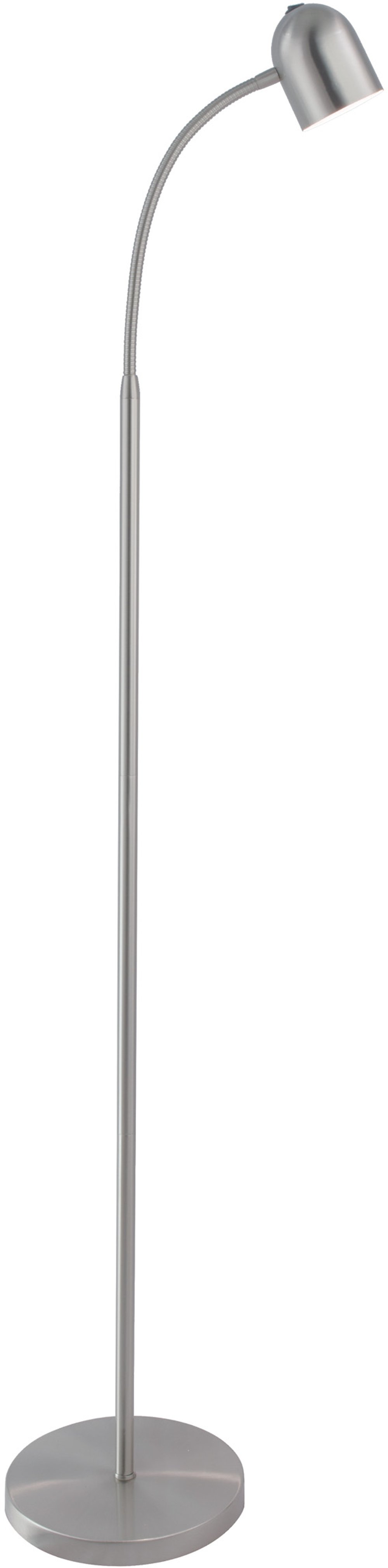
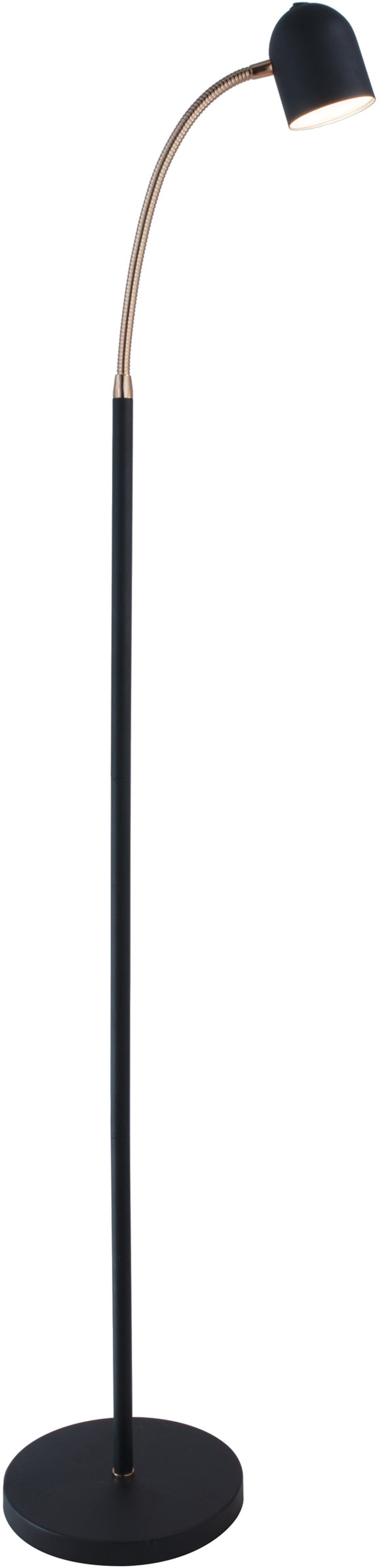
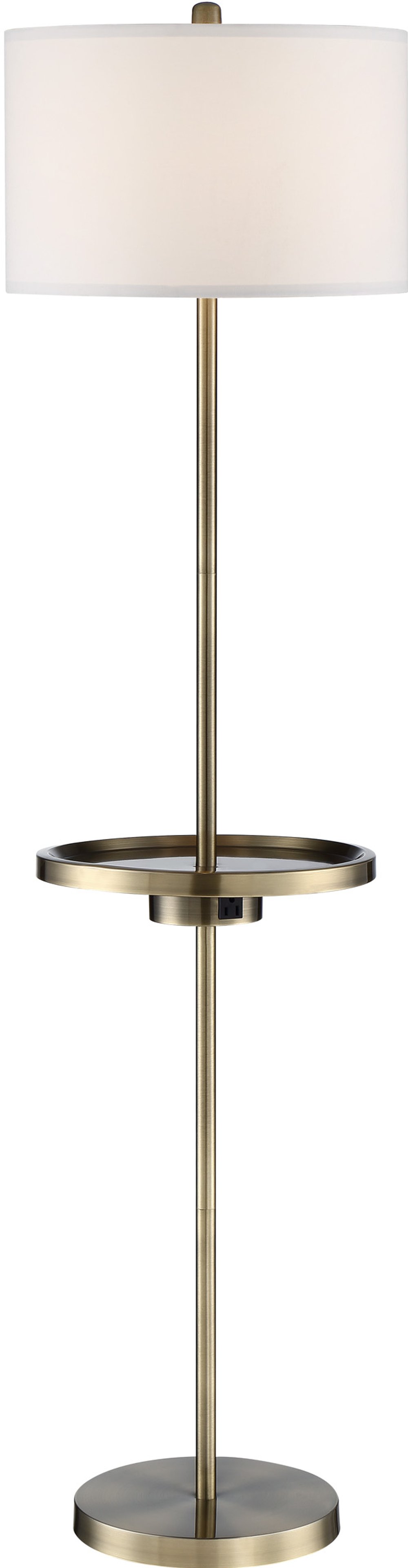
Living room floor lamps bring light where you need it without taking up space on a side table or requiring a ceiling fixture. They can brighten a seating area, create a comfortable spot for reading, or soften the contrast between a bright television and a dim room. The best fit depends on how you spend time in the space and where the light needs to land. A shaded floor lamp spreads light around a sofa or accent chair, making it a natural choice for conversation and everyday relaxation. A torchiere directs light upward, using the ceiling to help distribute a softer glow. An arc floor lamp reaches over a seating area, while an adjustable reading lamp places a more focused beam beside a favorite chair. Lamps with multiple light sources can support different activities in the same corner, especially when each light has its own control. Beyond function, a floor lamp helps connect the furniture around it. A slim metal silhouette can balance a substantial upholstered sofa, while a wood base and fabric shade can add texture beside clean-lined furniture. Rounded shades feel at home among soft curves; angular frames echo the lines of shelving and rectangular tables. Scale matters just as much as style. A tall lamp with a generous shade can hold its own beside a large sectional, while a narrow base may work better between a chair and a bookcase. Total height, shade width, and base dimensions all affect the fit. For an arc design, the distance the arm extends is especially important: the base needs a stable home even when the shade reaches well beyond it. A lamp should complement the seating arrangement without crowding the path to the sofa, blocking a view across the room, or competing with a nearby table for elbow room.
Lighting feels most comfortable when the lamp suits the activity. For someone who reads novels, works on a crossword, or does needlework in the living room, focused task lighting can make a favorite seat more useful. A shade or adjustable head that directs light onto the page helps illuminate the task without shining straight into seated eyes. Position also matters: light placed slightly beside and behind the shoulder can reduce shadows from your head, though the best arrangement depends on the chair, the task, and which hand you use. The selection of living room reading floor lamps centers on this more focused use. For a room used mostly for conversation or watching television, a diffused glow may be a better match than a concentrated beam. Fabric shades generally soften the light, while opaque metal shades direct more of it through their openings. Glass shades vary: clear glass exposes more of the bulb, while frosted or opal glass diffuses it. Bulb choice adds another layer of control. Lumens measure light output, while watts measure energy use, so lumen ratings offer a more useful brightness comparison across different bulb technologies. Warm white bulbs around 2700K to 3000K often suit a relaxed living room, though personal preference and nearby lighting also influence the result. Dimming makes it easier to move from reading to conversation, provided the lamp, bulb, and dimmer are compatible. A replaceable-bulb lamp offers flexibility when you want to change brightness or color temperature; an integrated LED design may provide a slimmer profile, with serviceability depending on its construction. Controls deserve attention, too. A rotary switch, pull chain, foot switch, or touch control should be easy to reach from the spot where you’ll use it. Smart-bulb compatibility can add scheduling or voice control when supported by the lamp and bulb. An accessible switch and a cord that reaches the outlet comfortably can make more difference in daily use than an extra decorative detail.
Materials and construction shape both the appearance of living room floor lamps and how well they handle everyday life. Metal frames can range from slender and understated to bold and architectural, with finishes that coordinate with cabinet hardware, picture frames, or nearby tables without needing to match every surface. Wood brings visible grain and a warmer, more textured character; its appearance may vary naturally from piece to piece. Glass adds visual lightness, while ceramic and stone elements can give a base a more substantial presence. A heavier base can support stability, but weight alone doesn’t determine how securely a lamp stands. Base width, overall height, arm extension, and placement all matter, particularly in homes with children or pets. A level surface outside busy walking paths gives the lamp a better foundation, and keeping the cord away from foot traffic helps the room stay comfortable to navigate. On thick carpet, check that the base sits evenly rather than leaning into the pile. For adjustable designs, secure joints and smooth-moving mechanisms help the lamp hold its intended position. Shade materials also influence long-term upkeep. Woven fabric brings softness and texture but benefits from regular gentle dusting; smooth metal and glass surfaces are generally easier to wipe clean according to the manufacturer’s instructions. Turn the lamp off, unplug it, and let the bulb cool before cleaning or changing components. A soft, dry cloth is a sensible starting point for many bases, while delicate finishes and fabric shades may need a different approach. Following the recommended bulb type and maximum wattage helps protect the fixture and shade. These practical details matter whether the lamp is destined for a first apartment, a shared family room, or a quiet reading corner. A thoughtfully chosen floor lamp earns its place through everyday usefulness: clear light over an open book, a welcoming glow beside the couch, and a shape that feels right among the furniture you enjoy.
Read More