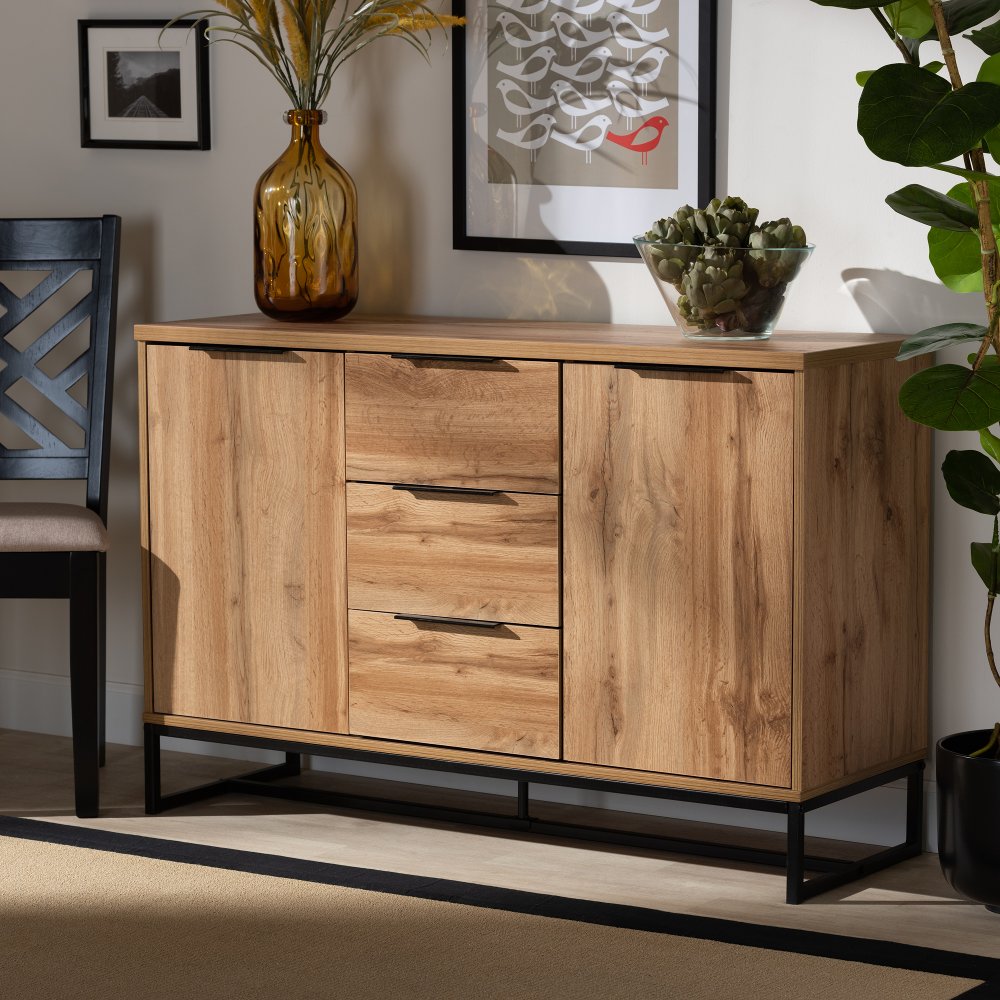
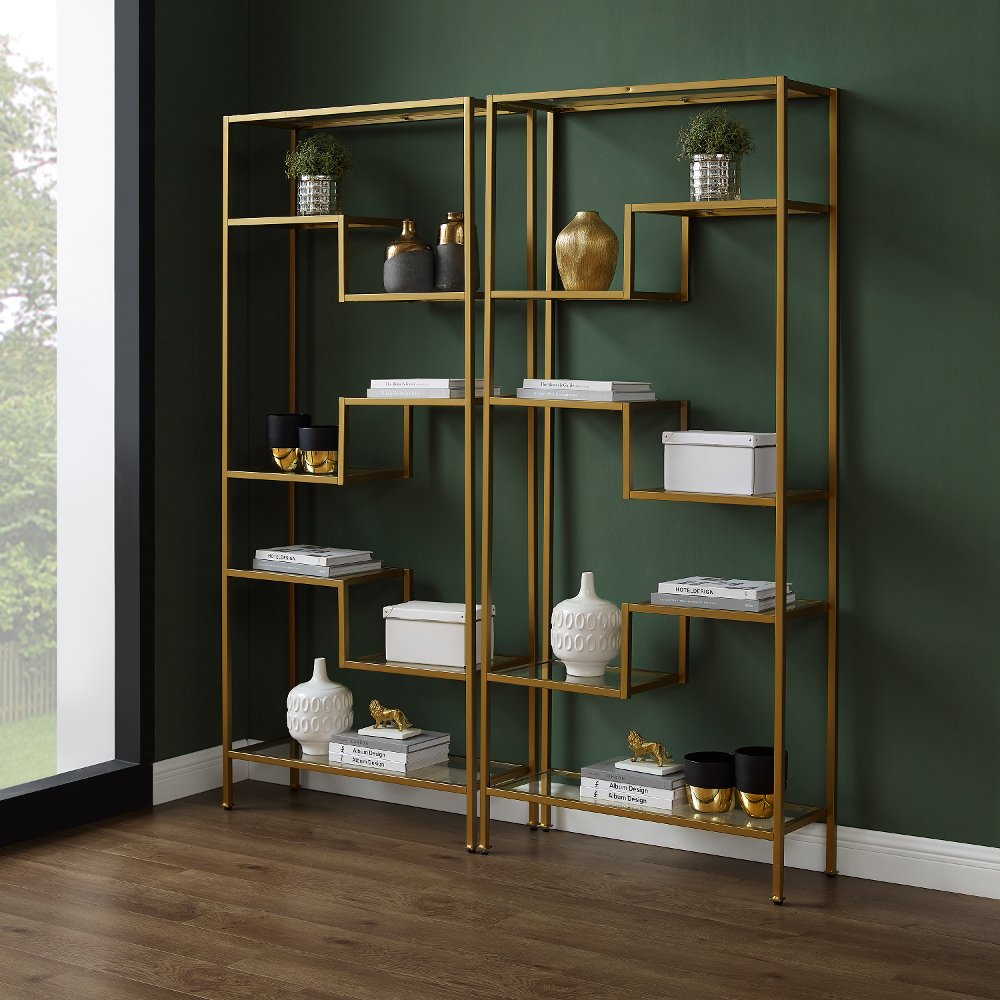
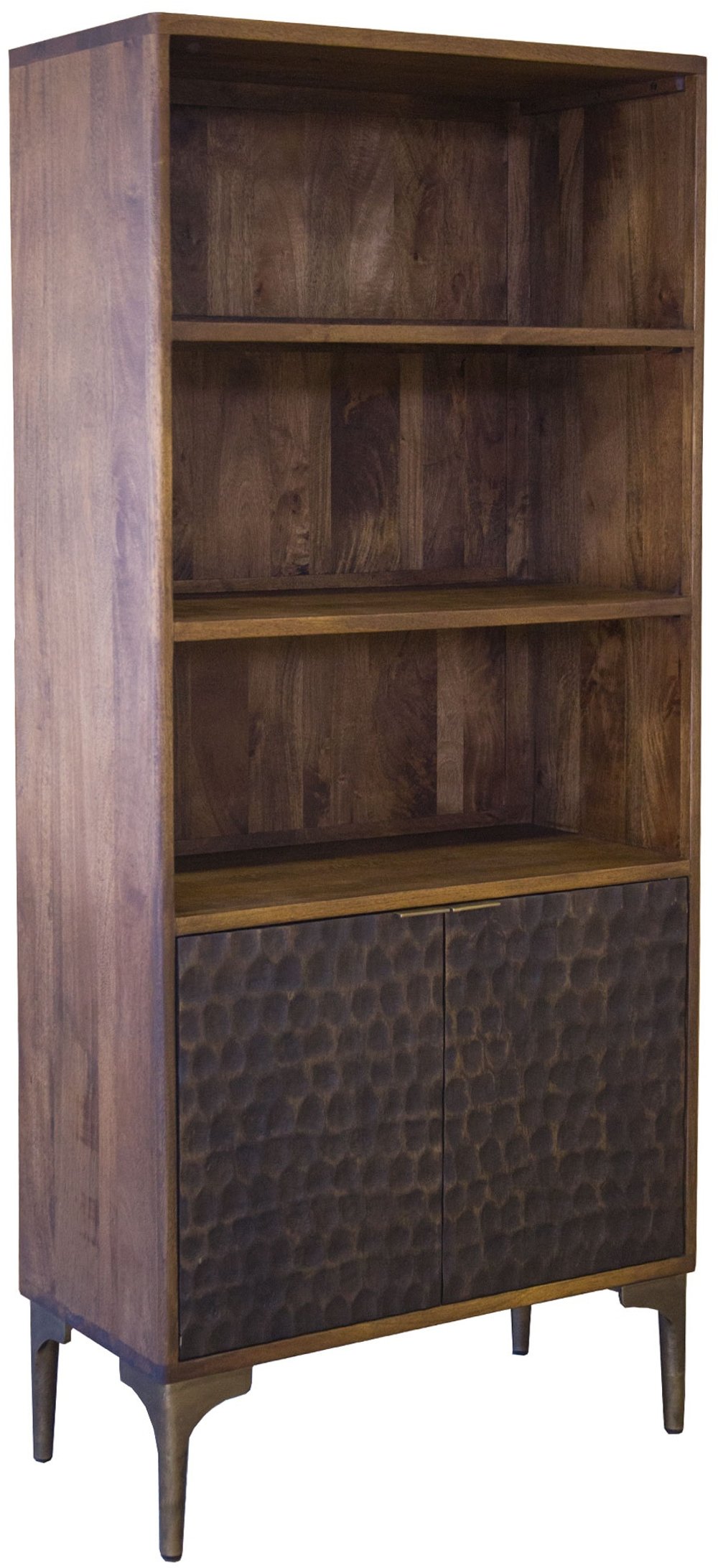
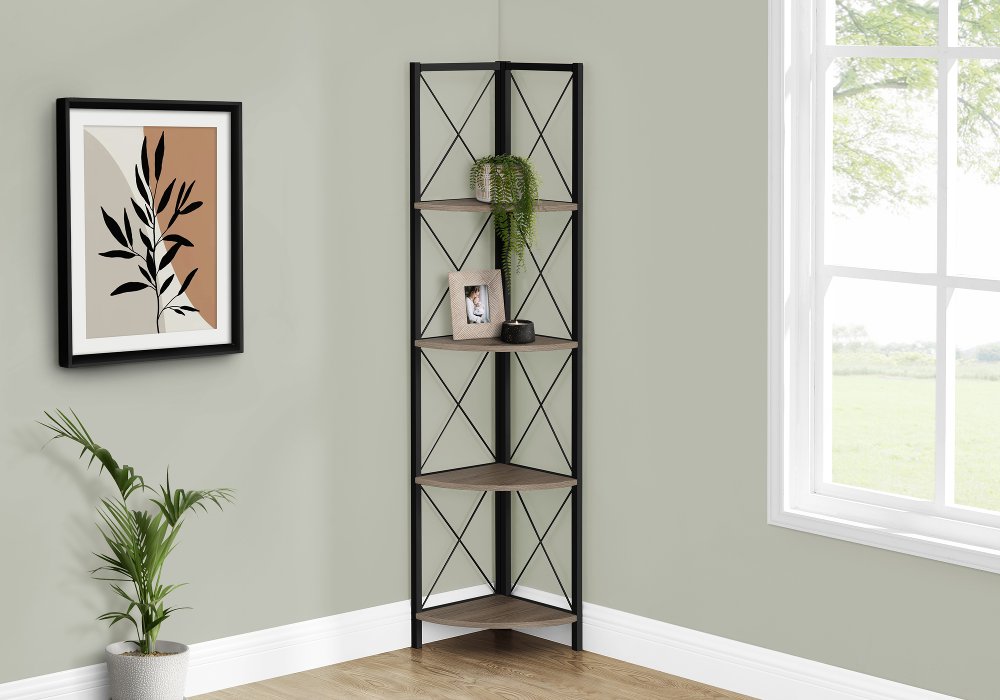
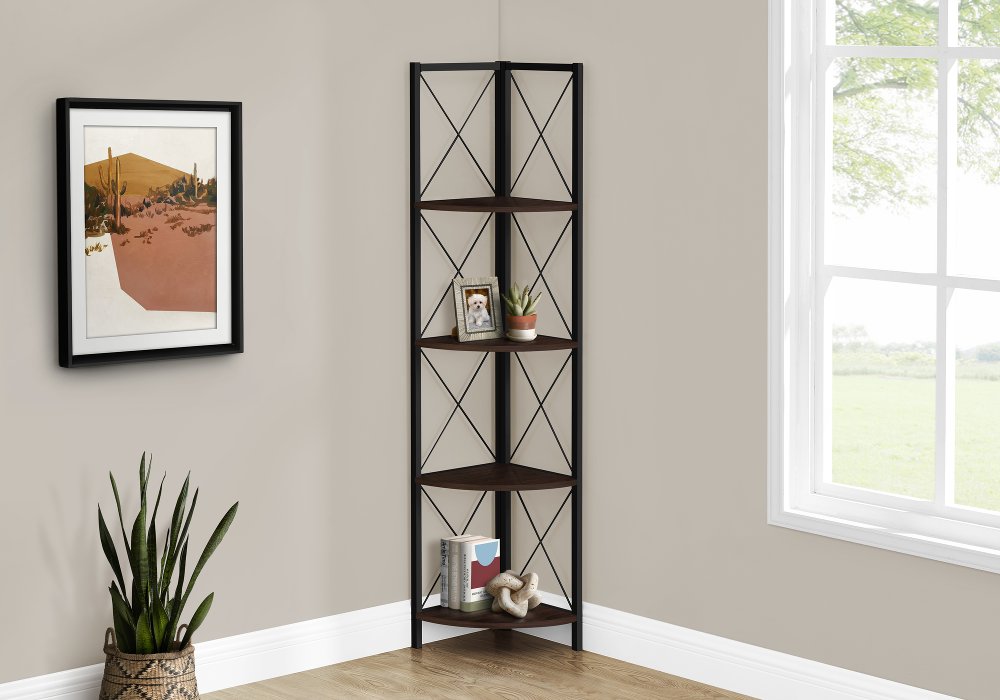
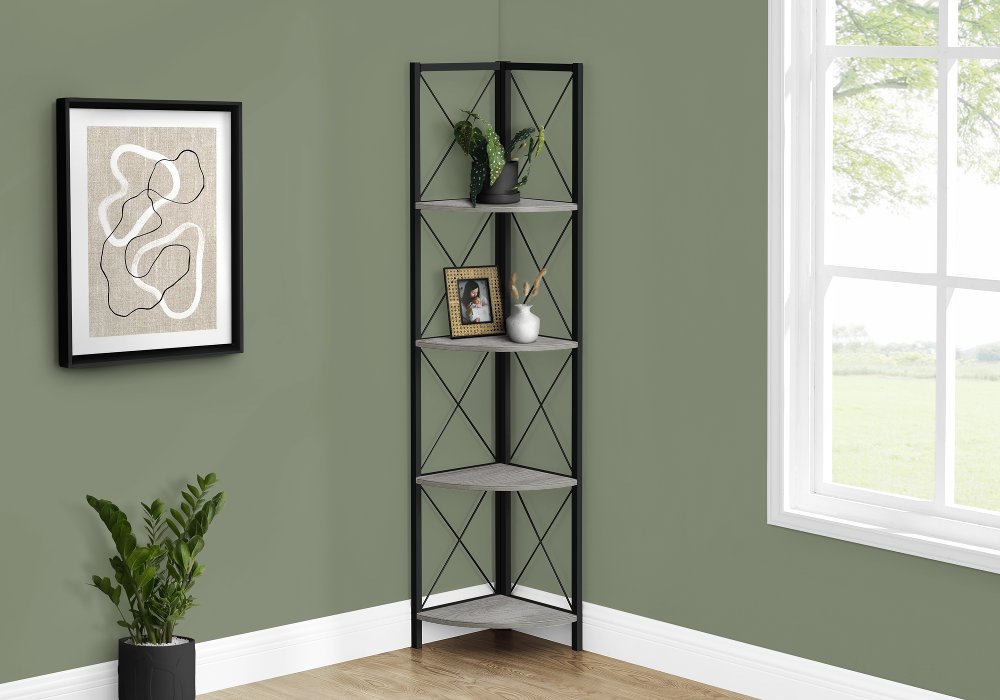
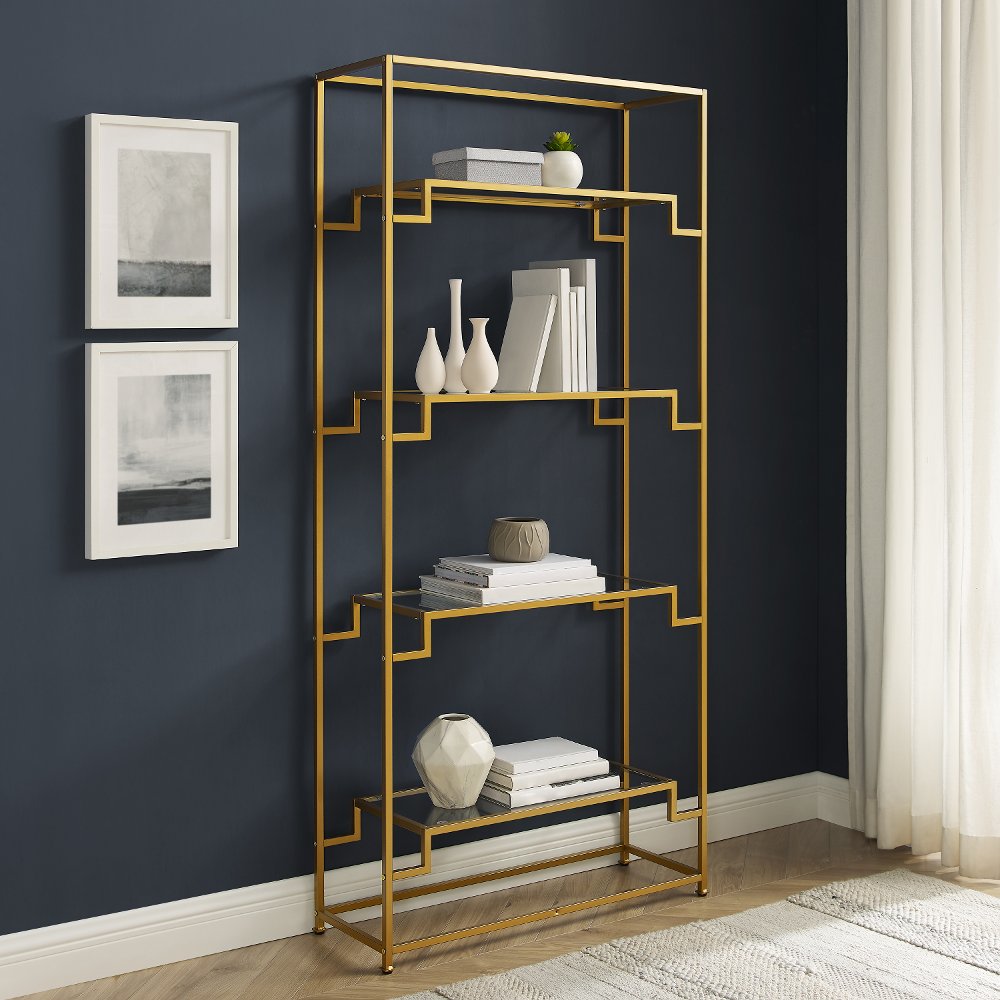
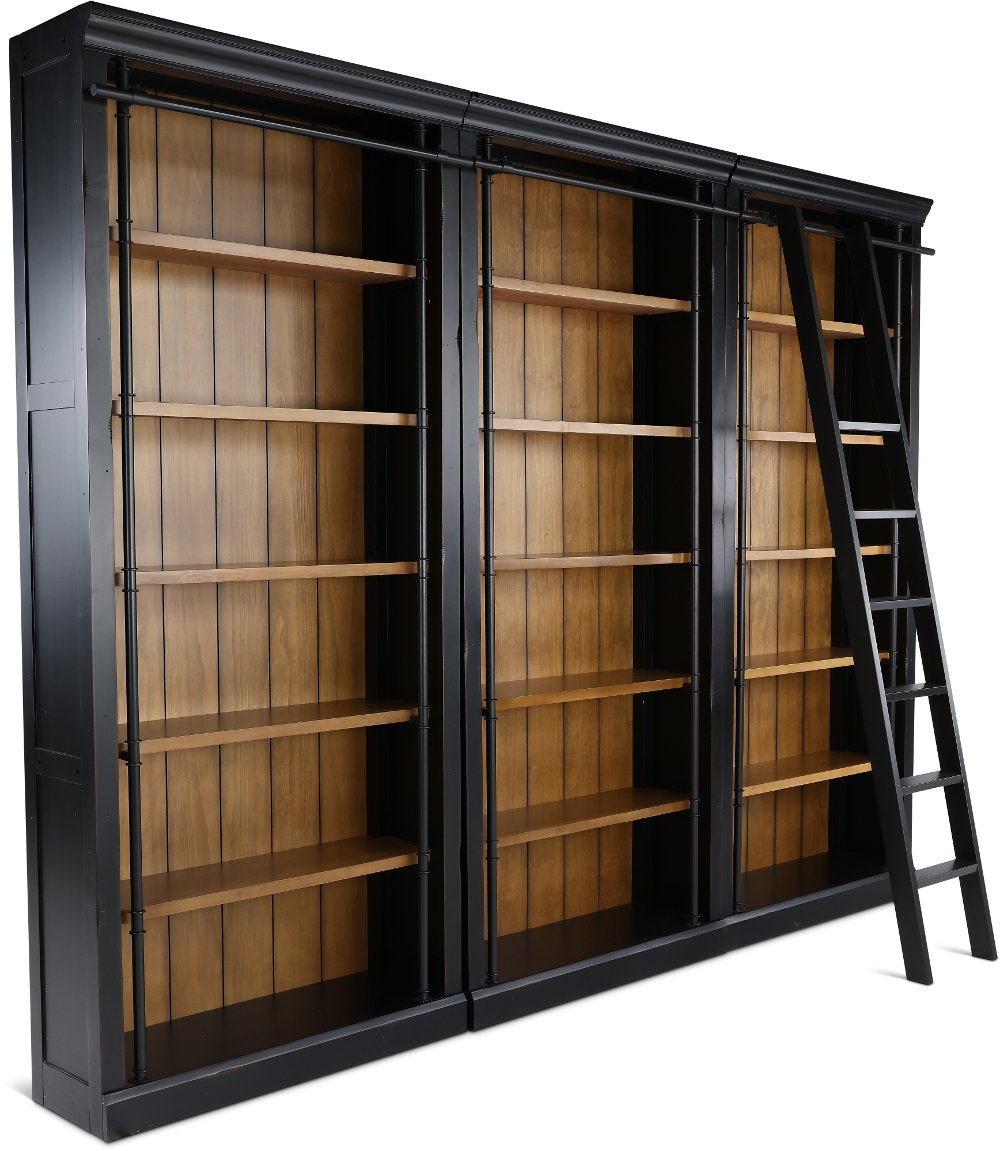
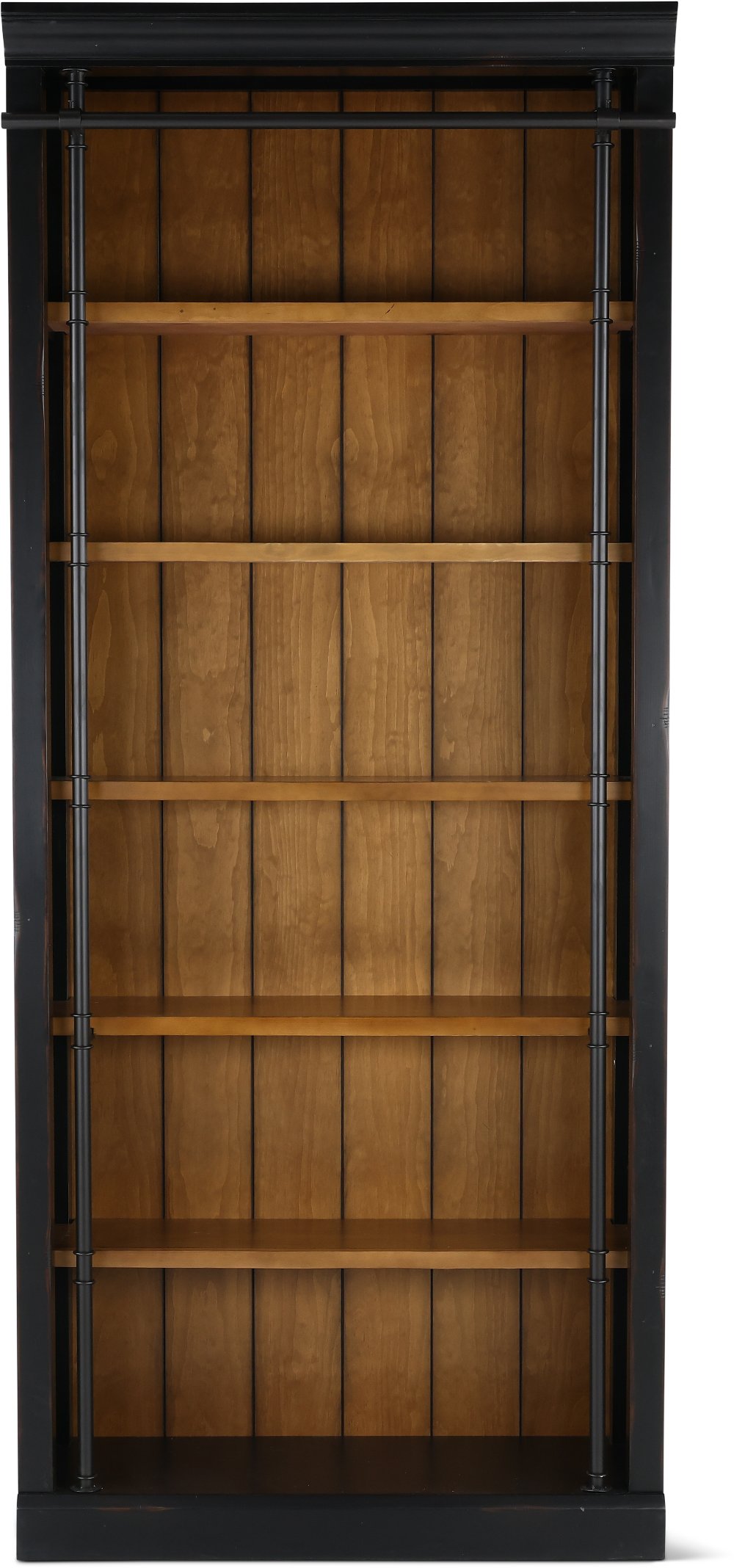
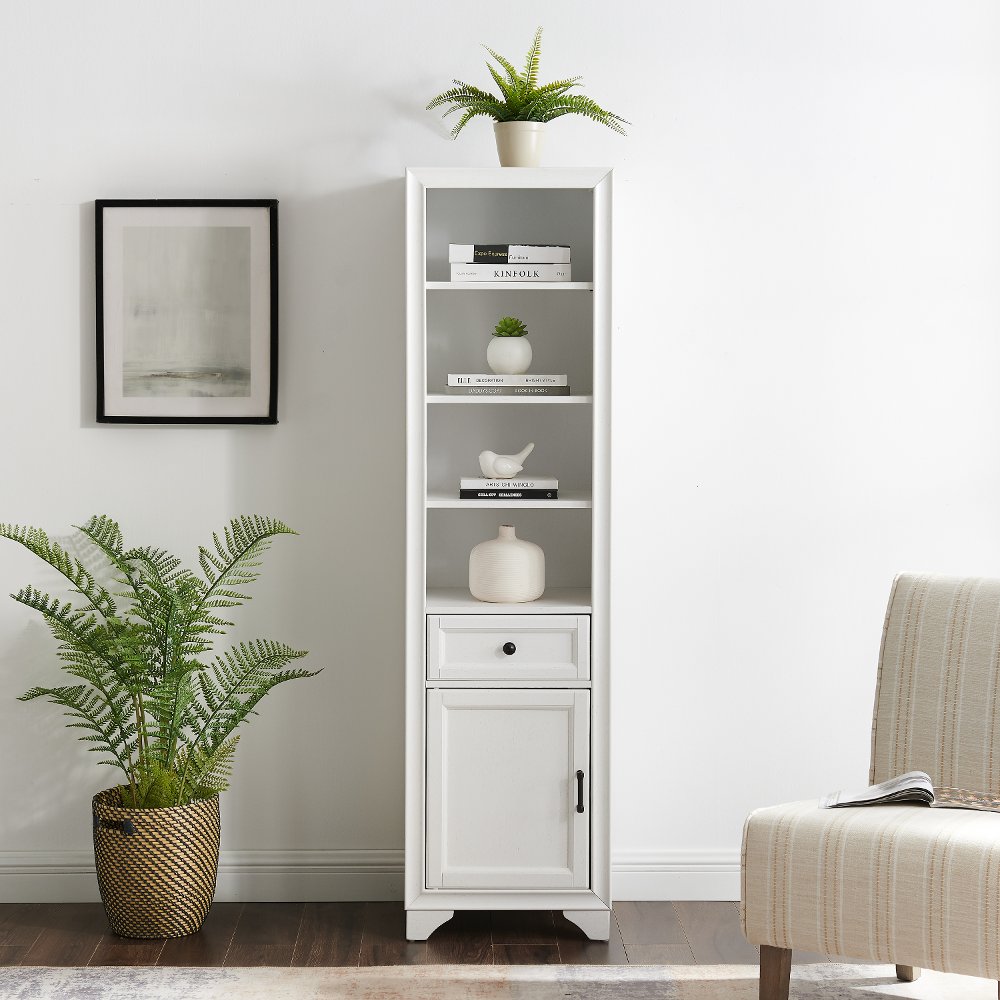
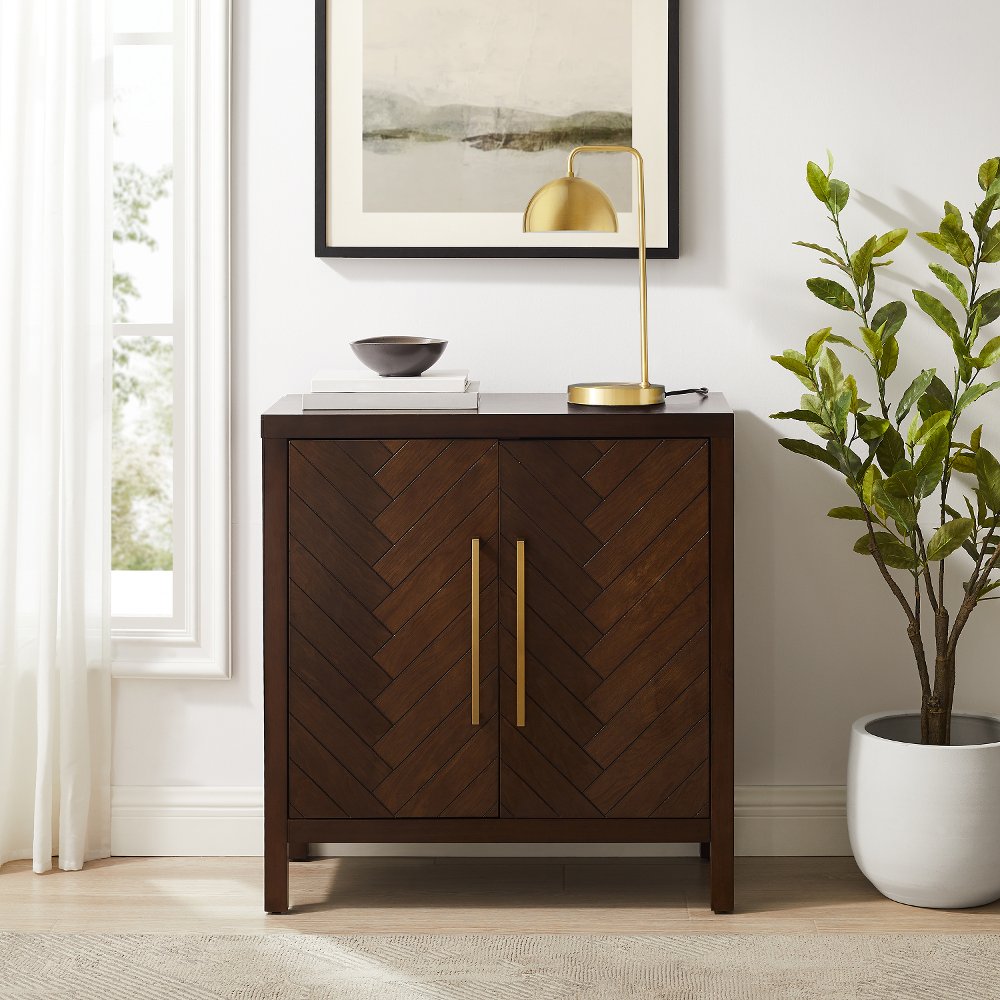
Metal shelf cabinets bring sturdy storage and a clean, defined look to rooms that need a little more order. Their appeal goes beyond an industrial style: a metal frame can feel crisp and understated in a home office, practical in a utility room, or right at home beside warm wood furniture in a living space. Enclosed shelves give everyday supplies a place to land without leaving every stack, bottle, and basket on display. Open sections keep frequently used belongings easy to reach, while glass-front doors can turn the same basic storage format into a spot for dishes, books, or collected objects. A cabinet with solid doors offers a quieter backdrop, especially in a room where paperwork, hobby supplies, and household essentials share space. Finish and shape make a noticeable difference in how the piece feels. Dark metal creates a strong outline against a light wall, while lighter finishes can blend more gently into a bright room. Slim legs lend a furniture-like appearance; a base that sits closer to the floor gives the cabinet a more substantial presence. For someone working from a small apartment, a narrow metal storage cabinet can hold office supplies without taking over the room. In a busy household, a wider cabinet can create separate shelf areas for art materials, board games, and spare linens. Crafters may appreciate space for labeled bins, and a dedicated workspace can benefit from enclosed storage for tools and project materials, provided the cabinet is designed for those loads. The most useful arrangement reflects what actually needs a home, whether that’s a row of binders standing upright or shallow baskets of charging cords. Metal shelf cabinets also pair well with softer textures. A woven basket, a fabric-lined tray, or nearby upholstered seating can balance their straight lines without taking away the practical character that makes them appealing. That mix helps storage feel like part of the room rather than an afterthought.
Construction determines how a metal shelf cabinet handles daily use, and similar-looking cabinets can serve very different purposes. Some combine a metal body with metal shelves; others use a steel frame with wood, engineered wood, or glass shelving. Steel is common for its strength and rigidity, but the thickness of the material, the quality of the joints, and the shelf supports all contribute to stability. A powder-coated finish provides a protective surface that can stand up well to ordinary handling, though scratches and chips still deserve attention. Smooth painted surfaces offer a different appearance, and textured finishes may make light fingerprints less noticeable. Shelf capacity matters more than appearance when the contents include books, dishes, or equipment. A cabinet’s total weight rating isn’t necessarily the rating for each shelf, so the stated limits for both are worth checking. Adjustable shelves give tall pitchers, upright folders, and bulky supply bins room to fit; fixed shelves provide a set layout that works well when the contents stay fairly consistent. Interior measurements are especially helpful because doors, hinges, and support pieces can reduce usable space. A cabinet might fit neatly along a wall yet still be too shallow for a particular storage tote. Outside dimensions matter just as much, including clearance for handles and fully opened doors. In a compact office, doors that swing into the desk chair’s path can make a convenient location feel cramped. A tall, narrow cabinet uses vertical space efficiently, while a lower, wider design can keep everyday belongings within comfortable reach. If the top will hold a lamp or decorative objects, its intended use and weight limit should support that plan. When comparing different materials and layouts, Cabinets With Shelves offers a broader look at storage styles that may suit the room. The right fit leaves enough space to move naturally, access the contents, and use nearby furniture without working around an oversized piece.
Everyday details often decide whether a cabinet remains useful long after the room is arranged. Handles should feel comfortable to grasp, hinges should allow easy access, and shelf spacing should make it possible to remove one object without rearranging everything around it. Ventilated or mesh doors can be useful for contents that benefit from airflow, while solid doors conceal a busier mix of supplies. Neither style makes a cabinet suitable for every material or setting; chemicals, flammable liquids, and specialized equipment require storage designed for their particular safety needs. Likewise, a standard lockable cabinet may help control casual access, but a basic lock shouldn’t be treated as childproofing or high-security protection. For family spaces, stability deserves close attention. Heavy belongings generally belong on lower shelves, loads should stay evenly distributed, and cabinets should be secured according to the manufacturer’s anti-tip instructions. Leveling feet, when included, can help the unit sit properly on an uneven floor, and suitable floor protectors can reduce scuffs beneath the base. Metal is durable, but it isn’t maintenance-free. A soft cloth and a mild cleaner approved for the finish usually suit routine care; abrasive pads and harsh chemicals can dull or damage protective coatings. Drying spills promptly helps protect seams, shelf edges, and hardware, where moisture may linger. Metal construction alone doesn’t establish outdoor suitability or resistance to damp environments, so the intended setting should match the cabinet’s stated use. Inside, trays can keep small supplies together, while compatible shelf liners may soften the sound of dishes or metal accessories being set down. Leaving a little open space around frequently handled belongings makes daily storage easier than filling every shelf edge to edge. A well-chosen metal shelf cabinet can support a home office, organize a creative workspace, or bring dependable storage to a shared living area. Its lasting value comes from the combination of a durable finish, a sensible footprint, and shelves arranged around the things that matter in everyday life.
Read More