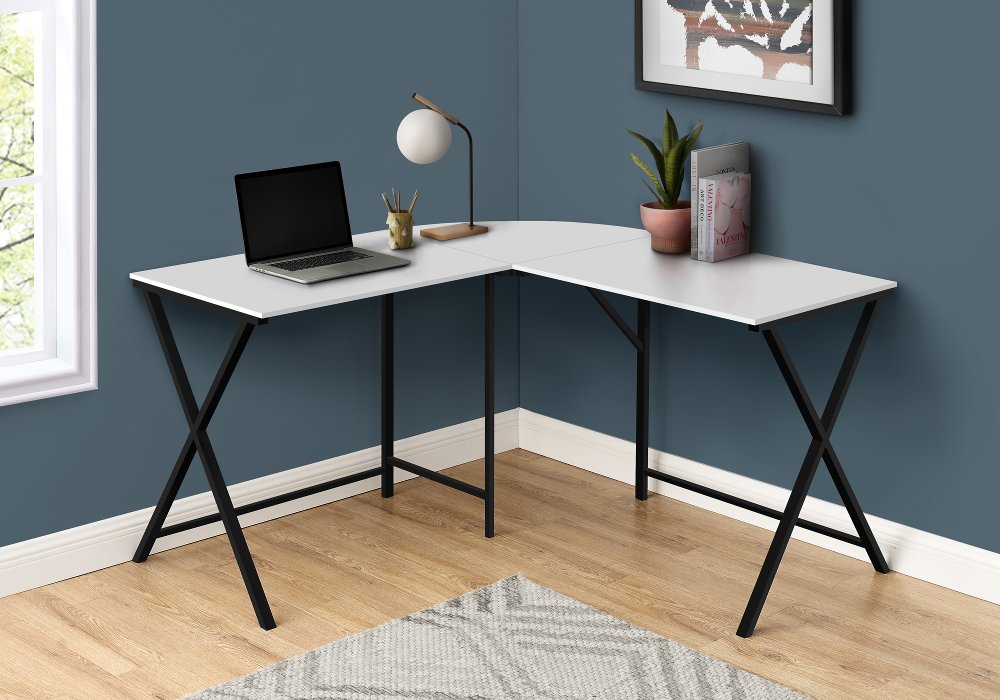
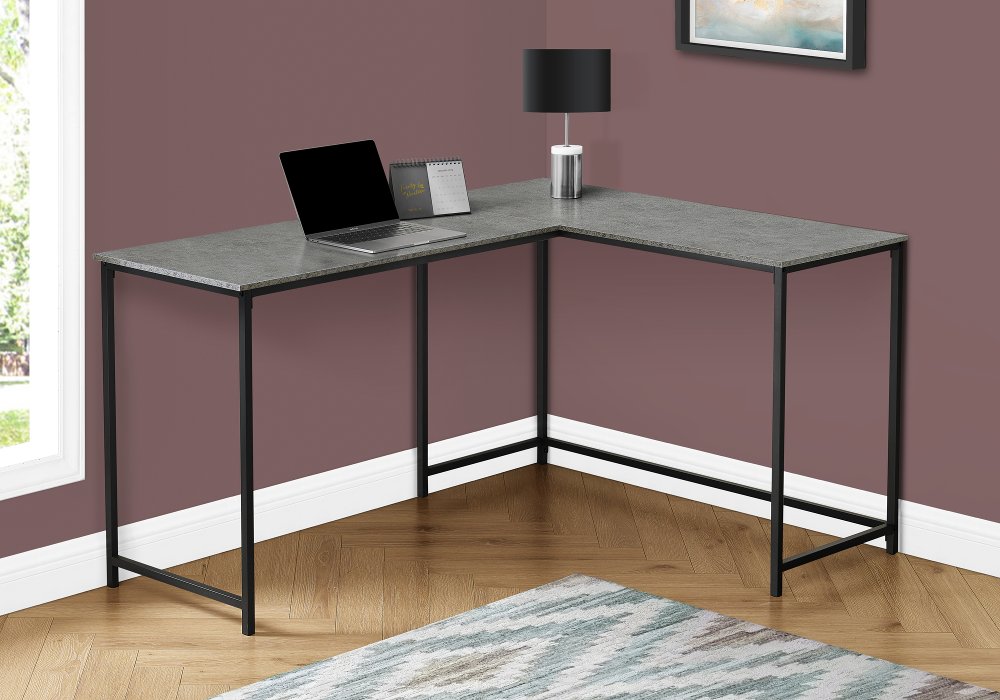
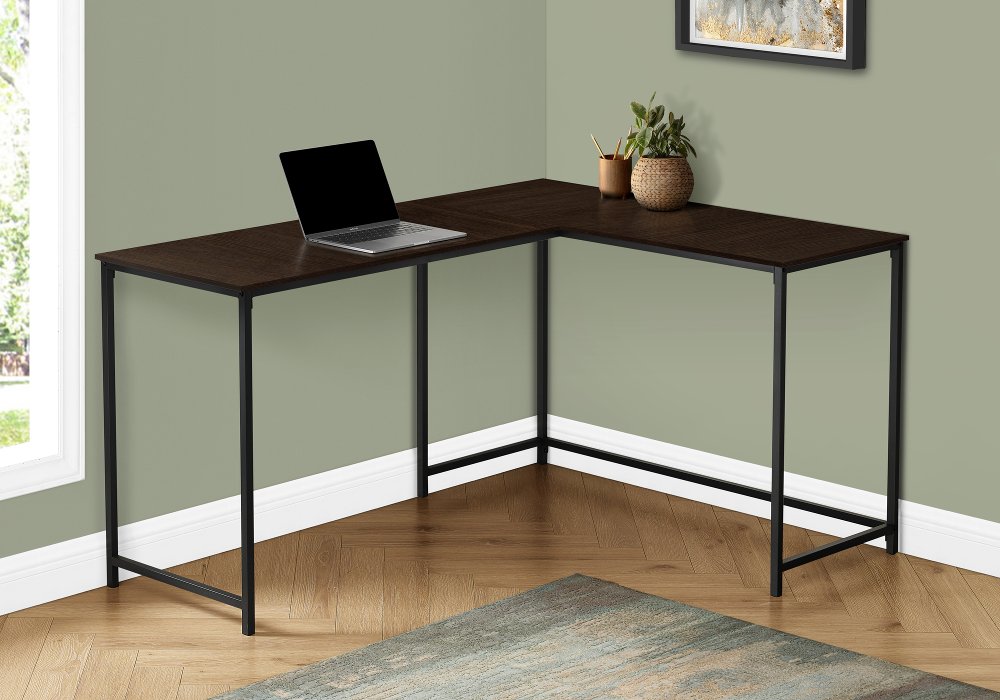
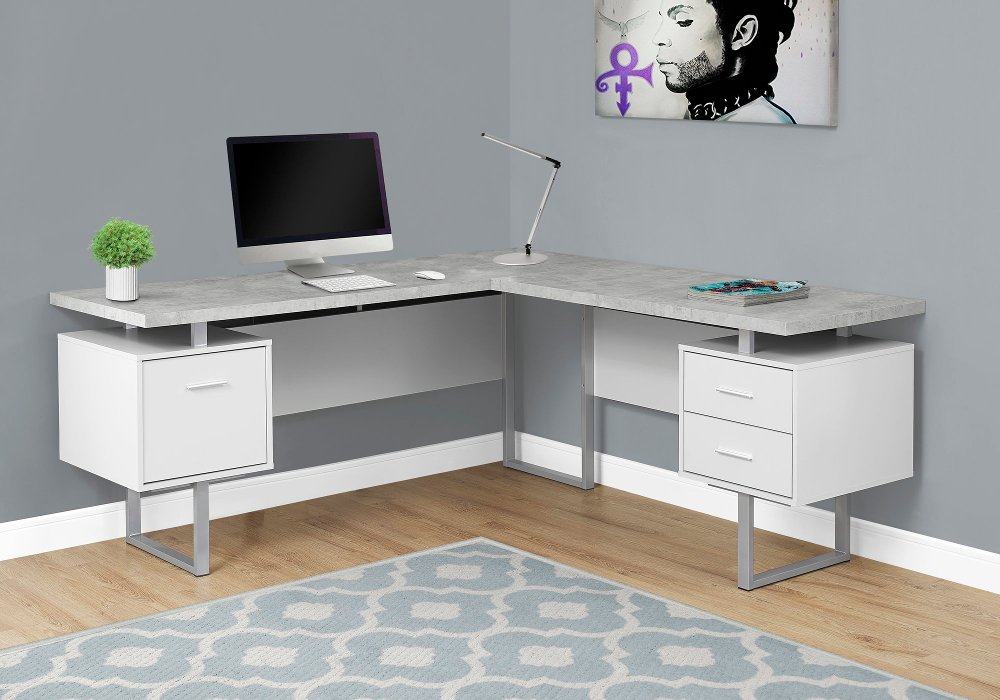
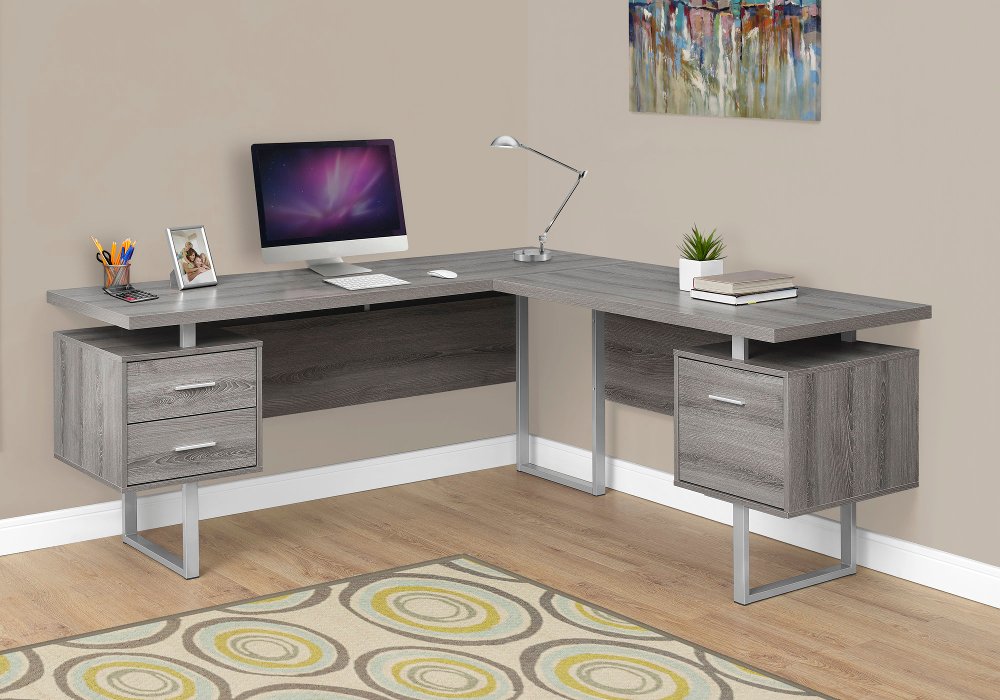
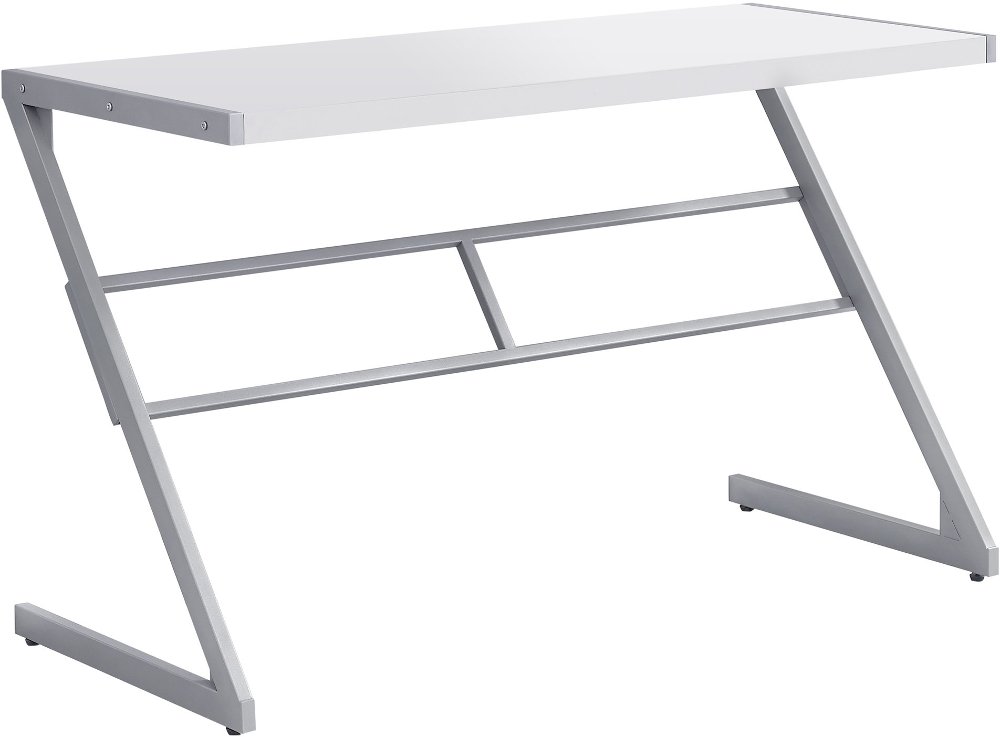
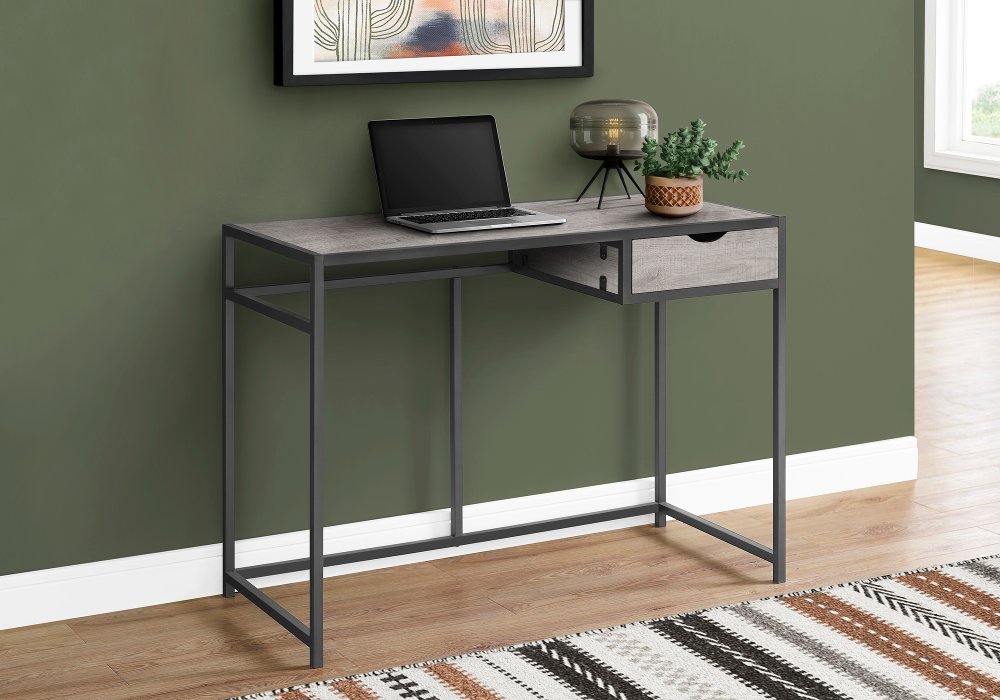
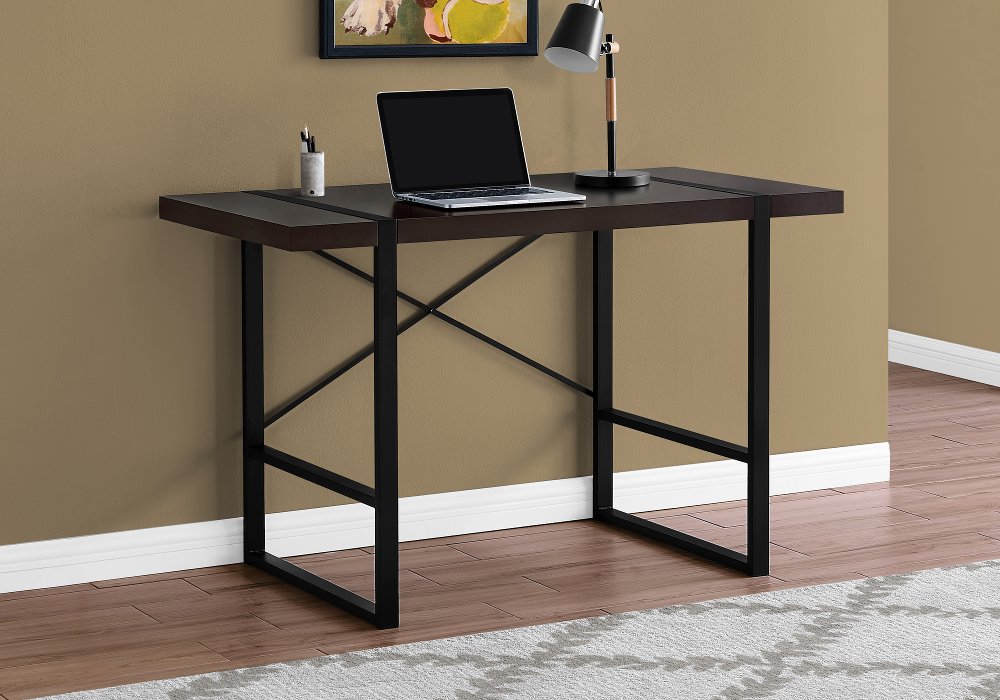
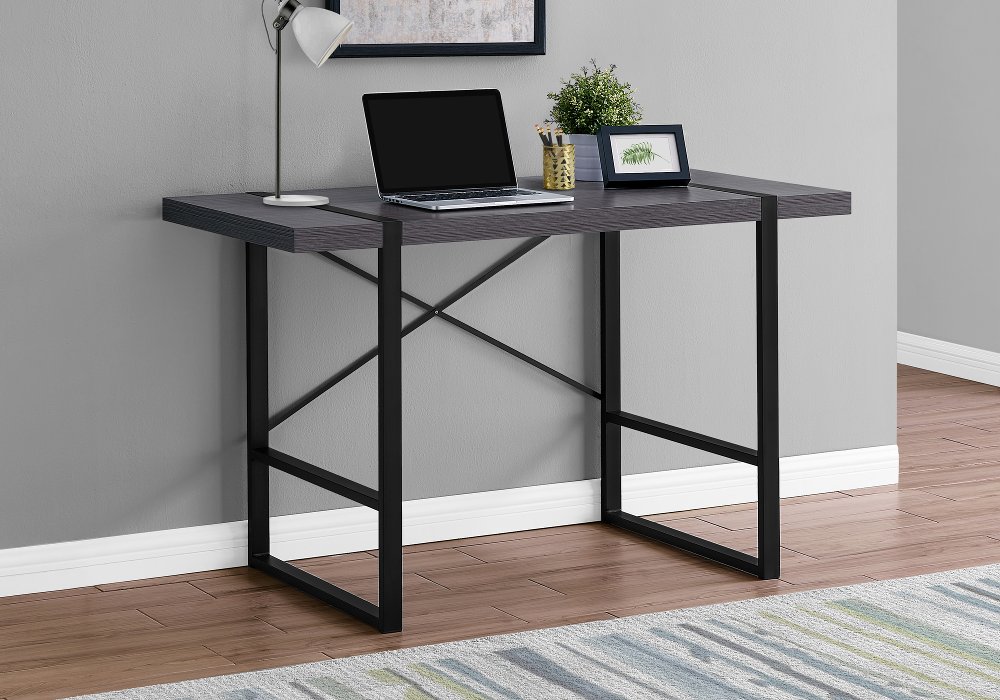
A minimalist office desk combines clean lines, a straightforward shape, and restrained details to create a workspace that feels organized without overwhelming the room. Common features include slim legs, simple hardware, neutral finishes, and a desktop with room for everyday essentials rather than decorative bulk. Some designs keep everything visible with an open frame, while others tuck a drawer or shallow storage compartment beneath the work surface. The appeal goes beyond appearance: a thoughtfully sized desk gives your laptop, notebook, and morning coffee a place to land while leaving the surrounding space open. Minimalist office desks work well in dedicated home offices, apartment living rooms, bedroom corners, and shared family work areas. A student might need space for a computer and an open textbook; a remote worker may need a monitor, keyboard, and video-call setup. Someone who mainly handles household paperwork can often use a smaller writing desk without sacrificing comfort. The right fit starts with the work you actually do. Desktop width determines how comfortably your essentials sit side by side, while depth affects the space available for a monitor, keyboard, and forearms. A shallow desk can suit occasional laptop use, but a deeper surface gives larger equipment more breathing room. Measure the full footprint, including any angled legs, and allow space to pull your chair back without blocking a doorway or walkway. Underneath, generous knee clearance helps the desk feel comfortable through longer tasks. Drawer aprons, crossbars, and support rails can affect that clearance even when the desktop dimensions look generous. Chair compatibility matters, too: armrests should fit beneath the desk if you want to tuck the chair away. For a nook beside a sofa or bed, a lighter-looking frame can help the desk blend into the room. In a larger office, a broad rectangular surface can maintain that same uncluttered character while supporting a more involved work setup.
Materials give minimalist desks much of their personality because there’s less ornament to draw attention away from the surface and frame. Wood brings visible grain and warmth, making a simple desk feel at home near upholstered furniture, woven accents, or other natural textures. Solid wood can develop character through use, though it also responds to changes in indoor humidity and needs care suited to its finish. Wood veneer offers a real-wood surface over a supporting core; its thin outer layer deserves protection from deep scratches and should never be treated as though it can withstand repeated sanding. Engineered wood with a laminate surface can provide a consistent appearance and straightforward everyday care, with performance depending on the construction and finish. Metal legs create a crisp outline and can support an open design, but frame stability, secure connections, and level placement matter more than a slim profile alone. Glass desktops keep sightlines open and have a distinctly light appearance, though fingerprints and dust tend to show more readily. Whatever the material, durability comes from the whole desk working together: a stable base, well-supported desktop, smoothly operating drawers, and edges that can handle regular contact. A desk used for brief correspondence faces different demands than one supporting multiple screens throughout the workday. Equipment weight should stay within the manufacturer’s stated limits, and monitor arms require a desktop edge and construction compatible with the clamp. A slender surface may look ideal yet need a different monitor arrangement. Daily care is usually simple when it follows the manufacturer’s instructions. A soft cloth removes dust, prompt spill cleanup helps protect seams and finishes, and a coaster keeps drink condensation away from the desktop. A writing pad can protect the area beneath pens and frequently moved accessories. Strong cleaners, abrasive pads, and excess moisture can damage many finishes, so material-specific care makes a difference. Direct sunlight may also change the appearance of wood and other surfaces over time, making placement part of long-term care.
The most useful minimalist desk supports your routine without asking you to keep every tool out of sight. A single drawer may be enough for pens, charging cables, and a notebook, while paperwork-heavy tasks benefit from nearby storage that leaves legroom intact. Open desks offer flexibility for a rolling file cabinet or a small storage unit, provided those additions fit without crowding your chair. Built-in storage creates a more contained arrangement, although the drawer dimensions matter as much as the number of drawers. A shallow compartment can handle stationery beautifully and still be too small for a laptop or bulky headset. Cable management also has an outsized effect on a simple desk’s appearance. A rear opening, cable tray, or discreet route along a leg can keep power cords from spreading across the surface or hanging into the foot space. Placement near an outlet helps keep cords away from walking paths, and adjustable-height desks need enough cable slack for their full range of movement. If standing is part of your routine, consider the usable height range, stability, and room for your equipment rather than assuming every adjustable design suits every person. For seated work, the relationship between the desk, chair, and screen matters more than achieving a perfectly bare desktop. Keep frequently used supplies within comfortable reach and reserve enough surface space for the task at hand, whether that’s reviewing a printed document or sketching beside a laptop. Finish and frame details can then connect the workspace to the rest of your home. White and pale wood tones offer a quiet look, dark finishes create definition, and mixed wood-and-metal designs add contrast. For a more substantial frame and visible metal details, Industrial Office Desks offer a related direction that can still feel orderly and understated. Minimalism leaves room for personality: a favorite lamp, a framed photo, or a small plant can make the space welcoming without taking over. A desk that fits your room, equipment, and habits makes that balance easier to maintain through everyday use.
Read More