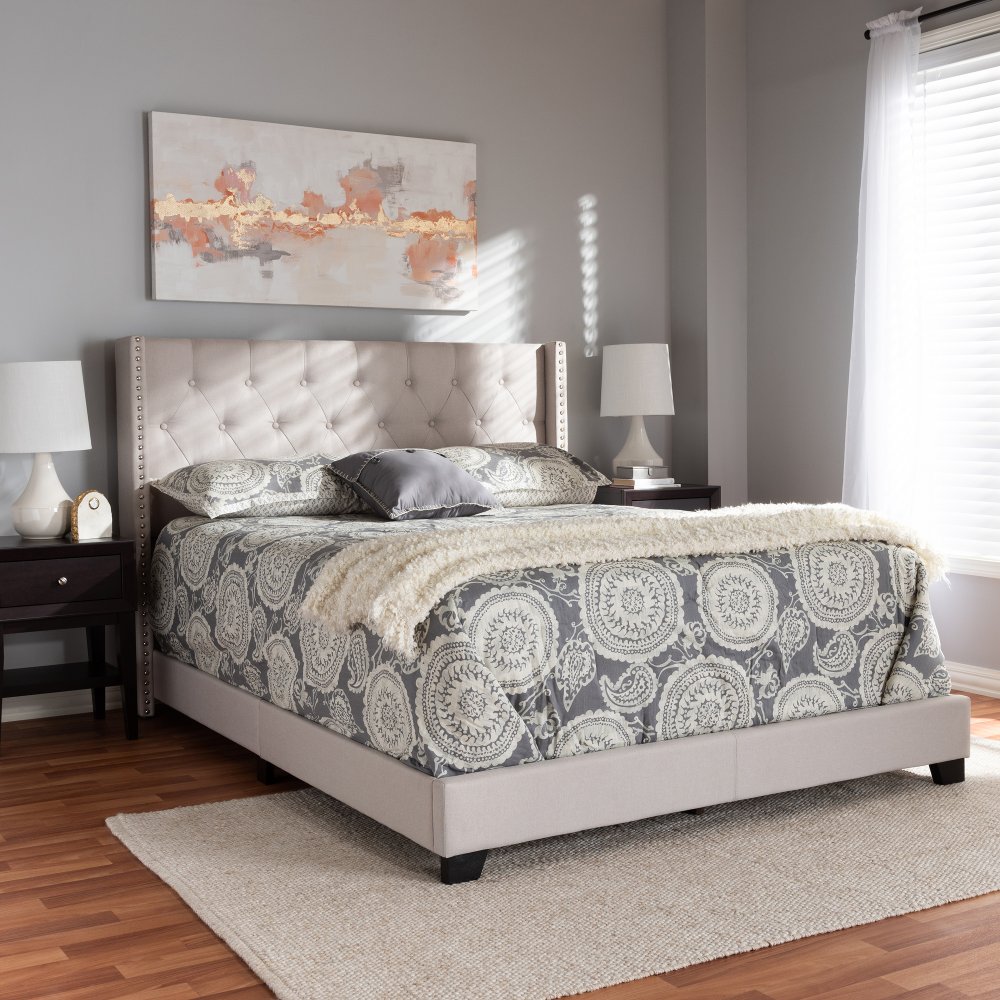
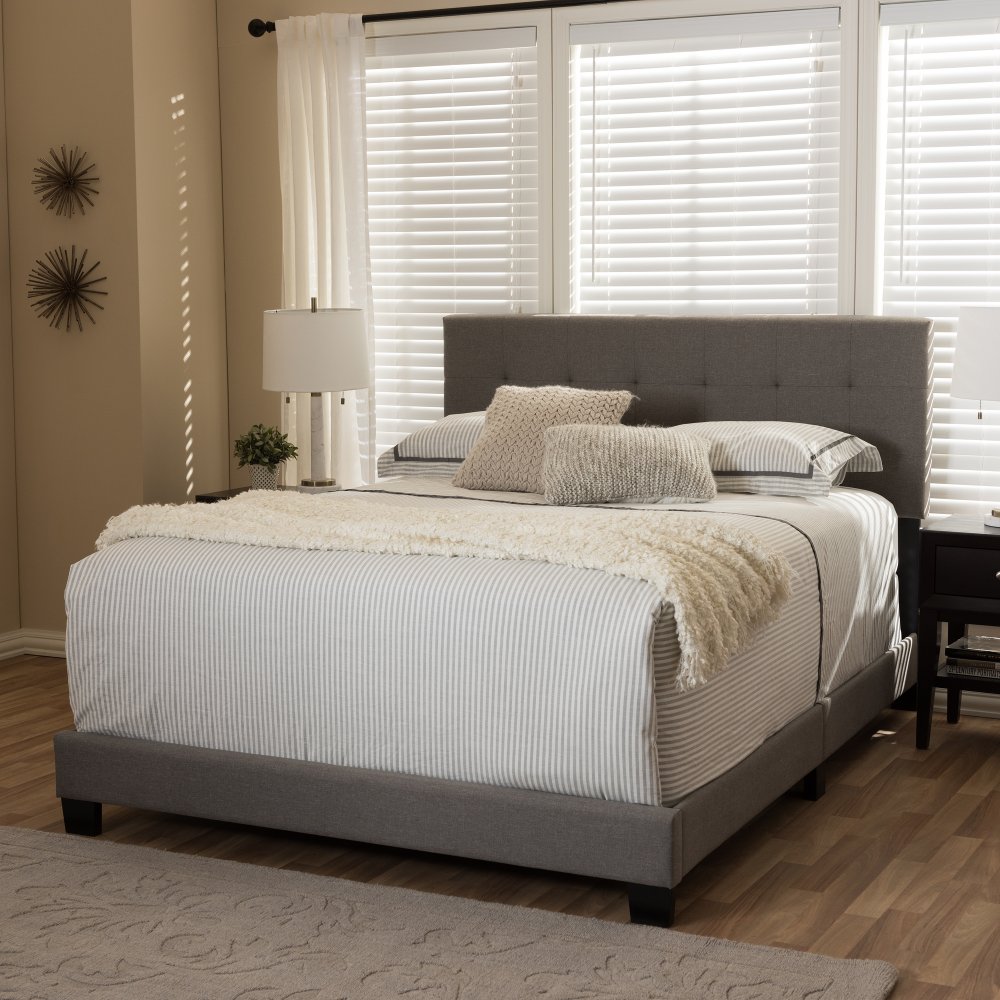
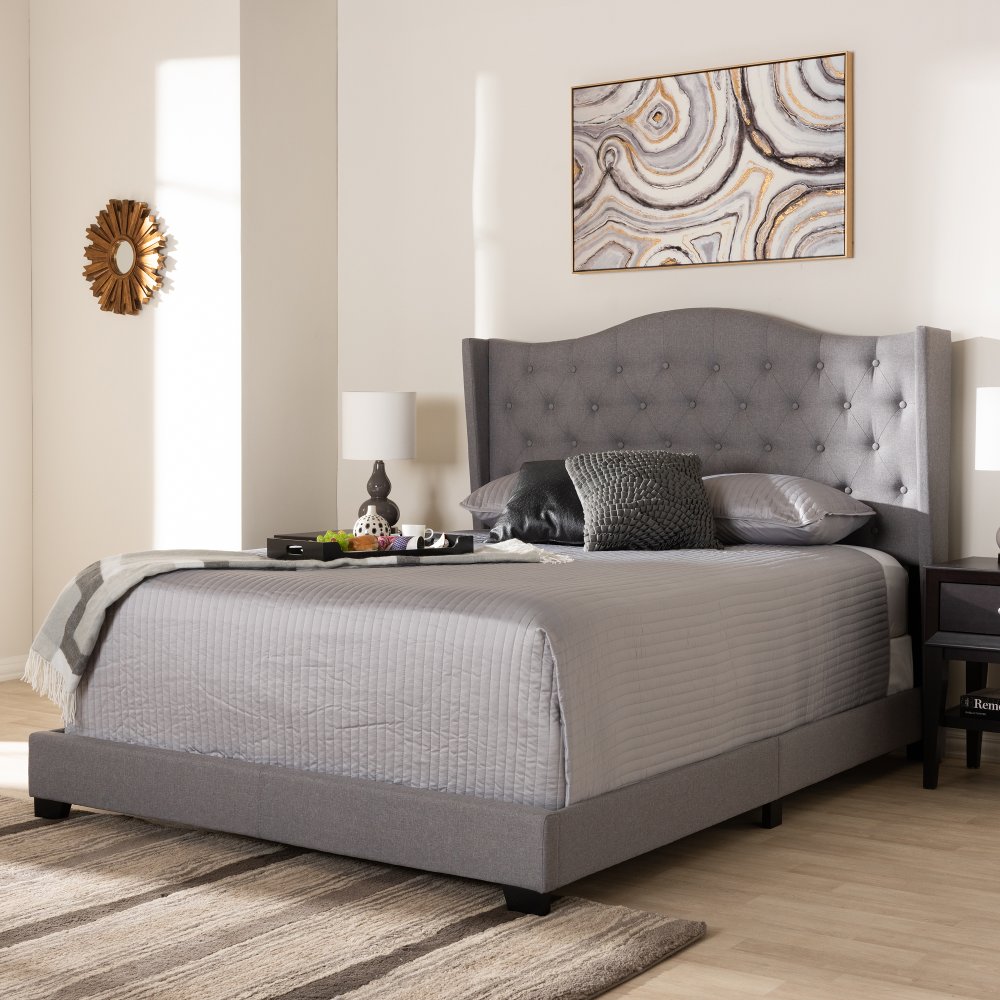
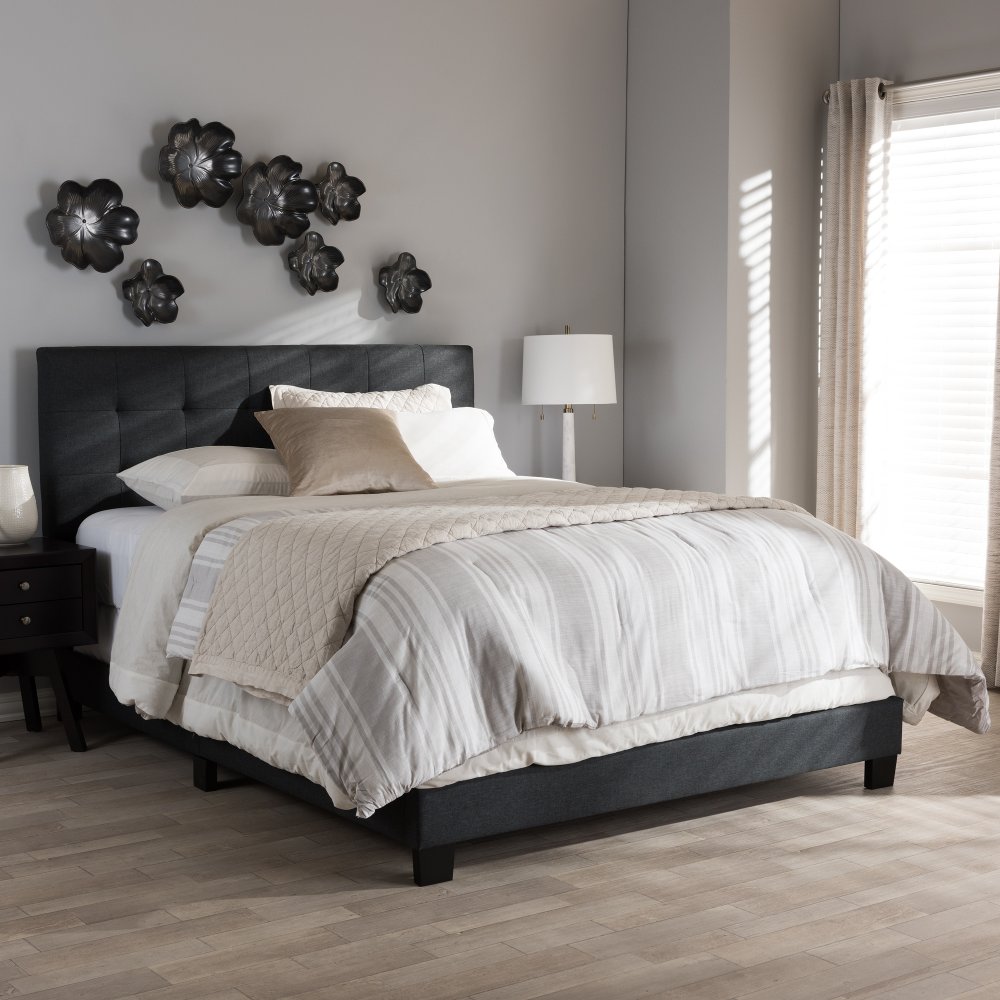
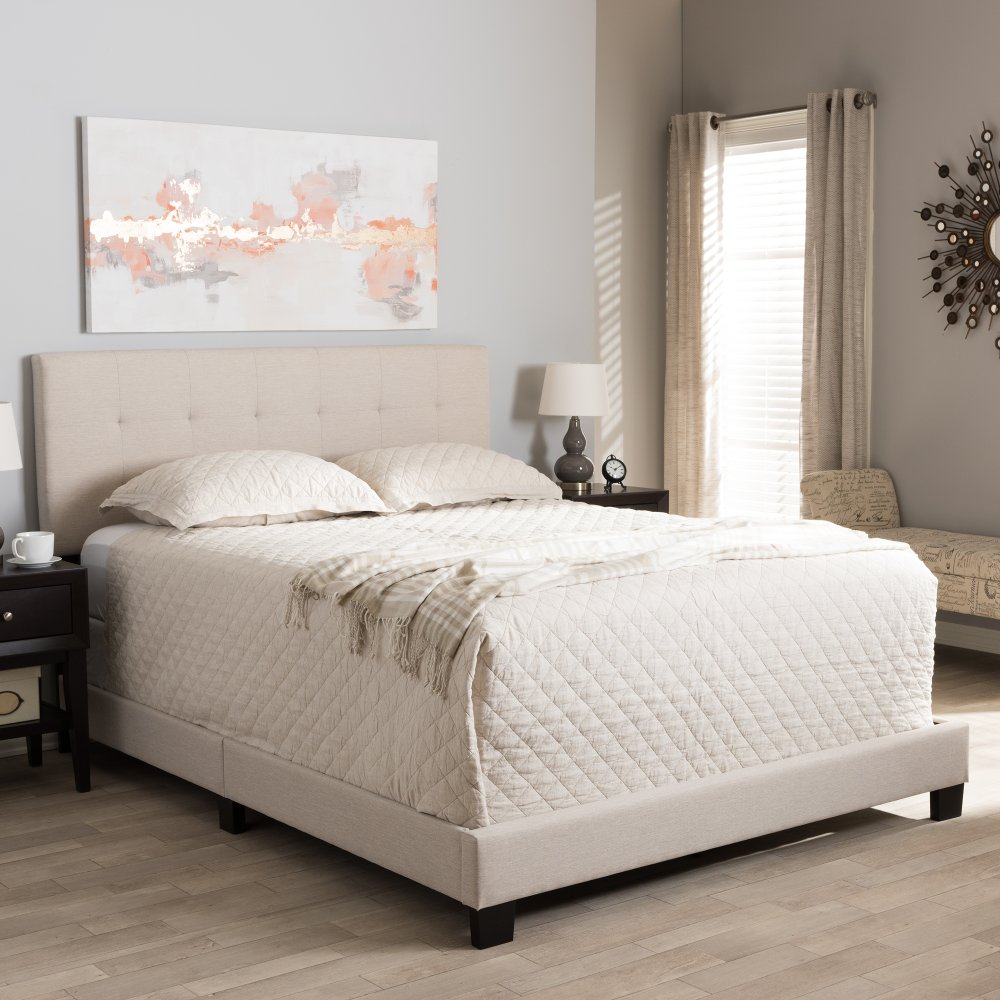
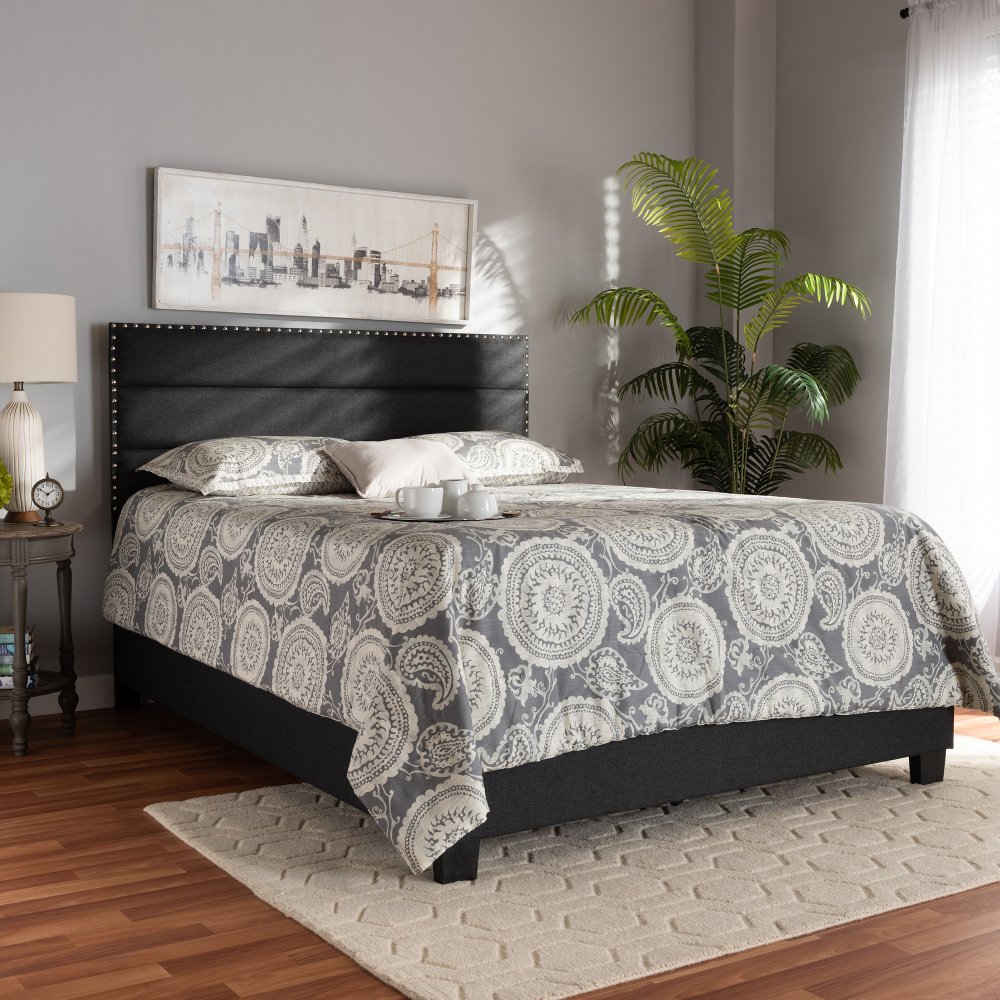
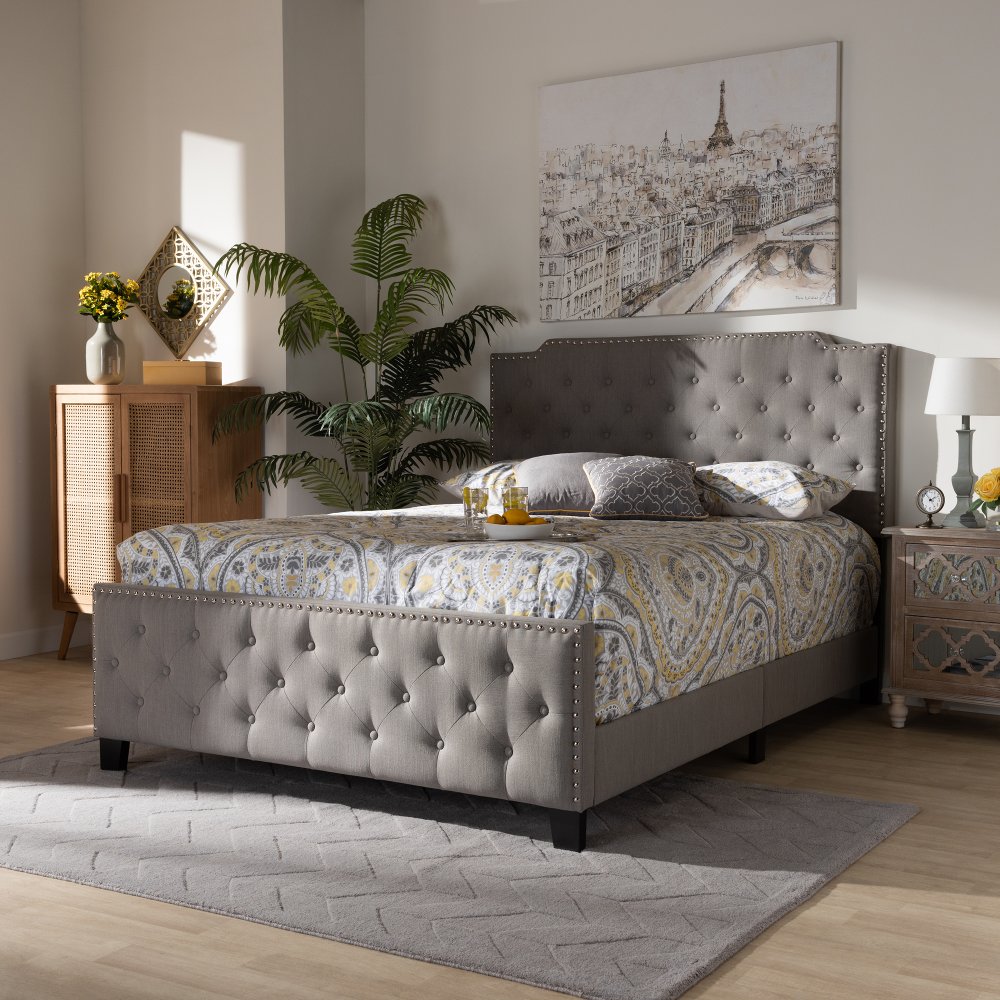
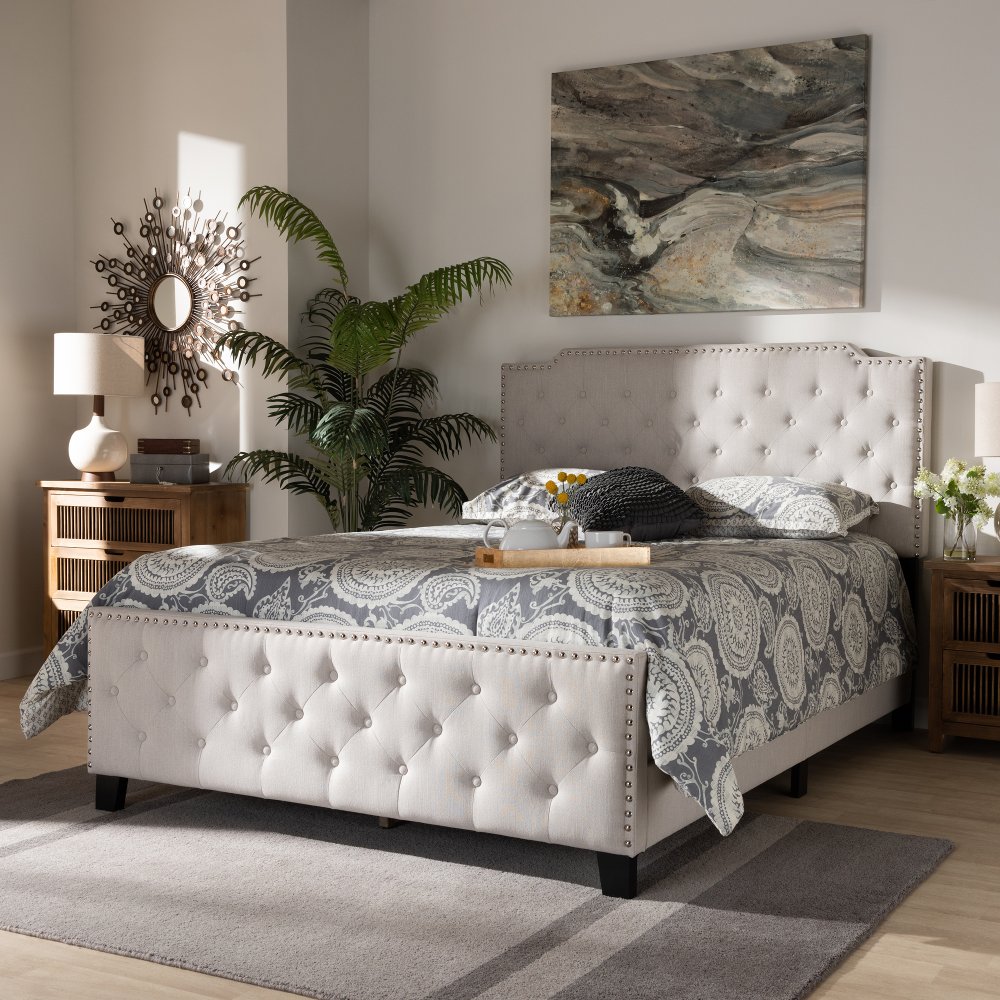
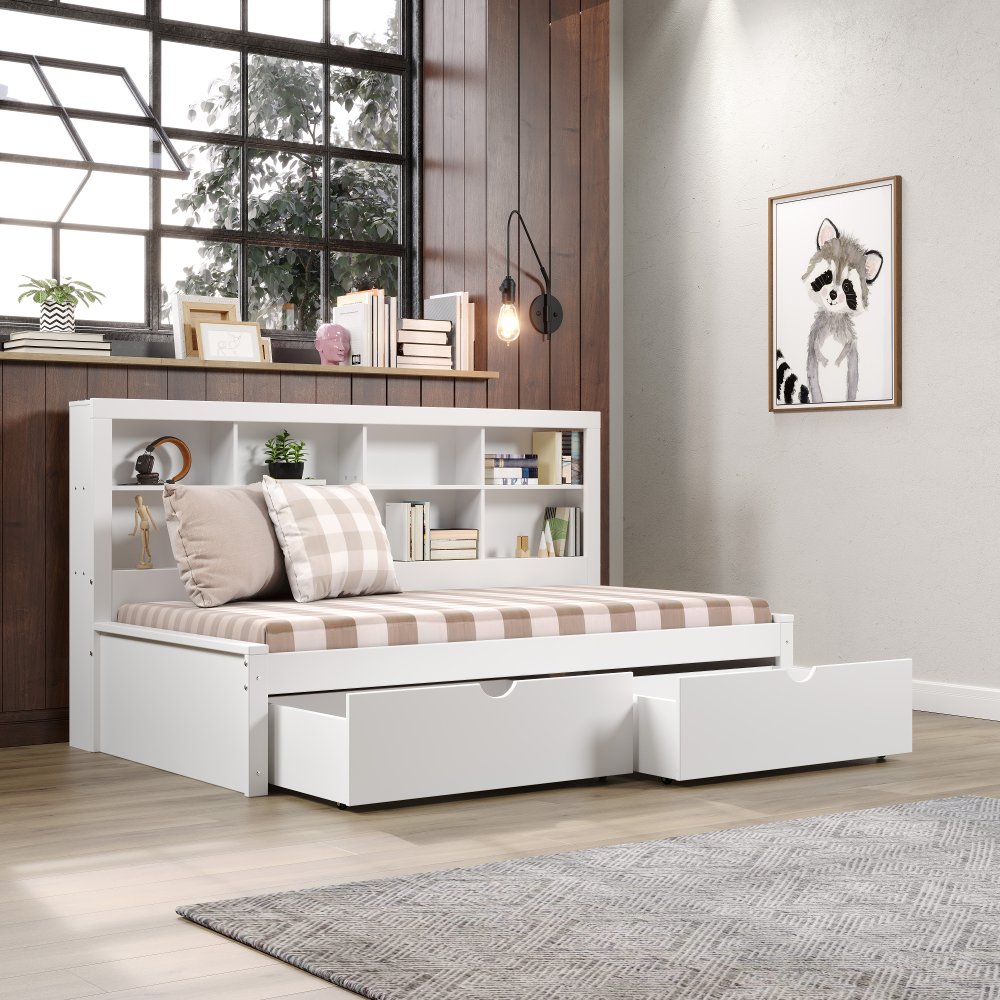
Modern and contemporary beds bring clean lines, balanced proportions, and practical design to the bedroom. Both styles favor an uncluttered look, but they aren’t quite interchangeable: modern beds often draw on established design traditions, including midcentury shapes and natural wood finishes, while contemporary beds reflect a broader mix of present-day influences. Either can make a room feel thoughtfully put together without elaborate carving or heavy ornamentation. A low-profile frame with a simple rectangular headboard creates a quiet focal point, while a gently curved upholstered headboard adds softness without making the room feel overly formal. Wood, metal, and upholstery each give these streamlined shapes a different personality. Visible wood grain brings texture and warmth; a slender metal frame keeps the outline crisp; and fabric introduces a softer surface behind your pillows. Mixed-material designs can bridge different pieces you already own, such as wood nightstands and a dresser with dark metal pulls. Finishes matter as much as shape. A pale wood finish can keep a compact room feeling visually open, while a deeper finish gives a larger bedroom a more defined anchor. Neither approach requires matching every piece of furniture. Repeating a finish, rounded edge, or hardware color can create a connection without making the room look like a complete matched set. For a softer focal point, contemporary upholstered platform beds combine a streamlined frame with a fabric-covered headboard or surround. Upholstery can make sitting up with a book more comfortable, especially when the headboard has substantial padding, though the amount of cushioning varies by design. These beds suit primary bedrooms, guest rooms, and older teens’ rooms, with proportions and materials that can work alongside different bedding and accessories over time. A simple frame also gives a favorite quilt, textured duvet, or pair of patterned pillows room to stand out. The overall effect depends less on decoration and more on how the bed’s shape, finish, and scale work together.
The right fit involves more than choosing a mattress size. A bed’s listed size generally identifies the mattress it accommodates, while the frame, headboard, and footboard determine how much floor space it takes up. A standard queen mattress typically measures 60 by 80 inches, for example, but an upholstered queen bed can extend several inches beyond those dimensions. That extra width matters when a nightstand sits close to a doorway or when two people need clear paths along opposite sides of the bed. King beds offer more sleeping width, while full and twin sizes can leave useful space for a desk, reading chair, or dresser in smaller rooms. Headboard height deserves the same attention as width: a tall headboard may compete with a low window, and a shorter one can disappear behind a thick mattress and stacked pillows. Low-profile beds often emphasize the horizontal lines associated with modern design, but the finished sleeping height also depends on mattress thickness and any required foundation. A comfortable height lets you sit on the edge and place your feet securely on the floor. Platform beds generally support a mattress on a solid surface or slats without a separate box spring, but the bed’s instructions and mattress requirements should always determine the setup. Slat spacing, center support, and weight capacity can affect compatibility, particularly with heavier mattresses or adjustable bases. A decorative frame isn’t automatically suitable for an adjustable base, even when the mattress dimensions match. Storage beds offer another practical option, putting drawers or a lift-up compartment beneath the sleeping surface. Drawers need enough clearance to open past nearby furniture, while lift-up designs need space to operate safely and comfortably. Open space beneath a raised frame can make floor cleaning easier; a frame that sits close to the floor creates a more grounded appearance. Delivery access matters, too. Narrow stairs, tight hallway turns, and small doorways can affect how larger headboard sections reach the room, even when the assembled bed fits comfortably inside.
Materials and construction help determine how a modern or contemporary bed holds up to everyday use. Solid wood brings natural grain variation and can develop small surface marks over time, while wood veneer offers a real-wood surface over an underlying core. Engineered wood construction varies, so panel thickness, joinery, edge protection, and the quality of the finish all deserve attention rather than relying on the material name alone. Metal frames offer a different look, with durability influenced by the strength of the joints, support layout, and protective finish. Across materials, well-fitted connections and the support system specified for the bed help keep the frame stable. Assembly should follow the manufacturer’s directions, including any center legs, support rails, and hardware checks. If a bed begins to creak, checking the connections according to those directions is more useful than assuming the frame itself has worn out. Upholstered beds bring their own considerations, especially in homes where pets nap against the headboard or children climb onto the bed. Fabric weave, care requirements, and any documented performance features matter more than color alone. A textured fabric may disguise small marks, but loosely woven surfaces can be more vulnerable to snagging. Removable covers shouldn’t be assumed washable unless the care label says so. Regular vacuuming with a suitable upholstery attachment helps remove dust from seams, and spills benefit from prompt attention using the recommended cleaning method. Wood and metal surfaces generally need gentle dusting and care products appropriate to their finishes; abrasive cleaners can dull or damage them. Keeping the frame away from persistent moisture and protecting finished surfaces during moves can also help preserve its appearance. For a frequently used primary bedroom, easy upkeep and sturdy support may carry the most weight. In a guest room, an approachable sleeping height and a shape that leaves room for luggage can make visits more comfortable. Thoughtful proportions, dependable construction, and manageable care give a streamlined bed lasting usefulness beyond its first room arrangement.
Read More