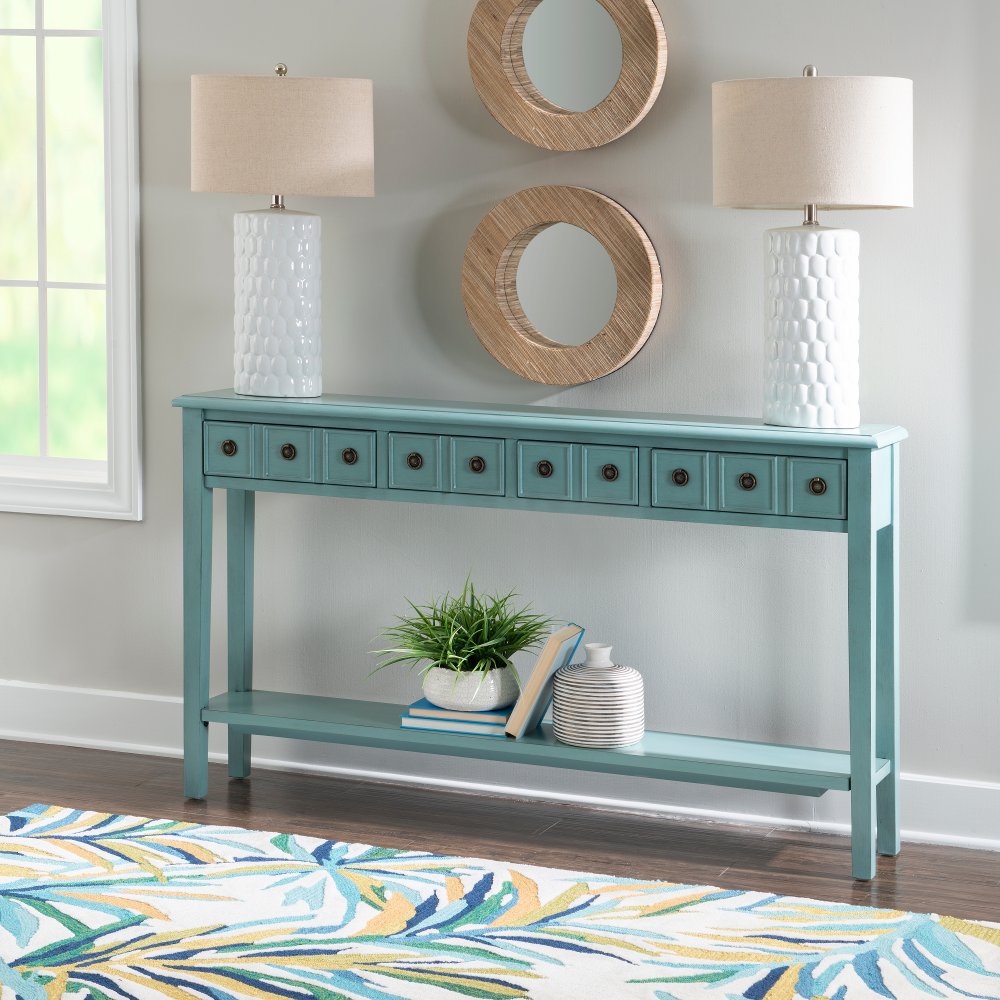
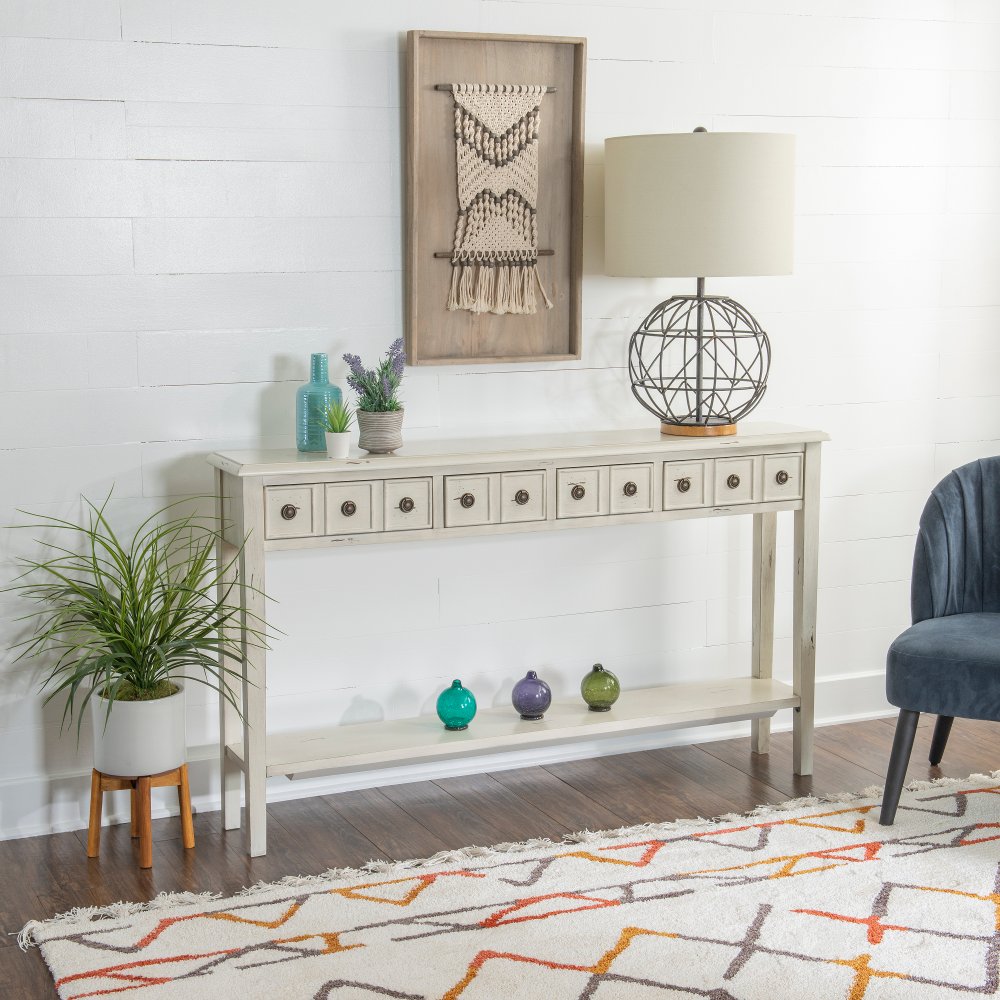
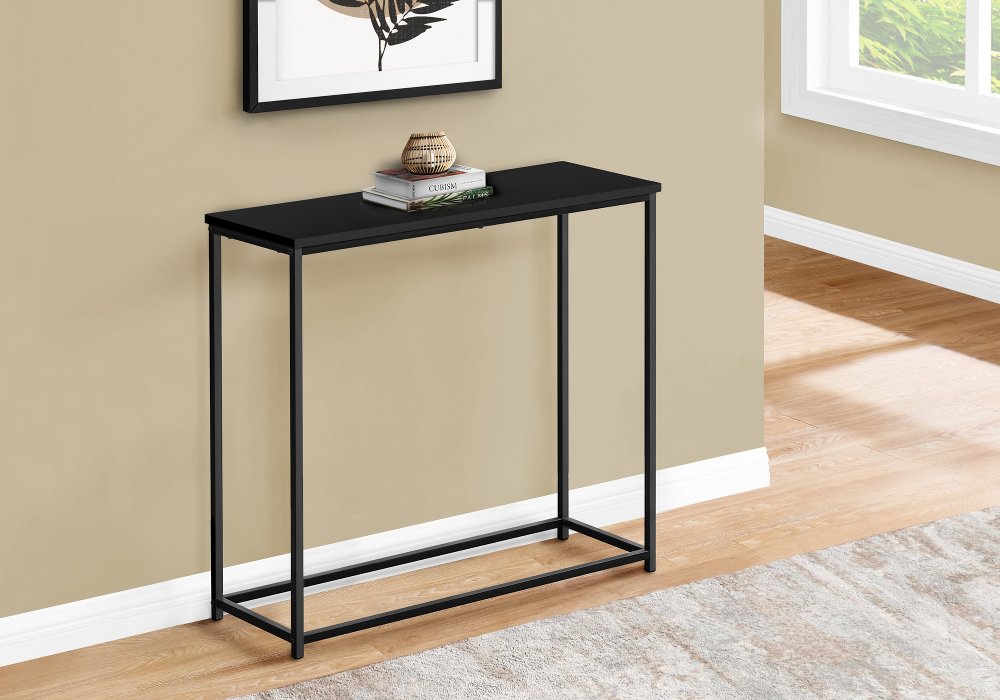
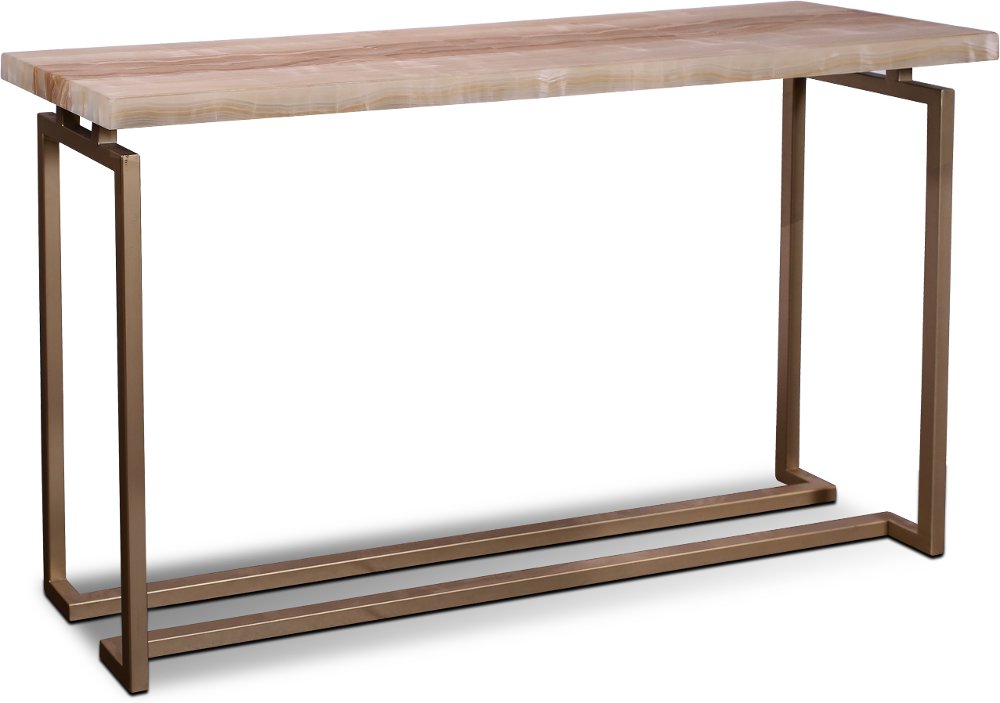
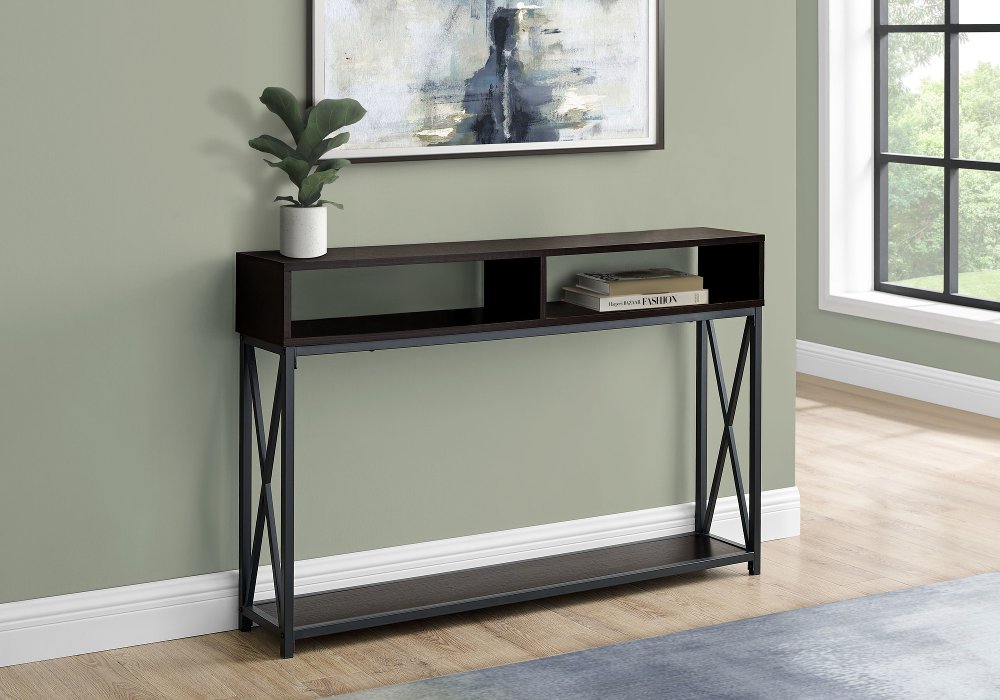
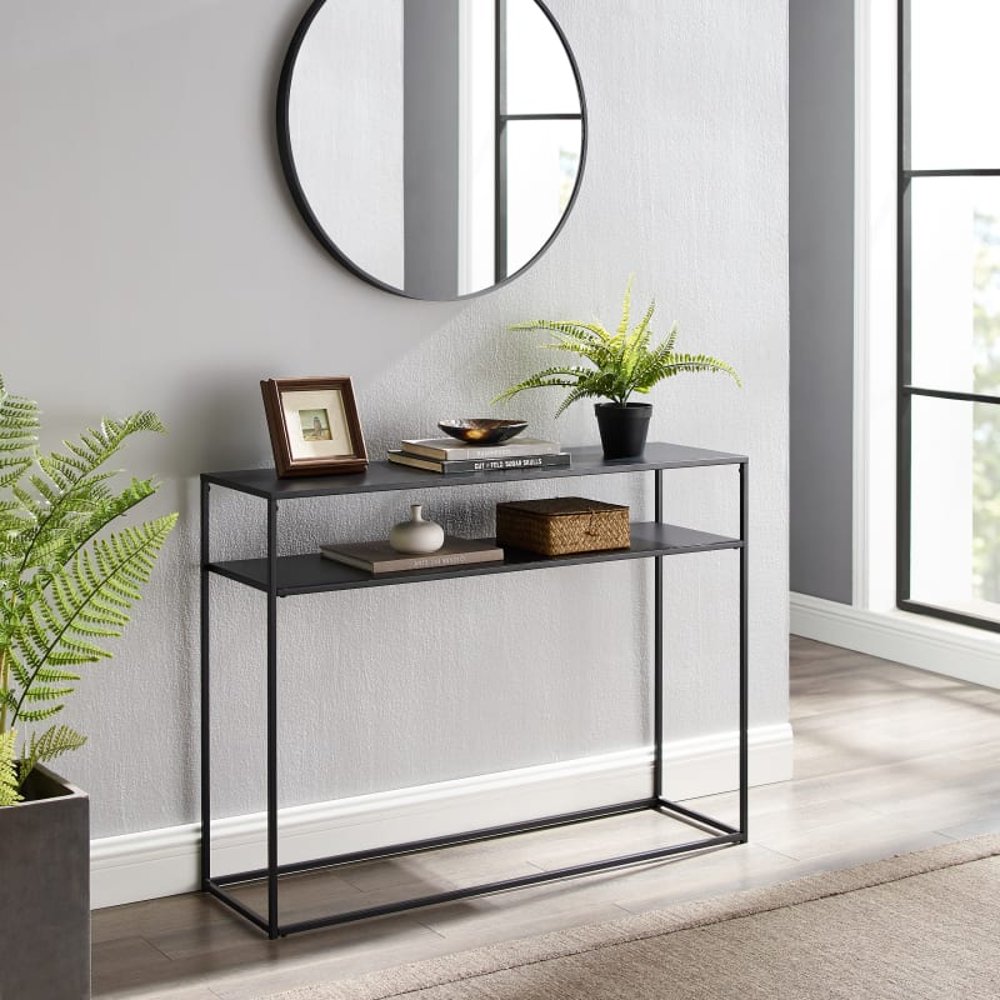
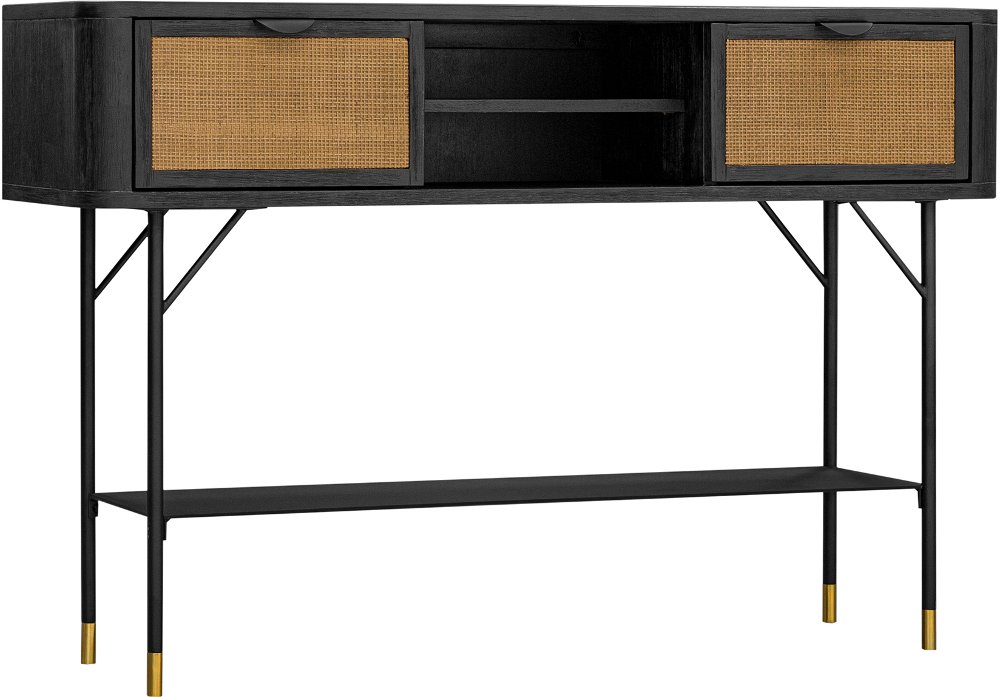
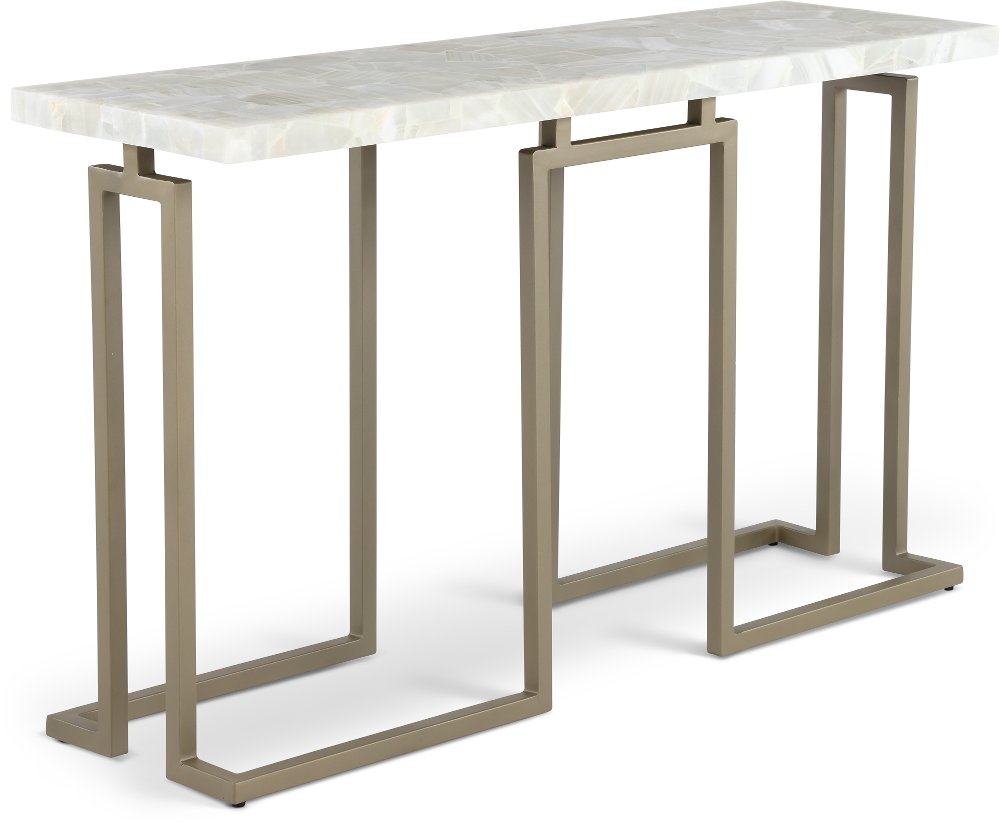
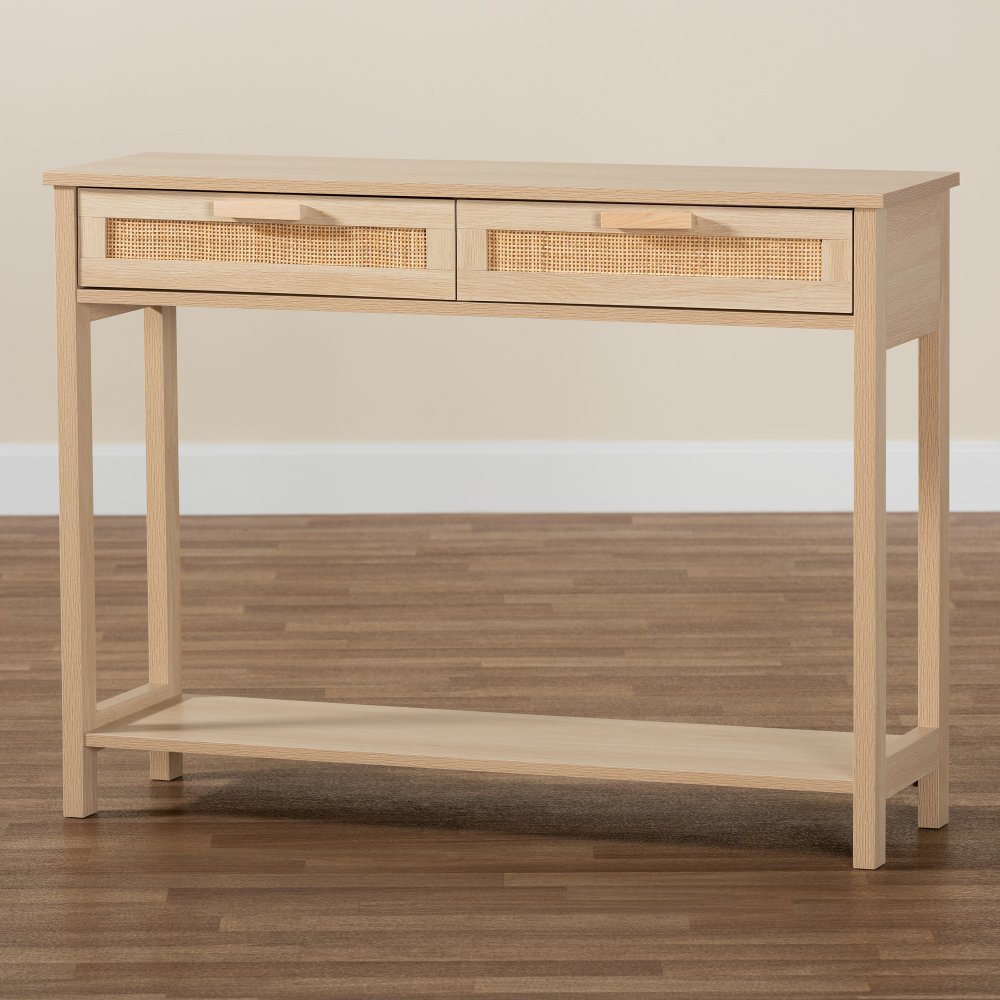
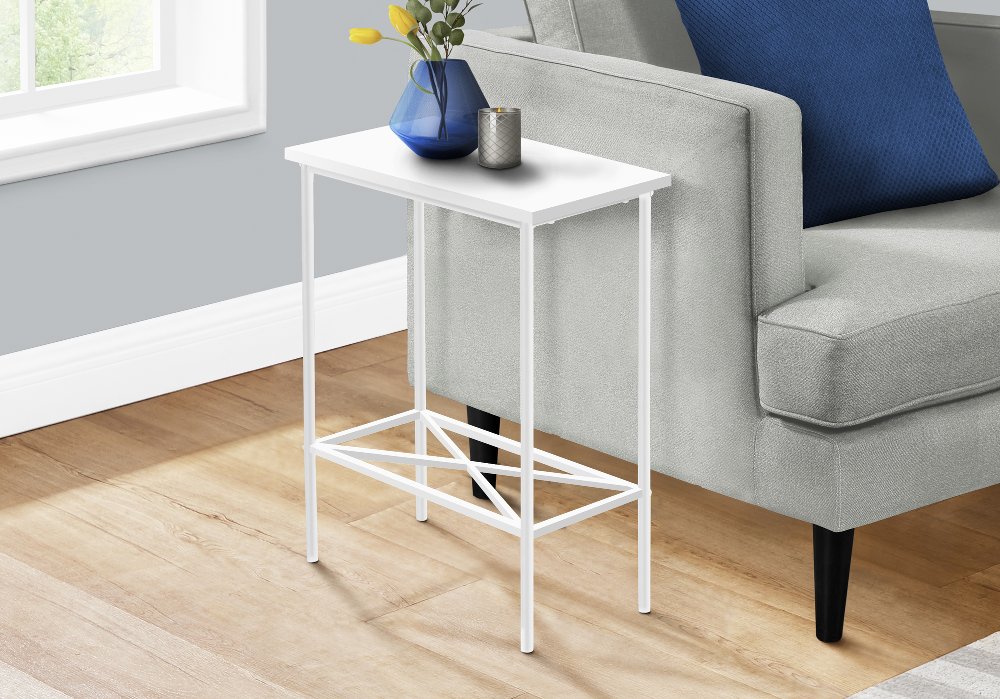
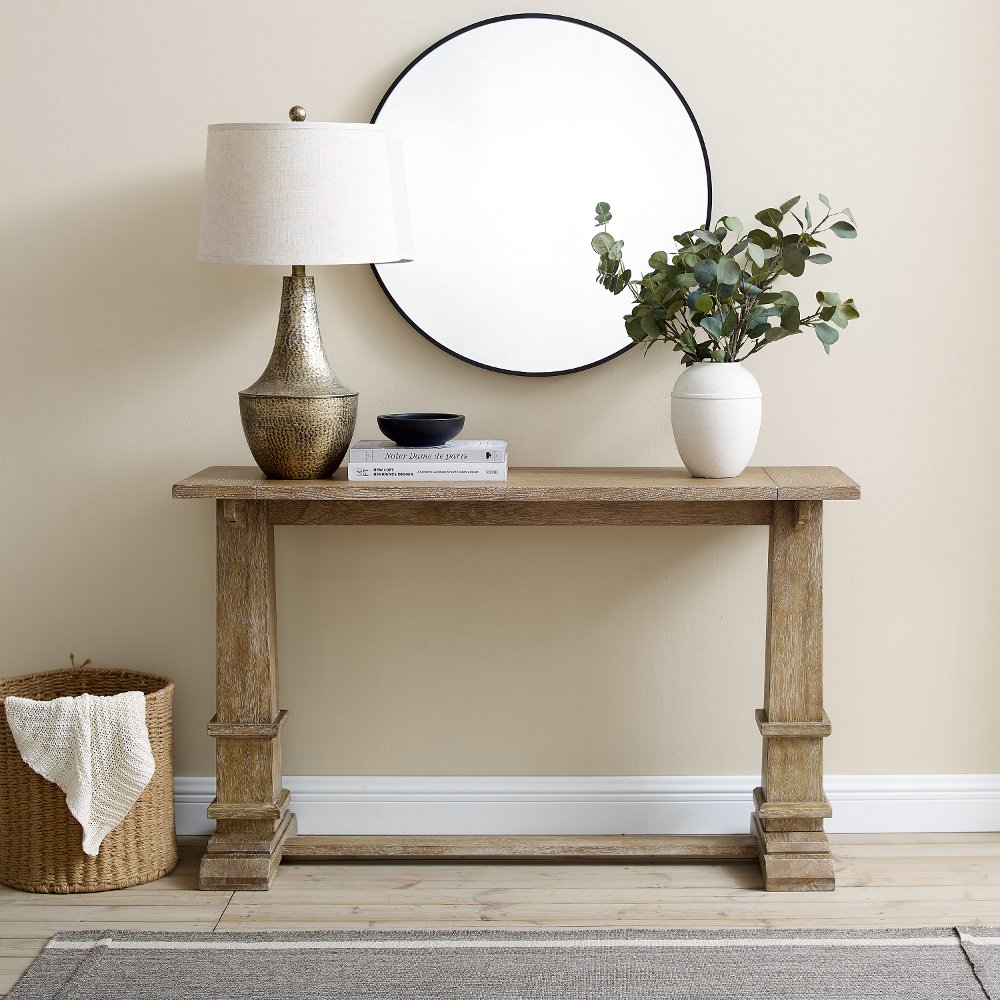
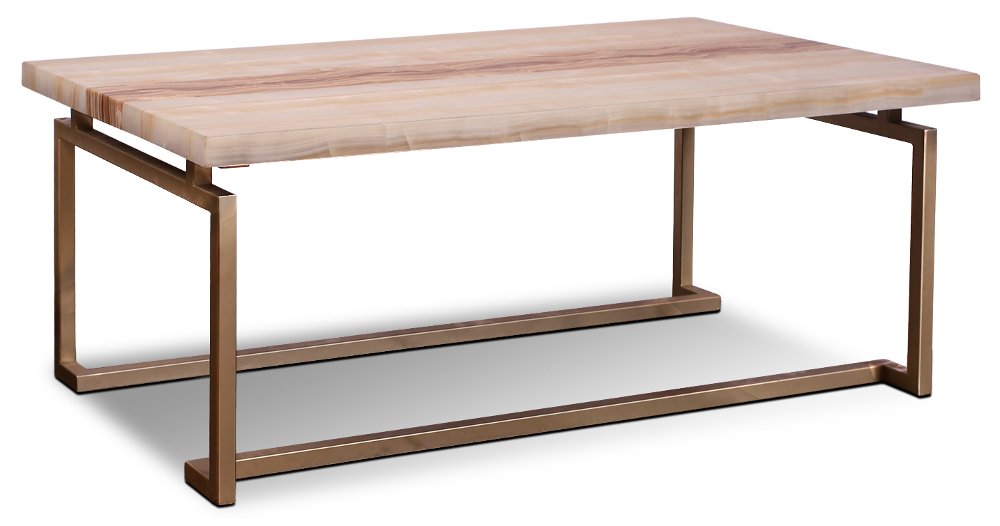
A narrow glass console table adds a useful surface where a deeper piece of furniture might interrupt the room. In an entryway, it creates a place for a small catchall tray and a lamp without taking over the path from the front door. Behind a sofa, it gives the seating area a finished edge and keeps a few everyday essentials close by. Along a dining room wall, it can hold a vase or a small arrangement of framed photos while leaving more space for chairs to pull out. The appeal comes from the combination of a slim footprint and a glass surface: light passes through the top, so the table’s outline remains visible without visually closing off the space around it. That open look can be especially welcome in an apartment, a compact living room, or a hallway where solid furniture feels heavy. Narrow glass console tables also work in larger rooms when the goal is a subtle accent rather than another substantial storage piece. A patterned rug stays visible beneath the table, and a favorite wall color or textured wallpaper still gets its moment. Clear glass tends to blend into its surroundings, while tinted or frosted glass gives the surface more presence and may soften the view of anything underneath. The frame contributes just as much to the overall effect. Slender metal legs can look crisp and understated, a warm wood base can soften the glass, and a sculptural support can turn a quiet stretch of wall into a focal point. For someone furnishing a first home or refreshing an established room, a slim glass console offers a practical way to add a little function without changing the entire layout. Its usefulness depends less on filling every inch of the top and more on giving a few well-chosen objects a convenient place to land.
The right fit starts with depth, but width, height, and the shape of the base deserve equal attention. “Narrow” is a relative description, so the listed dimensions matter more than the category name alone. A console that looks shallow in a photograph may still project too far into a tight passage, especially if its legs extend beyond the top. Measuring the full footprint helps account for those details, along with baseboards that can keep a table from sitting close to the wall. In a busy entry, leave enough room to carry grocery bags, open nearby doors, and pass comfortably without brushing against the corners. Behind a sofa, a tabletop at or slightly below the sofa back often creates a balanced line; beside a staircase, the handrail and walking route should remain clear. Glass thickness, edge finishing, frame construction, and the way the top attaches to its supports all affect how a table feels in everyday use. Tempered glass is strengthened through heat treatment and breaks differently from ordinary glass, but it isn’t unbreakable or scratchproof. Product details should identify the glass type and any weight limits rather than leaving those features to appearance alone. Smooth, finished edges and secure supports are worth attention, particularly in a home with children or pets. Rounded corners may feel more comfortable beside a walking path, although they don’t replace thoughtful placement and any manufacturer-required anchoring. A narrow table also needs a stable base, so it’s best used as a display or landing surface rather than a place to sit, climb, or lean heavily. Metal frames offer a range of looks, from matte finishes that recede into the room to polished surfaces that catch the light. Wood introduces grain and warmth, while mixed-material designs can connect existing furniture with newer accents. For a stronger focus on clean lines and modern shapes, Contemporary Glass Console Tables offer a related direction to explore while keeping the same airy quality that makes glass appealing.
Daily use is where small design choices make a lasting difference. An open console with a single glass top keeps the view simple, while a lower shelf provides another surface for a neatly arranged stack of books or a decorative box, within the table’s stated load limits. Baskets beneath an open base can help contain gloves or other small essentials, provided they fit without spilling into the walkway. If the console will hold a lamp, access to an outlet and a discreet cord route help keep the finished arrangement tidy. A lamp base should sit fully on the tabletop, with enough clearance that a passing sleeve or bag won’t easily catch it. The same principle applies to decorative pieces: a few objects with room between them usually suit a shallow surface better than a crowded collection. A low bowl for keys, a compact lamp, and a framed print above the table can make an entry feel settled without sacrificing its everyday purpose. During the cooler months, a small seasonal arrangement can refresh that setting without requiring extra furniture or much storage afterward. Glass care is generally straightforward, but the frame and any surface coatings may need different treatment. Follow the manufacturer’s cleaning directions, lift away loose grit before wiping, and use a soft, lint-free cloth with an approved cleaner to reduce streaks. Applying cleaner to the cloth rather than spraying the entire table helps keep excess moisture away from joints, wood, and metal finishes. Coasters and protective pads beneath accessories can help limit marks, while lifting objects instead of sliding them reduces the chance of scratches. Avoid setting hot cookware directly on the glass, and keep heavier decorations within the recommended capacity. Check fasteners as directed, and address any rocking instead of accepting it as part of a slim design. With the right proportions and a little routine care, a narrow glass console table can support the small habits that make a home comfortable: setting down the mail, switching on a welcoming light, or keeping a favorite photograph in view.
Read More