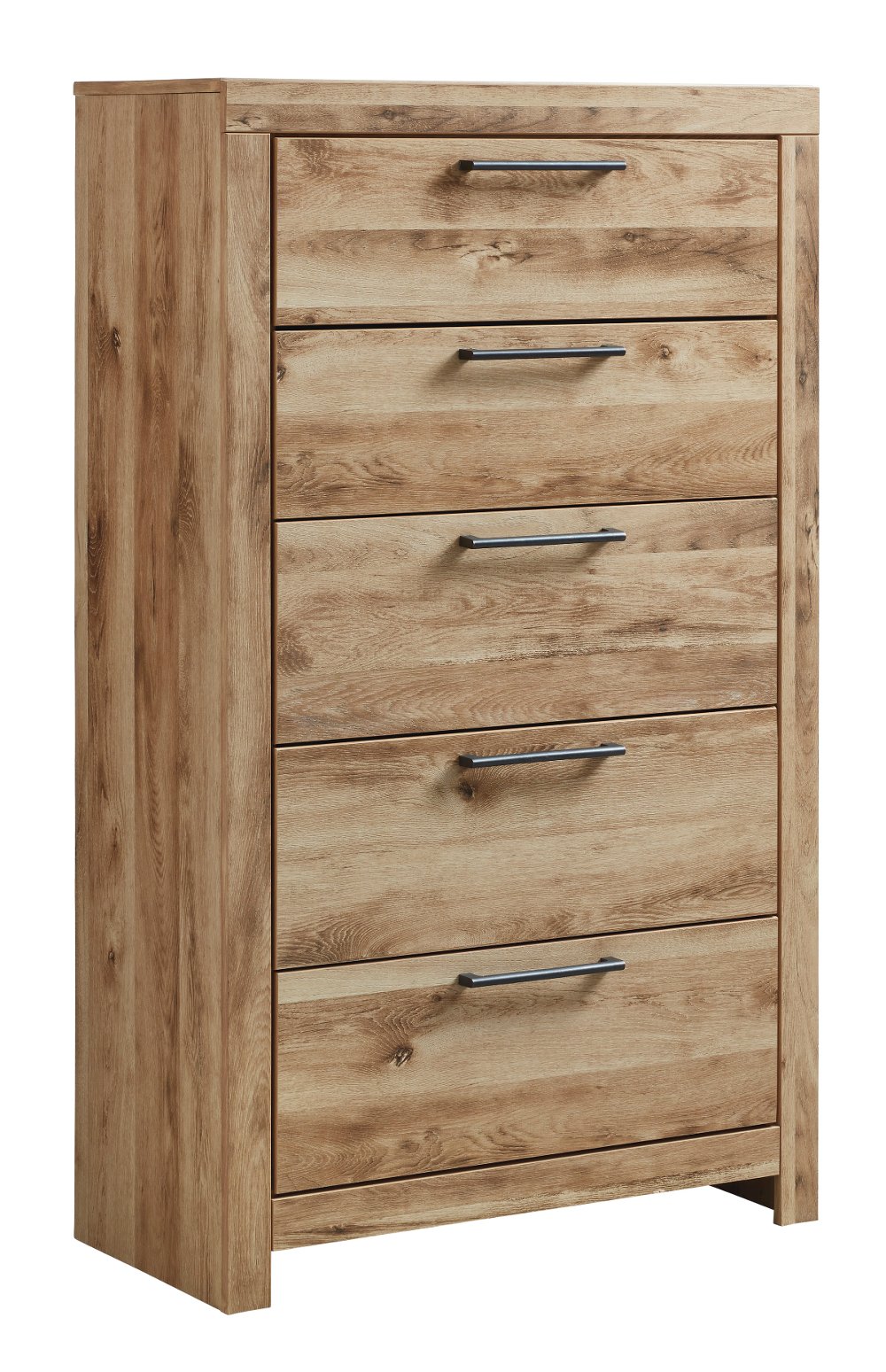
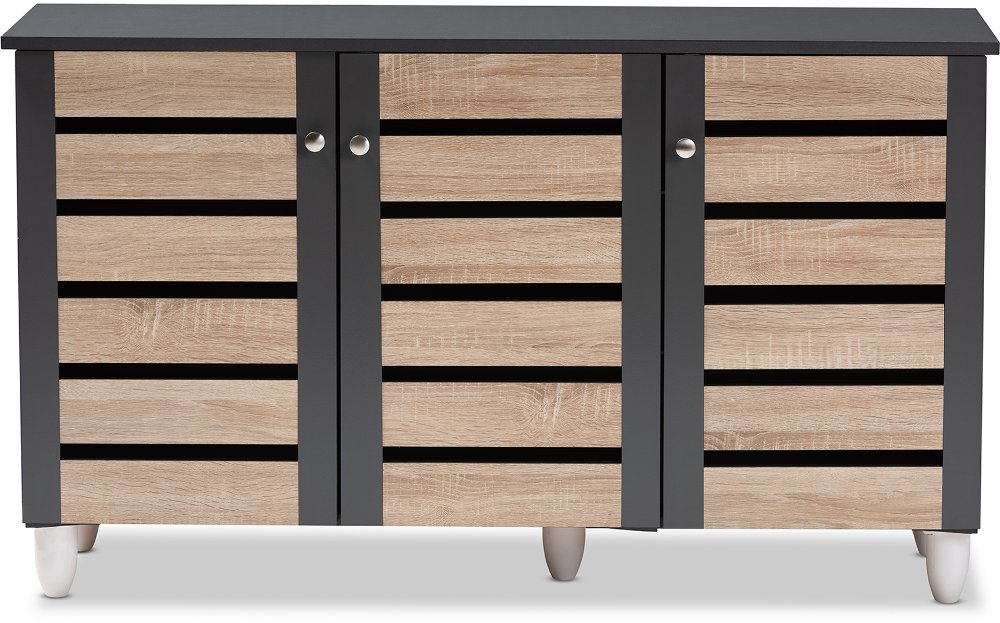
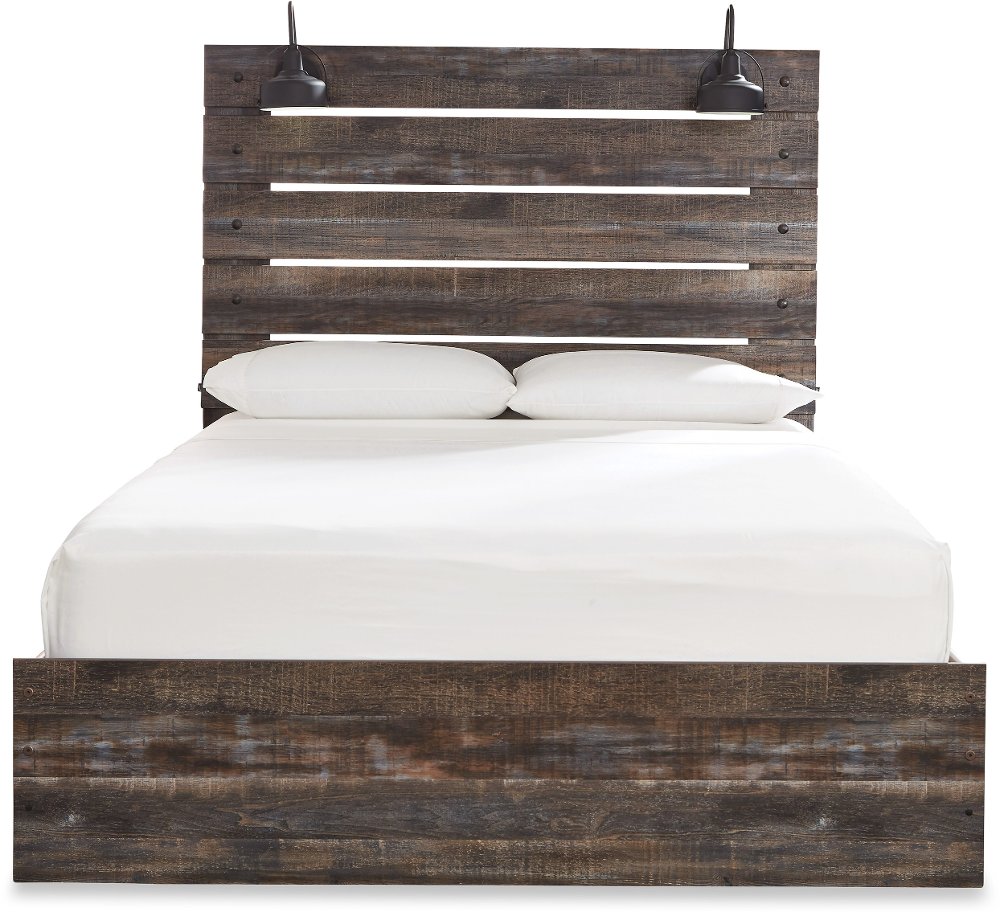
Particleboard furniture is made with engineered wood panels formed by bonding wood particles, such as chips and shavings, with resin under heat and pressure. The resulting panels provide a consistent base for desks, bookcases, dressers, cabinets, and other furniture designed for everyday indoor use. Most finished pieces cover the particleboard core with laminate, melamine, wood veneer, or another decorative surface. That outer layer shapes both the look of the furniture and how you care for it. Laminate and melamine can offer smooth, easy-to-wipe surfaces in solid colors or printed wood-grain patterns, while wood veneer adds a thin layer of real wood with natural grain variation. A wood-look finish doesn’t necessarily mean a piece is solid wood, so the materials description helps clarify what’s beneath the surface. Particleboard also differs from medium-density fiberboard, or MDF, which uses finer wood fibers, and plywood, which consists of bonded layers of wood veneer. Each material has its own performance characteristics, and furniture may combine several materials in one design. A cabinet might pair an engineered wood body with metal legs, for example, or use different materials for its doors, back panel, and drawer bottoms. For your room, the appeal often comes down to clean lines, coordinated finishes, and storage that gives everyday belongings a place to land. A warm wood-look surface can soften a workspace with a black task chair, while a light finish can keep a bedroom arrangement feeling visually open. Particleboard furniture can suit a first apartment, a study space, a guest bedroom, or an established home that needs more organization. Its suitability depends less on the room’s label than on the conditions and demands within it: a dry bedroom with steady temperatures presents a different setting from a damp utility area. Choose it for the role it needs to fill, with attention to the panel construction, protective finish, hardware, and support structure rather than appearance alone.
The best fit starts with what your furniture will hold and how you’ll move around it. For a home office, measure the space for the desk, then account for chair movement, legroom, outlets, and clearance for drawers or cabinet doors. A surface that comfortably holds a laptop and notebook may not provide enough room or support for several monitors and a large printer. For shelving, check both the overall dimensions and the usable shelf depth, especially if you’re storing binders, board games, or baskets. Listed weight limits matter: particleboard shelves can sag under sustained heavy loads, particularly across longer unsupported spans. Panel thickness, shelf width, center supports, and construction all affect how much weight a piece can carry. Follow the stated capacity for each shelf or surface, spread weight evenly, and keep heavier belongings low when the design allows. In a bedroom, drawer dimensions and smooth operation can make more difference to daily use than the size of the dresser alone. Folded sweaters need different space than socks and accessories, and a drawer should open without bumping the bed frame. In shared living areas, consider how a furniture finish works alongside upholstery, flooring, and nearby wood tones. Similar undertones can make different materials feel coordinated without requiring every surface to match. If your room needs a spot for a reading lamp, a puzzle, or a cup of tea, particle board tables bring the same considerations of size, surface protection, and structural support to the spaces beside and in front of your seating. Measure the delivery path, too, including doorways, stair turns, and the area needed for assembly. Particleboard isn’t automatically lightweight; larger panels and assembled storage pieces can be substantial. For students, remote workers, and households organizing a multipurpose room, practical details such as adjustable shelves, cable openings, and accessible storage can help the furniture serve its intended purpose. When furnishing a child’s bedroom or a busy family space, follow all anchoring instructions and use furniture only as intended, never as a climbing surface or step.
Durability depends on the quality of the particleboard, the furniture’s design, assembly, environment, and everyday care. There isn’t a single reliable lifespan that applies to every piece. Well-supported furniture used within its weight limits in a dry room has a better chance of staying serviceable than a similar piece exposed to spills, frequent dragging, or overloaded shelves. Moisture is a particular concern because water that reaches the core can cause swelling and permanent damage. A finished top may tolerate routine wiping, but seams, exposed edges, fastener holes, and areas around damaged edging can remain vulnerable. Wipe up spills promptly, place coasters beneath drinks, and use a protective tray under plants so condensation or drainage doesn’t sit against the surface. For regular cleaning, follow the manufacturer’s directions; many finishes need only a soft cloth lightly dampened with water or an approved mild cleaner, followed by a dry cloth. Avoid soaking the surface, and don’t assume a cleaner intended for solid wood is appropriate for laminate or melamine. Wood veneer may require different care, so match the cleaning method to the finish rather than the core material. Place furniture away from persistent dampness and protect it from hot cookware, sharp objects, and other sources of surface damage. Careful assembly also makes a lasting difference. Work on a clean, protected floor, identify the panels before fastening them together, and tighten hardware as directed without overtightening. Screws driven too firmly can strip their holes, and repeated disassembly may weaken connections in particleboard. Keep the assembly instructions and any specified tools for future adjustments. When rearranging a room, empty drawers and shelves first and get enough help to lift the piece rather than drag it, which can strain joints and loosen the base. Secure tall storage furniture to the wall according to the manufacturer’s instructions, using anchoring hardware appropriate for the wall. With thoughtful placement and straightforward care, particleboard furniture can provide useful work surfaces, organized storage, and a finished look that supports the way you live.
Read More