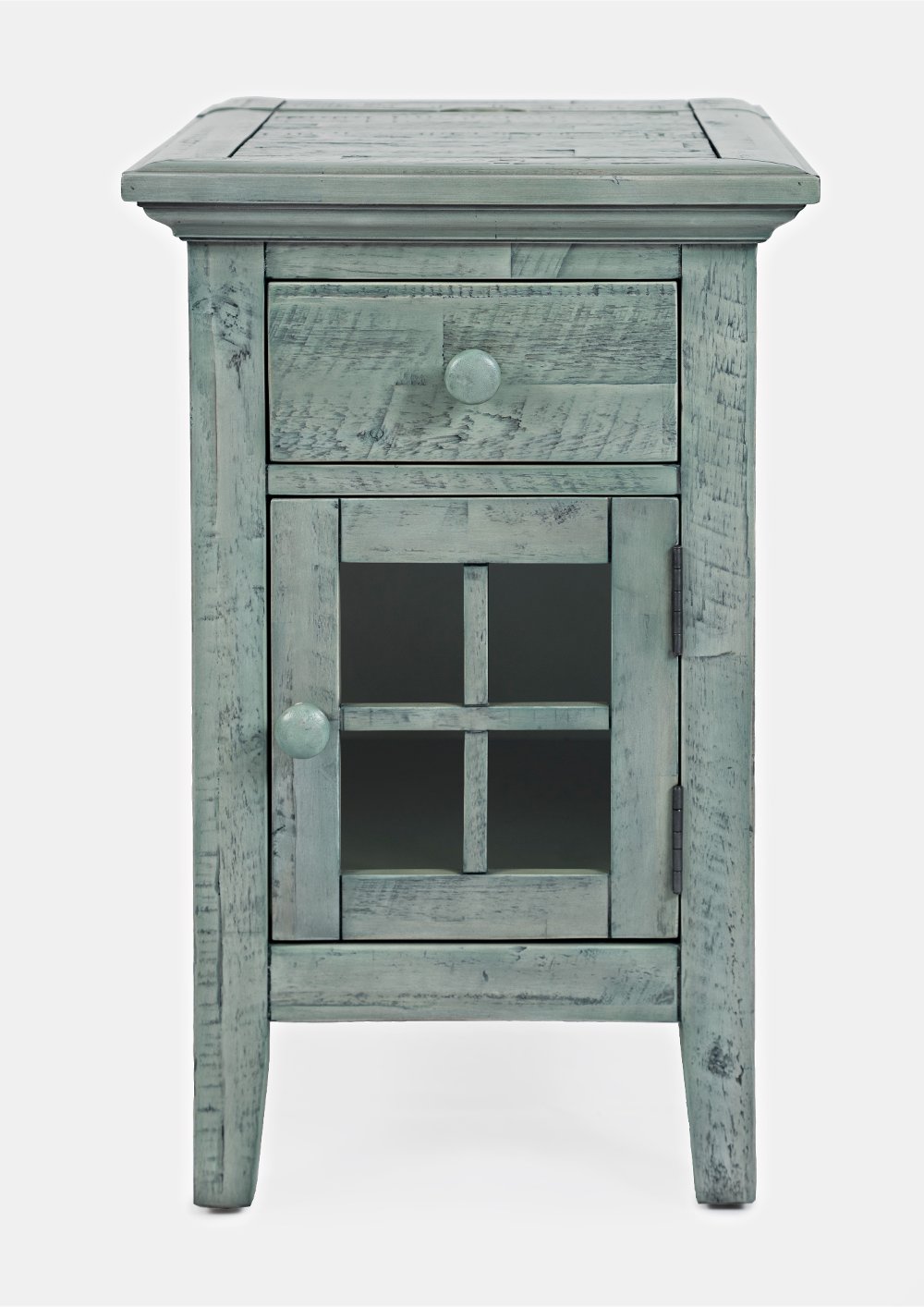
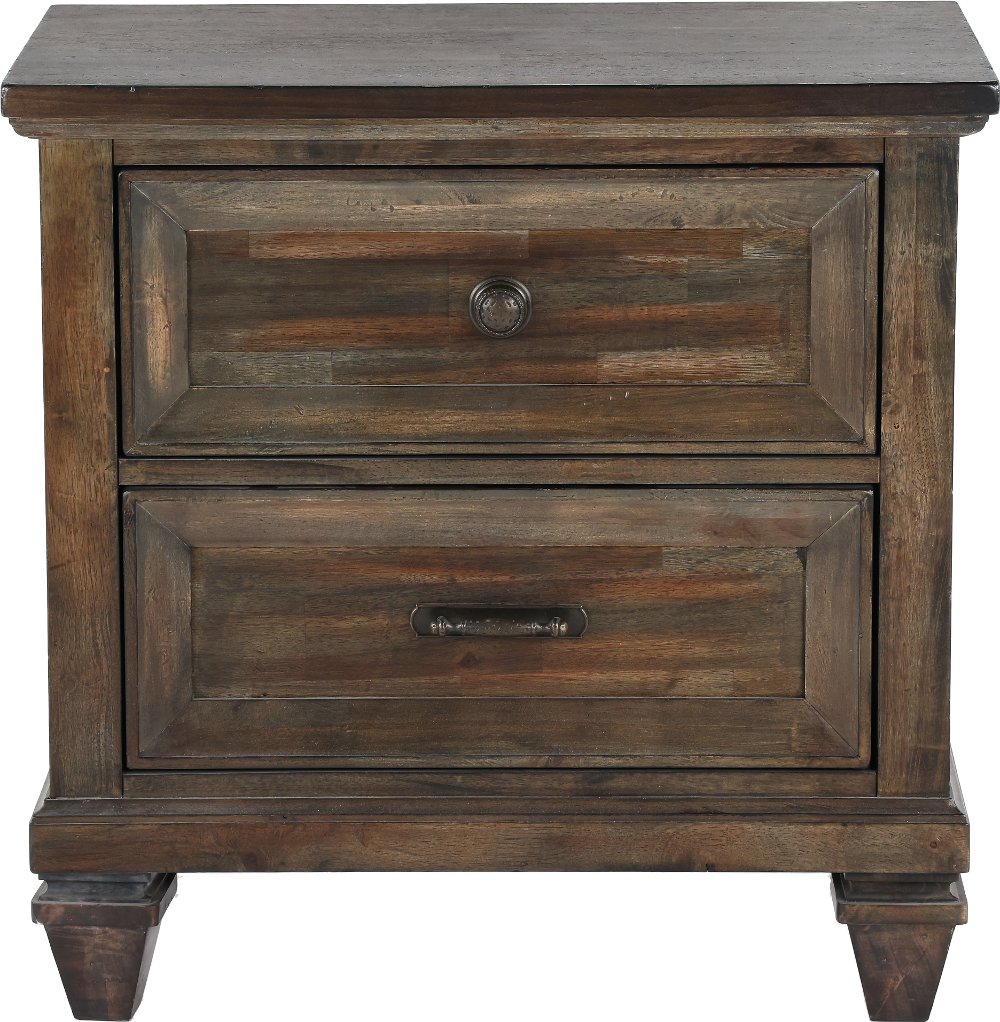
Rustic wood nightstands bring a grounded, comfortable feel to the bedroom, with grain patterns, textured finishes, and simple shapes that make the space feel lived in rather than overly decorated. Beside a crisp upholstered bed, a weathered wood finish adds warmth and contrast. Next to a wood bed frame, it can carry the room’s natural character from one piece to the next without requiring an exact match. The appeal is in the details: a visible knot, a softly worn edge, a plank-style drawer front, or a dark metal pull that feels sturdy in your hand. Some rustic bedside tables lean toward farmhouse style with lighter finishes and straightforward silhouettes, while others feel more like cabin furniture, with deeper brown tones and substantial proportions. Cleaner lines and restrained hardware can also make rustic wood work comfortably in a modern bedroom. Color undertones help tie those different looks together. A warm brown nightstand often complements cream bedding, muted green walls, and woven accents, while a gray-brown finish can sit naturally alongside cooler paint colors and charcoal textiles. Matching nightstands give a shared bedroom a balanced appearance, but different pieces can feel equally intentional when they share a similar height, wood tone, or hardware finish. For a smaller room, a slim frame or an open lower shelf can keep the bedside area from feeling crowded. In a spacious primary bedroom, a wider nightstand can hold its own beside a tall headboard and provide room for a substantial reading lamp. These pieces suit guest rooms, first apartments, and everyday bedrooms alike because their purpose is familiar: keeping the things you reach for close at hand. A book, glasses, a glass of water, and a place to set your phone can turn an empty corner beside the mattress into a useful part of your evening routine. During the cooler months, the wood’s warmth also pairs easily with layered quilts and soft lighting, without tying the room to a seasonal decorating scheme.
The best fit starts with how you use the space, not just how a nightstand looks from across the room. Measure the width beside the bed, then check depth against nearby doors, walking paths, and the space needed to open drawers fully. A tabletop near the height of the top of your mattress generally makes it easier to reach a lamp switch or set down a mug without stretching. Include the bed frame and mattress topper when taking that measurement; a nightstand that looks tall enough beside a low platform bed may feel quite different next to a thicker mattress. If the bed has built-in storage, allow clearance for those drawers, too. Think about the surface in practical terms. A lamp with a broad base can leave little room for a book on a narrow tabletop, while a smaller light may give you more usable space. Closed drawers help keep charging cords, hand cream, reading glasses, and other personal essentials tucked away. An open shelf makes books or a basket easy to reach, though it also leaves their contents visible. A combination of both can be especially useful when one person prefers a clear surface and another likes everything close by. Check drawer dimensions rather than relying only on the outside measurements, especially if you plan to store a tablet or larger reading materials. Smooth drawer movement, comfortable pulls, and a stable base matter when you’re using the piece every morning and night. For a guest bedroom, a simple layout with an accessible shelf and a little empty drawer space gives visitors somewhere to settle their belongings. In a shared room, each side can serve a different routine while still looking connected. If your room needs stronger contrast against pale walls or light bedding, black wooden nightstands offer another direction to consider, particularly when a darker finish echoes nearby lighting or bed-frame details. The goal is a bedside arrangement that feels easy to use, with enough breathing room to move comfortably.
Materials and construction deserve a closer look because a rustic appearance can come from several different approaches. Solid wood may show natural variations in grain and color, while wood veneer brings a real wood surface to a supporting core that may include plywood or other engineered materials. Neither description tells the whole story on its own; joinery, drawer construction, the finish, and the stability of the assembled piece all contribute to everyday performance. Softer woods can pick up dents more readily than some harder species, although hardness alone doesn’t determine how well a nightstand will hold up. Distressing may be part of the intended design, but it isn’t the same as protection from spills, scratches, or heat. A heavily textured top can have plenty of character while requiring a little more attention when dust settles into grooves. A smoother sealed surface may be simpler to wipe down, depending on the finish and the manufacturer’s care directions. Reclaimed wood, when specified, can bring distinctive markings from its previous use; a reclaimed-look finish describes an appearance and doesn’t necessarily mean the wood was salvaged. Natural variation also means two wood pieces may complement each other without looking identical. To keep a rustic nightstand looking its best, dust with a soft cloth and clean spills promptly, following the recommended care instructions rather than assuming every wood cleaner is suitable. A coaster beneath a bedside drink and a small tray for frequently handled essentials can help protect the surface. Avoid leaving damp cloths, hot mugs, or leaking bottles directly on the finish. Placement matters as well: prolonged direct sunlight can change wood color, and close exposure to heating vents can contribute to drying and movement. Follow assembly instructions and any included anchoring guidance, particularly in homes with children. With sensible care and proportions that suit your room, a rustic wood nightstand can remain useful through changes in bedding, wall color, and daily habits, adding character while quietly handling the practical work beside your bed.
Read More