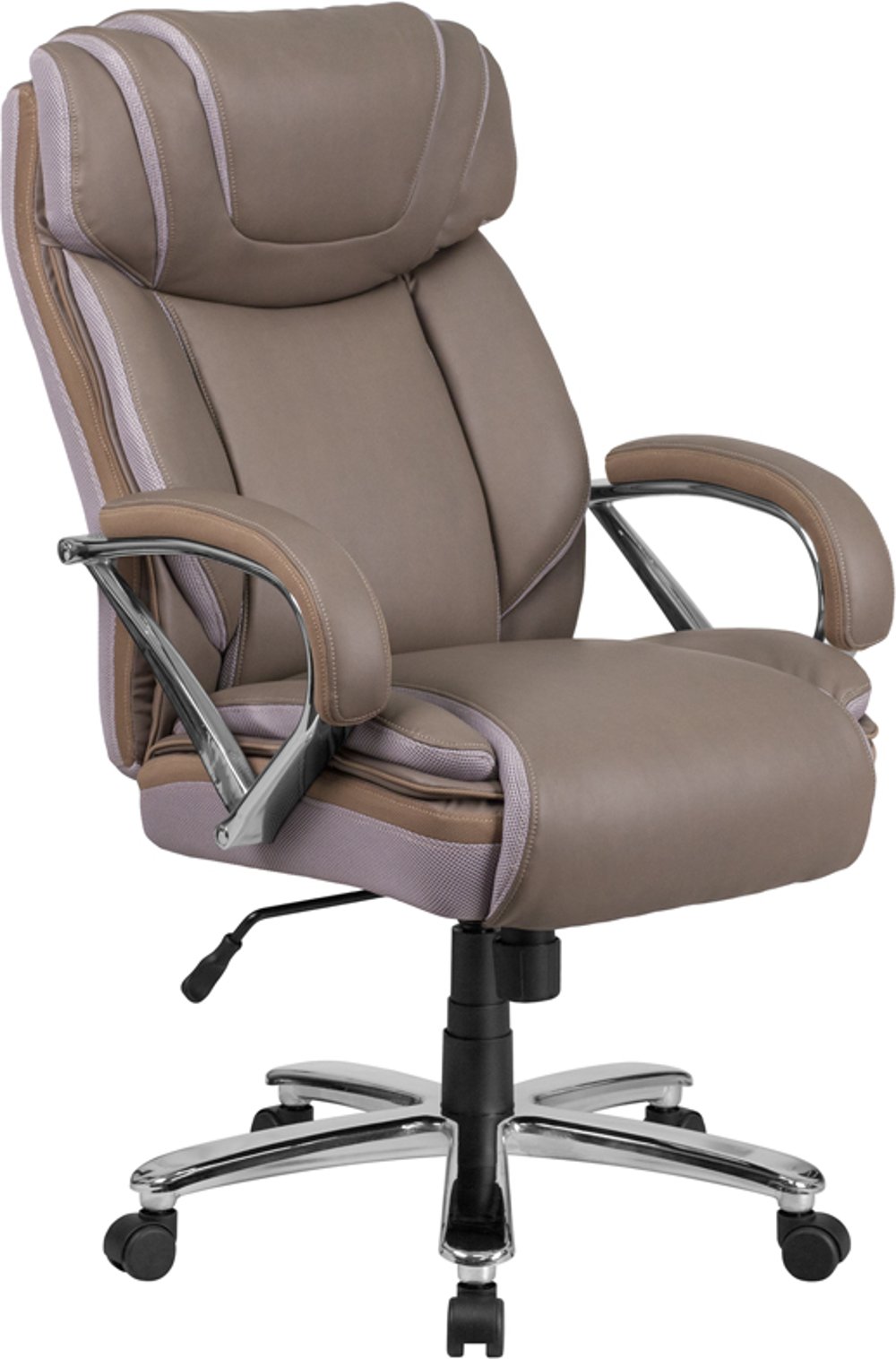
Traditional office chairs bring a sense of history and confidence to a workspace. Their deep wood tones, tailored upholstery, and substantial silhouettes can make a desk feel like a purposeful part of the room rather than a temporary place to sort paperwork. Look for familiar details such as button tufting, rolled arms, wingback profiles, brass or antique-style nailhead trim, and wood accents inspired by classic office furniture. Mahogany, walnut, cherry, and oak finishes each create a different impression, from warm and welcoming to stately and distinguished. Upholstery may include top-grain leather, faux leather, vinyl, or fabric, so consider how the chair will feel against your skin, how often it will be used, and how easily it can be cleaned. Leather and leather-look surfaces pair naturally with traditional décor and are often simple to wipe clean, while fabric can add softness and visual texture. A high-back executive chair can suit a private office, library, study, or spacious home workspace where its tall back and generous cushioning complement a large desk. A captain’s chair, banker’s chair, or other open-arm style can work well around a writing desk, reception area, or conference table, especially when you want classic character without a visually heavy profile. For a lighter, brighter interpretation of timeless office seating, you can also explore White Office Chairs while keeping the same attention to comfort and scale.
The most beautiful traditional office chair still needs to support the way you work. Before choosing a style, measure the desk height, available floor space, and distance between the chair and nearby walls or furniture. A broad executive silhouette may look right behind a substantial desk but feel crowded in a compact corner, while a more streamlined chair can offer classic details without overwhelming a smaller room. Consider a swivel base and rolling casters if you move between a monitor, files, and a nearby credenza throughout the day. Pneumatic seat-height adjustment helps align your chair with the desk, and a tilt function or tilt-lock control lets you change your position while keeping a more upright posture when needed. Traditional design doesn’t always reveal these conveniences at first glance; some chairs conceal modern mechanisms beneath wood-look trim, capped bases, or polished finishes. Check the seat depth and width as carefully as the exterior style. Ample cushioning can feel inviting during long work sessions, but the seat should still allow your feet to rest comfortably on the floor and your back to meet the chair’s support. Padded arms can make reading, writing, or reviewing documents more comfortable, while fixed arms may provide the stable, formal appearance associated with banker and guest seating. If more than one person will use the chair, adjustable features become especially valuable. For a shared home office, consider a finish and upholstery color that coordinate with both your desk and surrounding furniture, along with casters that suit the flooring. Hard floors may benefit from appropriate soft casters or a chair mat, while low-pile carpet generally accommodates standard rolling bases.
Traditional office chairs can serve more than one person or occasion. They’re a practical choice for someone furnishing a first home office, refreshing a workspace during the cooler months, or creating a quiet reading and correspondence area away from the main living space. An executive-style chair can also be a thoughtful housewarming or graduation gift for a person beginning a remote career, launching a small business, or spending more time at a desk. For a gift, focus on adaptable comfort and a finish that will age well rather than choosing a chair based only on appearance. Neutral upholstery, supportive padding, and a seat that accommodates different working positions are easier to live with over time. In a family study or shared workspace, traditional chairs can add a polished, grown-up look while helping the area feel ready for homework, planning, creative projects, or household tasks. They also pair naturally with bookcases, wood desks, framed artwork, table lamps, and other furnishings that benefit from a classic foundation. To keep the chair looking its best, follow the care instructions for the upholstery and wood finish, dust detailed trim gently, and wipe spills promptly with the recommended method. Avoid placing leather or faux leather directly beside a strong heat source or in prolonged sunlight, which can affect the surface over time. Whether you prefer a commanding high-back profile, a welcoming guest chair, or a more compact traditional silhouette, choosing based on room scale, daily habits, support, and maintenance will help you create a workspace that feels comfortable, capable, and distinctly your own.
Read More