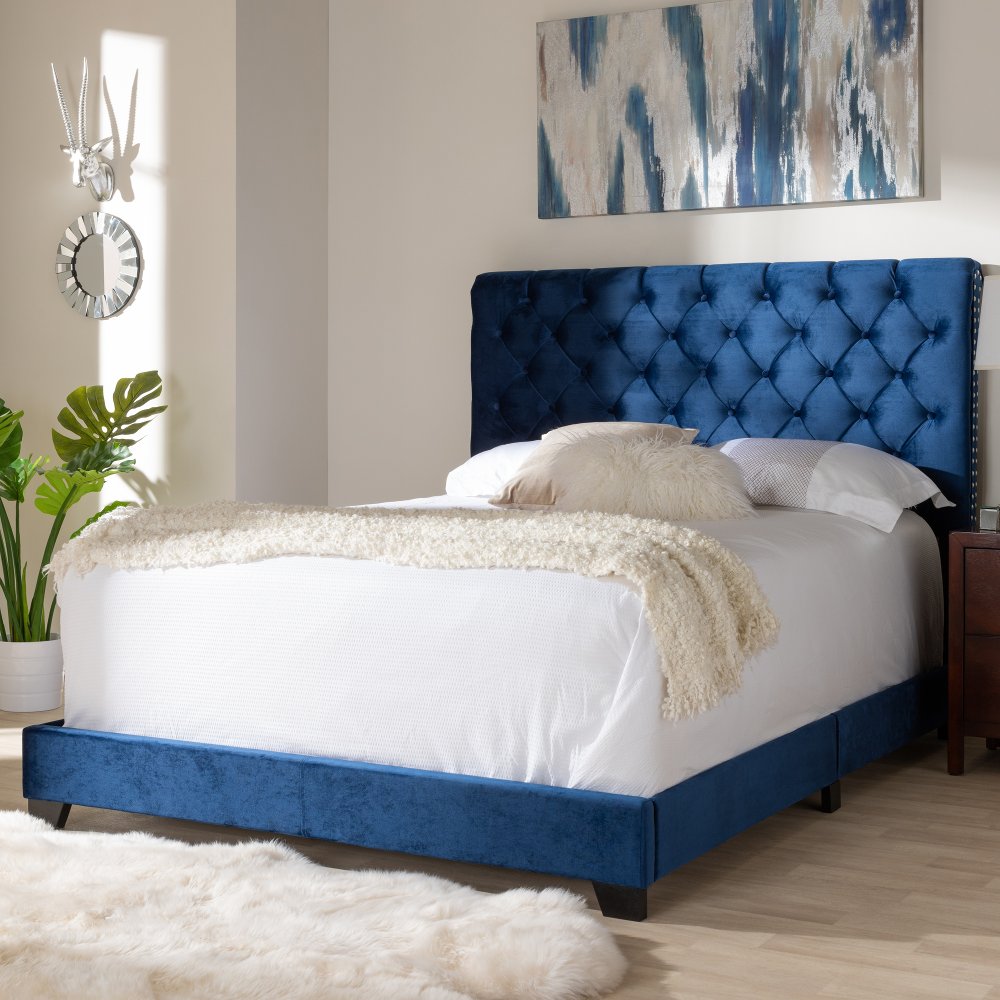
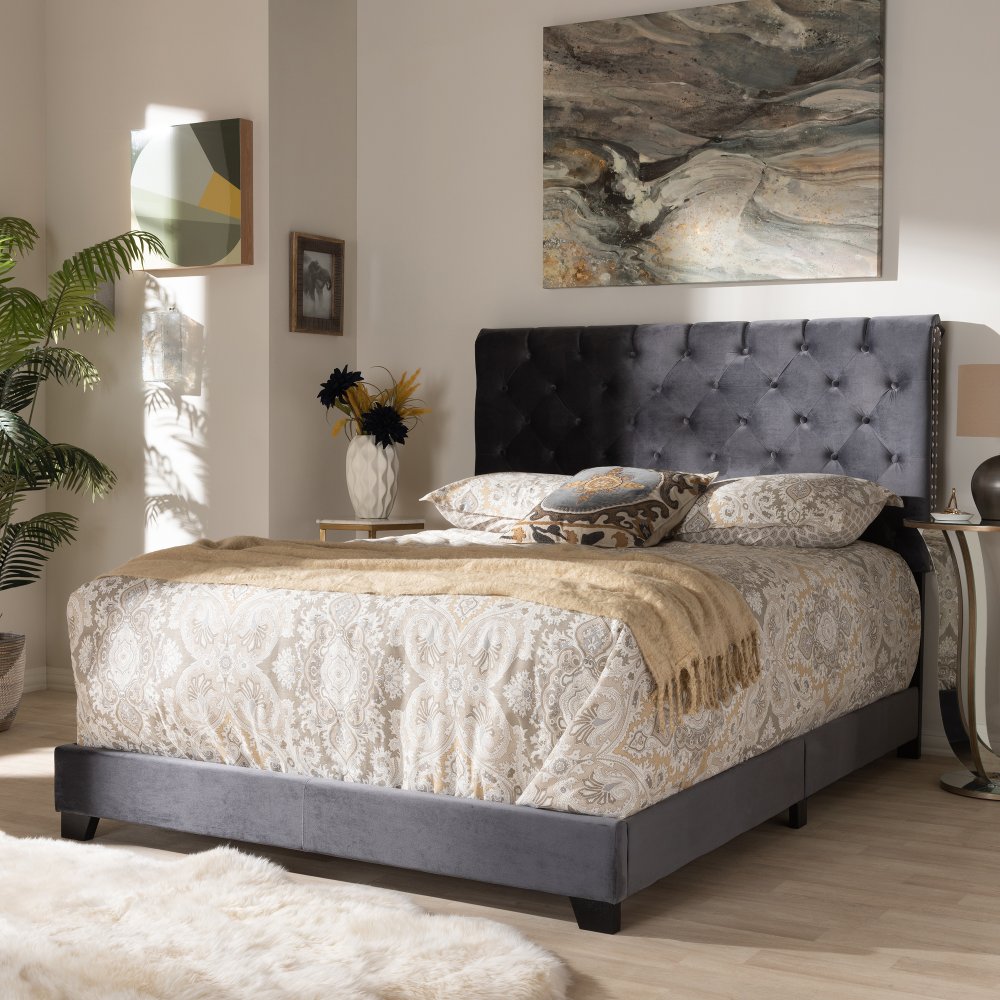
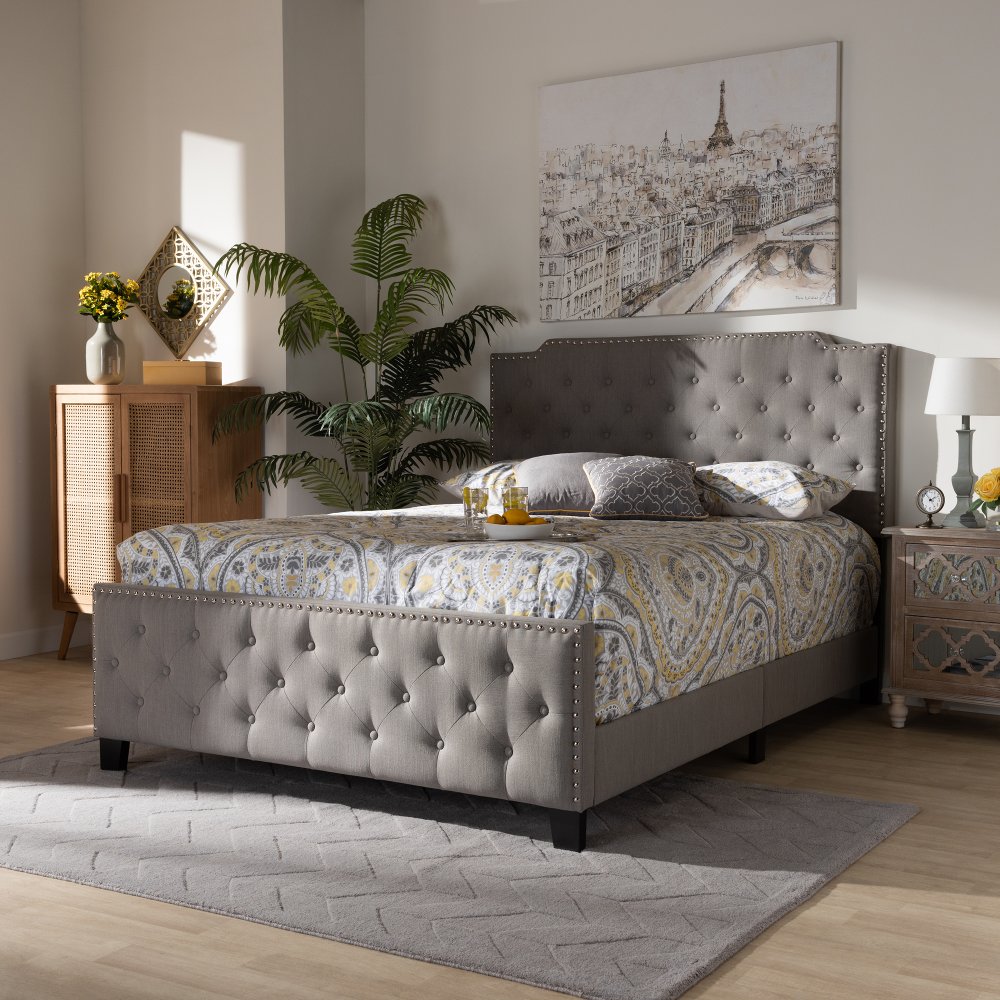
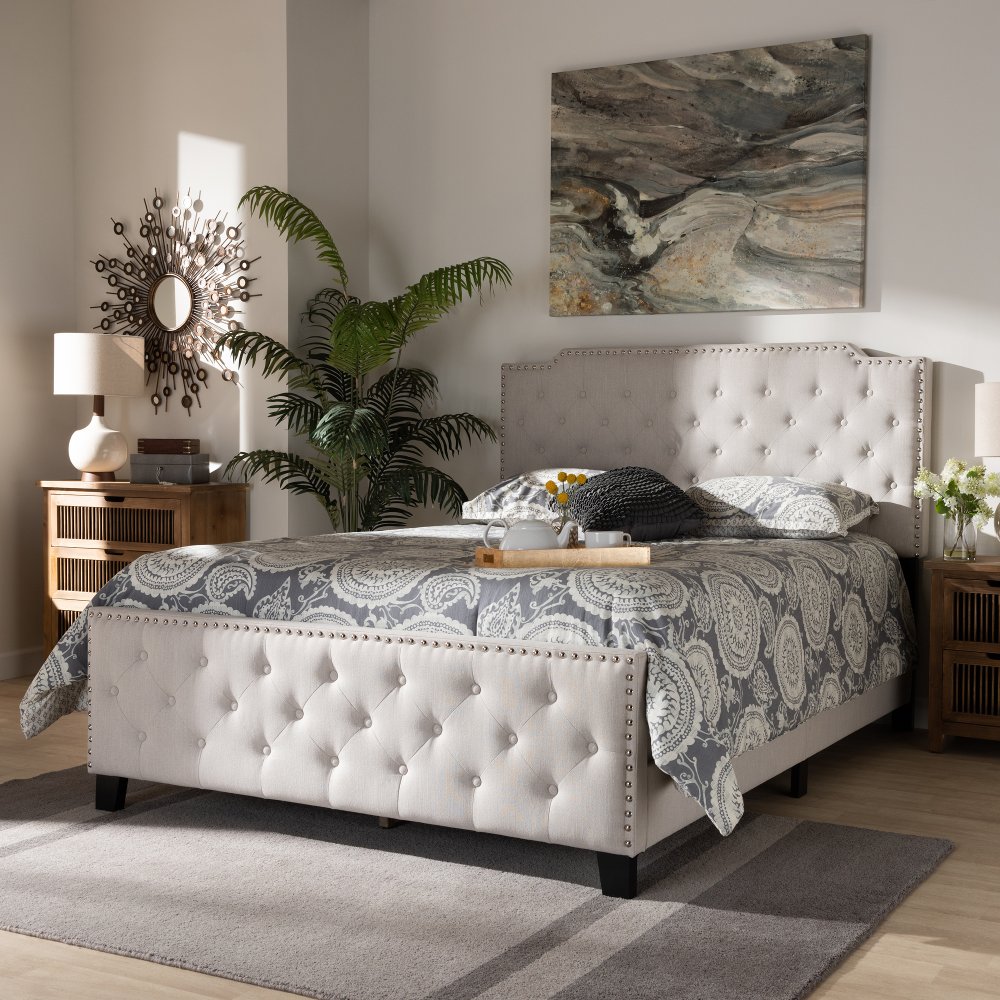
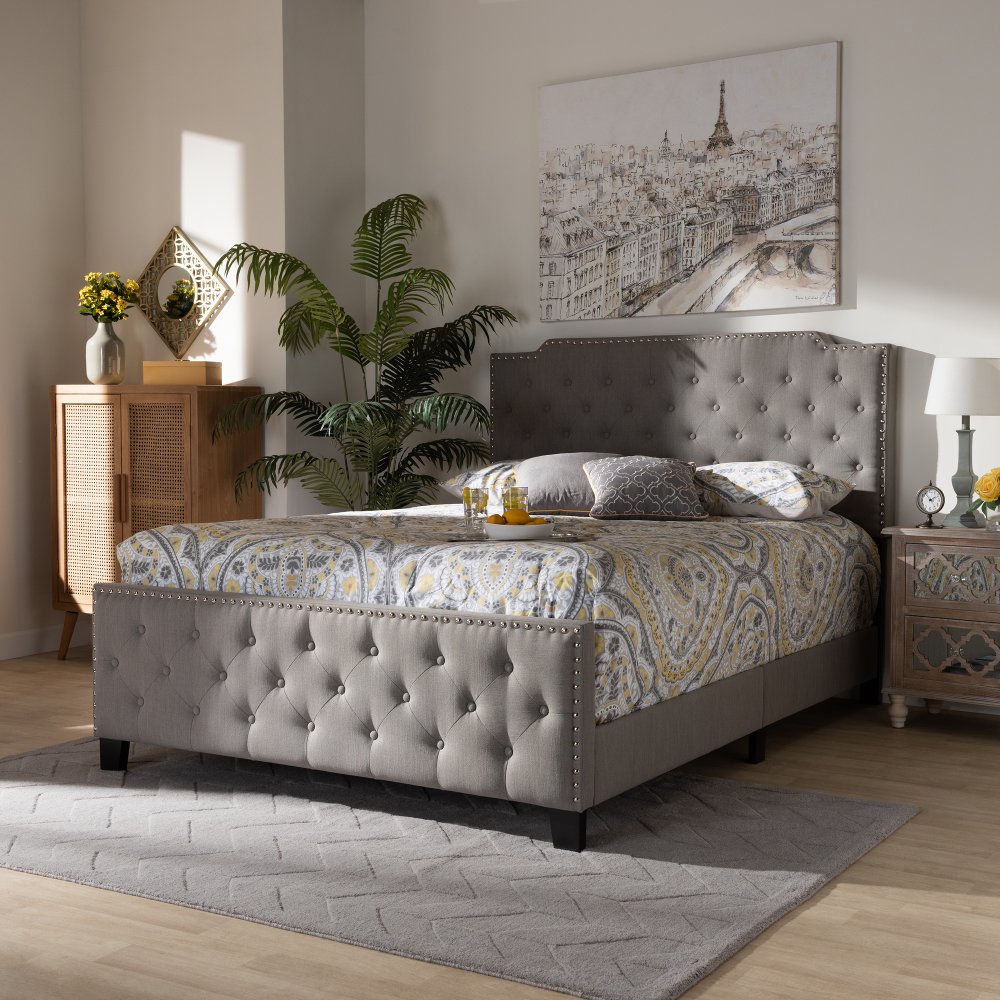
Tufted velvet headboards bring soft texture, tailored detail, and a comfortable backdrop to the bed, giving a bedroom a finished feel without requiring a complete furniture change. Their defining features are velvet upholstery and tufting: stitched or buttoned indentations that draw the fabric into a repeating pattern over padding. Diamond tufting creates a traditional, dressy look, while square patterns feel more structured and understated. The velvet’s short, dense pile catches light differently depending on its direction, so the same fabric can look softly muted in the morning and richer under a bedside lamp. That subtle variation adds depth to neutral bedrooms and makes deeper shades especially expressive. A navy or forest-green headboard can anchor crisp white bedding, while cream, taupe, or soft gray works easily with patterned quilts and warm wood nightstands. Shape matters as much as color. A straight top keeps the profile simple, an arched or camelback silhouette adds a graceful curve, and winged sides give the bed a more enclosed appearance. Taller designs make a strong focal point behind stacked pillows; lower profiles can feel more balanced beneath artwork or near a window. Although tufted velvet often suggests vintage glamour, it also fits comfortably into transitional and contemporary spaces when paired with clean-lined furniture. A simple dresser, plain linen-look bedding, and a small reading lamp let the upholstery stand out without making the room feel formal. For someone who reads a few chapters before sleep or enjoys a quiet cup of coffee in bed, a securely installed, padded headboard offers a softer surface to lean against than exposed wood or metal. Cushioning varies, and a supportive pillow can still make longer stretches more comfortable. These upholstered headboards work well in primary bedrooms, guest rooms, and older children’s rooms where a soft finish suits the space. During the cooler months, velvet pairs naturally with layered blankets, but its appeal doesn’t depend on the season.
A good fit starts with more than the mattress size printed on the label. Tufted velvet headboards may be designed for twin, full, queen, king, or California king beds, but their overall dimensions and mounting arrangements can differ. A queen mattress is typically 60 inches wide, for example, while its headboard may extend beyond that width to frame the bed. Checking the full width is especially useful when nightstands sit close together, a door swings toward the bed, or winged edges project into the room. For a bedroom built around a queen mattress, velvet queen headboards help narrow the focus to that size, though exact dimensions and attachment details still deserve attention. Some headboards connect to compatible bed frames through mounting slots or brackets; others mount to the wall or use a different installation method. Matching size names alone doesn’t establish compatibility, so compare bracket spacing, hardware requirements, and the frame manufacturer’s instructions before choosing. Adjustable mounting positions, when included, can help accommodate different mattress heights, but the listed adjustment range determines how much flexibility there actually is. Measure from the floor to the top of the mattress, including any foundation or topper, to picture how much tufting will remain visible. A thick mattress and tall pillows can hide much of a shorter design, while a very tall headboard may crowd a low window or sloped ceiling. Placement also affects daily use: allow room for nearby outlets, switches, baseboard trim, and nightstand drawers. If the bed has an adjustable base, confirm the base’s headboard attachment requirements and any clearance needed as it moves. A headboard generally adds an upholstered backdrop rather than supporting the mattress; the bed frame or base provides that support. Secure installation matters both for appearance and for keeping movement to a minimum when someone settles against the cushions. Wall-mounted styles need fasteners appropriate for the wall construction, and frame-mounted styles need properly fitted hardware.
Materials and care details help determine how a velvet upholstered headboard will handle everyday life. Velvet describes the fabric’s construction rather than a single fiber: upholstery may use polyester, cotton, blends, or other fibers, each with its own feel and maintenance needs. Polyester velvet is often chosen for everyday upholstery, but durability depends on the particular fabric, backing, seams, and construction—not the fiber name alone. Performance velvet may offer specified stain resistance or other protective qualities; that designation doesn’t mean every spill will wipe away or that every cleaning product is safe. Beneath the fabric, foam or other padding shapes the upholstered surface, while a wood, engineered-wood, metal, or mixed-material structure provides the framework. For frequently used bedrooms, secure tufting, neatly finished seams, and stable mounting connections deserve as much attention as color. Deep tufts create appealing shadows, though their folds can also collect dust and hair. Gentle vacuuming with an upholstery attachment, following the manufacturer’s instructions, helps keep those recesses tidy. Check the care label before spot cleaning, blot spills promptly rather than rubbing, and test any permitted cleaner in an inconspicuous area first. Some fabrics allow water-based cleaning, while others require solvent-based products or professional care. Avoid assuming that steam, a wet cloth, or a stiff brush is suitable for all velvet. Pressure and changes in pile direction can leave temporary shading or marks that aren’t necessarily stains; use only the recommended method to refresh the surface. Keeping the headboard away from prolonged direct sunlight can help reduce uneven fading. In households with pets, consider whether claws might catch the upholstery and whether the chosen shade will make shed hair especially noticeable. Pillows between the fabric and someone’s head can help limit contact with hair products and natural oils. For a guest room, an easy-care fabric and a moderate profile can make the space welcoming without overwhelming it. In a bedroom used every day, the right balance of texture, proportions, sturdy attachment, and manageable care helps a tufted velvet headboard feel as practical as it looks inviting.
Read More