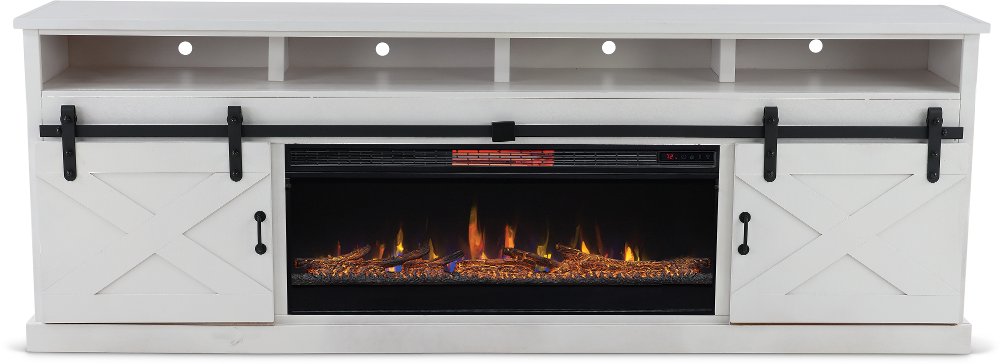
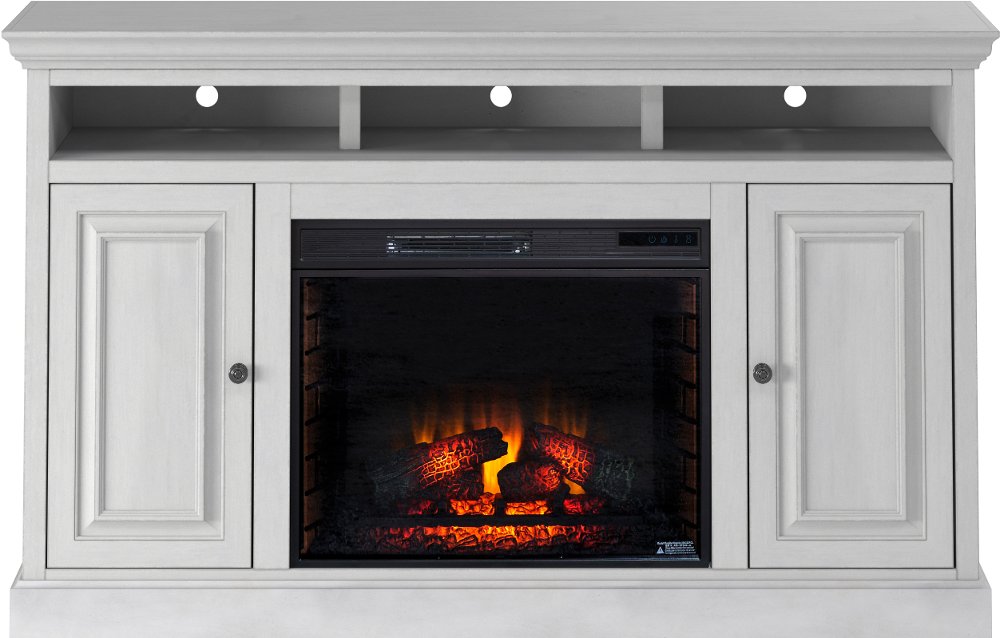
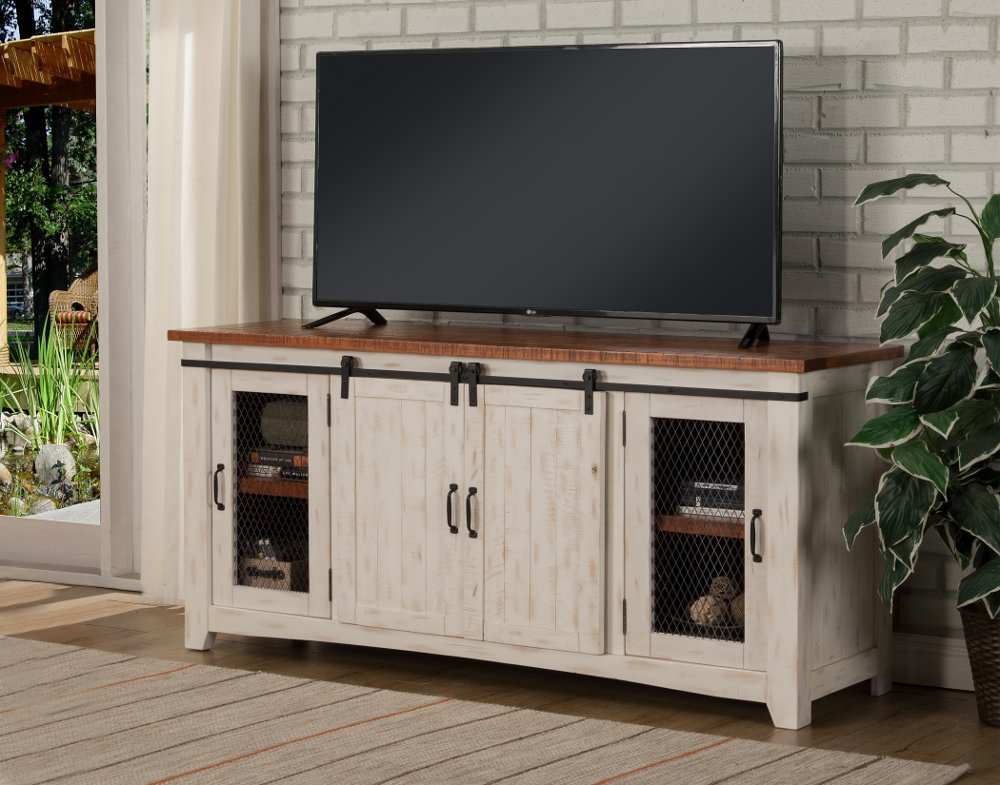
TV stands for smart TVs give your screen a stable home while keeping streaming devices, gaming consoles, and everyday essentials organized. A smart TV doesn’t need a special internet-connected stand; it needs furniture that fits its dimensions, supports its weight, and leaves room for the equipment you use alongside it. Media consoles range from simple open-shelf designs to enclosed entertainment cabinets, with some designs adding built-in outlets, USB charging ports, or integrated LED lighting. Those extras can make a setup more convenient, but the right fit starts with the television itself. Screen sizes are measured diagonally, so a television’s advertised size isn’t the same as its actual width. Check the TV’s full width, depth, weight, and foot spacing against the stand’s usable top surface and stated weight capacity. Widely spaced feet need solid support at both ends, while a central pedestal needs enough depth to sit completely on the surface. A console wider than the screen generally creates a balanced look and leaves useful space at either side, provided the entire setup stays within the furniture’s limits. For a larger entertainment area, TV stands for large TVs offer a helpful starting point for finding proportions that suit a broad screen. Height matters, too: a comfortable setup usually places the center of the screen near seated eye level, though your sofa height and viewing position affect the best placement. Picture settling into your usual seat rather than judging the height while standing in the room. If the furniture includes an integrated TV mount, compatibility also depends on the television’s VESA mounting pattern, supported screen dimensions, and weight. A freestanding media console beneath a wall-mounted smart TV serves a different purpose, providing storage and visual balance without carrying the screen. Either arrangement can work well in a living room, apartment, bedroom, or dedicated movie space when the furniture matches the way you watch.
Storage makes a TV stand useful long after the screen is in place. Open shelves keep frequently used components accessible, while cabinets and drawers give controllers, spare cables, instruction booklets, and remote controls a place to land. For a household that streams most of its entertainment, a streamlined console with a few compartments may be enough. A gamer or movie enthusiast may need deeper shelves, adjustable storage, and separate spaces for a receiver, console, and disc player. Measure each component with its plugs connected, since a cabinet that fits the device itself may still leave too little room for cables behind it. Ventilation is just as important as shelf size. Electronics need the clearances specified by their manufacturers, and an enclosed cabinet can trap heat even when everything looks neatly tucked away. Open backs, ventilation slots, and generously spaced shelves can help support airflow, but they don’t replace those clearance requirements. Cable-management openings let cords travel between compartments and toward the outlet with fewer visible tangles. Some TV stands include built-in power strips or USB ports, which can simplify charging a controller or connecting small accessories; check the electrical ratings and follow the furniture and device instructions rather than assuming every port supports every use. Integrated lighting is another optional feature, not a requirement for smart TV compatibility. Depending on the design, LED lights may offer adjustable brightness, color settings, or app controls, while voice control requires specifically compatible hardware and software. A soft glow around the console can add atmosphere to a gaming setup without making the furniture the main attraction. Leave room for audio equipment as well. A soundbar should sit where it won’t cover the bottom of the picture or block the TV’s remote sensor. Cabinet doors also deserve attention: solid fronts conceal clutter, but components operated by infrared remotes may need a clear signal path. Thoughtful storage keeps the setup easy to use instead of simply hiding everything behind closed doors.
Materials and construction shape how a smart TV stand looks, feels, and holds up to daily use. Solid wood brings natural grain and character, while wood veneer gives a surface the appearance of real wood over a supporting core. Engineered wood with a laminate finish can offer a consistent look and a surface that’s straightforward to wipe clean, although edges and seams still need protection from moisture. Metal frames introduce a lighter, more open profile or an industrial feel, depending on their finish and proportions. Glass shelves can make furniture appear less visually heavy; check that the glass is appropriate for the intended use and observe each shelf’s load limit. Durability depends on the whole piece, including its joinery, shelf supports, hardware, finish, and assembly, rather than on one material alone. A long shelf loaded with equipment needs adequate support, and doors and drawers should operate smoothly without pulling the cabinet off balance. In a busy family room, easy-clean surfaces and enclosed storage can help manage fingerprints and small accessories. In a compact apartment, a shallower cabinet may preserve walking space, as long as it still accommodates the television base and electronics safely. Consider door swings, drawer clearance, and the route between the sofa and nearby rooms before settling on a footprint. Style can then follow the room’s existing character: warm wood tones pair naturally with textured upholstery, clean-lined cabinets complement a simple interior, and painted finishes can coordinate with nearby shelving. Care is usually uncomplicated when it follows the manufacturer’s directions. Dust with a soft cloth, clean spills promptly, and use only cleaners approved for the finish; avoid spraying liquid directly onto furniture or nearby electronics. Follow assembly instructions carefully and use the recommended anti-tip restraints for both the furniture and television, especially in homes with children or pets. With the right dimensions, practical storage, and a finish suited to everyday life, a TV stand helps turn a collection of screens, cords, and components into a comfortable place to unwind.
Read More