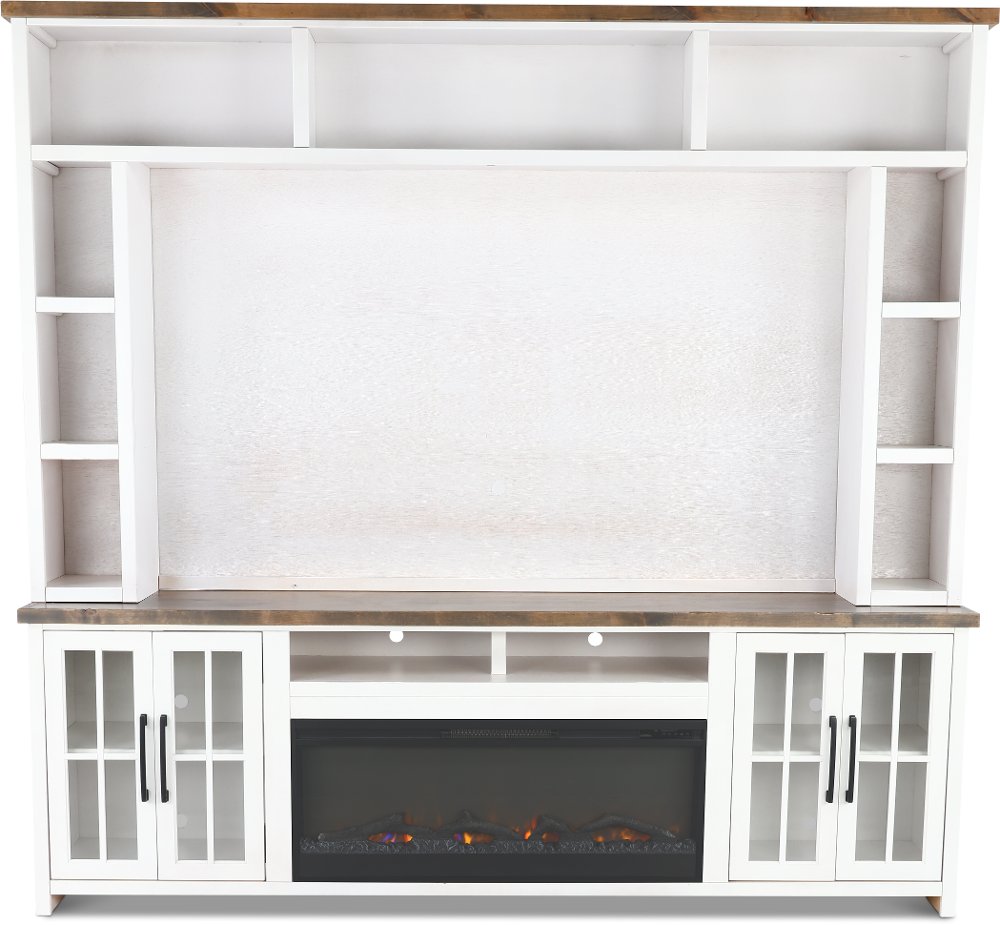
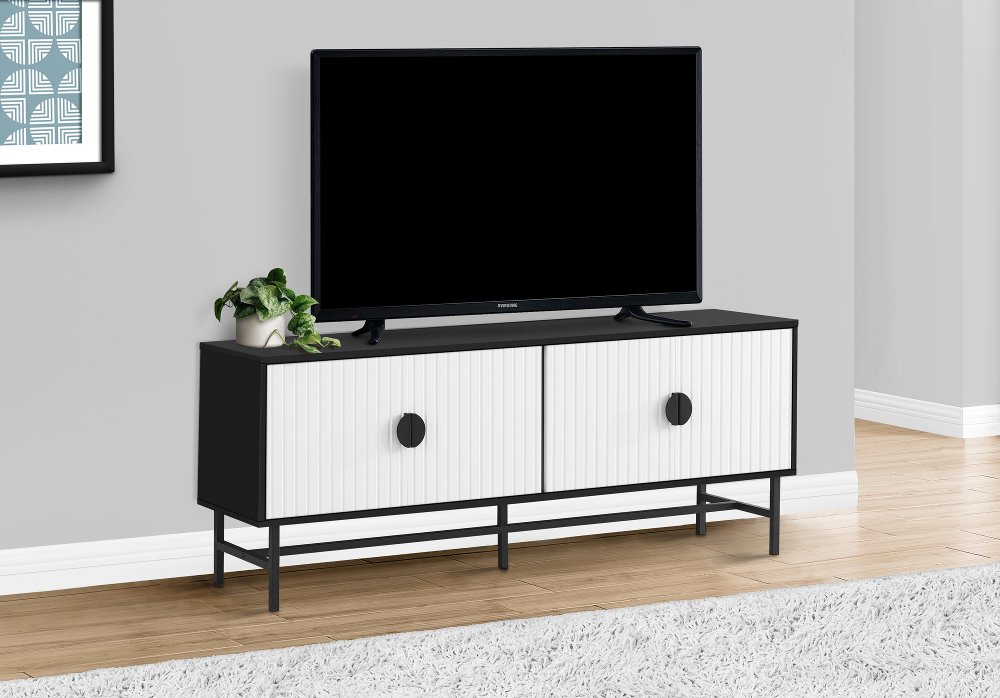
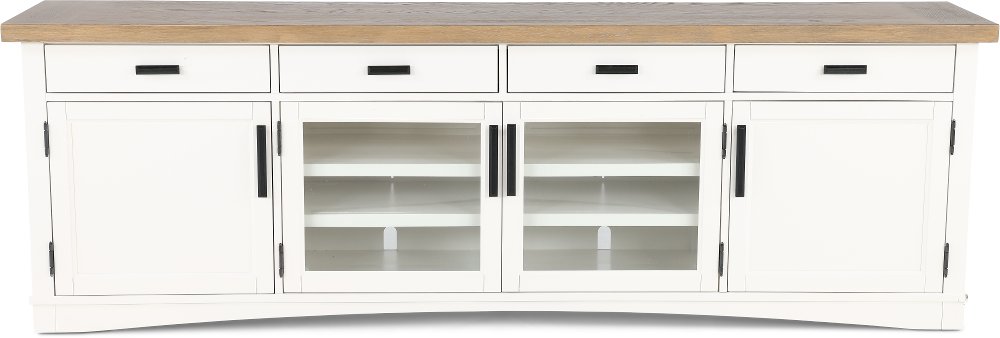
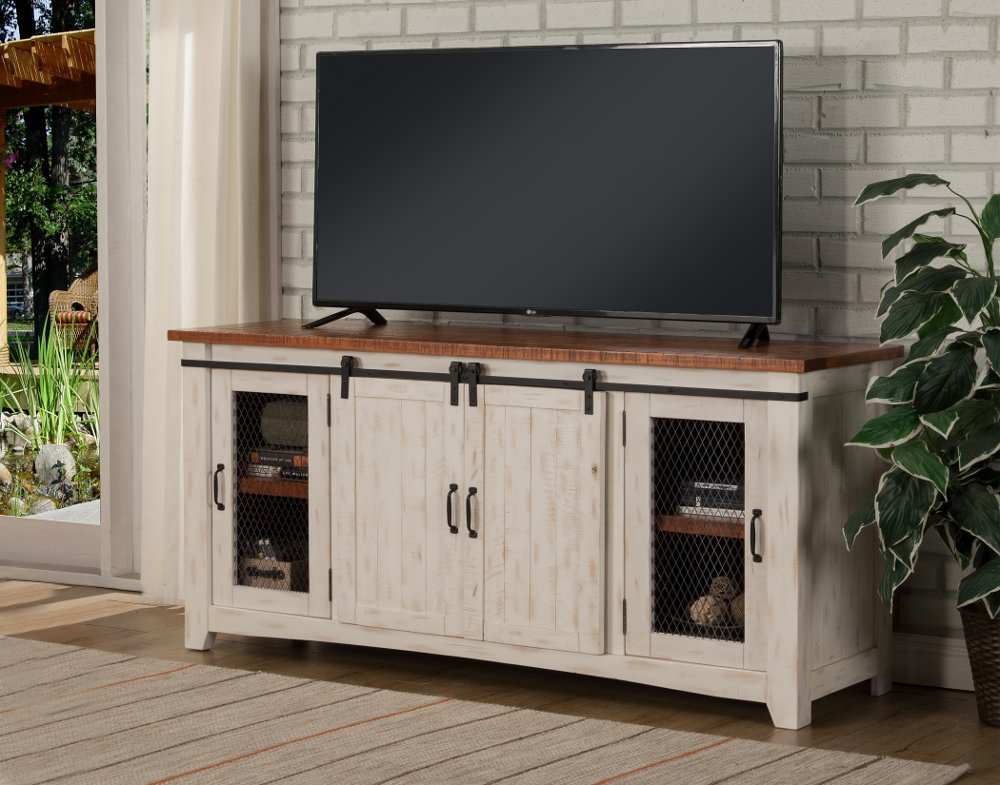
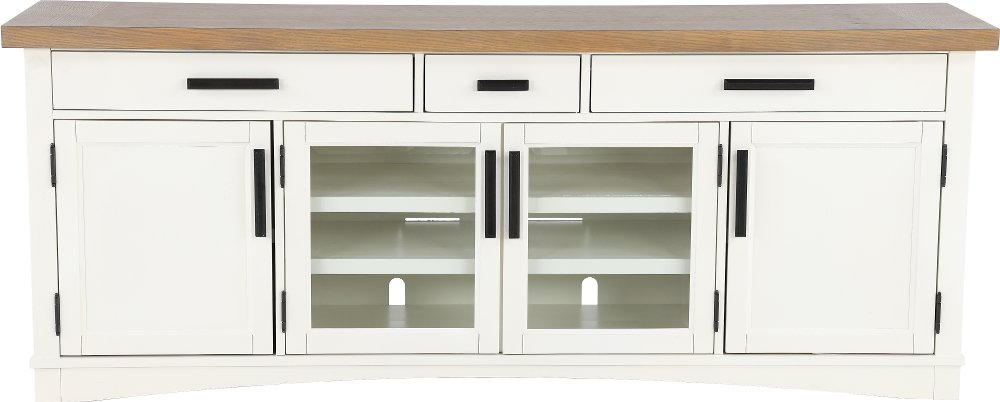
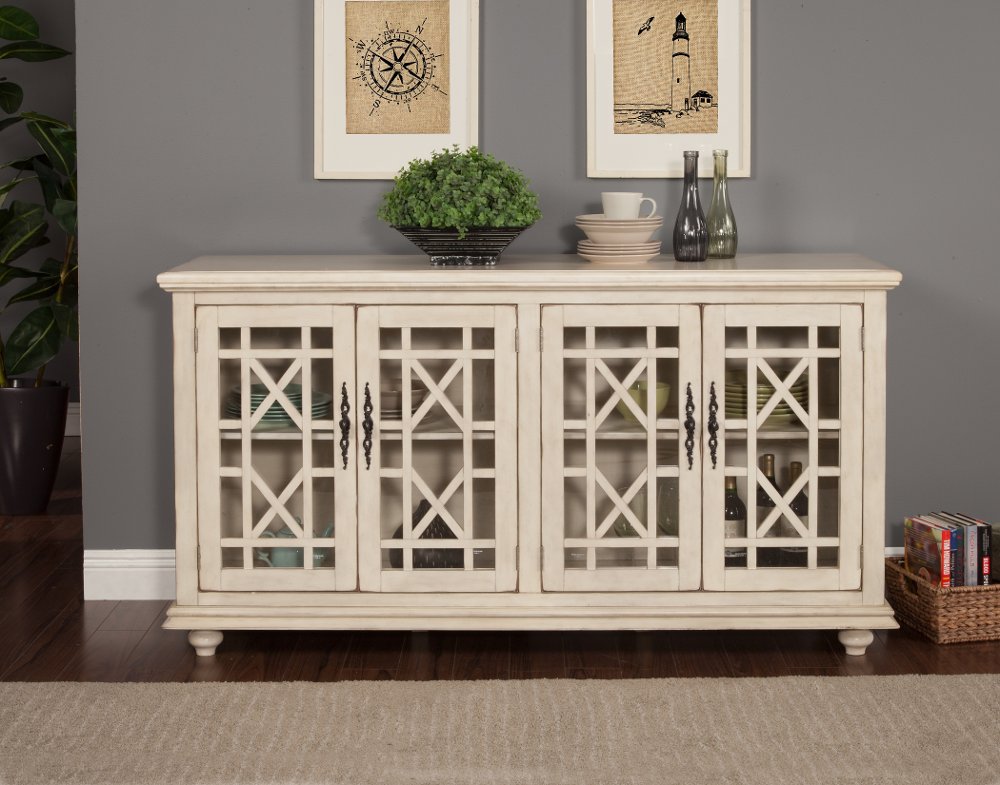
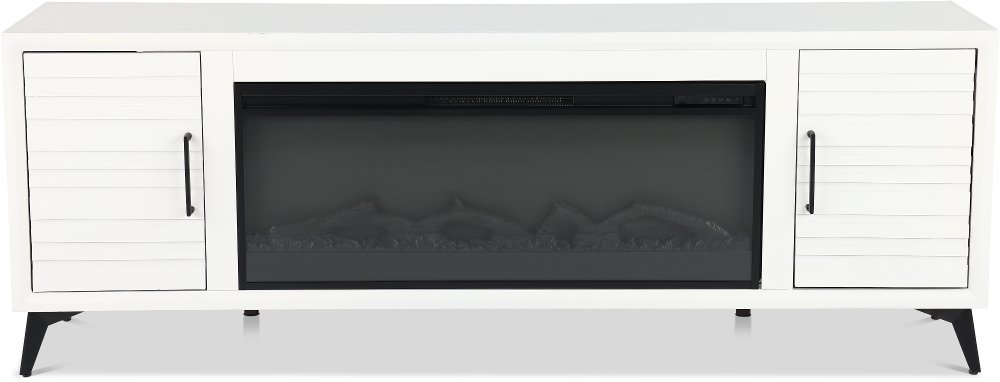
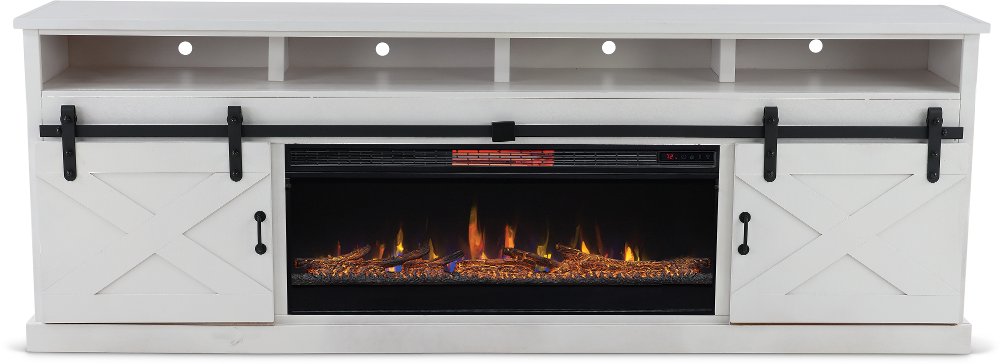
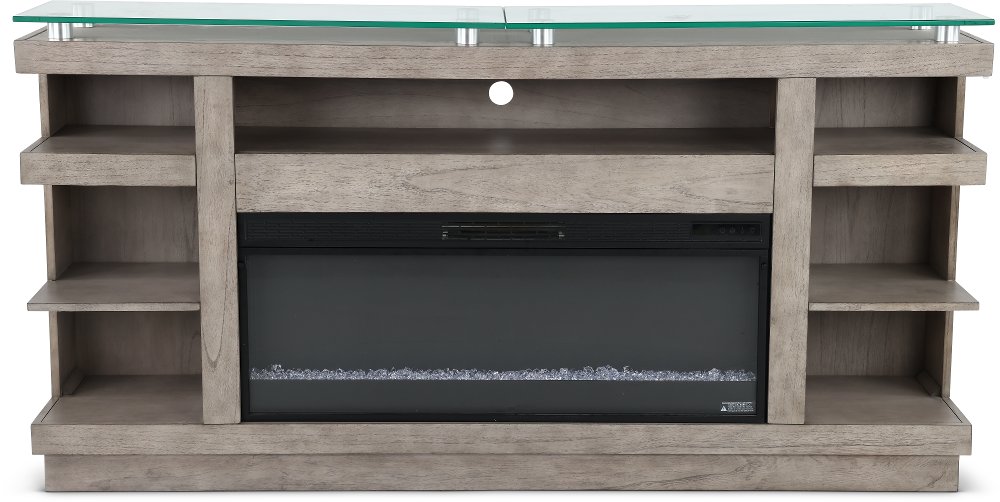
White entertainment centers for flat screen TVs bring the screen, storage, and display space together in a finish that feels clean without demanding an all-white room. Against a deep blue wall, a white entertainment center creates a crisp focal point; beside pale upholstery and natural wood accents, it blends into a softer, more relaxed setting. The category includes low-profile media consoles, tall cabinet arrangements, floating wall units, and multi-piece entertainment centers with shelving on either side of the television. Each shape serves a different purpose. A low console leaves room for artwork around a wall-mounted screen, while a larger media wall can give books, speakers, and family photos a place alongside everyday electronics. Floating designs keep the floor beneath the cabinet visible, creating an open look, but require appropriate wall construction, mounting hardware, and installation. Fireplace media consoles combine television storage with an electric fireplace insert; their placement and use depend on the manufacturer’s clearance, electrical, and ventilation requirements. Style details make just as much difference as the overall shape. Flat doors, slender pulls, and smooth white surfaces suit a modern living room. Framed cabinet fronts, turned feet, or crown molding lean more traditional, while textured finishes and wood-tone tops bring a casual feel to farmhouse or coastal spaces. Bright white tends to look sharper, and creamy white feels softer alongside beige fabrics or warm wood flooring. Lighting can change how those undertones appear, so comparing a finish with nearby trim and furniture helps create a cohesive room. For a smaller footprint or a simpler arrangement, White TV Stands for Flat Screens offer a related starting point when a full surround would feel too substantial. The best match gives your television a comfortable home while leaving enough visual space for the rest of the room, whether that means a compact apartment seating area, a shared family room, or a dedicated space for movies and games.
Fit starts with the television’s actual dimensions, not just its advertised screen size. TV sizes are measured diagonally, while furniture dimensions describe width, depth, and height. For a television resting on a console, check the TV’s overall width, the distance between its feet, the depth of its base, and its weight against the furniture manufacturer’s stated limits. Every support point should sit fully on the intended surface, with no overhang. A console wider than the screen usually looks more balanced; roughly six inches of extra width on each side can be a useful styling target, but it isn’t a substitute for the correct weight rating and a fully supported base. With an enclosed entertainment center, the opening also needs to accommodate the television and the ventilation and connection clearances specified by its manufacturer. Leave access to ports so plugging in a game console or replacing an HDMI cable doesn’t become a furniture-moving project. Viewing height matters, too. A screen positioned near seated eye level is a practical starting point for comfortable viewing, though the right placement depends on your seating and screen dimensions. Think through the room beyond the TV wall: cabinet doors need space to open, drawers need room to extend, and walkways should stay clear. Storage works best when it reflects what actually happens in the room. Open shelves provide access to frequently used components, closed cabinets tuck away controllers and spare cables, and adjustable shelves accommodate equipment of different heights. Measure a soundbar’s width and height, and keep it positioned according to its manufacturer’s guidance rather than tucked behind a door. Cable openings help route cords neatly, but they don’t automatically provide enough airflow for heat-producing electronics. Wall-mounted furniture and televisions need hardware suited to the wall structure and their loaded weight. Secure freestanding furniture and televisions as directed, using the recommended anchoring or restraint systems, especially in homes with children or pets.
Materials and construction influence how a white entertainment center feels, how it wears, and how much attention it needs. Solid wood, wood veneer, engineered wood, metal, and glass all appear in media furniture, often in combination. Solid wood brings natural character and can respond to changes in indoor humidity. Veneer provides a real wood surface over a supporting core, while engineered wood can create a smooth foundation for painted or laminated finishes. Performance depends on the construction and finish as well as the material name: well-supported shelves, secure joints, and drawers that move smoothly matter in daily use. Check individual shelf ratings before loading heavy receivers, speakers, or stacks of books. A white finish can make the entire arrangement feel lighter, but its sheen affects both appearance and upkeep. Glossy surfaces reflect light and may show fingerprints, while matte and textured finishes have their own cleaning requirements. Follow the furniture maker’s care instructions, dust with a soft cloth, and wipe spills promptly. When damp cleaning is permitted, use minimal moisture and dry the surface afterward, paying particular attention to seams and edges. Abrasive pads and harsh cleaners can damage paint, laminate, or protective coatings. Felt pads beneath decorative objects help limit scuffs, and coasters keep drinks from leaving moisture on the top. For households that share one screen for streaming, gaming, and music, a mix of easy-access shelves and concealed storage can make cleanup feel manageable. A drawer for remotes, a shelf sized for the game system, and a cabinet for board games give everyday belongings a predictable place to land. In a quieter living room, fewer displayed objects can keep a larger white media center from looking busy: a short stack of books, a ceramic bowl, and a framed photo may be enough. Consider future equipment changes as well as today’s setup, particularly when choosing a fixed television opening or shallow component shelves. An entertainment center that fits your screen, supports your equipment, and suits your daily habits can make the whole room feel more settled without taking attention away from the people spending time there.
Read More