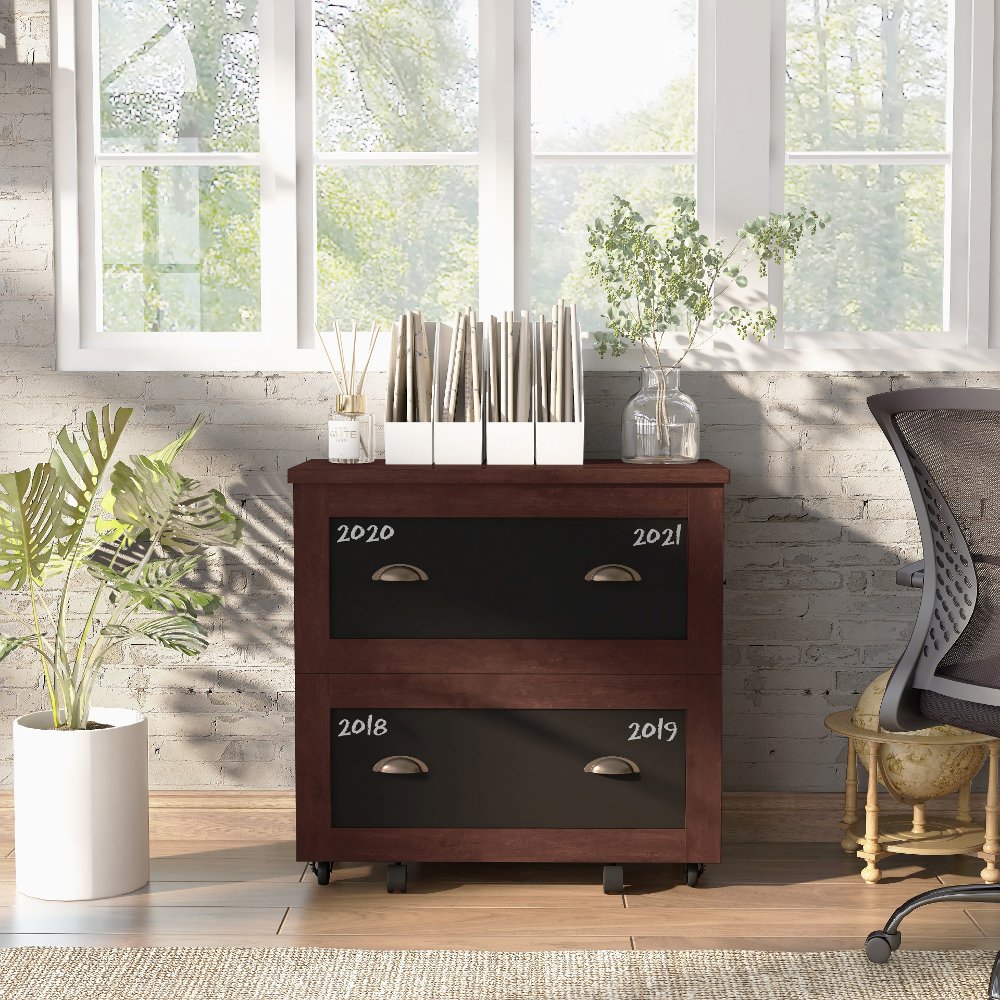
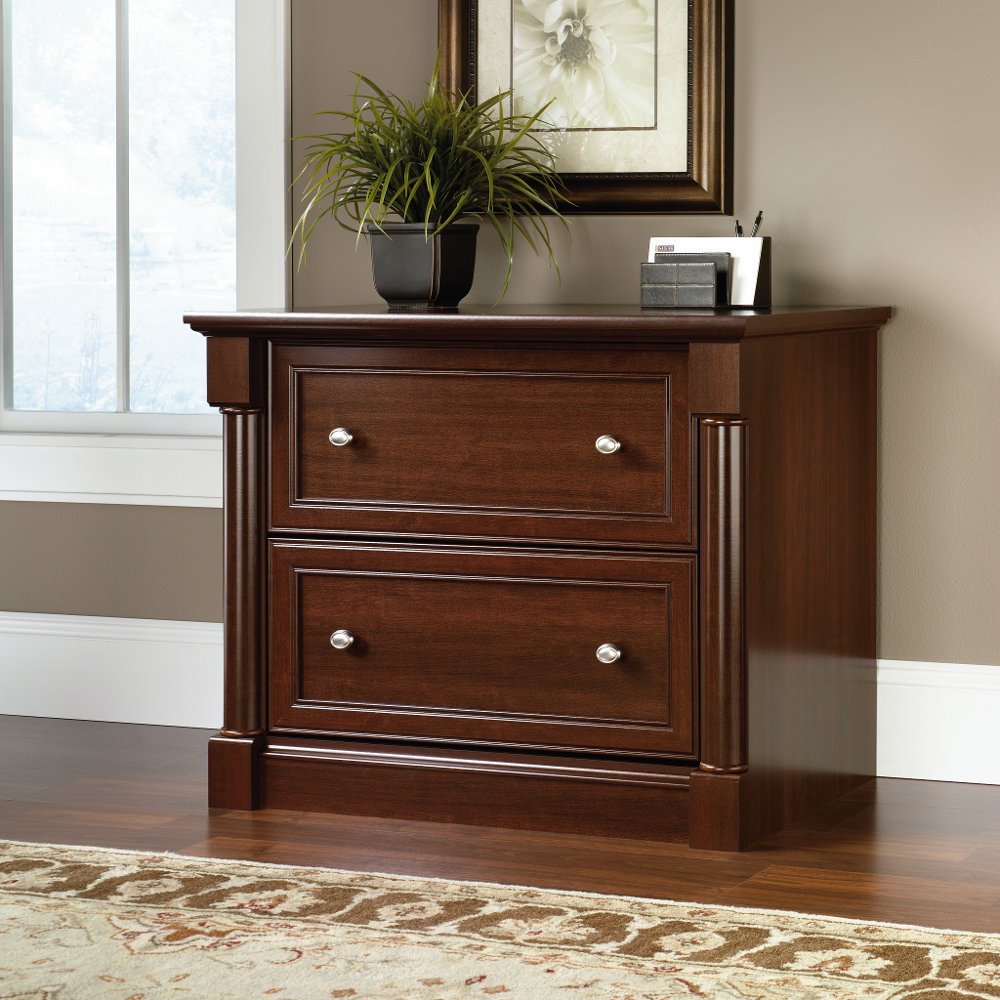
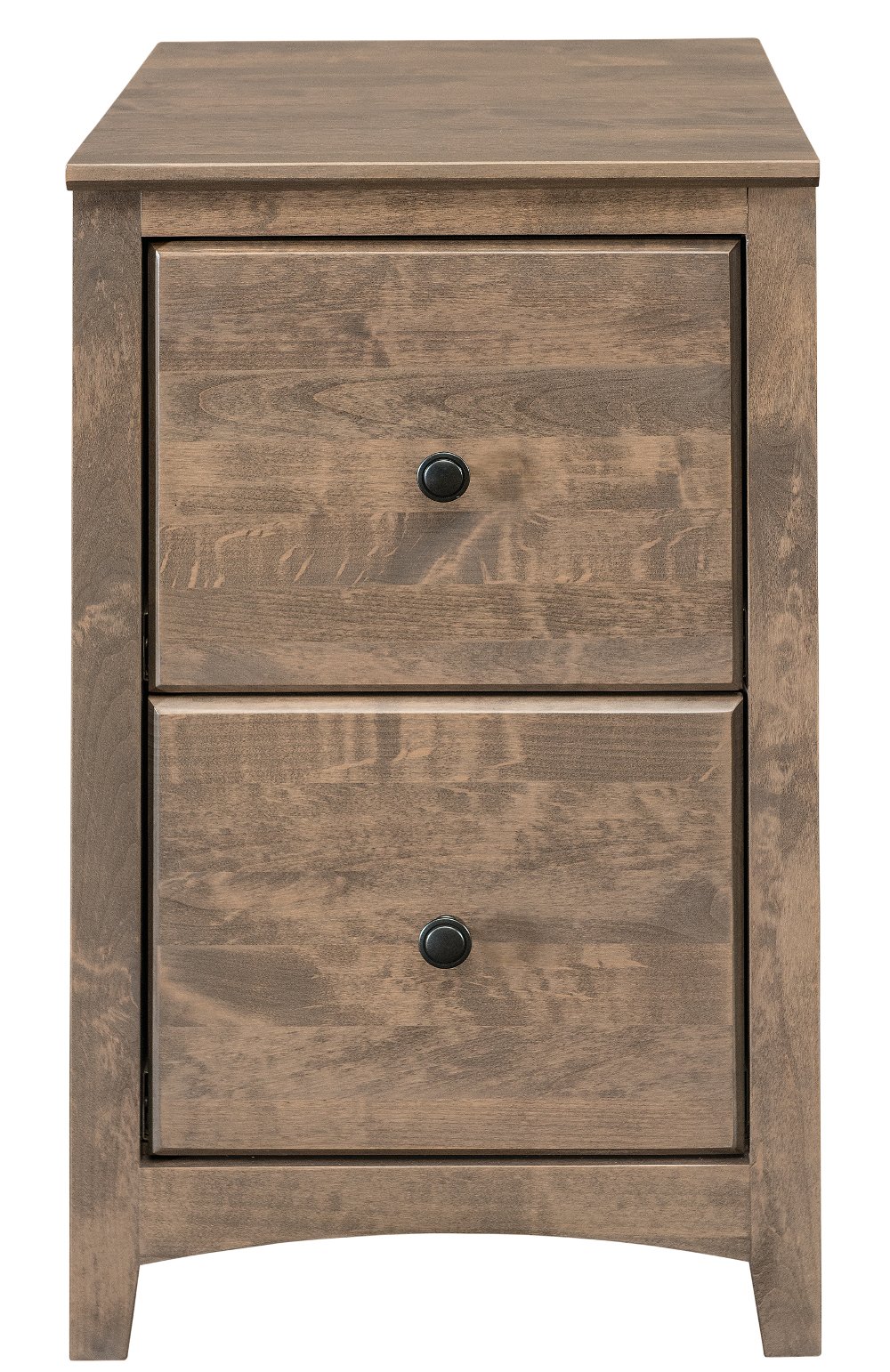
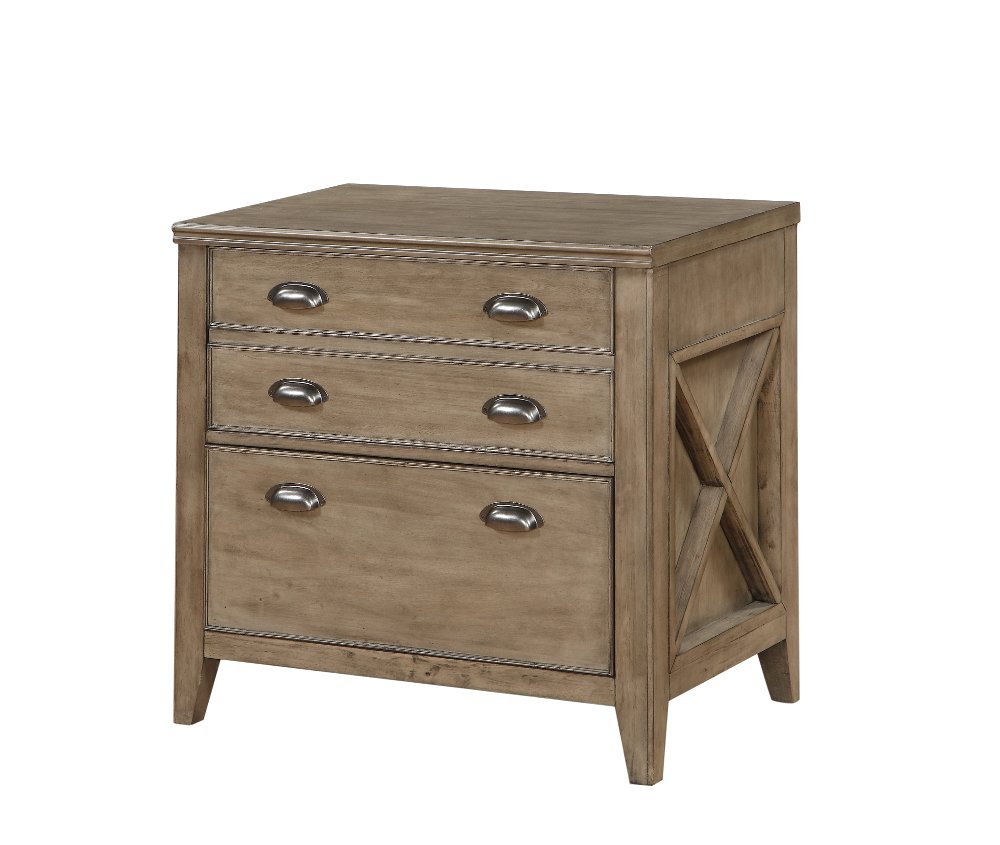
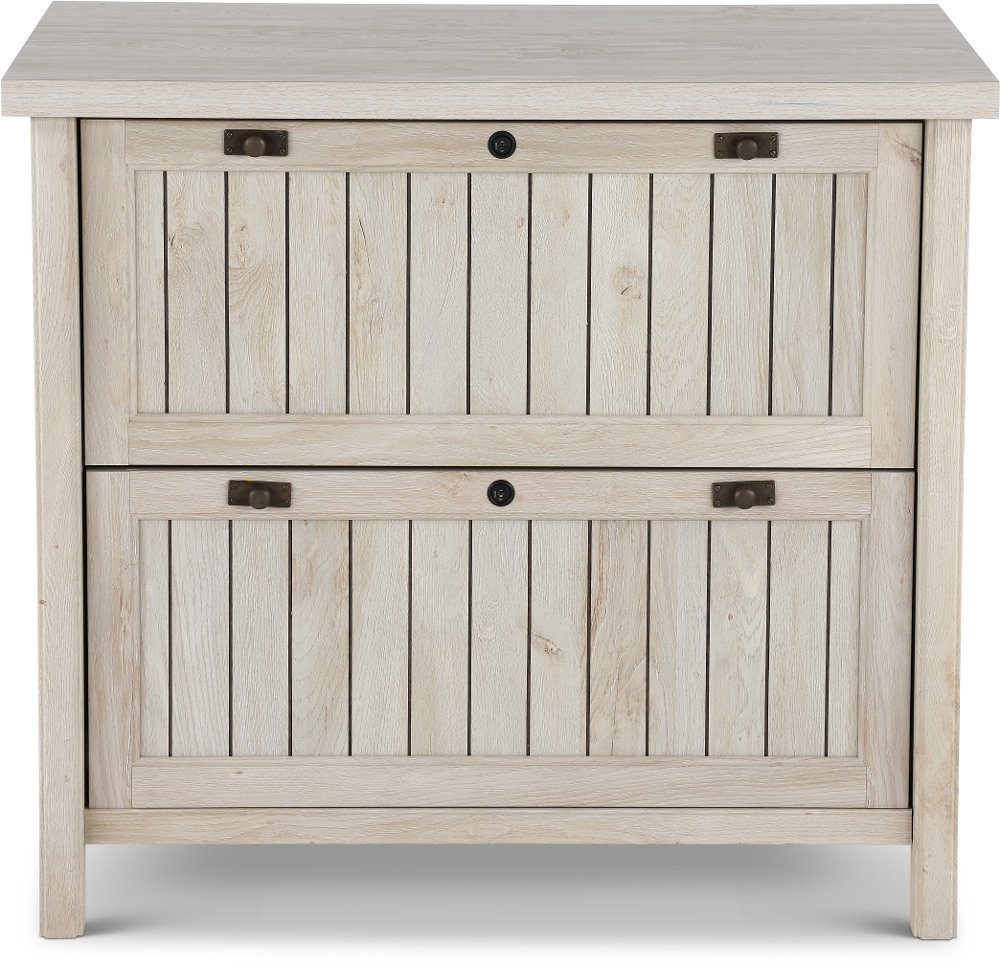
Wood office cabinets give paperwork, supplies, and everyday work essentials a place to land, while bringing the warmth of furniture into a hardworking room. A cabinet with a rich wood grain can make a home office feel more connected to the rest of your home, especially when your desk shares space with a living room or guest bedroom. Behind closed doors, printer paper, charging cords, reference books, and project folders stay out of sight without being out of reach. That balance matters when the same room needs to support a morning video call and a relaxed evening afterward. The right configuration depends on what you need to put away. Shelves work well for baskets, binders, and stacks of supplies, while drawers make smaller essentials easier to separate. If paperwork takes up most of your storage space, look for a cabinet designed for filing rather than assuming any deep drawer will accommodate hanging folders. Letter-size and legal-size documents need different clearances, and file rails should match the format you use. For a student, a compact wood office storage cabinet can hold notebooks, art materials, and class projects beside a desk. For someone working from home, a wider cabinet may keep client files and equipment close enough to reach without interrupting the day. A shared household workspace might call for separate drawers or labeled bins so homework supplies don't get mixed in with business records. Style can be just as practical as layout. Simple doors and understated hardware blend easily into multipurpose spaces, while paneled fronts and shaped bases give a dedicated office a more traditional feel. Light wood tones create a softer visual presence; deeper brown finishes add contrast beside pale walls or upholstered seating. Matching every piece isn't necessary. Repeating a wood undertone, hardware finish, or clean-lined shape can help your cabinet and desk feel comfortable together without making the room look overly coordinated.
Construction plays a big part in how a wood office cabinet looks, feels, and holds up to everyday use. Solid wood shows natural variation in grain and color, giving each piece its own character. Depending on the wood species and finish, some surfaces may show dents or scratches more readily than others, so the best choice reflects how you plan to use the cabinet, not just how it looks. If natural wood construction is a priority, solid wood office storage cabinets are a useful category to explore, with attention to the listed materials for the frame, doors, shelves, and drawer components. A cabinet described as wood may combine several materials. Wood veneer is a thin layer of real wood applied over a supporting core, offering genuine grain with a different construction approach from solid lumber. Engineered wood can provide a consistent base for veneers and other surface treatments. Printed wood-look finishes create the appearance of grain but aren't the same as a real wood surface. Each construction deserves a close look at the product specifications, especially where daily wear is likely. Door edges, drawer fronts, shelf supports, and hardware connections all contribute to long-term performance. A drawer that carries heavy files needs an appropriate weight rating and hardware designed for that load. Adjustable shelves offer flexibility for tall binders or storage boxes, but their capacity still matters when you're lining them with books. Smooth drawer operation and doors that open comfortably make a difference when you're reaching for supplies several times a day. If a cabinet includes a lock, consider what it secures and whether that meets your needs; a furniture lock isn't a substitute for storage specifically rated to protect valuables or sensitive records. Finish details also affect the room's overall feel. Visible grain and a matte surface tend to look relaxed, while a more uniform finish can feel tailored. The most useful cabinet combines an appealing exterior with an interior that suits your actual routine.
Fit goes beyond finding an open stretch of wall. Before choosing a wood office cabinet, measure the space's width, depth, and height, then account for baseboards, nearby outlets, and the room needed to open doors or pull drawers all the way out. A cabinet may fit neatly beside a desk yet crowd the chair when both are in use. In a narrow office, a shallow storage cabinet can preserve a comfortable walkway; a taller design can use vertical space without taking up as much floor area. Follow the manufacturer's anchoring instructions, particularly for tall cabinets or furniture with drawers, and place heavier supplies lower when the design allows. If the top will hold a printer, check its dimensions and weight against the cabinet's usable surface and load rating. Leave space for the paper tray, lid, cords, and any ventilation clearances the equipment requires. An enclosed cabinet should only house operating electronics when both the furniture design and equipment instructions support that use. Delivery access matters, too: doorways, stairs, and tight turns can affect whether an assembled cabinet reaches its intended spot. Once it's in place, a few simple habits help protect the finish. Dust with a soft cloth, wipe up spills promptly, and follow the manufacturer's cleaning directions rather than reaching for an all-purpose spray. Avoid abrasive pads and excessive water, and use protective pads beneath equipment or decorative objects when recommended for the finish. Keep the surface from becoming a permanent pile of mail by giving incoming papers a tray and moving finished work into folders. A shelf reserved for everyday supplies saves searching, while less-used materials can occupy harder-to-reach spaces. Whether your work involves invoices, lesson plans, creative projects, or household records, wood office cabinets can support an orderly space without giving it an institutional feel. Thoughtful proportions, suitable materials, and storage arranged around your habits make the cabinet a practical part of the room, not simply another piece to work around.
Read More