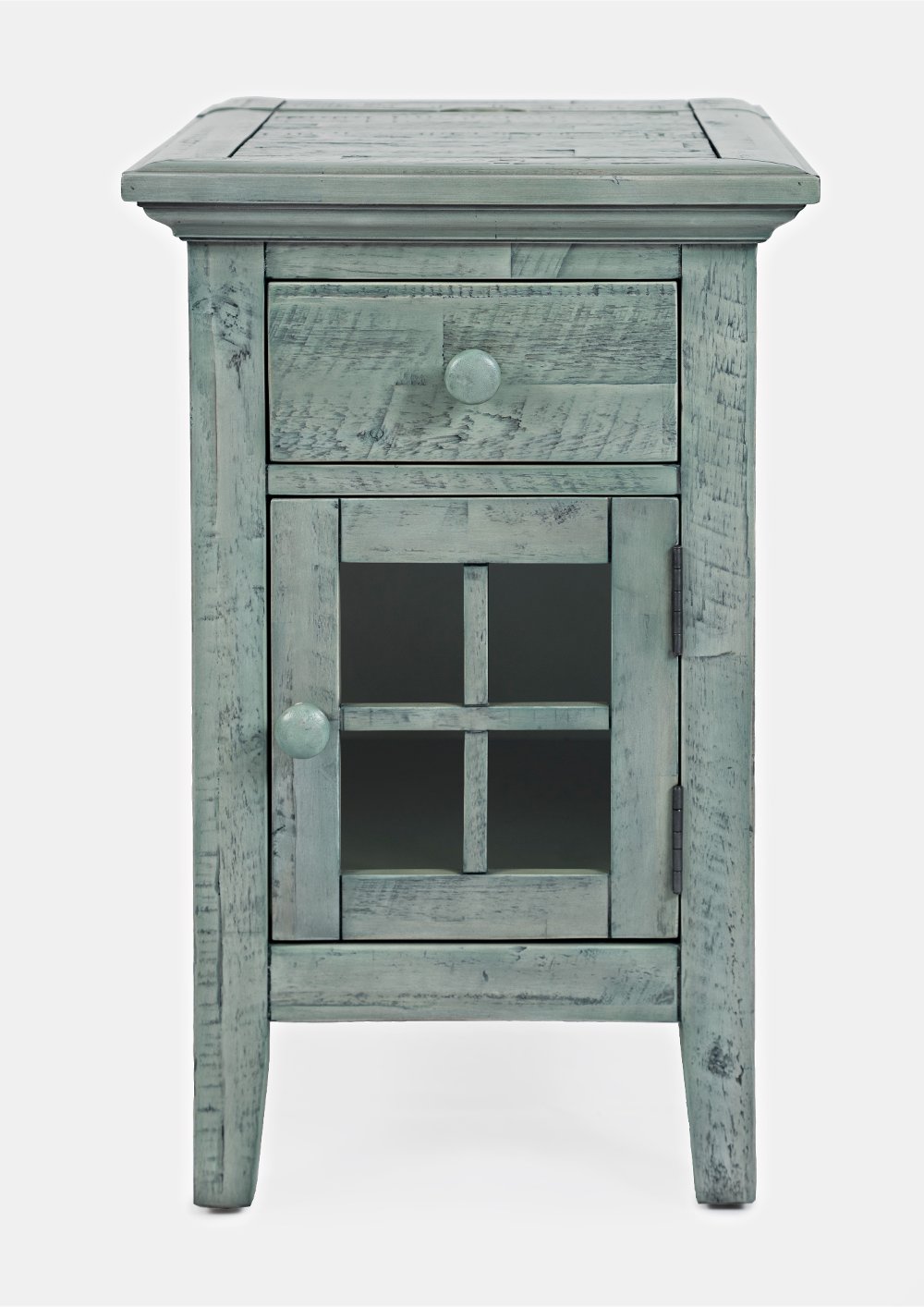
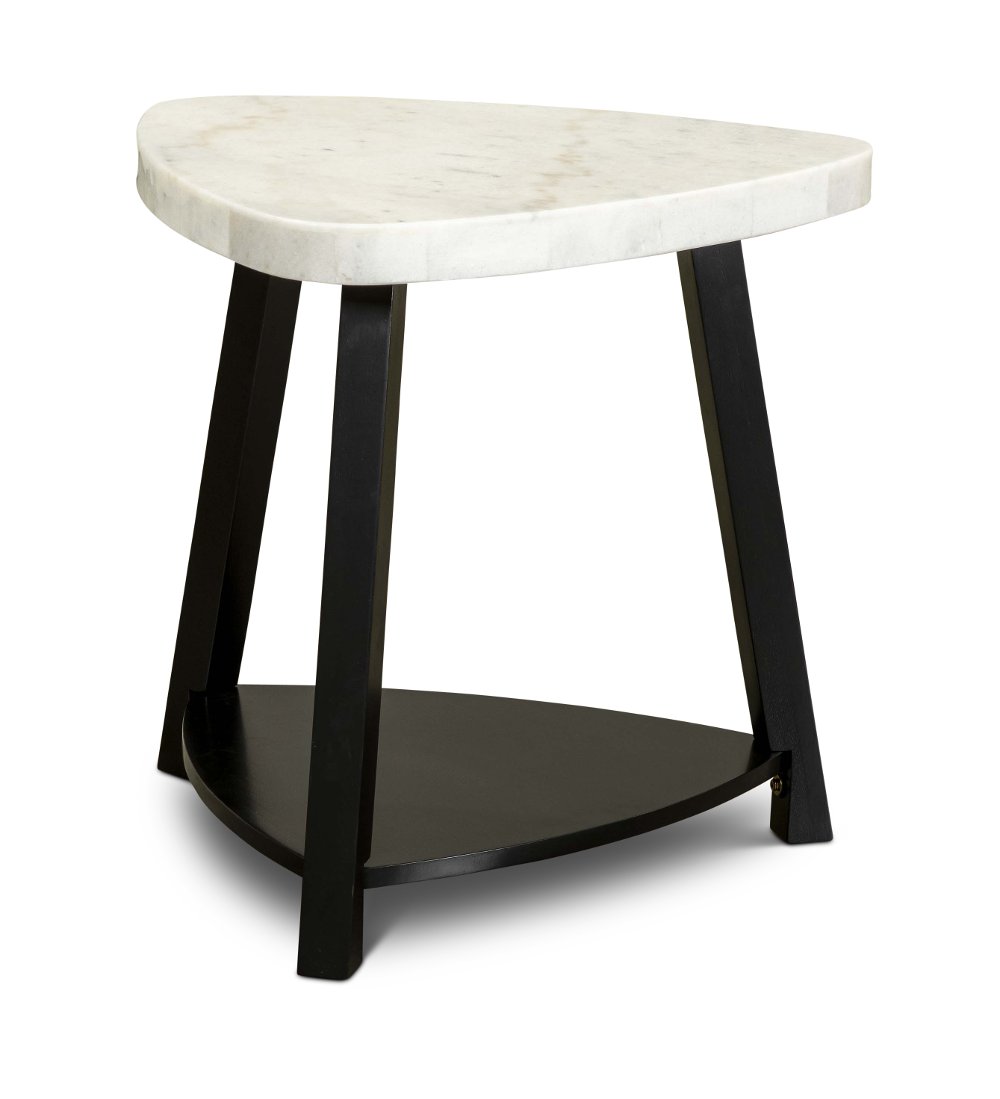
Colorful end tables are compact accent tables that combine an easy-to-reach surface with a painted, tinted, patterned, or multicolored finish. Positioned beside a sofa, armchair, or bed, they give everyday essentials a home while adding personality to the room. Their smaller footprint makes color feel approachable: a blue table beside a neutral sofa can add interest without changing the entire space, while a sunny yellow accent can draw attention to a favorite reading chair. Bright red, orange, and turquoise create a lively focal point; sage, dusty blue, and soft pink bring a gentler touch. Deeper shades, such as navy, forest green, and burgundy, provide rich contrast against light upholstery and pale walls. Solid-color finishes emphasize a table’s shape, while mosaic surfaces, painted floral details, and geometric patterns add another layer of texture and visual interest. Some decorative finishes have an iridescent effect, revealing different tones as the viewing angle changes. Color works especially well when it connects to something already in the room, such as a stripe in a rug, a small detail in artwork, or the trim on a throw pillow. That connection helps an accent table feel intentional without requiring every piece of furniture to match. A pair of different-colored tables can also look cohesive when they share similar proportions or repeat colors found elsewhere in the space. The shape adds to the effect: a square table introduces crisp lines, a sculptural pedestal becomes a decorative accent, and a round tabletop softens an arrangement of straight-edged furniture. For more curved silhouettes, explore Unique Round End Tables. The combination of color and shape supports a range of decorating styles, from clean-lined modern rooms to relaxed spaces filled with woven textures, collected artwork, and comfortable seating. A colorful side table doesn’t have to dominate the room; even a muted finish can give a familiar seating area a fresh sense of character.
The most useful colorful end table fits both the space beside the seat and the way that space gets used. A tabletop close to the height of the sofa or chair arm, often level with it or slightly lower, keeps a drink, book, or remote within comfortable reach. Low lounge seating generally pairs better with a lower table, while a taller upholstered chair may need a higher surface. Width and depth matter just as much. A narrow table can tuck beside a sofa in an apartment living room, while a broader top gives a reading corner room for a lamp, coaster, and current book. Measuring the open floor area helps preserve a comfortable walkway and keeps the table from crowding neighboring furniture. Recliners need additional clearance for their moving parts, and sofa beds need enough room to open without striking an accent table. The tabletop should also suit what sits on it: a wide lamp base needs a stable surface with room left for everyday use, rather than a top filled edge to edge. Drawers offer a place for remotes, charging cables, and reading glasses, helping the color remain the focal point instead of the clutter. Open shelves keep books or a basket accessible, while enclosed storage gives frequently used supplies a more discreet home. Nesting tables provide flexible surfaces that can spread out for guests and tuck together afterward, though their heights and proportions should still work with the surrounding seating. Open-base designs leave more of the floor visible, which can make a compact arrangement feel less crowded; cabinet-style tables offer more concealed storage in exchange for a fuller silhouette. For people who read, work on hobbies, or settle in with a tablet, a colorful end table can support the small routines that make a room comfortable. Beside a bed, it can serve as a casual nightstand when its height and storage meet the sleeper’s needs. In a shared living room, two well-placed tables give everyone a convenient spot for a glass without requiring a large central coffee table.
Materials and construction influence how a colorful end table looks, feels, and holds up to daily use. Painted solid wood offers a substantial feel and may retain visible grain or subtle surface variation, depending on the finish. Engineered wood can support smooth painted or laminated surfaces; the quality of the edges, joints, and protective coating matters as much as the material name. Powder-coated metal brings crisp color to slender frames and sculptural shapes, while its durability depends on the coating and construction. Glass, ceramic tile, or stone details introduce different textures and reflect light in their own ways. Mosaic tops add pattern through small pieces of material and grout lines, creating a decorative surface that may need more careful cleaning than a smooth top. A glossy finish catches light and gives saturated colors extra presence, while a matte finish creates a quieter look. Distressed painted finishes add visual variation, but decorative wear doesn’t replace the need for sturdy joints and a stable base. Tables used frequently benefit from secure hardware, balanced proportions, and a surface suited to their intended purpose. Follow the manufacturer’s care instructions, wipe spills promptly, and use coasters beneath drinks to help protect the finish. A soft cloth is usually a better starting point than an abrasive scrubber, and cleaner compatibility matters for painted surfaces, coatings, and decorative inlays. Protective pads under lamps and accessories can reduce scratches; felt pads under table legs can help protect compatible flooring. Direct sunlight may alter some colors over time, so placement near a bright window deserves consideration. Indoor accent tables should stay indoors unless their materials and finish are specifically rated for outdoor use. For households with children or pets, stable construction and placement away from busy paths deserve extra attention. As a housewarming gift, a colorful end table can be a thoughtful choice for someone furnishing a first apartment or creating a reading nook, especially when the recipient’s room dimensions and favorite colors are known. The right combination of finish, function, and proportions makes it a practical piece with personality.
Read More