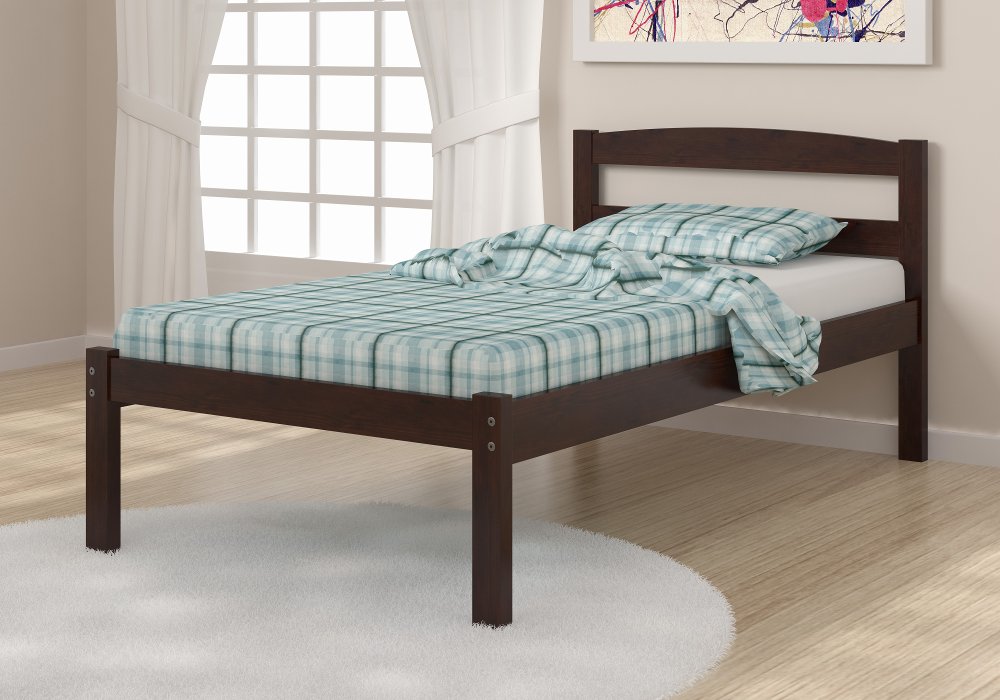
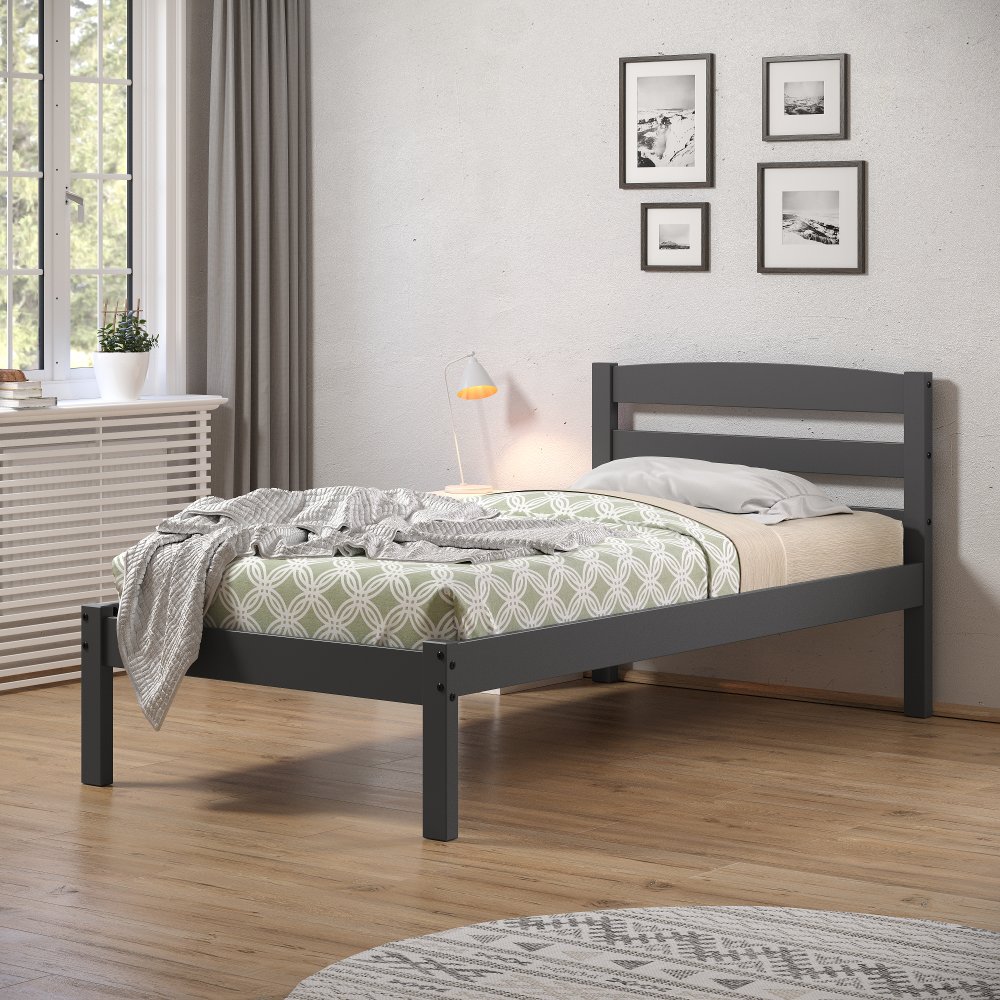
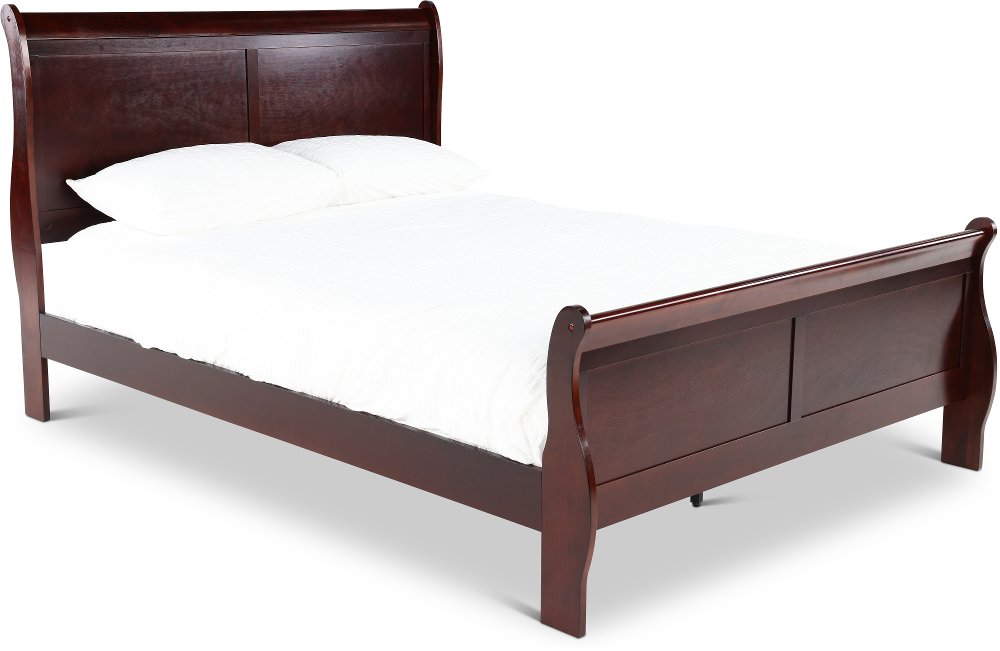
Dark wood beds bring rich color, visible texture, and a grounded feel to a bedroom, making them a natural centerpiece for spaces that range from relaxed and rustic to clean-lined and contemporary. The category includes beds made from naturally darker woods as well as lighter woods finished with deep brown stains. Walnut often has a chocolate-brown color and flowing grain, while mahogany tends toward warmer reddish-brown tones. Oak, acacia, and pine can also take on a darker appearance through staining, so a finish name such as espresso or dark walnut describes the color rather than necessarily identifying the wood species. That distinction matters when comparing materials and deciding how much grain, variation, or texture suits your room. An almost-black espresso finish creates a crisp outline against pale walls, while a warm brown finish with visible knots feels more casual beside woven baskets and linen bedding. Style changes the effect just as much as color. A dark wood platform bed with a low profile keeps the silhouette simple; a paneled headboard adds structure without requiring much decoration. Spindle beds allow glimpses of the wall through the headboard, helping a deeper finish feel less visually solid. Sleigh beds introduce curved lines and a more traditional presence, while four-poster designs draw attention upward and benefit from enough space around them to show their shape. For a primary bedroom, a substantial headboard can anchor the room even when the remaining furniture is understated. In a guest bedroom, a simpler frame leaves more room for a luggage stand or a comfortable chair. Dark wood also works well in a teen’s room because its neutral brown tones can stay relevant as bedding, artwork, and personal tastes change. The best match is a bed whose shape and finish complement the way the room is used, rather than one that depends on every surrounding piece matching exactly.
Size and construction determine how comfortably a dark wood bed fits into everyday life. Twin and full beds can suit smaller bedrooms, while queen and king beds offer more sleeping space when the room allows. Mattress dimensions are only the starting point: the frame, headboard, and footboard can extend beyond them, especially on sleigh beds or designs with thick posts. Measure the bed’s overall footprint and leave comfortable walking space beside it, with room for closet doors, dresser drawers, and bedroom doors to open. A tall footboard can feel restrictive for a taller sleeper who likes to stretch out, while a low footboard keeps the end of the bed more open. Headboard height deserves a closer look, too. A thick mattress and stacked pillows may cover much of a shorter headboard, and a taller design could interfere with a window or sloped ceiling. Platform beds generally support a mattress without a box spring, but the required support system depends on the frame and the mattress manufacturer’s instructions. Check slat spacing, center supports, weight limits, and foundation requirements rather than assuming all platform frames work the same way. For storage beds, measure the clearance needed to pull drawers out fully; a nearby nightstand or rug with a thick edge may affect access. Those drawers can be useful for extra sheets or folded blankets in rooms with limited closet space. Materials also influence performance over time. Solid wood offers natural variation and, depending on the finish and construction, may allow future refinishing. Wood veneer over an engineered core provides a real wood surface and can offer dimensional stability. Neither label alone tells the whole durability story: secure joinery, sturdy rails, appropriate center support, and correctly installed hardware all matter. Pine is softer than many hardwoods and can pick up dents more readily, though those marks may blend into a rustic finish. A smooth, dark surface may make scratches more noticeable, making finish texture worth considering in a busy household.
Styling a dark wood bed is largely about balancing its depth with the colors and textures around it. Crisp white, ivory, pale gray, and oatmeal bedding provide contrast that lets the headboard’s grain and shape stand out. For a warmer look, layer cream sheets with a rust-colored throw or muted olive pillows; for a quieter palette, combine soft blue bedding with warm brown wood and brushed metal accents. Dark furniture doesn’t automatically make a small room feel smaller. A frame with open space underneath, a light-colored rug, and curtains that let daylight through can keep the bedroom feeling airy. Matching bedroom furniture creates a coordinated look, but an exact wood match isn’t essential. A painted nightstand, an upholstered bench, or a dresser in a complementary wood tone can make the space feel collected rather than uniform. When mixing woods, pay attention to undertones: reddish brown, golden brown, and cooler espresso finishes each interact differently with flooring and wall color. For a softer contrast against dark flooring or deeply colored walls, light wood beds offer another way to balance the room. Whatever finish you choose, simple care helps protect its appearance. Dust regularly with a soft cloth, following the manufacturer’s care instructions, because settled dust tends to show clearly on darker surfaces. Wipe up spills promptly and avoid abrasive cleaners, soaking the wood, or applying polish that isn’t recommended for the finish. Position the bed away from direct heating vents when possible, and limit prolonged direct sunlight to help reduce uneven fading. Steady indoor humidity can also help minimize seasonal wood movement. During the cooler months, keep blankets clear of storage drawer tracks and check accessible fasteners if the frame begins to loosen or squeak. Lift rather than drag the bed when moving it, with help as needed, to avoid stressing the joints. With thoughtful proportions, suitable mattress support, and regular care, a dark wood bed can provide a dependable foundation for restful nights and a bedroom that feels comfortably your own.
Read More