Results for: Heaters
#myrcwilleyhome
See how real customers are transforming their spaces with RC Willey. Get inspired, share your style, and create a space that's Your Home. Your Way.
Explore NowSpace Heaters and Patio Heaters — Stay Warm Indoors and Out
A heater is one of those purchases that pays off every time the temperature drops — and the right one makes a real difference in how comfortable your home and outdoor spaces feel through fall and winter. Whether you need a space heater that takes the edge off a drafty bedroom, a propane patio heater that keeps a backyard gathering going well past sunset, or an electric heater for a covered porch where gas isn't an option, getting the type and fuel source right matters as much as the brand.
RC Willey carries a full range of space heaters and patio heaters — indoor, outdoor, electric, and propane — from brands built for real household use. Browse heaters and heating appliances at RC Willey and find the right one for your space.
Why Shop Heaters at RC Willey?
RC Willey has been a trusted appliance and home goods retailer across the western US for decades. Our heater selection covers the full range — from compact tabletop electric heaters for a home office to tall freestanding propane patio heaters built for large outdoor entertaining spaces. Flexible financing makes it easy to buy the right heater for your needs rather than defaulting to whatever fits the immediate budget, and our team is available to help you match the right heating solution to your specific space.
Space Heaters — Indoor Heating Where You Need It Most
A space heater supplements your home's central heating system in the rooms and spaces where it doesn't quite reach — or fills in when you want to warm a single room without running the furnace for the whole house. Modern space heaters are more energy-efficient, safer, and more feature-rich than older generations of the product, and the range of available types covers everything from a small desk heater to a full room-sized unit that handles a large open-plan space.
Electric Space Heaters
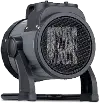
Electric space heaters are the most common indoor heating solution for supplemental warmth. They plug into a standard household outlet, require no fuel supply or venting, and are available in a range of sizes from compact personal heaters to larger units capable of heating rooms up to 1,500 square feet. Most electric space heaters include safety features like tip-over protection and overheat shutoff, which are particularly important for households with children or pets.
Within the electric space heater category, several heating technologies are worth understanding:
Ceramic heaters use a ceramic heating element that warms quickly, maintains a consistent output temperature, and is self-regulating — it becomes less efficient as it gets hotter, which acts as a natural safety buffer. Ceramic heaters are among the most popular choices for bedroom and office use.
Infrared heaters emit infrared radiation that heats people and objects directly rather than warming the surrounding air first. This makes infrared heaters particularly effective in spaces with high ceilings or drafts where heated air would dissipate quickly. They're also quieter than fan-forced heaters since many don't require a fan to distribute heat.
Oil-filled radiant heaters use sealed oil that's heated by an electric element and radiates warmth from the outside of the unit. They heat more slowly than ceramic or infrared alternatives but retain heat longer after being switched off — making them a strong choice for sustained overnight use in a bedroom.
Fan-forced heaters use a heating element combined with a fan to push warm air into the room quickly. They heat a space faster than radiant alternatives but are noisier and less effective in drafty environments.
Propane and Gas Indoor Heaters
Propane heaters designed for indoor use — specifically those rated and certified for indoor operation — provide a higher heat output than most electric alternatives and are a practical choice for garages, workshops, and well-ventilated spaces where a standard electrical outlet isn't convenient. Always confirm indoor-safety certification before using any propane heater inside an enclosed space.
Patio Heaters — Extend Your Outdoor Season
A patio heater is one of the most effective investments for getting more out of your outdoor space. In the western US where RC Willey operates, fall evenings and winter afternoons can be perfectly comfortable with the right heat source — and a quality patio heater extends the usable season of a deck, patio, or backyard by months. Here's what to know about the main types.
Propane Patio Heaters
Propane patio heaters are the most widely used outdoor heating option for residential spaces. They're self-contained — a standard propane tank sits inside or beneath the base — which makes them fully portable and easy to reposition for different entertaining setups. Propane heaters typically deliver higher BTU output than electric alternatives, making them more effective at heating larger outdoor areas and performing in colder ambient temperatures.
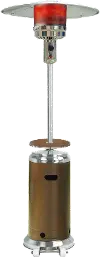
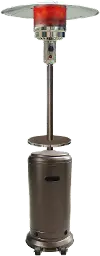
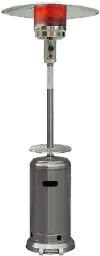
The most common propane patio heater form is the freestanding mushroom-style tower, which radiates heat in a circular pattern from a reflector at the top — typically covering a radius of six to ten feet depending on BTU output. Tabletop propane heaters provide the same fuel efficiency in a smaller format suited to outdoor dining tables and compact patio setups.
Propane patio heaters require adequate outdoor ventilation — they should never be used indoors or in enclosed spaces. When the propane tank runs out mid-use, having a spare on hand is the most reliable way to avoid an unplanned end to an outdoor evening.
Electric Patio Heaters
Electric patio heaters plug into an outdoor electrical outlet or are hardwired directly — no fuel tank, no fumes, no refills. They're the strongest choice for covered patios, enclosed porches, and outdoor spaces where gas isn't available or where a cleaner, lower-maintenance solution is preferred. Electric patio heaters use infrared technology to heat people and objects directly rather than the surrounding air, which makes them perform well even in breezy conditions where convective heat would dissipate quickly.
Most residential electric patio heaters are wall-mounted or ceiling-mounted, which keeps them out of the way and directs heat toward the seating area below. Freestanding electric tower heaters are also available for areas where mounting isn't practical. Many models include remote controls, adjustable heat settings, and timer functions for convenient operation.
Natural Gas Patio Heaters
Natural gas patio heaters connect directly to a home's gas line — which means no tank refills, continuous fuel supply, and lower operating costs over time compared to propane. The tradeoff is that they're not portable and require professional installation to connect to the gas supply. For homeowners with an existing outdoor gas line or a dedicated outdoor cooking and entertaining area where permanent heating is the goal, natural gas is the most convenient and cost-effective long-term fuel choice.
Comparing Patio Heater Fuel Types
| Fuel Type | Portability | Heat Output | Installation | Best For |
|---|---|---|---|---|
| Propane | Fully portable | High – 30,000-50,000 BTU typical | None – self-contained | Open patios, flexible setups, entertaining |
| Electric | Fixed or semi-portable | Moderate – measured in watts | Outlet or hardwired | Covered patios, enclosed spaces, no gas available |
| Natural Gas | Fixed – not portable | High – continuous supply | Professional installation required | Permanent setups, large spaces, high-use households |
Comparing Indoor Space Heater Types
| Type | Heat Speed | Best For | Noise Level | Safety |
|---|---|---|---|---|
| Ceramic | Fast | Bedrooms, offices, everyday rooms | Low to moderate | Self-regulating – very good |
| Infrared | Fast – heats objects directly | High-ceiling rooms, drafty spaces | Very low | Good – surface stays cooler |
| Oil-Filled Radiant | Slow – holds heat longer | Overnight use, sustained warmth | Silent | Excellent – no exposed element |
| Fan-Forced | Very fast | Quick warm-up, smaller spaces | Moderate | |
| Last Row | Lorem Ipsum | Lorem Ipsum |
What to Look for When Buying a Heater
BTU and Wattage — Matching Heat Output to Room Size
For patio heaters, output is measured in BTUs. A general rule is that 5,000 BTUs covers approximately 150 square feet of outdoor space in mild conditions — though wind, ambient temperature, and the openness of the space all affect real-world performance. Most freestanding propane patio heaters produce between 30,000 and 50,000 BTUs, which is sufficient for covering a standard residential patio seating area of 100 to 200 square feet with comfortable warmth.
For indoor space heaters, output is measured in watts. A 1,500-watt heater — the most common output for residential space heaters — handles approximately 150 square feet of well-insulated indoor space comfortably. Larger rooms or spaces with poor insulation benefit from a higher-output heater or multiple units.
Safety Features
For indoor space heaters, tip-over protection and overheat shutoff are the two most critical safety features. Tip-over protection cuts power immediately if the unit is knocked over — essential in households with children, pets, or high-traffic areas. Overheat shutoff prevents the heating element from reaching unsafe temperatures if airflow is blocked or the unit is left on for extended periods. Both features are standard on quality heaters and worth confirming before purchasing.
For outdoor propane patio heaters, a safety tilt valve that cuts gas flow if the unit tips over is the equivalent critical feature. Many models also include a pilot light safety system that shuts off the gas supply if the flame goes out unexpectedly.
Portability and Placement
Indoor space heaters range from compact personal units that sit on a desk to larger floor-standing models that can be moved between rooms on caster wheels. Confirm the heater's cord length and weight if portability across multiple rooms is part of the plan.
Patio heaters range from fully portable propane towers that can be moved anywhere to wall-mounted and ceiling-mounted electric units that are fixed in place once installed. For entertaining spaces where the furniture layout changes depending on the occasion, a portable propane heater offers more flexibility. For a covered patio with a consistent layout, a wall or ceiling-mounted electric heater is a cleaner, lower-maintenance solution.
Weatherproofing for Outdoor Heaters
Outdoor heaters are exposed to rain, humidity, UV exposure, and temperature swings that indoor heaters never face. Look for outdoor heaters with weatherproof construction — powder-coated steel or stainless steel for metal components, and an IP (Ingress Protection) rating for electric models that confirms the unit's resistance to moisture. Even weatherproof patio heaters benefit from a protective cover during extended periods of non-use or off-season storage, which extends the heater's life and finish significantly.
Here's What Shoppers Usually Ask
Can a propane patio heater be used indoors? No — and this is an important safety distinction. Propane patio heaters produce carbon monoxide as a byproduct of combustion and require adequate outdoor ventilation to operate safely. Using a propane patio heater indoors or in an enclosed space creates a serious carbon monoxide risk. For indoor heating with propane, only use heaters that are specifically certified for indoor use and follow all manufacturer ventilation guidelines.
How long does a propane tank last on a patio heater? A standard 20-pound propane tank — the most common size used with residential patio heaters — provides approximately eight to ten hours of heat at full output on a typical 40,000-BTU freestanding heater. Running the heater at a lower heat setting extends the burn time. Keeping a spare tank on hand is the most reliable approach for longer outdoor gatherings.
What size space heater do I need for my room? A 1,500-watt space heater handles approximately 150 square feet of well-insulated indoor space. For a larger room — 200 to 300 square feet — look for a heater with a higher output rating or consider two units. Keep in mind that ceiling height, insulation quality, and the number of windows in the space all affect how much heat is actually needed to maintain a comfortable temperature.
Are electric space heaters expensive to run? The cost depends on your local electricity rate and how frequently the heater runs. A 1,500-watt heater running for one hour uses 1.5 kilowatt-hours of electricity. At an average residential electricity rate, that works out to roughly 15 to 25 cents per hour depending on your region — a reasonable cost for supplemental heat in a specific room, particularly compared to running a whole-house furnace to warm a single space.
How far does a patio heater heat? Most freestanding propane patio heaters with outputs in the 40,000 to 46,000 BTU range effectively heat a radius of roughly six to ten feet from the unit in calm outdoor conditions. Wind reduces effective range — infrared electric heaters tend to perform better in breezy conditions because they heat people and surfaces directly rather than warming the surrounding air.
Is a wall-mounted patio heater better than a freestanding one? It depends on your space and priorities. Wall-mounted and ceiling-mounted patio heaters free up floor space, stay out of foot traffic paths, and provide a cleaner aesthetic — particularly for covered patios with a consistent layout. Freestanding patio heaters are more flexible and can be repositioned for different setups. For a permanent covered patio used regularly, mounted is generally the better long-term choice. For a flexible entertaining space, freestanding works better.
Frequently Asked Questions
- Can I leave a patio heater outside year-round? Most patio heaters can handle outdoor exposure, but using a weatherproof cover during periods of non-use protects the finish and internal components from rain, humidity, and UV damage. Bringing propane heaters into a garage or shed during the off-season extends their lifespan and keeps the propane tank in better condition.
- What's the safest placement for an indoor space heater? Place a space heater on a hard, flat, non-flammable surface — not on carpet if possible, and never on furniture. Keep at least three feet of clearance between the heater and any flammable materials including curtains, bedding, paper, and upholstered furniture. Never leave a space heater running unattended or while sleeping.
- Do electric patio heaters work in cold weather? Yes — electric infrared patio heaters work in cold weather by heating people and objects directly rather than the surrounding air. Their effectiveness in very cold conditions depends on wattage output, distance from the heat source, and wind exposure. In covered or semi-enclosed outdoor spaces, electric heaters perform particularly well regardless of ambient temperature.
- What's the difference between a space heater and a patio heater? Space heaters are designed for indoor supplemental heating — they're typically smaller, run on electricity, and are intended for enclosed spaces. Patio heaters are designed for outdoor use, operate at much higher outputs, and are available in propane, natural gas, and electric versions depending on the installation. Using a patio heater indoors is not safe — the two categories are not interchangeable.
- How do I clean and maintain a patio heater? Wipe down the exterior with a damp cloth and mild soap at the end of each season. Check the burner and reflector on gas models for debris or insect nests that can block gas flow or affect heat distribution. Inspect the gas hose and connections annually for cracks or wear. Store with a protective cover when not in use to keep moisture and UV exposure from degrading the finish and components.
- Are there energy-efficient space heaters? Yes — infrared and oil-filled radiant heaters are generally considered the most energy-efficient electric space heater types for sustained use. Infrared heaters convert nearly all electrical energy directly into heat. Oil-filled radiant heaters retain heat after being switched off, allowing the unit to cycle on less frequently. Look for Energy Star certified models where available for the most efficient options.
Find Your Heater at RC Willey
Whether you need a compact space heater that takes the chill off a bedroom or a full-output propane patio heater that keeps the backyard gathering going through October, RC Willey has the selection to match your space and your situation. Browse heaters and heating appliances at RC Willey and find the right warmth solution for every corner of your home — indoors and out.