Viewing 1 - 32 of 222 Results
Sort by:
View Filters
Sale
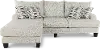
2PC/VILLANOVA/OP2 Villanova Oatmeal Taupe 2 Piece Sectional
Villanova Oatmeal Taupe 2 Piece Sectional
3.5 stars (3 reviews)
$1199.99
$1,399.99Save $200
Essentials
Essentials
Sale
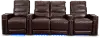
3PC/GRPT/CHLLNGR/OP1 Challenger Graphite Gray 3 Piece Sectional
Challenger Graphite Gray 3 Piece Sectional
0 stars (0 reviews)
$2449.99
$2,649.99Save $200
Essentials
Essentials
Sale
Sale
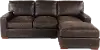
4PC/AUTUMN/STLG/OP3 Autumn Gray 4 Piece Sectional
Autumn Gray 4 Piece Sectional
3.5 stars (3 reviews)
$2299.99
$2,499.99Save $200
Sale
Sale
Sale

#myrcwilleyhome

See how real customers are transforming their spaces with RC Willey. Get inspired, share your style, and create a space that's Your Home. Your Way.

Explore Now

Contemporary Sectional Sofas — The Living Room's Most Powerful Design Statement

A contemporary sectional sofa does two things simultaneously that no other living room piece can — it provides the seating capacity a household actually needs and makes a design statement that defines the entire room around it. In a living room where the sectional is the largest piece of furniture by a significant margin, the aesthetic direction of that single piece sets the tone for everything else. Getting it right matters more than any other furniture decision in the space.

Contemporary sectionals in 2026 have moved decisively away from the sharp, angular silhouettes that defined the category for much of the past decade. Curves are back — gently curved backs, rounded arm profiles, and the arc-shaped sectionals that float beautifully in open-plan living rooms are among the strongest design directions in the category right now. Warm material tones — bouclé, warm linen, performance velvet, and genuine leather in camel, warm white, and charcoal — have replaced the cool grays and cold-toned fabrics that dominated contemporary furniture through the mid-2010s. The result is a sectional category that's genuinely current without asking the room to feel cold or uncomfortable.

RC Willey carries contemporary sectional sofas across L-shaped, curved, modular, and chaise configurations — in the clean lines, warm materials, and refined proportions that define the style in 2026. Browse contemporary furniture at RC Willey and explore our full sectional collection to find the one that fits your living room.

Why RC Willey for Your Contemporary Sectional?

RC Willey has been helping families across the western US furnish living rooms they love for decades. Our contemporary sectional selection brings together the current design directions, warm materials, and quality construction standards that make a sectional worth keeping for years. Flexible financing makes it easier to invest in a sectional that holds up — in both construction and aesthetic — rather than one that feels dated within three years of purchase. Our team is available in-store to help you confirm sizing, compare fabric options, and find the right configuration for your specific room.

Questions Worth Asking — Answered

  • What is a contemporary sectional sofa? A contemporary sectional sofa is a multi-piece upholstered seating system built around the current moment's design language — clean lines or gentle sculptural curves, warm natural materials, minimal ornamentation, and construction quality that justifies long-term ownership. Unlike traditional sectionals with rolled arms and formal fabric, contemporary sectionals use flat or track arms, performance fabrics or leather in warm neutrals, and proportions designed for both comfort and visual impact in a modern living room.
  • What is the difference between a modern and contemporary sectional? Modern refers to the mid-century Modern design movement — tapered legs, organic curves, warm teak and walnut, and the specific aesthetic of 1950s and 1960s Scandinavian design. Contemporary means current — what's being made and sold now. In 2026, contemporary sectionals include bouclé upholstery, curved arc profiles, warm-toned performance fabrics, and Japandi-influenced proportions. Contemporary evolves continuously. Modern refers to a fixed historical aesthetic that can be specifically replicated.
  • Are curved sectionals still in style? Yes — curved sectionals are one of the strongest contemporary furniture directions in 2026, not a passing trend on its way out. The shift from sharp geometric lines to sculptural curves reflects a broader design movement toward warmer, more livable interiors that began several years ago and has continued to deepen. A well-proportioned curved sectional in a warm neutral fabric suits open-plan living rooms, conversation-focused spaces, and any room where the sectional is meant to float rather than push against a wall.
  • What fabric is best for a contemporary sectional? Bouclé — a textured looped yarn fabric — is the defining contemporary sectional fabric in 2026 for its warmth, tactile richness, and visual interest that plain weaves don't deliver. Performance bouclé adds stain resistance to the aesthetic appeal. Performance velvet in warm charcoal, dusty rose, or deep olive is a strong alternative for rooms where a richer, more saturated surface suits the palette. Leather and faux leather in camel, warm white, and cognac suit contemporary sectionals where a cleaner, more refined surface is the priority over textural warmth.
  • What color contemporary sectional goes with everything? Warm white and warm greige — a warm gray-beige — are the most universally compatible contemporary sectional colors in 2026. Both complement warm wood floors and furniture, work with virtually any wall color, and suit the current design direction toward organic neutral palettes. Warm charcoal is the strongest darker neutral — it adds depth without the formality of black and works across cool and warm room palettes. Avoid cool gray — it has dated more quickly than warm-toned equivalents and creates visual tension with the warm wood tones that dominate 2026 interior design.
  • How do I choose the right contemporary sectional for my living room? Start with room dimensions — allow at least 36 inches of clearance on all open sides and 18 inches between the sectional and the coffee table. Then decide on orientation — the living room's relationship to the TV, the entry, and adjacent spaces determines whether an L-shape, curved arc, or U-configuration serves the room best. Choose fabric based on household use — performance fabric for active households, leather for easy-clean priority, bouclé for design-first rooms where daily scrubbing isn't the primary concern.

What Makes a Contemporary Sectional Different

A contemporary sectional is defined not just by what it includes but by what it deliberately avoids. No rolled arms. No nail-head trim. No tufted cushions in formal fabric. No heavy skirts that hide the legs. What contemporary sectionals do use is specific and current — and understanding these defining features helps shoppers evaluate whether a sectional is genuinely contemporary or simply a standard sectional marketed with the label.

Arm Styles — Track, Flat, and Sloped

The arm is the most immediately readable signal of a sectional's aesthetic positioning. Contemporary sectionals use track arms — a flat, straight arm that runs level with the sofa back — or a low-profile slope arm that tapers from back to front in a clean, uninterrupted line. Both arm styles create the clean silhouette that defines the contemporary aesthetic. Rolled arms, T-cushion arms, and wide pillow-top arms are all traditional signals — regardless of the fabric they're upholstered in, these arm styles read as traditional rather than contemporary.

Leg Style and Height

Contemporary sectionals either sit on clearly visible legs — tapered wood or metal, typically four to six inches — or on a platform base with a low reveal that keeps the base clean and consistent. Visible legs in warm wood or metal add a design detail that suits contemporary living rooms. Platform bases work best in rooms where a lower, more grounded profile is the goal — particularly for modular and pit-style configurations.

Leg material matters in 2026. Warm wood legs — walnut, oak, and warm-stained alternatives — suit the warm material direction of contemporary design. Brushed gold and brass-finish metal legs suit contemporary-glam and quiet luxury directions. Black metal legs suit minimalist and industrial contemporary directions.

Cushion Construction and Profile

Contemporary sectionals in 2026 use cushions that maintain their shape and profile — high-density foam cores that hold their form under daily use rather than collapsing and requiring constant fluffing. The cushion profile of a contemporary sectional is deliberate — either a tight, structured cushion that maintains a crisp silhouette or a deep, sink-in cushion that creates the relaxed, enveloping quality of pit-style configurations. Both are contemporary — the choice depends on whether the room prioritizes structured visual precision or deep comfort.

Back Construction — Tight vs. Pillow Back

Contemporary sectionals are available in tight-back and pillow-back configurations. Tight-back sectionals have a firm, fixed back without removable cushions — a cleaner, more architectural silhouette that maintains its appearance consistently over time. Pillow-back sectionals have removable back cushions that allow position adjustment and a softer overall profile — at the cost of requiring daily fluffing to maintain their appearance. For design-first contemporary rooms where the sectional's silhouette is a deliberate visual choice, tight-back is typically the cleaner option.

Contemporary Sectional Configurations — 2026 Direction

Curved and Arc Sectionals

The curved sectional is the defining contemporary configuration in 2026 — and the direction that most clearly separates current contemporary design from the sharp, angular aesthetic of the previous decade. A curved sectional has a gently bowed or arc-shaped back that creates a soft, enveloping seating arrangement that works particularly well floating in the center of an open-plan space rather than pushed against a wall.

The curved sectional's design advantage is its ability to define a conversation zone in an open-plan space without physical walls or barriers — the arc of the back creates a natural boundary that the eye reads as the room's seating area without requiring the sectional to be anchored to a wall or corner. For households with open-plan living rooms where the sofa floats in the center of the space, a curved contemporary sectional is the configuration most suited to that condition.

Curved sectionals are available in full-arc configurations where the entire back follows a continuous curve, and in softer curved alternatives where only the back profile is rounded without the dramatic arc of a full curve. Both read as genuinely contemporary in 2026 — the full arc is the stronger design statement, the softer curve is more versatile across room shapes and sizes.

L-Shaped Contemporary Sectionals

The L-shaped configuration remains the most practical and widely purchased contemporary sectional format — and the contemporary interpretation of the L-shape has evolved significantly from the boxy, angular versions that dominated the category. Current L-shaped contemporary sectionals use softer proportions, curved corner transitions, sloped arm profiles, and warm fabric choices that give the standard L-shape a significantly more current feeling than earlier generations of the same configuration.

L-shaped contemporary sectionals suit most standard rectangular living rooms — the 90-degree configuration fits naturally against a corner wall, creates a clear TV-facing orientation, and provides seating for three to five people comfortably. For contemporary living rooms where a curved arc isn't practical due to TV placement or room layout, a well-chosen L-shaped contemporary sectional in warm bouclé or performance fabric achieves the current aesthetic direction within the most practical configuration.

Modular Contemporary Sectionals

Modular contemporary sectionals are built from individual pieces — corner units, armless chairs, chaises, and ottomans — that combine into standard or custom configurations and can be reconfigured as room needs change. The contemporary interpretation of modular favors low-profile, deep-seat pieces in warm textured fabrics — the modular pit sofa that creates a sunken, enveloping lounge environment is one of the strongest contemporary design directions for dedicated home theater and media rooms.

Modular contemporary sectionals suit households that move frequently, rearrange regularly, or want the flexibility to expand the seating configuration over time without replacing the entire piece. The contemporary modular category has improved significantly in visual quality — earlier modular sectionals often looked visually disjointed — with current designs using consistent arm heights, flush connection points, and cohesive silhouettes that read as a unified piece rather than assembled components.

Chaise Sectionals

A contemporary chaise sectional — a sofa section with a single chaise extension on one end — suits rooms where a full L-shaped sectional would be too large but a straight sofa doesn't provide enough lounging flexibility. The chaise creates a dedicated reclining or lounging position at one end without the full perpendicular section of an L-shape — reducing the total footprint while maintaining the multi-position seating that makes a sectional more compelling than a standard sofa.

Contemporary chaise sectionals are available in left-facing and right-facing configurations — confirm the orientation that places the chaise away from the primary traffic path before ordering. In contemporary styling, chaise sectionals lean toward clean arm profiles, visible legs, and warm upholstery choices that suit the aesthetic even at the smaller scale that the chaise configuration creates.

Contemporary Sectional Materials

Bouclé

Bouclé is the definitive contemporary sectional fabric — a looped, textured yarn that creates a visually rich, tactile surface that plain weaves and smooth performance fabrics don't replicate. The texture of bouclé adds warmth and depth to a sectional's visual character in a way that suits the organic, material-forward direction of contemporary design. Performance bouclé — treated for stain resistance and moisture repellency — makes the material practical for households that need durability alongside the aesthetic.

The most widely purchased bouclé colorways for contemporary sectionals in 2026 are warm white, natural cream, warm oat, and light camel — all of which complement warm wood floors and furniture naturally without reading as cold or sterile.

Performance Velvet

Performance velvet — a tightly woven velvet construction treated for stain resistance — brings a richer, more saturated surface quality to contemporary sectionals than bouclé or plain weaves. In warm charcoal, dusty rose, deep olive, and cognac, performance velvet contemporary sectionals add a quiet luxury quality to a living room that neutral textured fabrics don't deliver in the same way. Velvet reads particularly well in rooms with warm wood accents, brass-finish hardware, and the organic neutral palettes that define 2026 contemporary interiors.

Leather and Faux Leather

Leather and quality faux leather contemporary sectionals occupy a specific design position — cleaner and more refined than fabric options, easier to maintain for households where spill resistance is a daily priority, and particularly well-suited to contemporary living rooms where a more structured, polished aesthetic is the goal rather than the relaxed warmth of textured fabric. Camel, warm cognac, warm white, and charcoal are the strongest leather colorways for contemporary sectionals in 2026 — all warm-toned alternatives to the cool grays that dominated the category in earlier years.

Performance Fabric

Performance fabric — tight-weave polyester or poly-blend constructions treated for stain resistance — covers the broadest range of the contemporary sectional market in terms of color and pattern availability. For households with children, pets, or active daily use where aesthetic matters as much as practicality, performance fabric in warm neutral tones — warm greige, soft sand, warm white — delivers the contemporary look alongside the easy-clean capability that bouclé and velvet don't offer to the same degree.

Comparing Contemporary Sectional Configurations

Configuration Best Room Current Design Strength Seating Capacity Key Consideration
Curved Arc Open-plan, floating layout Strongest – defines the contemporary moment 4 to 6 Best floating in center – not against a wall
L-Shaped Standard rectangular rooms Strong – softened proportions read as current 3 to 5 Confirm left vs right facing before ordering
Modular Pit Home theater, media rooms Strong – deep-seat lounge direction Scales with config Higher cost per seat – reconfiguration benefit
Chaise Sectional Smaller rooms, one lounger Moderate – clean proportions suit contemporary 3 to 4 Chaise direction must be confirmed for layout
U-Shaped Large open-plan rooms Moderate – curved U stronger than angular 5 to 8 Needs significant floor space – 14x18 minimum

Comparing Contemporary Sectional Fabrics

Fabric Visual Character Durability Best For Current Relevance
Bouclé Textured, warm, organic Good – performance bouclé adds stain resistance Design-first rooms, warm contemporary Highest – defining fabric of the moment
Performance Velvet Rich, saturated, quiet luxury Very good – tight weave resists wear Quiet luxury contemporary, accent color rooms Very high – warm tones align with current direction
Leather Clean, refined, structured Excellent – wipes clean easily Minimalist contemporary, easy-care households High – camel and warm tones are very current
Performance Fabric Versatile, easy-clean, wide color range Excellent – treated for daily household use Active households, families, pets High – warm neutral colorways suit current direction
Faux Leather Clean look, accessible price Good – varies by quality Budget-conscious contemporary Moderate – quality varies significantly

Frequently Asked Questions

  • What size contemporary sectional do I need? Allow at least 36 inches of clearance between the sectional and any wall or adjacent furniture on open sides, and 18 inches between the sectional and the coffee table. A 12x15 room suits a standard L-shaped contemporary sectional with a 100-inch sofa section. A curved arc sectional needs slightly more central floor space — typically a 13x16 foot minimum to float effectively without feeling crowded.
  • How do I arrange a contemporary sectional in an open-plan living room? Float the sectional in the center of the living zone rather than pushing it against a wall — the back of the sectional creates a visual boundary that defines the seating area. Position the sectional with its back to the dining or kitchen zone and its face toward the TV or conversation focal point. A curved arc sectional is particularly effective in this arrangement — the curve reinforces zone definition and creates a more inviting conversation configuration than a straight-backed L-shape pushed to the room's edge. Browse rugs at RC Willey to find the right rug size to anchor your floating sectional arrangement.
  • Can a contemporary sectional work in a smaller living room? Yes — with the right configuration. A chaise sectional rather than a full L-shape suits rooms under 12x12 feet — it provides the lounging position without the full perpendicular footprint. In a contemporary context, choosing a chaise sectional with a low-profile arm, visible legs, and a warm bouclé or performance fabric keeps the piece feeling current without overwhelming the space. Avoid curved arc configurations in rooms under 13x15 feet — the configuration needs adequate central floor space to read as intended.
  • Is bouclé practical for a contemporary sectional in a household with kids or pets? Performance bouclé — treated for stain resistance — handles everyday spills and light pet contact significantly better than untreated bouclé. For households with very young children, large dogs, or frequent significant spills, performance fabric or leather still outperforms performance bouclé on pure maintenance practicality. For design-first households where spills are managed promptly, performance bouclé is a practical and beautiful choice. For households where easy-clean is the dominant concern, performance fabric or leather serves better.
  • How long does a contemporary sectional last? A quality contemporary sectional with a kiln-dried hardwood frame and high-density foam cushions rated at 1.8 pounds per cubic foot or above typically lasts eight to twelve years with normal daily household use. Frame construction is the primary longevity driver — hardwood frames outlast particleboard and softwood alternatives significantly. Bouclé and velvet fabrics maintain their appearance well with basic care. Performance fabrics and leather are among the most durable upholstery options for long-term daily use.
  • How do I clean a bouclé sectional? Vacuum bouclé upholstery weekly using a soft brush attachment — never a beater bar which can pull and distort the looped fibers. For spills, blot immediately with a clean dry cloth rather than rubbing — rubbing drives the liquid deeper into the fiber loops and can distort the texture. For deeper cleaning, use a small amount of mild upholstery cleaner applied to a cloth rather than directly to the fabric. Performance bouclé is significantly easier to clean than untreated bouclé — always confirm whether the specific fabric is performance-treated before purchasing if cleaning ease is a priority.
  • How much does a contemporary sectional cost? Contemporary sectionals at RC Willey span a meaningful range depending on configuration, size, fabric, and construction quality. Entry-level contemporary L-shaped sectionals in performance fabric start in the $1,000 to $1,800 range. Mid-range contemporary sectionals — including curved arc configurations and L-shapes in bouclé or performance velvet — typically run $1,800 to $4,000. Premium contemporary sectionals in leather, performance bouclé, or modular configurations with quality hardwood frames reach $4,000 and above. The right investment depends on household use intensity and how long you expect the piece to hold up — quality construction pays off significantly over a sectional's lifespan in a room used daily.
  • What coffee table goes with a contemporary sectional? A round or oval coffee table in warm wood — walnut, oak, or acacia — is the most universally compatible choice with a contemporary sectional in 2026. The rounded profile complements the softer arm and back profiles of current contemporary sectionals without adding more geometric angles to a room that may already have strong linear elements. Sintered stone tops on metal or wood bases are a strong contemporary alternative — they suit the mixed material direction of 2026 design and handle daily use without staining or etching. For curved arc sectionals specifically, a round table is almost always the stronger choice — it echoes the arc's curved profile and creates visual consistency across the room's seating area.

Find Your Contemporary Sectional at RC Willey

The right contemporary sectional transforms a living room – not just in seating capacity but in the design character of the entire space. A curved arc in warm bouclé that floats in an open-plan room. An L-shaped configuration in performance velvet that anchors a TV-facing layout. A modular pit sofa in warm performance fabric that turns a media room into the best seat in the house. Here at RC WIlley, we carry contemporary sectionals in every style, fabric, and configuration, so that you can transform your house into your home.