#myrcwilleyhome

See how real customers are transforming their spaces with RC Willey. Get inspired, share your style, and create a space that's Your Home. Your Way.

Explore Now

Farmhouse Hall Trees

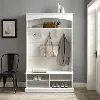
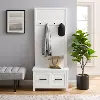
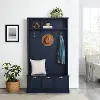
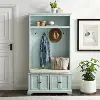
If your entryway turns into a daily pileup of shoes, backpacks, and jackets the second everyone walks through the door, a farmhouse hall tree is the fix. It combines a coat rack, a bench, and built-in storage into one piece, so every coat, bag, and pair of shoes finally has a home. With warm wood tones, simple lines, and that classic cozy-cottage charm, a farmhouse hall tree brings function and rustic style to the busiest spot in your house.

What Makes a Hall Tree "Farmhouse"?

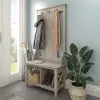
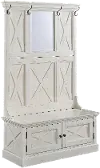
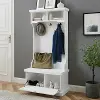
A hall tree is a freestanding piece of entryway furniture that combines hooks, a bench, and storage in a single footprint. The farmhouse version leans into warm, distressed wood finishes, simple plank-style construction, and hardware like black iron hooks or rustic knobs. Instead of polished, formal furniture, a rustic farmhouse hall tree feels lived-in and welcoming, like something that's always belonged in your entryway.

Most farmhouse hall trees share a few signature details:

  • Wood finish: distressed, whitewashed, or weathered wood tones, often with visible grain
  • Hardware: matte black or aged metal hooks and pulls
  • Simple lines: plank-style backs and clean silhouettes instead of ornate carving
  • Mixed materials: wood paired with metal accents for a sturdier, more industrial-farmhouse look

This style works especially well if your home already leans into farmhouse, country, or modern rustic decor, but it also pairs nicely with transitional spaces that just want a warmer, more relaxed feel near the front door.

Why a Farmhouse Hall Tree With Bench Is Worth It

A farmhouse hall tree with bench does more than just look good. It gives your whole family a single, dedicated spot to drop bags, hang coats, and put on shoes without crowding the doorway.

Here's what you get with a hall tree and bench combo:

  • A place to sit: putting on shoes while standing isn't fun for anyone, especially kids or anyone with mobility concerns
  • Hooks within reach: coats, hats, and bags stay off the floor and off your dining chairs
  • Shoe storage underneath: cubbies or open shelving keep footwear from piling up by the door
  • One organized landing zone: instead of scattered piles across multiple surfaces, everything has an assigned spot

If mornings in your house involve searching for a missing shoe or untangling backpack straps from coat hooks, a hall tree with a bench solves that in one piece of furniture.

Hall Tree vs. Coat Rack vs. Entryway Bench

If you're not sure whether you actually need a hall tree, it helps to see how it stacks up against the simpler options. A coat rack is just hooks, nothing more. An entryway bench gives you seating and maybe some under-seat storage, but no hooks. A hall tree combines both, which is why it tends to be the better pick for busy households.

Feature Coat Rack Entryway Bench Hall Tree
Hooks For Coats/Bags Yes No Yes
Seating No Yes Yes
Shoe Storage No Sometimes Usually
Best For Minimalist, single-person spaces Seating-focused entries Busy entryways, families
Typical Width 18”-20” footprint Varies widely 18” to 50”+

If your entryway only needs to handle one person's jacket and keys, a coat rack alone might be enough. But for households with kids, guests, or anyone juggling shoes and bags at the same time, the all-in-one hall tree setup tends to earn its space.

Choosing the Right Size Hall Tree Farmhouse Style

Before you shop, measure your entryway. Hall trees are sized by width, and getting that number right makes the difference between a piece that fits naturally and one that crowds your doorway.

Width Range Best For
18” to 24” Narrow hallways, apartments, tight entryways
25” to 50” Standard entryways, most homes
50” and Up Large foyers, mudrooms, families with kids

A few measuring tips worth keeping in mind:

  • Measure height, width, and depth of the space, not just the wall
  • Leave room for any nearby doors to swing open without hitting the hall tree
  • For mudrooms or busy households, size up so there's enough bench space for more than one person at a time
  • Don't forget depth: a hall tree that's too deep can narrow a hallway enough to slow down foot traffic

Where to Put a Farmhouse Hall Tree in Your Home

The entryway is the obvious spot, but it's far from the only one. A farmhouse hall tree works just as well in a mudroom, back entry, or even a laundry room doorway, anywhere your family needs a consistent drop zone for outerwear and shoes.

A few placement ideas to consider:

  • Front entryway: the classic choice, especially for homes where guests come straight through the front door
  • Back door or mudroom: ideal for catching muddy boots, sports gear, and backpacks before they make it further into the house
  • Garage entry: useful if your family typically comes and goes through the garage rather than the front door
  • Under-stair nook: a narrower hall tree can make smart use of awkward, otherwise wasted space

Wherever you place it, try to keep it within a few steps of the door your family uses most. A beautiful hall tree tucked somewhere inconvenient just won't get used the way it should.

Hall Tree Farmhouse Styles for Every Entryway

Not every farmhouse look is the same, and RC Willey carries hall trees that fit a range of farmhouse-adjacent styles:

  • Classic farmhouse: whitewashed or weathered wood with simple plank backs
  • Modern farmhouse: mixed wood-and-black-metal frames with cleaner lines
  • Country farmhouse: warmer wood tones, sometimes paired with cozy bedding and layered textiles elsewhere in the home for a cohesive feel
  • Coastal farmhouse: lighter, driftwood-style finishes for a softer, beachier take

If you're decorating a full entryway around the look, a farmhouse area rug placed in front of the bench adds warmth underfoot and helps define the space. A small console table nearby can also round out the look, giving you a spot for keys, mail, or a seasonal centerpiece.

Solid Wood vs. Engineered Wood: What to Know Before You Buy

Most farmhouse hall trees are built from either solid wood or engineered wood (sometimes called particleboard or MDF). Solid wood holds up longer and gets better-looking with age instead of looking worn out, but it costs more and is heavier to move. Engineered wood keeps the price down and resists warping, though it's not quite as durable under heavy daily use. Either option can deliver the farmhouse look, so the right pick really comes down to your budget and how hard the piece will be used day to day.

A couple of practical notes on each:

  • Solid wood hall trees tend to feel sturdier underfoot when used as a bench, which matters if multiple people use it at once
  • Engineered wood pieces are usually lighter, making them easier to move if you rearrange your entryway often
  • Either material can be finished to look distressed or whitewashed, so you don't have to sacrifice the farmhouse look either way

The Details That Matter

A few practical things to check before you buy:

  • Bench weight capacity: look for a bench rated to comfortably support an adult sitting down to put on shoes
  • Anti-tip hardware: especially important if you have kids who might climb or lean on the piece
  • Hook spacing: wider spacing keeps bulky winter coats from bunching together
  • Cubby depth: deeper cubbies fit boots, not just sneakers
  • Assembly: most hall trees ship flat-packed, so check estimated assembly time if you're short on it
  • Hook height: if kids will use the hooks too, look for a piece with hooks set at more than one height

Frequently Asked Questions

  • What is a farmhouse hall tree used for? It's an all-in-one entryway piece that combines a coat rack, bench, and storage so coats, shoes, and bags all have one dedicated spot near the door.
  • How wide should a hall tree be for a small entryway? Look for something in the 18" to 24" range. That width fits most apartments and narrow hallways without blocking foot traffic.
  • Is a farmhouse hall tree with bench sturdy enough for kids to sit on? Yes, as long as the bench is rated for adult weight and the piece includes anti-tip hardware, it can comfortably handle daily use from kids and adults alike.
  • What's the difference between a hall tree and a coat rack? A coat rack is just hooks, usually on a single pole or wall-mounted bar. A hall tree combines those hooks with a bench and storage, giving you a complete entryway organization system in one piece.
  • Do farmhouse hall trees come with shoe storage? Many do, either as open cubbies underneath the bench or as a small shelf. If shoe storage is a priority, check the product details for cubby count and depth before buying.
  • Can a hall tree fit in a mudroom instead of an entryway? Definitely. Hall trees work well in mudrooms, back entries, and even laundry rooms, anywhere your family needs a drop zone for outerwear and shoes.
  • Is a rustic farmhouse hall tree hard to assemble? Most ship flat-packed with all the hardware included. Assembly time varies by size, but a standard hall tree with bench typically takes an hour or two with basic tools.

Find Your Perfect Farmhouse Hall Tree