Results for: Exercise Bikes
#myrcwilleyhome
See how real customers are transforming their spaces with RC Willey. Get inspired, share your style, and create a space that's Your Home. Your Way.
Explore NowDiscover the Perfect Exercise Bike for Your Home Workout
Ready to kickstart your fitness journey or enhance your home gym? An exercise bike is an awesome choice for getting a great cardio workout right in your living room. Whether you're a seasoned cyclist or just starting out, there's a stationary bike designed to fit your needs, space, and fitness goals. Let's dive into the world of exercise bicycles and help you find your ideal ride.
Why is an exercise bike such a great pick for home workouts? For starters, they offer a low-impact exercise, which means less stress on your joints compared to running or other high-impact activities. This makes them perfect for people of all ages and fitness levels, including those recovering from injuries or looking for a gentle way to stay active. Plus, the convenience of having your own stationary bicycle means you can work out whenever you want, no gym membership or bad weather excuses needed. You can cycle while watching your favorite show, listening to music, or catching up on a podcast. This makes an exercise bike a very effective tool for burning calories, boosting your cardiovascular health, and even helping to sculpt your legs and core. It’s a versatile piece of fitness equipment that can really make a difference in your daily routine.
Unpacking the Different Types of Exercise Bikes
When you're shopping for an exercise bike, you'll quickly notice there isn't just one kind. Each type offers a unique experience, focusing on different aspects of comfort, workout intensity, and body positioning. Understanding these differences is key to choosing the stationary bike that's right for you and your home gym setup.
Upright Exercise Bikes
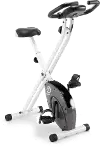
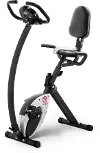
Upright exercise bikes are probably what you picture when you think of a traditional stationary bike. They're designed to mimic the riding position of a regular road bicycle, with your body positioned vertically over the pedals. You'll typically sit on a smaller, narrower seat, and lean slightly forward to reach the handlebars.
These bikes are fantastic if you're looking for a compact piece of equipment that doesn't take up much space, making them ideal for smaller apartments or dedicated home gym corners. The upright position engages your core more actively than some other bike types, and you can often stand up on the pedals during your ride, much like outdoor cycling, for a more intense workout. They offer a great cardio workout and can help build leg strength. However, some users might find the upright posture and smaller seat less comfortable for longer rides, especially if they have back issues or prefer a more relaxed position. If you enjoy the feeling of an outdoor bike ride and want a challenging workout without taking up too much floor space, an upright exercise bike could be your perfect match.
Recumbent Exercise Bikes
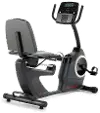
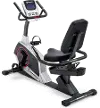
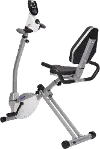
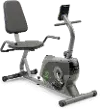
If comfort is your top priority, a recumbent exercise bike might be exactly what you're looking for. Unlike upright bikes, a recumbent bike positions you in a reclined, seated position with a larger, bucket-style seat and backrest. Your legs pedal out in front of your body, which helps distribute your weight more evenly and reduces pressure on your wrists, neck, and lower back.
This design makes recumbent exercise bikes incredibly comfortable, especially for extended workout sessions. They're often recommended for individuals who need extra back support, those recovering from injuries, or older adults looking for a gentle yet effective cardio workout. Is a recumbent bike a good exercise? Absolutely! While it might feel less intense on your core since you're reclined, it still provides an excellent cardiovascular workout, strengthens your leg muscles, and burns calories. The low-impact nature is a huge plus for joint health. What are the disadvantages of a recumbent bike? They typically have a larger footprint than upright bikes, so they require a bit more space. Also, the reclined position means you can't stand on the pedals for high-intensity bursts, which might be a drawback for some seasoned cyclists. However, for those prioritizing comfort and support without sacrificing a great workout, a recumbent exercise bike is an outstanding choice for any home gym. Many magnetic recumbent bike models offer incredibly smooth resistance for a quiet and effective ride.
Indoor Cycling (Spin) Bikes
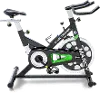
Indoor cycling bikes, often called spin bikes, are designed to replicate the experience of outdoor road cycling classes. They feature a heavy flywheel, often in the front, and adjustable resistance that you control manually. You'll typically find a more aggressive riding position, similar to a racing bike, with handlebars positioned lower than the seat.
Spin bikes are built for high-intensity, immersive workouts. The heavy flywheel provides a smooth, consistent ride and allows for quick changes in resistance, making them perfect for interval training (HIIT) and simulated hill climbs. If you love the idea of a challenging, calorie-burning workout that gets your heart rate up, an indoor cycling bike is an excellent option. Many models allow you to stand up out of the saddle, mimicking hill climbs and engaging more muscle groups for a full-body workout experience. The downside? They're generally less comfortable for casual, long-duration rides compared to upright or recumbent bikes, mainly due to the smaller, firmer seat and more aggressive posture. However, for dedicated cyclists or anyone wanting to push their limits with an energetic workout, an indoor cycling bike is hard to beat for bringing that studio cycling class feeling into your home.
Air Bikes (Fan Bikes)
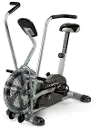
Air bikes, or fan bikes, stand apart from other stationary bikes because they use a large fan to generate resistance. The harder and faster you pedal and push/pull the handlebars, the more air resistance the fan creates. This means infinite resistance, and that you control how challenging your workout is simply by how much effort you put in.
What makes air bikes unique is their dual-action design; your arms and legs work simultaneously, providing an incredibly efficient full-body workout. They're fantastic for high-intensity interval training (HIIT) because you can quickly switch between all-out sprints and recovery periods. Air bikes are known for their ability to burn a lot of calories in a short amount of time and are often used in cross-training routines. The cons? They can be quite noisy due to the fan, which might be a consideration if you live in an apartment or need a quiet workout space. Also, the fan-based resistance feels different than magnetic resistance, and some might not find it as smooth or consistent for longer, steady-state cardio sessions. But if you're seeking a robust piece of equipment that delivers a challenging, full-body workout and you're not worried about a little noise, an air bike is a powerful addition to any home gym.
Key Features to Consider Before You Buy
Choosing the right exercise bike involves more than just picking a type; you'll also want to look at specific features that impact your comfort, workout effectiveness, and overall user experience.
- Resistance Type: Most exercise bikes use either magnetic resistance or friction resistance. Magnetic resistance is generally quieter, smoother, and requires less maintenance, as there are no parts making physical contact. Many recumbent exercise bikes and upright models feature magnetic resistance. Friction resistance uses pads that press against the flywheel, which can be noisier and may require occasional pad replacement, but often provides a more direct, tactile feel, especially in many indoor cycling bikes.
- Adjustability: A properly fitted bike makes all the difference for comfort and injury prevention. Look for models with easily adjustable seats (up/down, forward/back) and handlebars. Recumbent bikes should have adjustable recline positions, and upright bikes should allow you to adjust the handlebar height and angle. This ensures that the bicycle can accommodate multiple users in your household comfortably.
- Console and Connectivity: Most stationary bikes come with an LCD monitor that tracks key metrics like speed, distance, time, and calories burned. More advanced models might include heart rate monitoring (often through handlebar sensors or compatibility with chest straps), pre-set workout programs, and Bluetooth connectivity. This allows you to sync with fitness apps or even stream virtual cycling classes, adding variety and motivation to your workout. Look for a tablet holder if you plan to use your own device for entertainment or guided workouts.
- Comfort: While recumbent bikes excel in comfort, even upright and indoor cycling bikes can offer comfortable features. Look for padded seats (or consider adding a gel seat cover), ergonomic handlebars, and adjustable pedal straps. Some models even feature a built-in fan for cooling during intense sessions.
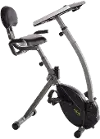
- Size and Portability: Measure your space before you buy! Recumbent bikes tend to be the largest, while some upright exercise bikes are designed to be compact or even foldable. Consider the weight of the machine and if it has transport wheels if you plan on moving it around your home gym.
- Flywheel Weight: For magnetic and indoor cycling bikes, a heavier flywheel (generally 20 lbs or more) usually means a smoother, more stable, and more realistic ride, as it helps maintain momentum.
Getting the Most Out of Your Home Exercise Bike
Once you've chosen your perfect exercise bicycle, knowing how to use it effectively can help you hit your fitness goals and enjoy your workouts even more.
Exercise bikes are fantastic for cardiovascular health. Regular cycling helps strengthen your heart and lungs, improves circulation, and can lower blood pressure. As for what an exercise bike does to your body, it primarily targets your quadriceps, hamstrings, and glutes, helping to tone and strengthen your leg muscles. While it's a great calorie burner, can you lose belly fat by riding a stationary bike? While an exercise bike helps with overall fat loss (including belly fat) by burning calories, spot reduction isn't possible. Consistency is key to seeing results across your entire body.
How much should you ride? Is 30 minutes a day on an exercise bike enough? For most people, yes! Thirty minutes of moderate-intensity exercise on a stationary bike most days of the week is an excellent target for improving cardiovascular fitness and contributing to weight management. It's roughly equivalent to 30 minutes of brisk walking, though the intensity can vary. As for how many miles on a stationary bike is equivalent to 10,000 steps, it really depends on your speed and resistance, but a general estimate might put 30-60 minutes of cycling at a moderate pace in the range of 10,000 steps, showing it's a great way to hit your daily movement goals.
To get the most out of your home gym setup, make sure your exercise bike is placed in a spot that encourages use. Maybe it's facing a window, in front of a TV, or even in a quiet corner where you can listen to music. Keep it clean by wiping it down after each workout, and check for any loose parts or sounds periodically. With proper care, your exercise equipment will last for years, providing countless beneficial rides.
Finding Your Perfect Ride at RC Willey
At RC Willey, we understand that finding the right exercise bike for your home is about more than just a purchase; it's about investing in your health and happiness. We offer a fantastic selection of high-quality stationary bicycles, including comfortable recumbent exercise bike models, versatile upright bikes, and dynamic indoor cycling machines, all designed to fit seamlessly into your home. Our team is here to help you navigate the options, answer your questions, and ensure you go home with an exercise bike that perfectly matches your needs and goals. Stop by today or browse our collection online, and let us help you find the ride that helps you achieve your fitness dreams.