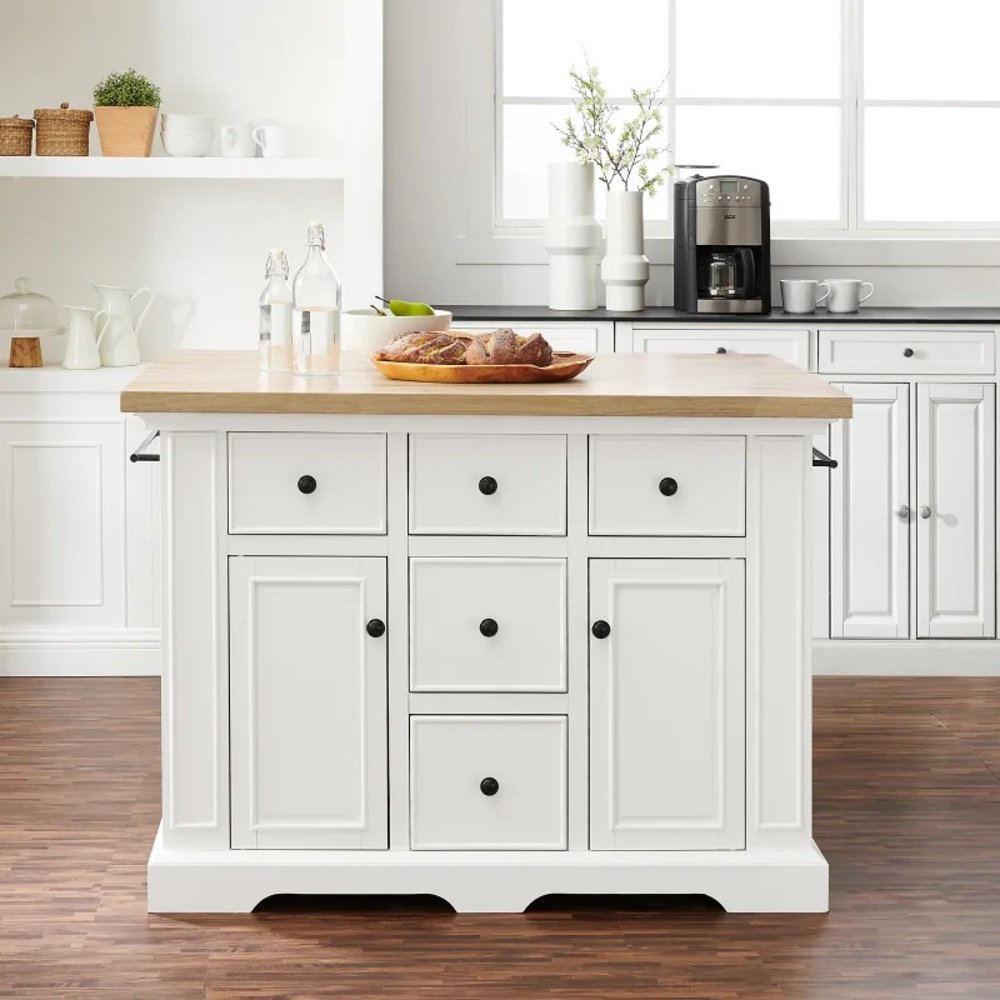
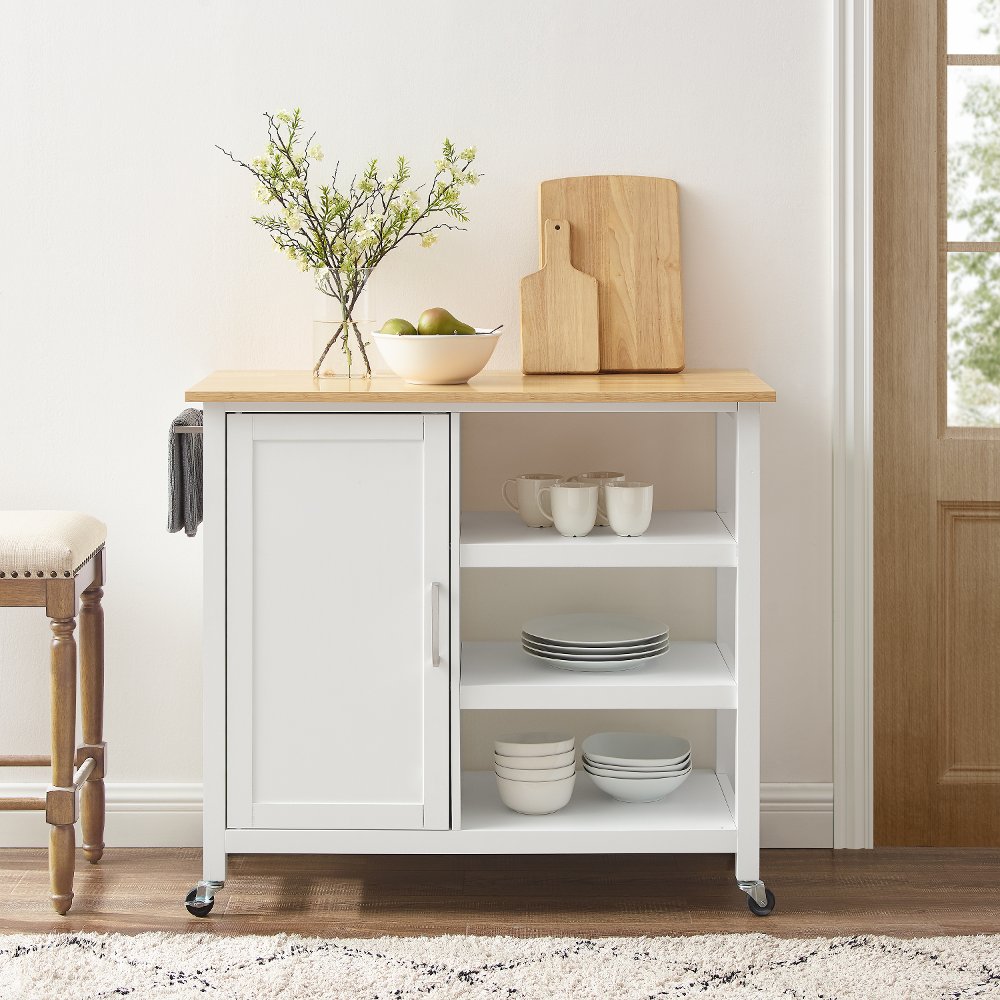
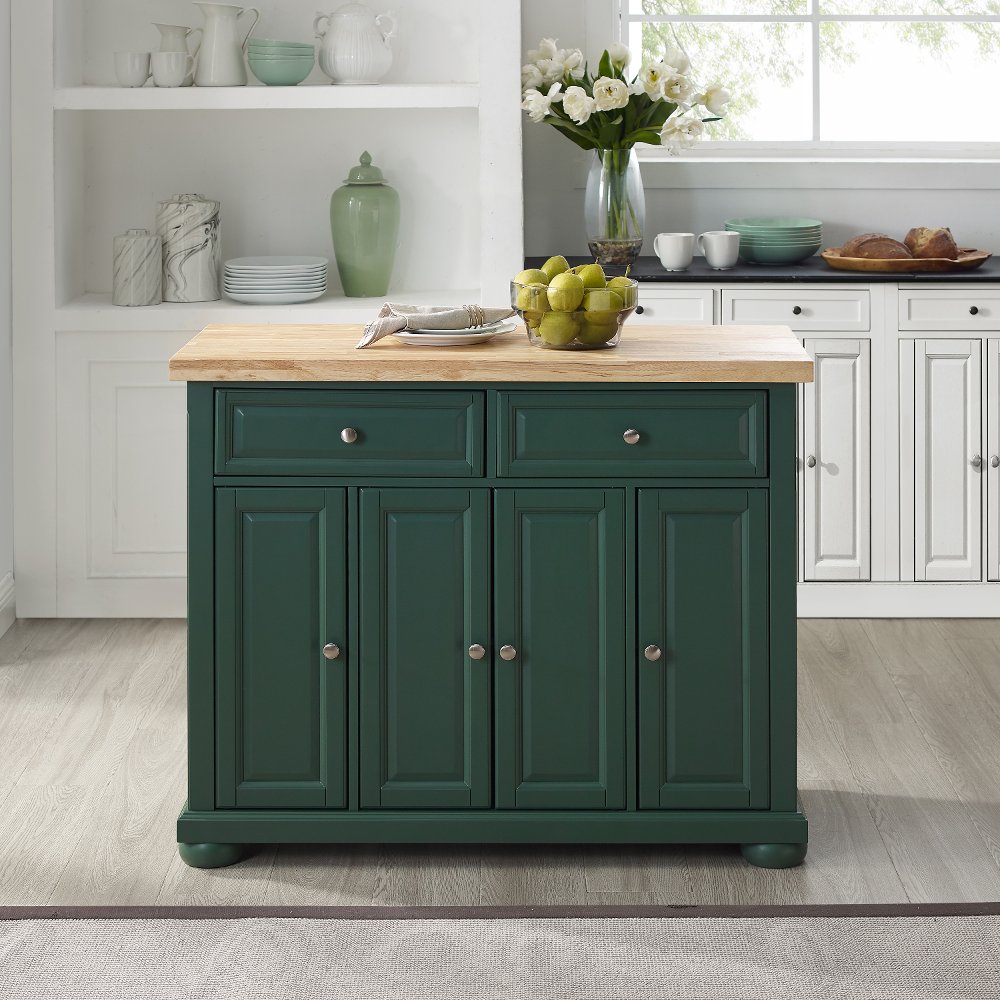
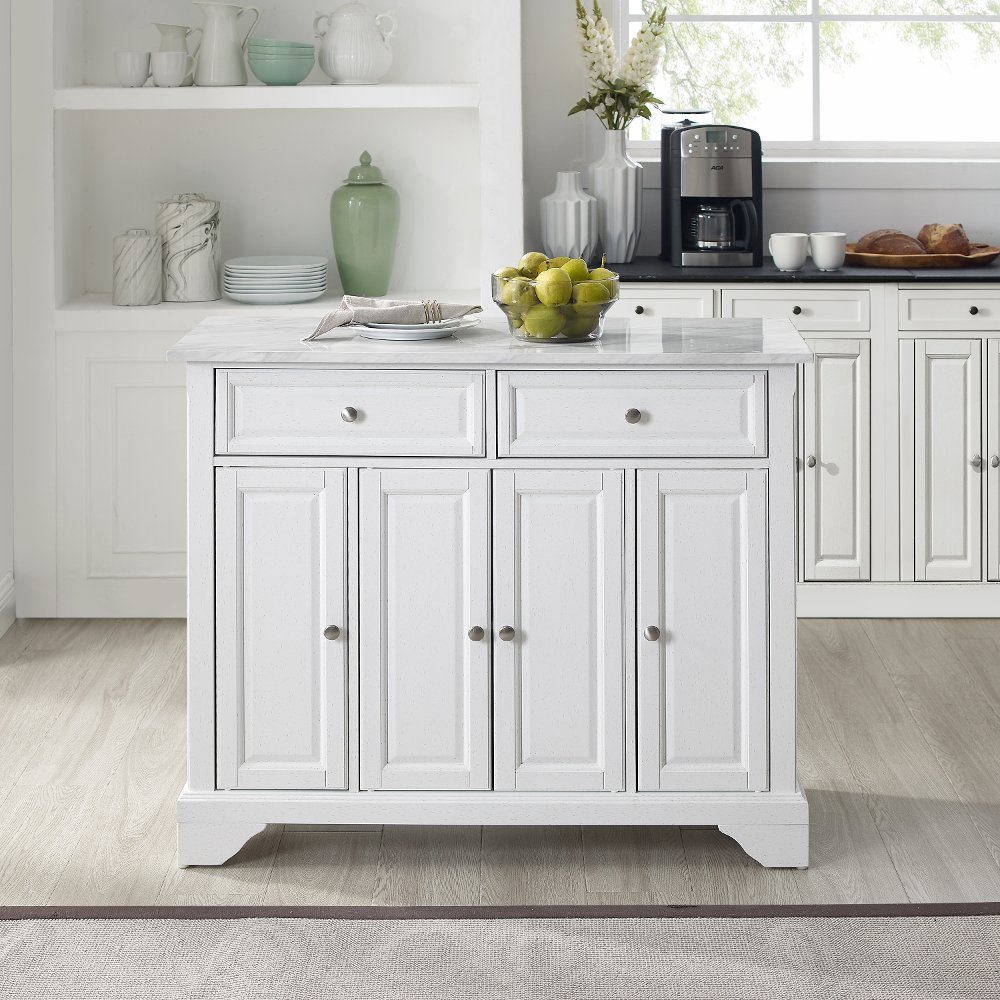
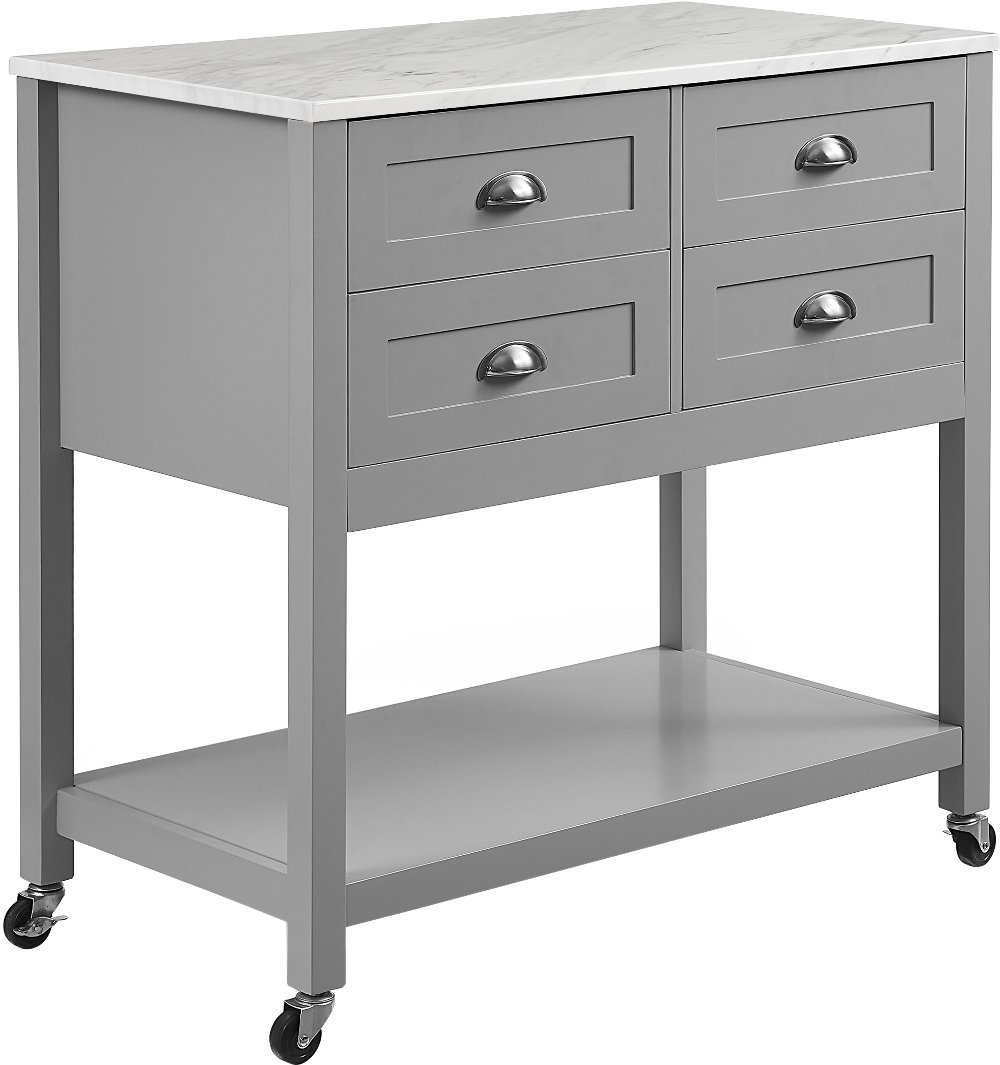
Kitchen island assembly brings together the practical storage, prep space, and welcoming style that make a kitchen feel ready for everyday life. The right choice depends on how you want the island to work in your home. Freestanding islands and kitchen carts can offer flexible placement, open shelving, drawers, towel bars, or casters that make it easier to shift the layout when you need more room. A permanent island built from base cabinets creates a more defined work center and may support a larger countertop, seating overhang, or integrated features. Before choosing an assembled or ready-to-assemble option, measure the available footprint carefully, including the space needed to open refrigerator and oven doors, pull out drawers, and move comfortably around the island. A generous walkway helps the kitchen stay pleasant when several people are cooking together, while a smaller room may benefit from a compact island that keeps essentials close without crowding the path. Consider the height and depth as well as the length. A standard work surface can support chopping, mixing, and serving, while a raised section may create a comfortable spot for stools and casual meals. Homes with traditional details often pair beautifully with Traditional Kitchen Islands, especially when warm finishes, framed doors, and familiar hardware help the new piece feel connected to the rest of the room.
Assembly details can vary, so keep the product instructions nearby and organize the work before opening every box. Clear a clean area large enough to lay out panels without scratching them, then inventory the labeled parts, fasteners, shelf pins, drawer components, doors, handles, feet, or wheels. Separating similar hardware into small containers can save time later, particularly when cam locks, dowels, and screws look nearly identical at first glance. A screwdriver, measuring tape, level, soft blanket, and rubber mallet may help with common tasks, while a drill should only be used when the instructions permit it and at a controlled setting. Begin by identifying the base, side panels, shelves, and crosspieces so the frame stays square as it comes together. If the island includes casters or stationary feet, install them securely and check that the base sits evenly before adding shelves or a countertop. Drawers typically require attention to the orientation of their slide tracks; the cabinet and drawer portions need to meet correctly for smooth movement. Doors and handles should sit flush, and adjustable shelves can be positioned around the cookware, serving pieces, pantry goods, or small appliances you plan to store. When the countertop attaches to the base, use only the designated brackets, screws, or adhesive method. A heavy top deserves careful lifting and steady support, and some surfaces require special handling to protect their finish. Take a patient approach and make small adjustments as you go. That extra care often makes the difference between a drawer that glides quietly and one that catches every time you reach for a utensil.
For a permanent kitchen island, installation involves more than putting the cabinet boxes together. Mark the intended footprint on the floor and confirm the layout from several angles before fastening anything in place. Floors can slope or have a high point that is difficult to notice until cabinets begin to line up, so use a level and appropriate shims to create a stable, even base. Floor cleats, angle brackets, or other securing hardware can help anchor the island according to the construction and the manufacturer’s requirements. Adjacent cabinet boxes should meet flush at the front and top before you connect them, and decorative end panels, toe kicks, and rear panels should sit neatly so the finished island looks polished from every side. If the design includes plumbing, electrical outlets, a sink, a cooktop, or lighting, plan those connections before the cabinets and countertop cover the access points, and have qualified professionals handle work that requires permits or specialized trade knowledge. Mobile islands call for a different kind of attention: lock the casters when the island is in use, keep heavier items low, and make sure the piece can roll through doorways and around corners without striking walls or appliances. These products can be especially helpful for apartment kitchens, busy family homes, first kitchens, or anyone who enjoys a flexible prep station during cooler months when more meals happen indoors. They also make thoughtful housewarming or wedding gifts when the recipient has room for added storage and a place to gather. Whether the island becomes the spot where children spread out homework, friends arrange appetizers, or a home cook lines up ingredients beside a cutting board, thoughtful Kitchen Island Assembly helps create a dependable centerpiece built for real routines.
Read More