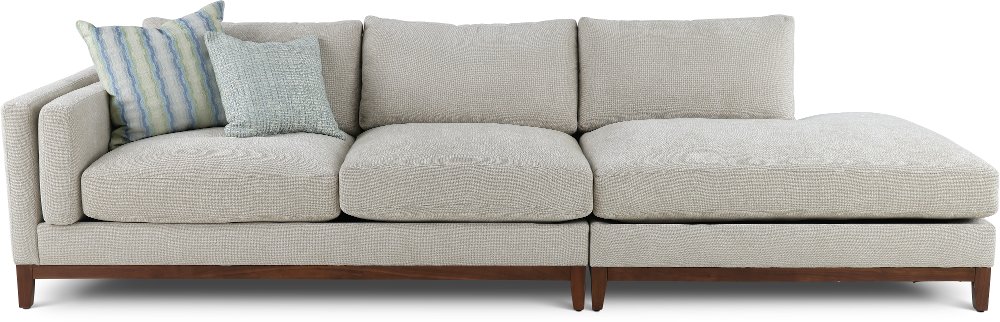
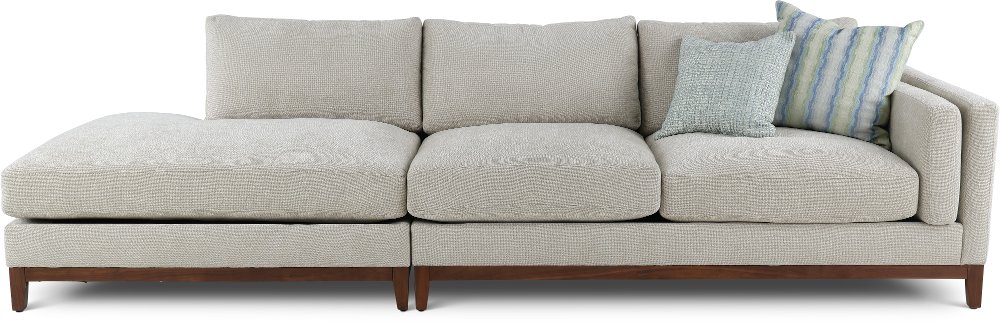
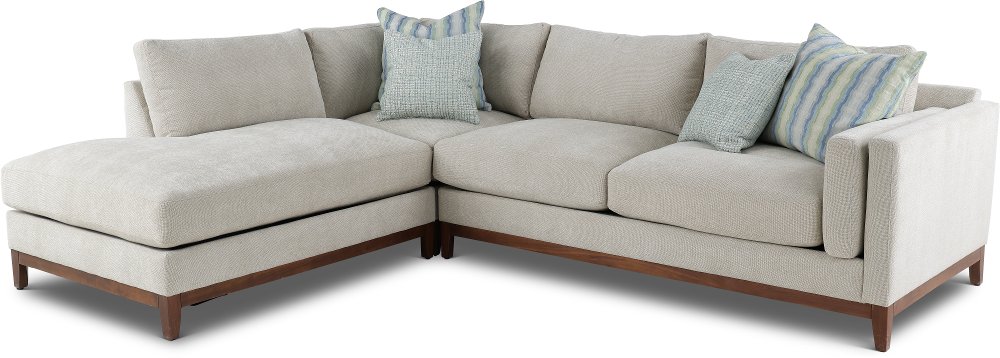
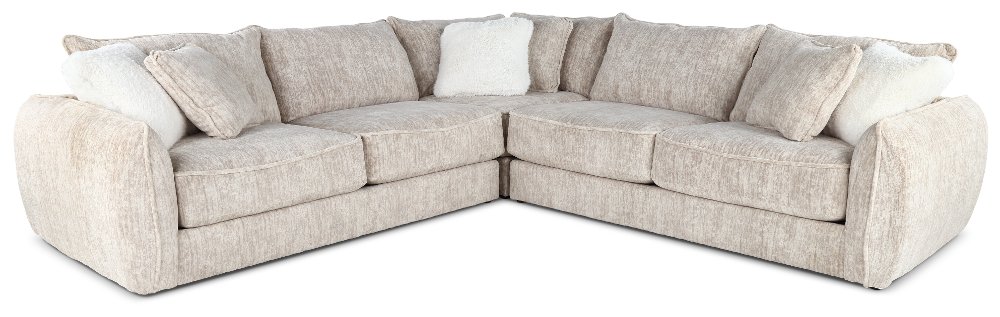
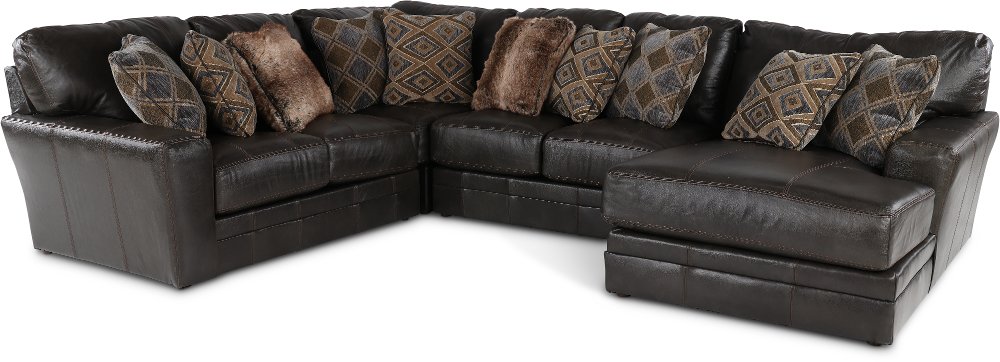
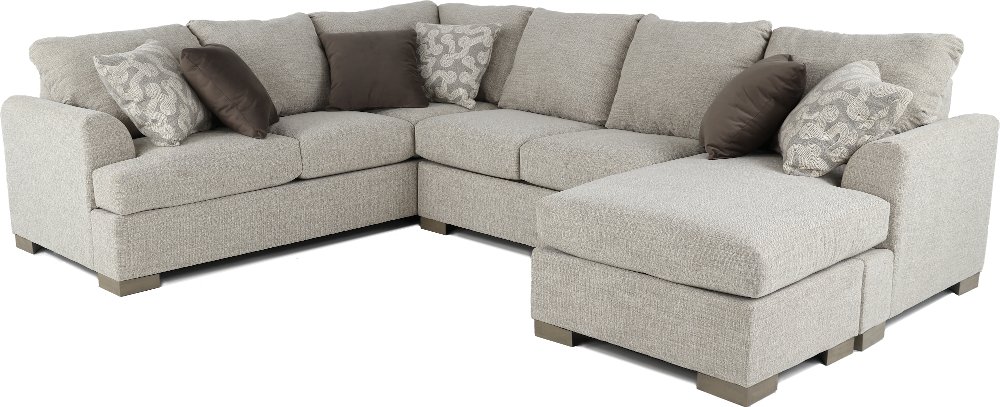
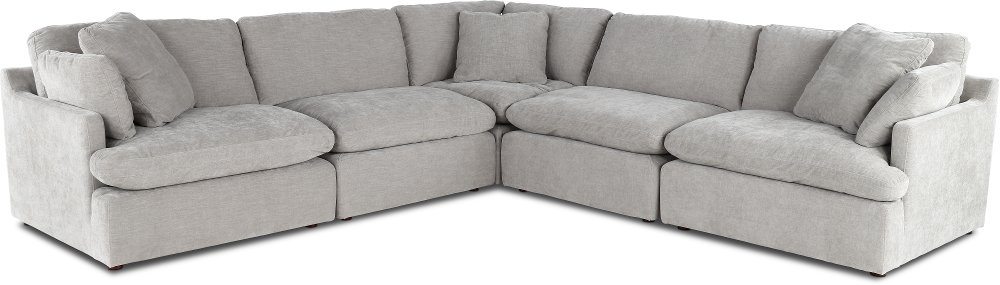
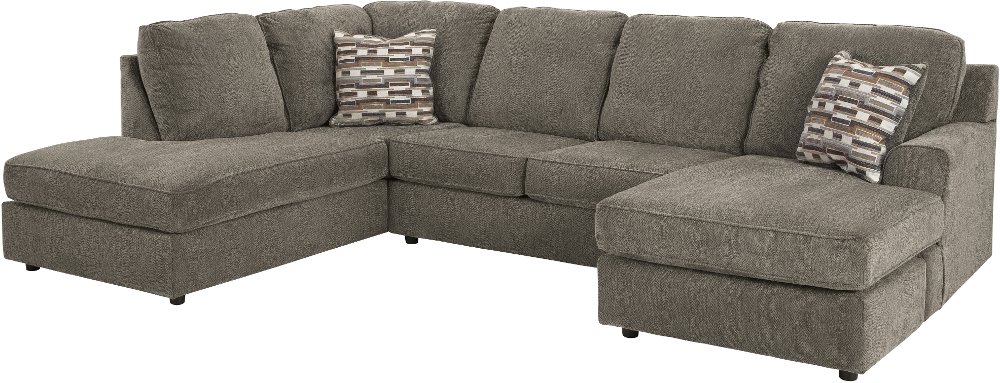
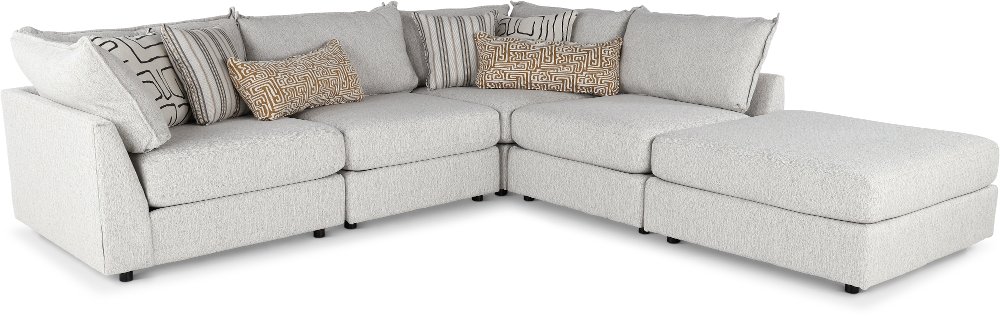
An L-shaped sectional sofa with a chaise combines a main seating section with an extended lounge seat that creates an L-shaped footprint, giving you room to sit upright or stretch out with your feet supported. Unlike a standard sofa paired with a separate ottoman, a chaise sectional keeps that lounging space connected to the seating arrangement. It’s a comfortable fit for everyday routines: reading with a pillow tucked behind your back, sharing a movie with family, or settling in beside someone who prefers to sit with both feet on the floor. The shape can help define a conversation area in an open living room or make practical use of a corner without adding several separate chairs. Size matters more than the sectional label alone. A compact sofa with a chaise can suit an apartment, while a longer configuration can anchor a spacious family room; the overall width, depth, and chaise projection determine how each one fits. Low-profile arms and exposed legs tend to give the furniture a lighter appearance, while broad arms, a substantial base, and generous back cushions create a more grounded look. Tailored upholstery and straight lines work well with clean-lined interiors, and rounded arms or textured cushions add softness to a relaxed setting. Seat proportions shape the experience just as much as the silhouette. Deeper seats invite curling up, while shallower seats can make it easier to sit upright with your back supported. A higher, firmer seat may also feel easier to stand from than a low, plush seat, depending on your height and mobility. The chaise deserves its own attention: its usable length should comfortably support your legs, and its width affects how much room you have to shift positions. For a seating area centered on unwinding, Cozy Sectional Sofas With Chaise offers a related style direction, with the same emphasis on making everyday lounging feel natural.
The best-fitting L-shaped sectional sofas with chaise leave space for life around them, not just enough room for the furniture itself. Overall measurements include the frame and arms, so the seating area will be smaller than the full footprint. Marking that footprint with painter’s tape helps show whether the chaise would interrupt the path from the hallway to the kitchen or crowd the spot where a cabinet door needs to open. Around 30 to 36 inches is a useful starting point for a main walkway, with more space needed for some households and mobility devices. Between a sofa and coffee table, roughly 14 to 18 inches often keeps drinks within reach while leaving legroom, though the right distance depends on how the seats are used. A round or oval coffee table can soften the inside corner of an L-shaped arrangement and make movement around the chaise less awkward. Orientation is another important distinction. Left-facing and right-facing descriptions generally refer to the side where the chaise sits when you stand in front of the sectional and look at it, rather than when you’re seated. Because component labels and naming conventions can differ, the configuration diagram is the clearest way to confirm placement. A reversible chaise can offer flexibility when rearranging a room or moving to a new home, but the mechanism varies: some use a movable ottoman and long cushion, while others rely on interchangeable modules. Modular construction doesn’t automatically mean every piece can switch sides. Against a wall, the chaise can create a tucked-away lounging spot; floating away from the wall, the sectional can separate the living area from a dining space without a tall divider. Delivery access matters, too. Door openings, hallway turns, stair landings, and elevator dimensions all affect whether the individual sections can reach the room. Removable legs or backs may help with access when the design allows, but packaged dimensions and assembly details are worth checking before choosing a configuration.
Upholstery, cushioning, and construction determine how a chaise sectional feels after the first sit and how it holds up to repeated use. Woven fabrics offer a wide range of textures, from smooth, tightly woven surfaces to nubby finishes with a more casual look. Chenille has a soft, inviting hand, while velvet adds depth as its pile catches the light and may show pressure marks or changes in shading. Polyester and blended upholstery can be practical for busy living spaces, but fiber content alone doesn’t establish stain resistance or durability. Performance fabrics may offer specific benefits, such as easier spot cleaning or resistance to certain spills; the stated performance features and care instructions matter more than the label by itself. In a home with pets, a tight weave may be less likely to catch claws than a loose, looped texture, although no upholstery is scratchproof. Leather has a distinct feel and can develop character with use, but its finish affects care, and scratches or sunlight exposure can change its appearance. Faux leather has different maintenance needs and shouldn’t be treated with leather conditioners unless the manufacturer recommends them. Beneath the upholstery, a well-built frame, reinforced joints, supportive suspension, and resilient cushions all contribute to lasting comfort. Firm foam tends to feel more structured, while fiber or feather blends can create a softer seat that needs regular fluffing. Rotating or flipping cushions, when their design permits, helps distribute wear, especially when the chaise becomes everyone’s favorite spot. Routine care usually starts with vacuuming seams and crevices using an appropriate upholstery attachment and blotting spills promptly rather than rubbing them into the fabric. Cleaning codes identify suitable methods: W indicates water-based cleaners, S indicates solvent-based cleaners, WS allows either, and X calls for vacuuming or light brushing rather than liquid cleaners. A zippered cushion cover isn’t necessarily machine washable. Following the upholstery’s specific care directions helps preserve the look and feel of a sectional built around daily comfort, shared space, and the way you actually relax at home.
Read More