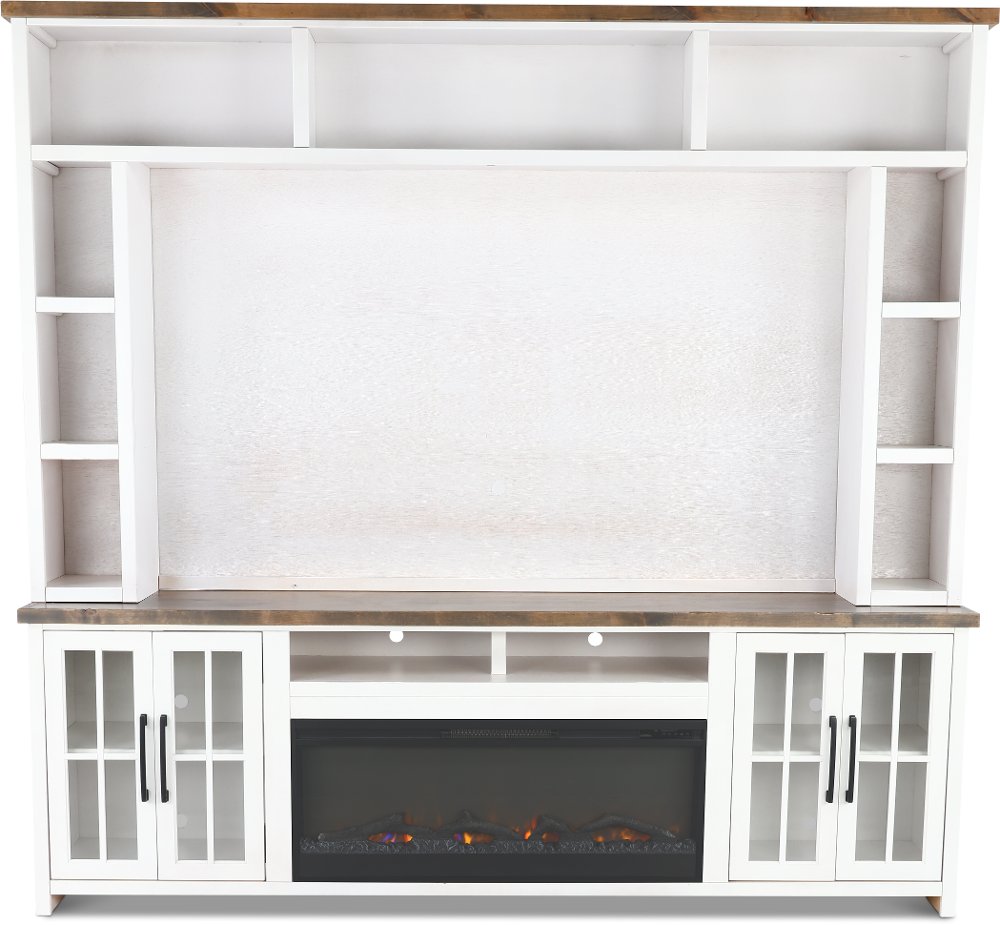
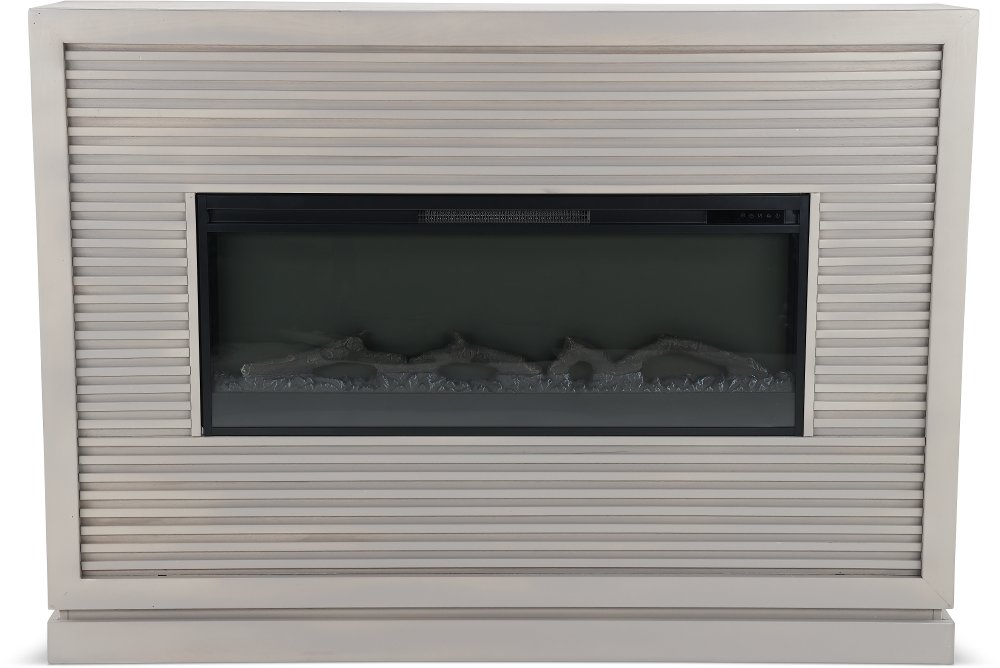
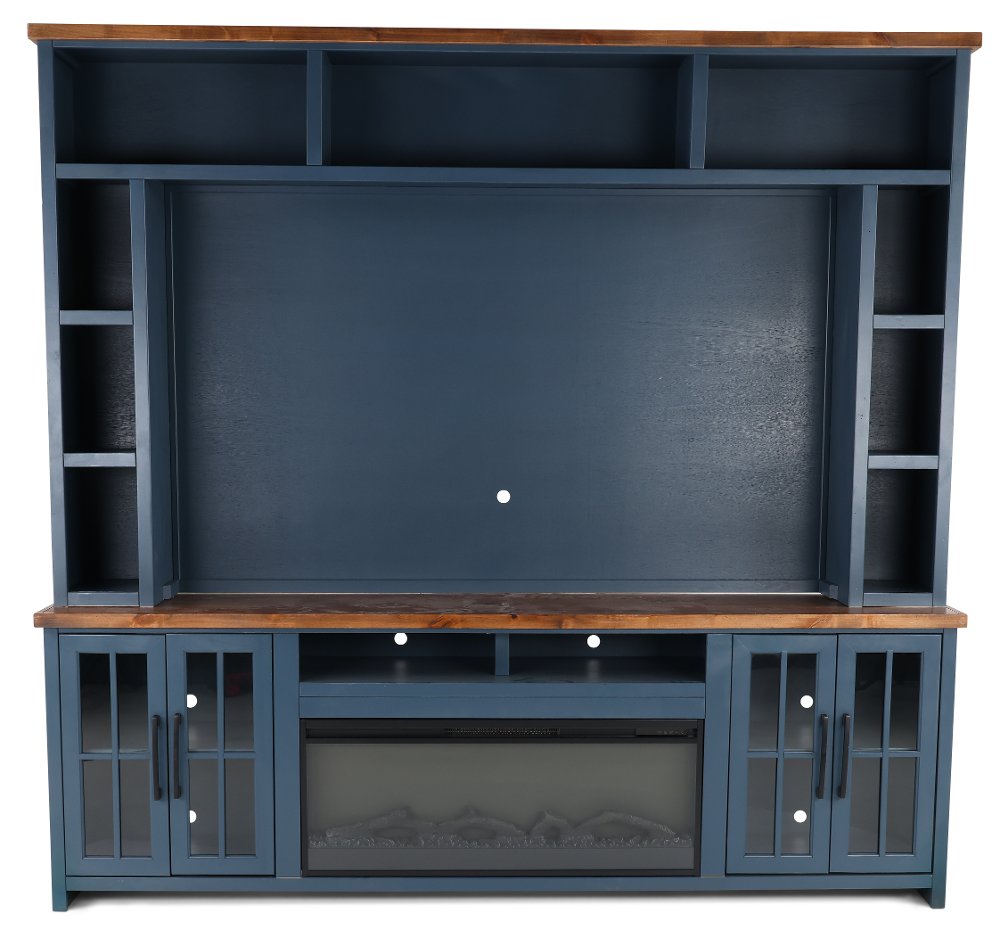
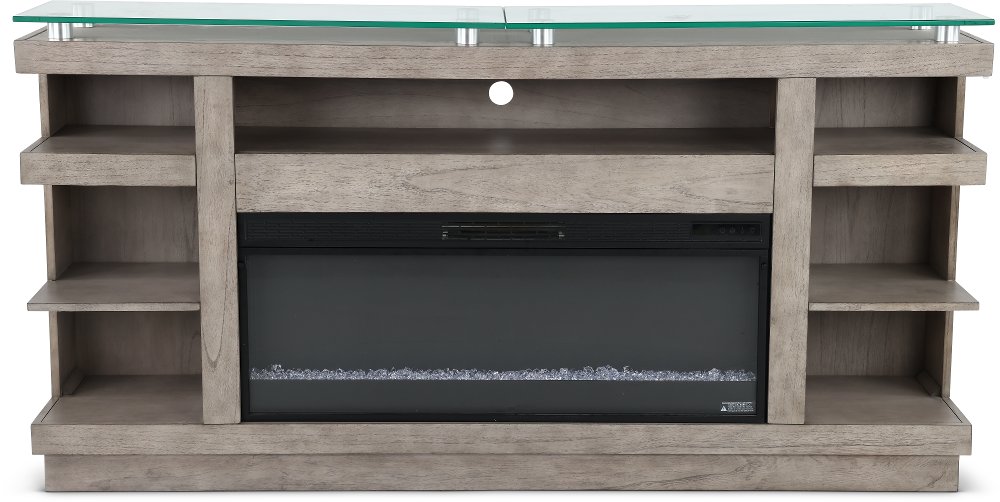
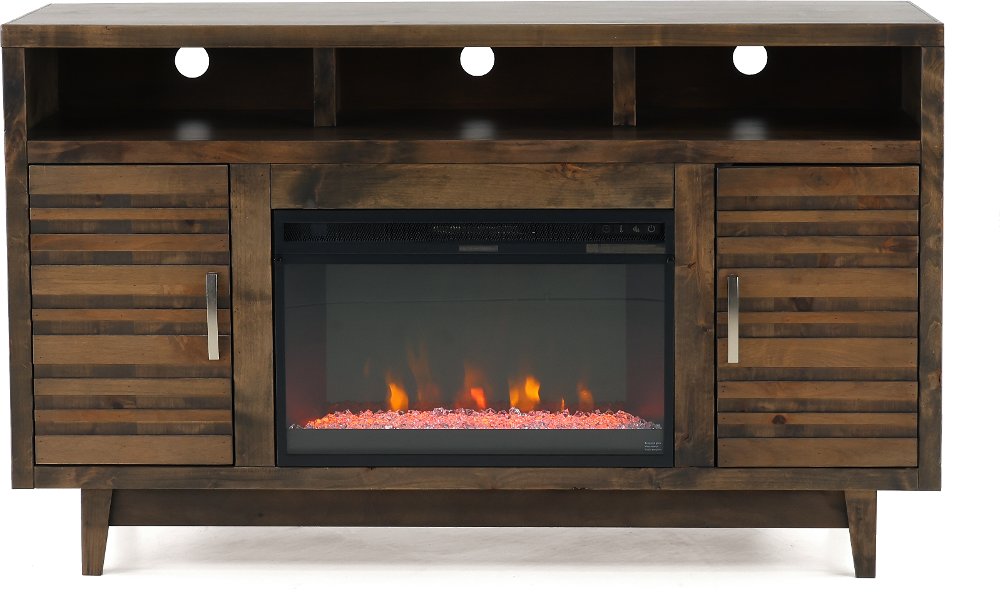
Plug-in fireplaces bring the look of a hearth into your home without a chimney, gas line, or wood-burning fire. A plug-in electric fireplace connects to a compatible standard 120-volt household outlet and uses electricity to power its flame display and, on models with a heater, supplemental heat. Because there’s no fuel burning inside, it doesn’t produce combustion smoke or require a flue to carry exhaust outdoors. That makes this category a practical choice for spaces where adding a traditional fireplace would involve major construction. The right style can anchor a living room, add character to a bedroom, or give a reading nook a welcoming focal point. Freestanding electric stoves offer a compact, traditional silhouette, while mantel fireplaces create the appearance of a more substantial hearth. Electric fireplace TV stands combine a firebox with space for entertainment equipment, and wall-mounted designs suit rooms where a streamlined look matters. Inserts fit into compatible cabinets or fireplace openings, though an existing opening doesn’t automatically make every insert a suitable match. Recessed installations require a unit specifically designed for that placement and the clearances listed in its instructions. Across these styles, flame displays range from softly glowing logs and ember beds to contemporary crystal-look accents and adjustable colors. Many models let you operate the flame effect independently of the heater, so you can enjoy the visual atmosphere without adding heat to the room. Features vary, but adjustable brightness, flame speed, remote controls, and timers can make the fireplace easier to tailor to everyday routines. A low glow beside a favorite chair creates a different effect from a wide, bright display beneath a television. Thinking about how you’ll see and use the fireplace helps narrow the choices beyond appearance alone, especially in a room where several people share the seating area. The fireplace should feel connected to the furniture around it rather than competing with the room’s main gathering space.
Heating performance deserves the same attention as the flame display. Many standard plug-in electric fireplaces use about 1,500 watts on their highest heat setting, producing roughly 5,000 BTUs per hour. They’re generally intended to provide supplemental room heat rather than replace a home’s primary heating system. Manufacturer coverage estimates vary, and actual comfort depends on insulation, ceiling height, open doorways, window area, and the room’s layout. A fireplace placed near a seating group in an enclosed room serves a different purpose from one positioned in a large, open living area. Compare the stated wattage, heat output, and recommended coverage rather than assuming a larger cabinet contains a more powerful heater. Thermostat controls can help maintain a selected setting, while multiple heat levels offer flexibility when full output isn’t needed. Some designs use a fan to circulate warmed air, so vent location and operating sound matter when the fireplace will sit near a television, desk, or bed. Measure the full width, height, and depth of the unit, including its base or mantel, and allow for the manufacturer’s required clearance around air intakes and heat outlets. Curtains, blankets, upholstered furniture, and other combustible materials need to stay outside those clearance zones. Plug the fireplace directly into a compatible wall outlet, not an extension cord or power strip, and follow its electrical requirements, including any dedicated-circuit requirement. A nearby outlet should allow the cord to remain visible and unpinched, without running beneath a rug or through a doorway. For wall-mounted designs, the mounting surface and hardware must support the unit as specified. For fireplace TV stands, check both the television size recommendation and the top’s weight capacity, along with any heat-clearance requirements for electronics. These details help the fireplace fit naturally into the room instead of forcing furniture, cords, or screens into awkward positions. Bedrooms and homes with children or pets also call for careful attention to placement, hot surfaces, and the safety features described by the manufacturer.
Materials and construction influence how a plug-in fireplace looks, feels, and holds up to everyday use. Fireplace furniture may combine engineered wood, wood veneers, laminate finishes, metal hardware, and a glass-fronted electric firebox. A wood-look finish can coordinate with bookcases and end tables, while painted cabinets, stone-look surrounds, and dark metal frames create different visual effects. Look closely at the overall proportions: a substantial mantel can balance a broad wall, while a shallow cabinet may leave more usable floor space in a smaller room. On media consoles, shelves and enclosed compartments help organize streaming devices, games, and accessories; cable openings and ventilation help keep those spaces functional. Sturdy joints, secure hardware, stable bases, and smoothly operating doors contribute to durability, especially in a busy family room. If the fireplace is freestanding, follow any anchoring instructions rather than relying on its weight alone for stability. Day-to-day care is usually straightforward, but the cabinet finish and electric components need different treatment. Turn the fireplace off, unplug it, and let it cool before cleaning as directed. A soft cloth can remove dust from exterior surfaces, while the owner’s manual should determine which cleaners are safe for the glass and surround. Keep ventilation openings clear, and avoid spraying liquids into controls, seams, or the heater. Unlike a wood-burning hearth, an electric fireplace doesn’t leave ashes to shovel or soot from combustion to clean away. LED flame lighting is common, though component life, replacement options, and service access vary by design. Easy-to-reach controls, readable settings, and an accessible remote can be just as valuable as decorative details, particularly for someone who plans to use the fireplace daily. The Heated Fireplaces collection offers another way to explore fireplace options with warming features. Matching the installation type, heating specifications, dimensions, and finish to your space helps create a focal point that supports the way you relax, gather, and enjoy your home.
Read More