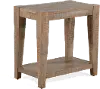
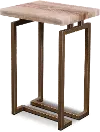
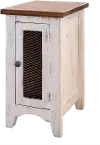
Results for: Side Tables
#myrcwilleyhome
See how real customers are transforming their spaces with RC Willey. Get inspired, share your style, and create a space that's Your Home. Your Way.
Explore NowSide Tables and End Tables — Small Furniture, Big Impact
A side table or end table is one of those pieces of furniture that earns its place in a room quickly. It holds a lamp, keeps a drink within reach, corrals a remote, and gives a living room or bedroom the finished, layered look that an empty corner next to a sofa simply can't. Small side tables do a lot of quiet work in a room — and when they're chosen well, they add style and personality on top of the practical benefits.
The good news is that the end table and small side table category has never been more varied. From solid wood tables with storage drawers to sculptural metal accent pieces, C-shaped tables that slide under a sofa arm, and nesting sets that expand your surface options without committing to a permanent footprint, there's a side table built for virtually every space, style, and situation. Browse side tables and end tables at RC Willey and find the right one for your room.
Why Shop Side Tables at RC Willey?
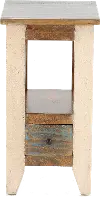
RC Willey carries a wide selection of end tables and small side tables from brands that build furniture for real homes — in the styles, finishes, and configurations that work across a range of living room and bedroom setups. Flexible financing makes it easier to buy the pieces that actually fit your room rather than settling for whatever fits the budget that day. Delivery is available, so your new table arrives without the hassle of figuring out the logistics yourself.
The Details That Matter
How tall should a side table be? The most reliable rule is that a side table should sit at the same height as — or within two inches below — the arm of the sofa or chair it's placed beside. For most standard sofas, that puts the ideal side table height between 24 and 28 inches. A table that's noticeably shorter than the sofa arm requires an uncomfortable reach down to access it. A table that's taller than the sofa arm looks proportionally off and creates visual imbalance in the seating area.
How much tabletop surface do I actually need? That depends on what the table is doing. If it's holding a lamp and a coaster, a small round or square tabletop in the 16 to 20 inch range is plenty. If it's also handling a remote, a book, a phone, and a drink at the same time — which is how most side tables actually get used — a tabletop of at least 20 to 24 inches gives you enough working surface without the table overwhelming the space beside the sofa.
Should end tables match each other — and the rest of the room? They don't have to match exactly, but they should relate to each other and the room in some way — through shared material, finish tone, or design language. Identical end tables on either side of a sofa create a clean, formal symmetry. Two different tables that share a finish or material feel more collected and intentional. Mixing a wood table with a metal one works well when the two pieces share a color temperature — both warm-toned or both cool-toned rather than one of each.
What's the difference between a side table and an end table? The terms are used interchangeably in most retail contexts, including at RC Willey. Technically, an end table is placed at the end of a sofa — at the armrest — while a side table can go beside a chair, a bed, or anywhere additional surface space is useful. For practical shopping purposes, focus on dimensions, height, and style rather than the label.
Do I need storage in a side table? It depends on the room. In a living room with limited storage elsewhere, a side table with a drawer or lower shelf is genuinely useful for keeping remotes, coasters, chargers, and small items organized and off the tabletop. In a room that already has adequate storage, a clean-lined side table without drawers often looks better and takes up less visual space. When in doubt, a shelf rather than a drawer gives you accessible storage without the extra visual weight of a fully enclosed cabinet base.
Types of Side Tables and End Tables
Understanding the main side table types makes it much easier to narrow down what's right for a specific room and situation.
Standard Side Tables
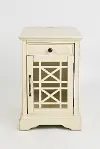
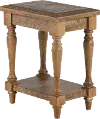
A standard side table is the most common configuration — a tabletop on four legs, with or without a lower shelf. It's the most versatile type in the category, works in almost any room or style direction, and is available across every price point. Standard side tables sit beside sofas and chairs in living rooms, beside beds as nightstands, in entryways as accent pieces, and in reading corners as a surface for a lamp and a cup of tea. The simplicity of the form is the strength — it goes anywhere and works with almost anything.
C-Shaped Side Tables
C-shaped side tables — also called C-tables or laptop tables — have an extended base that slides under the seat cushions of a sofa or chair, positioning the tabletop over the arm or lap without requiring any floor clearance beside the seat. They're a particularly practical choice for smaller rooms where floor space beside the sofa is limited, for anyone who eats, works, or reads from the sofa, and for setups where a standard table would block movement around the seating area. The C-shape keeps the table stable and accessible without occupying the space beside the furniture.
Nesting Tables
Nesting tables come as a set of two or three progressively smaller tables that stack together when not in use and spread out to provide multiple surfaces when needed. They're one of the most space-efficient side table options available — a set of three nesting tables takes up only the footprint of the largest piece when stored but gives you three separate surfaces when entertaining or when extra space is useful. Nesting tables work particularly well in smaller living rooms and apartments where flexibility matters as much as function.
Side Tables with Storage
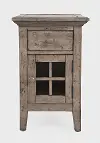
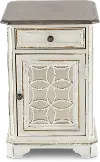
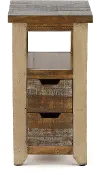
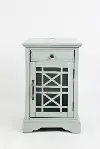
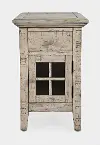
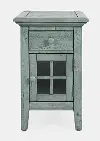
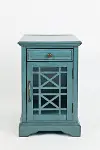
Side tables with storage — drawers, shelves, or cabinet doors — add organizational function to the basic surface role of a standard end table. A drawer side table keeps small items contained and out of sight. An open-shelf configuration keeps frequently accessed items — books, remotes, charging cables — visible and within reach. Some side tables combine both, with a drawer on top and an open shelf below. For living rooms and bedrooms where clutter management is a daily reality, a storage side table earns its keep quickly.
Accent and Sculptural Side Tables
Accent and sculptural side tables prioritize aesthetic impact alongside function. These are pieces where the base design, material combination, or overall form is as much of the point as the surface on top. A marble-top side table with a brass hairpin base. A textured concrete round table with an industrial silhouette. A rattan side table that brings natural texture into a coastal or bohemian room. Accent tables often work as statement pieces — the one table in a room that gets noticed rather than blending into the background — and they pair well with simpler, more neutral surrounding furniture.
Drum and Cylinder Tables
Drum side tables have a cylindrical base that mirrors the shape of a drum or barrel. They're available across a wide range of styles and materials — upholstered fabric drums work well in traditional and transitional rooms, while solid wood or metal cylinders suit contemporary and industrial spaces. The rounded silhouette of a drum table softens a room's geometry and pairs naturally with curved sofas, round coffee tables, and other furniture with softer profiles.
Choosing the Right Material for a Side Table
Material is one of the most consequential decisions in side table shopping — it determines how the table looks, how long it lasts, and how much maintenance it requires.
Wood
Solid wood and wood veneer side tables are the most popular in the category and for good reason. Wood adds warmth, pairs naturally with a wide range of interior styles, and wears well over time — especially harder species like oak, walnut, and acacia that resist denting and scratching better than softer woods like pine. Solid wood develops character over time and can be refinished if the surface is damaged. Veneer constructions deliver the appearance of wood grain at a lower price point and are more resistant to warping in humidity-variable environments.
Metal
Metal side tables — in steel, iron, brass, and aluminum — suit contemporary, industrial, and transitional interiors and are among the easiest materials to maintain. Powder-coated finishes resist chipping and scratching. Brass and gold-toned metal frames have grown significantly in popularity for adding warmth and a touch of refinement to rooms that would otherwise read as cool or industrial. Metal frames pair naturally with wood, marble, and glass tabletops in mixed-material designs.
Marble and Stone
A marble-top side table is one of the more straightforward ways to add a premium material moment to a room without committing to a large piece. Marble is durable, easy to wipe clean, and carries a visual weight that makes even a small side table feel like a deliberate design choice. The tradeoff is that marble requires sealing and is susceptible to staining from acidic liquids if left unattended. Engineered stone and stone-look ceramic tops deliver a similar aesthetic with significantly less maintenance.
Glass
Glass tabletops keep a room feeling light and open — particularly useful in smaller rooms where a solid surface would feel heavier and more space-consuming. Tempered glass is the appropriate safety standard for furniture use. Glass tops are easy to wipe clean but show fingerprints readily, which means they require more frequent surface maintenance than wood or metal alternatives.
Rattan and Natural Fiber
Rattan, cane, and woven natural fiber side tables bring texture and organic warmth into a room that reads as particularly well-suited to coastal, bohemian, and transitional interiors. They're typically lighter in weight than wood or metal alternatives, which makes them easy to move around. Rattan and cane are reasonably durable in indoor conditions and add a handcrafted quality that mass-produced wood and metal tables don't always deliver.
Comparing Side Table Types
| Type | Best For | Space Required | Style Range |
|---|---|---|---|
| Standard Side Table | Any room, universal use | Standard floor clearance beside seating | All styles |
| C-Shaped Table | Small rooms, sofa use, laptop and meal surfaces | Slides under seating – minimal floor space | Modern, transitional |
| Nesting Tables | Small spaces, flexible surface needs | Single footprint when stacked | Contemporary, transitional |
| Storage Side Table | Clutter management, limited storage rooms | Standard floor clearance | All styles |
| Accent Table | Statement pieces, design-forward rooms | Standard floor clearance | Varies – often contemporary or eclectic |
| Drum Table | Rooms with curved or soft-profile furniture | Standard floor clearance | Traditional, transitional, contemporary |
Side Table Sizing — A Quick Reference
Getting the height and surface size right before you buy saves a lot of frustration once the table arrives.
| Placement | Recommended Height | Recommended Top Size |
|---|---|---|
| Beside Standard Sofa | 24-28 inches | 18-24 inches diameter or width |
| Beside Low-Profile Or Sectional Sofa | 20-24 inches | 16-22 inches diameter or width |
| Beside Armchair or Accent Chair | 22-26 inches | 16-20 inches diameter or width |
| Beside Nightstand Use | 24-28 inches | 18-24 inches diameter or width |
| Small Space Or TIght Corner | Under 22 inches | Under 18 inches – prioritize vertical storage |
Frequently Asked Questions
- Do side tables have to match the coffee table? They don't have to match exactly, but they should relate visually. A side table and coffee table that share a material — both wood, both metal — or a finish tone — both warm or both cool — create a cohesive living room without requiring identical pieces. Mixing materials intentionally, like a wood coffee table with a metal side table, works well when the overall color palette holds together.
- Can a side table be used as a nightstand? Yes — and it's one of the most common uses for small side tables. The key is height. A side table used as a nightstand should sit at approximately mattress height, which is typically between 24 and 28 inches for a standard bed with a mattress on a platform or low-profile frame. Make sure the tabletop is large enough to hold a lamp, a phone, and whatever else you keep beside the bed.
- How many side tables does a living room need? Most living rooms benefit from at least one side table at each end of the main sofa, plus one beside any accent chair. That said, the room's layout, the size of the seating group, and how much surface area you actually need all factor into the right number. In a smaller room, one well-placed side table on the most-used end of the sofa handles the job without crowding the space.
- What's the best side table for a small living room? A C-shaped table, a nesting set, or a slim accent table with a small footprint are the strongest choices for tight spaces. C-tables take no floor space beside the sofa. Nesting sets compress to a single footprint when not in use. Slim round or square tables under 18 inches wide give you surface space without visually closing off the room.
- Can I use two different side tables on either side of a sofa? Yes — and it's increasingly the preferred approach in contemporary interior design. Mixing side tables adds personality and a more collected, less showroom feel to a room. The most reliable approach is to vary shape or size while keeping material or finish consistent — a round table and a square table, both in natural oak, for example.
Find Your Side Table at RC Willey
The right end table or small side table does more than hold a lamp — it completes a room. Whether you need a storage-forward piece that keeps a living room organized, a sculptural accent that makes a corner interesting, or a simple, well-proportioned table that sits reliably beside your sofa for the next decade, RC Willey has the selection to get you there. Browse side tables and end tables at RC Willey and find the one that fits your space.