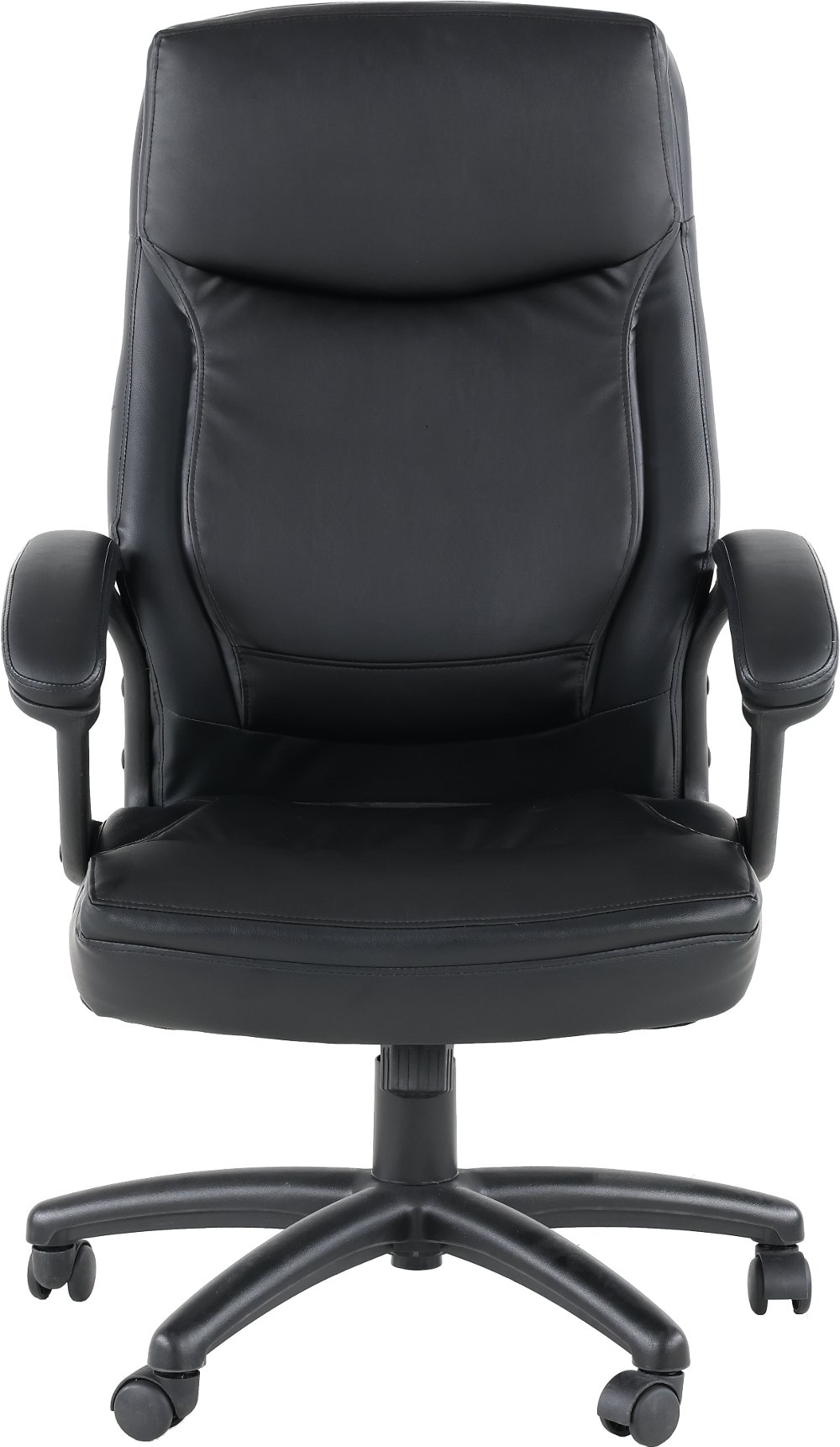
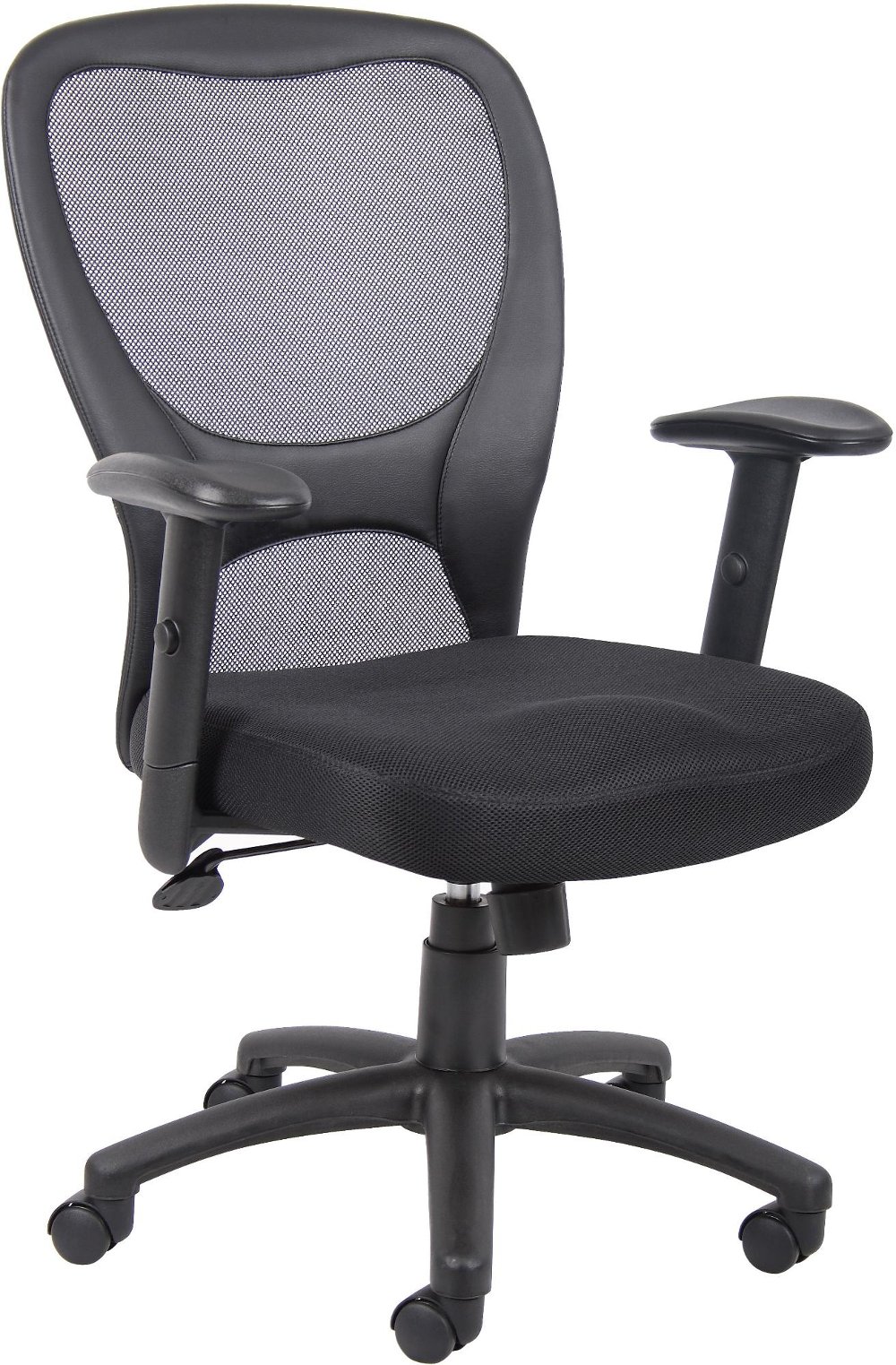
Adjustable office chairs let you change your seating position to better fit your body, desk, and daily routine. Depending on the design, adjustments may include seat height, seat depth, armrest position, lumbar support, backrest angle, and tilt tension. These features serve different purposes, so a chair with several useful adjustments can be more comfortable than one chosen for its appearance alone. A height-adjustable seat helps position your feet flat on the floor or a footrest while keeping your knees comfortably bent. Seat depth matters, too: the seat should support your thighs without pressing into the backs of your knees. For someone with shorter legs, a deep seat can make it difficult to reach the backrest; a taller person may appreciate more room from front to back. Adjustable armrests give your forearms a resting place without pushing your shoulders upward, and arms that lower or flip up can make it easier to tuck the chair beneath a desk. Backrest tilt allows a change in posture between focused keyboard work and a more relaxed moment reviewing a document. Tilt tension controls how much resistance you feel when leaning back, while a tilt lock holds the backrest in a supported position, depending on the mechanism. Lumbar support follows the inward curve of the lower back, with some designs allowing changes in height or firmness. For seating that emphasizes this kind of personalized fit, adjustable ergonomic office chairs offer another way to explore supportive features. The right combination depends on how you sit and what your work involves. A shared household desk may benefit from easy-to-reach controls that accommodate different users, while a dedicated home office gives you room to fine-tune a chair around one person’s needs. Adjustment levers and knobs should be understandable and accessible from a seated position, so small changes feel practical rather than like a project. Even a well-fitted chair works best as part of a setup that allows regular movement and comfortable access to the keyboard, mouse, and screen.
Materials shape how an adjustable desk chair feels, looks, and holds up to everyday use. Mesh backs allow airflow and often have a lighter visual presence, which can suit a compact workspace or a desk tucked into a bedroom. The feel of mesh depends on its tension, weave, and supporting frame; some people enjoy its flexible support, while others prefer the more substantial feel of upholstery. Fabric office chairs bring texture to a room and can coordinate naturally with nearby sofas, curtains, or an upholstered bed. Tightly woven fabrics may be practical for frequent use, although cleaning needs vary by fiber and finish. Leather offers a distinctive surface that can develop character over time, while faux leather provides a similar upholstered appearance with different maintenance requirements. Neither material should be treated as interchangeable when it comes to care. A high-back chair with layered cushioning can create a more traditional executive look, while a streamlined task chair keeps the focus on a simple, functional workspace. Cushion construction matters as much as the covering. A seat that feels plush for a few minutes may feel different after an extended work session, and firmer cushioning can provide a more consistent seating surface for some users. Seams, piping, and upholstery edges also influence comfort, especially where your legs or arms make contact. Routine care helps preserve both the finish and the moving parts. Fabric generally benefits from regular vacuuming with an upholstery attachment, while mesh can collect dust around its frame and beneath the seat. Spills deserve prompt attention using the manufacturer’s recommended method, and any cleaner should be appropriate for the actual material. Leather may require approved conditioning, while faux leather typically needs a different approach. Gentle cleaning and careful use help protect the chair’s appearance without exposing upholstery, finishes, or adjustment mechanisms to unnecessary moisture.
An office chair also needs to suit the space around it and the amount of use it will receive. A chair used for occasional bill paying has a different workload from one supporting full workdays, online classes, or hours of creative projects. For frequent use, construction details such as a stable base, secure arm connections, durable upholstery, and smoothly operating controls deserve attention alongside comfort. Manufacturer specifications provide the clearest information about weight capacity, dimensions, intended use, and any documented testing. Weight capacity alone doesn’t describe fit: seat width, back height, arm spacing, and the available height range all affect how comfortably a chair accommodates its user. Wider seats and taller backs can provide welcome room, but the chair still needs enough clearance to move freely at the desk. A swivel base makes it easier to turn toward a nearby shelf or second work surface without repeatedly twisting at the waist. Casters should match the flooring or be used with a suitable protective mat; wheels designed for carpet may perform differently on wood, tile, or other hard surfaces. Overall chair width matters in narrow rooms, and the space behind the desk needs to accommodate rolling back and standing up. Students may appreciate a chair that adjusts between studying and video calls, while remote workers often benefit from controls that support changes in position throughout the day. In a shared workspace, straightforward adjustments help each person reset the chair without a complicated routine. Adjustable office seating can also be a thoughtful gift for someone setting up a home office or study area, especially when the recipient can help confirm sizing and preferred features. A chair that complements the room is a welcome finishing touch, but everyday usefulness comes from a comfortable fit, dependable construction, and adjustments that make sense for the person sitting in it. Those qualities help turn a desk area into a workspace that feels considered, comfortable, and ready for the tasks ahead.
Read More