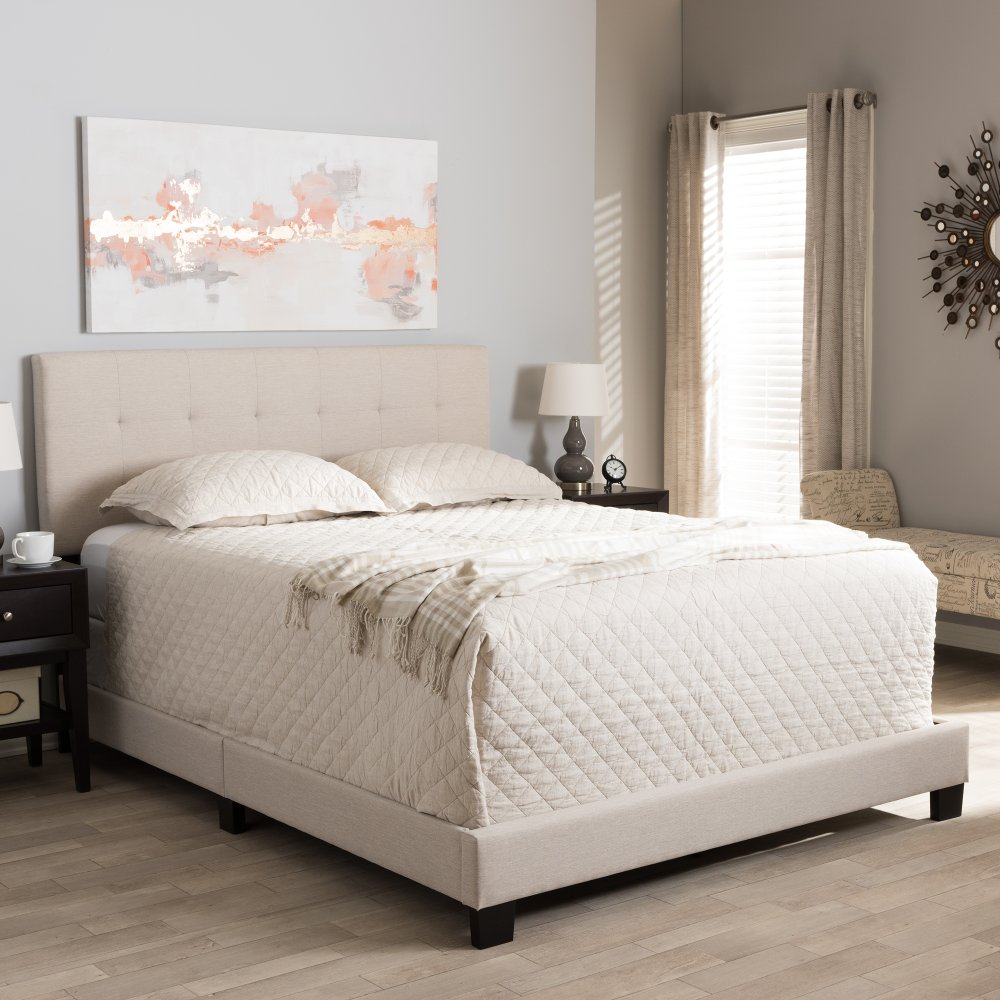
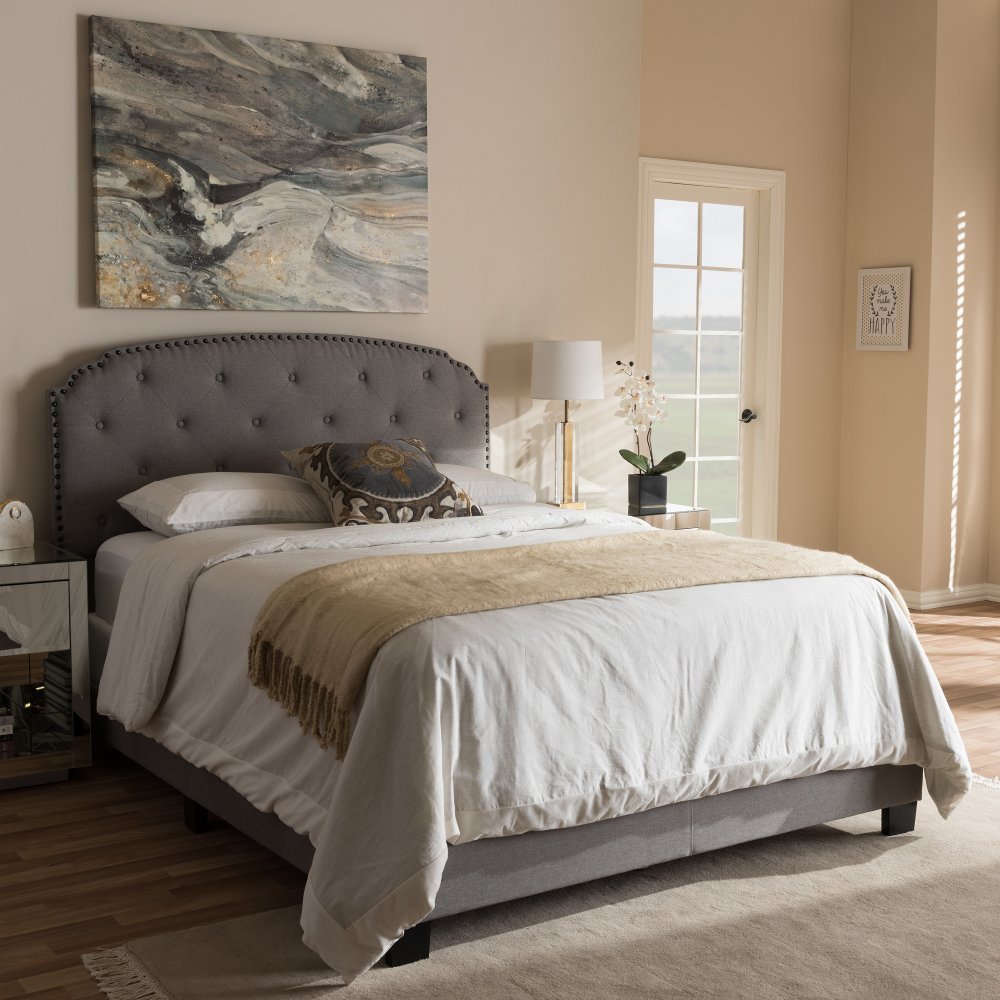
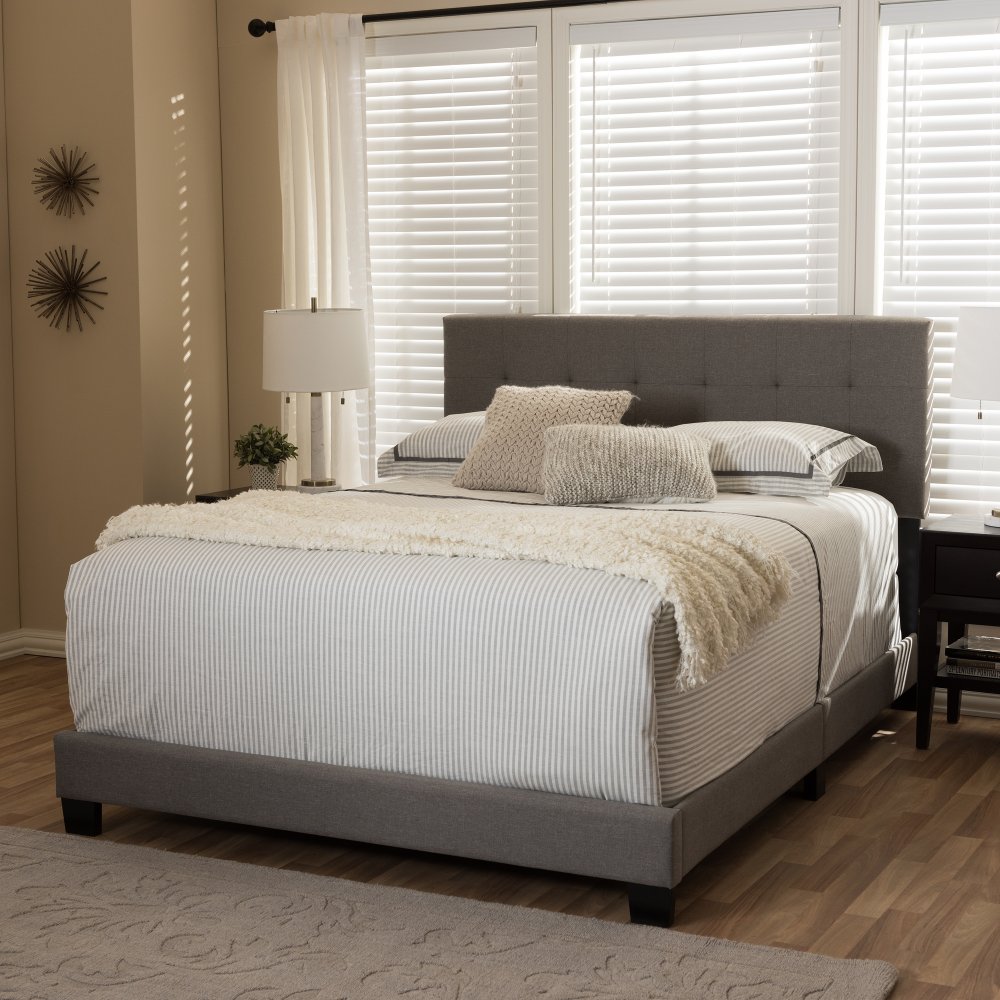
Beige queen beds pair a versatile neutral finish with a frame designed for a standard queen mattress, creating a comfortable focal point without overwhelming the bedroom. The appeal is in the balance: beige feels softer than a stark white finish, yet it gives bedding, artwork, and wood furniture plenty of room to stand out. Shades can range from pale ivory-beige and oatmeal to sandy tan or a deeper beige with gray undertones. Those differences matter when the bed sits beside an existing dresser or against a painted wall. A warm beige can complement honey-colored oak and muted terracotta, while a cooler shade can work with charcoal accents and crisp white bedding. Upholstered queen beds bring another layer of texture through woven fabric, linen-look materials, plush velvet, or looped upholstery. A tightly woven surface creates a tailored appearance, while a more textured fabric adds depth even when the room stays mostly neutral. Headboard shape helps define the overall look, too. A simple rectangular headboard suits a clean, understated bedroom; button tufting introduces a more traditional detail; and a wingback design frames the pillows with gently enclosing sides. Curved corners can soften a room filled with straight-lined furniture, while channel stitching adds structure without relying on decorative trim. Beige beds can also feature painted wood or mixed-material details for a different balance of softness and definition. The best match depends on the room you’re creating rather than a single decorating style. Picture an oatmeal upholstered bed beside a walnut nightstand, with a reading lamp and a textured white coverlet, or a sand-colored frame paired with navy bedding and black metal accents. Both arrangements let the bed anchor the space while leaving the personality to the details around it. Because beige works with many colors, it also makes sense for a bedroom that may change over time, whether that means new bedding, different curtains, or furniture carried over from another home.
The construction beneath that neutral exterior is just as important as the appearance. A standard queen mattress measures approximately 60 inches wide by 80 inches long, but the bed’s overall footprint will be larger once you include side rails, a footboard, and the headboard. Winged headboards and thick upholstery can add several inches, so the full frame dimensions are more useful for planning a room than mattress size alone. Leave enough space to walk beside the bed, open nearby dresser drawers, and reach the nightstands comfortably. In a smaller bedroom, a slim frame or an open area beneath the rails can keep the layout from feeling crowded. For a streamlined foundation, beige queen size platform beds use a platform or slatted support system that often eliminates the need for a box spring. Mattress requirements still matter: foam, hybrid, and innerspring mattresses may have different rules for slat spacing and support, so check the mattress manufacturer’s guidance alongside the bed’s specifications. Other queen bed frames require a box spring or a separate foundation. The combined height of the frame, foundation, and mattress affects how easily you can sit down, stand up, and reach the floor. A thick mattress may also cover much of a shorter headboard, changing the finished appearance. Look beyond the upholstery to the structural materials, including wood, engineered wood, and metal, and consider how the frame’s joints, slats, center rail, and support legs work together. Check the stated weight capacity for the intended sleepers and mattress rather than assuming every queen frame supports the same load. Storage designs can make a queen bed especially useful in rooms with limited closet space. Under-bed drawers give extra linens a dedicated home, while lift-up storage can provide access beneath the mattress. Drawers need room to extend, and lift mechanisms have their own operating instructions and clearance requirements. These details help a beige queen bed serve a primary bedroom, a guest room for visiting couples, or a larger bedroom for a single sleeper who wants more room to stretch out.
Daily use and care help determine which beige bed feels right for your home. Upholstered headboards offer a padded surface behind your pillows, making them appealing if you like to read or watch television in bed. Fabric texture deserves attention when pets share the room or children regularly climb up for a story. Looped fabrics can catch claws, and raised stitching or tufting creates places where dust and lint may collect. A close weave may be easier to maintain, though stain resistance and cleaning methods depend on the particular material and finish. Beige can soften the appearance of some everyday lint, but it isn’t a substitute for regular care. Use the upholstery attachment on a vacuum, following the manufacturer’s recommendations, to remove dust from the headboard, seams, and rails. Blot spills promptly instead of rubbing them into the fabric, and follow the care label before applying water, solvent, or an upholstery cleaner. Test any permitted cleaning solution in an inconspicuous spot first. Wood and metal details need their own care, usually with a soft cloth and a cleaner approved for that finish. Protect upholstery from prolonged direct sunlight where practical, since fading can change the color unevenly. For lasting stability, follow assembly instructions carefully, check accessible hardware periodically, and avoid dragging an assembled bed across the floor. The room’s routines can influence the design choice as much as maintenance does. A low-profile footboard leaves more visual space at the end of the bed and can feel less restrictive for a tall sleeper. A taller headboard makes a stronger backdrop for layered pillows, while a simpler silhouette keeps attention on a favorite quilt or piece of art. In a guest bedroom, neutral upholstery makes it easy to coordinate fresh linens with existing furniture. In your own bedroom, the same quiet color gives familiar pieces a cohesive setting. A beige queen bed earns its place through the combination of comfortable proportions, dependable support, manageable care, and a look that feels at home with the way you live.
Read More