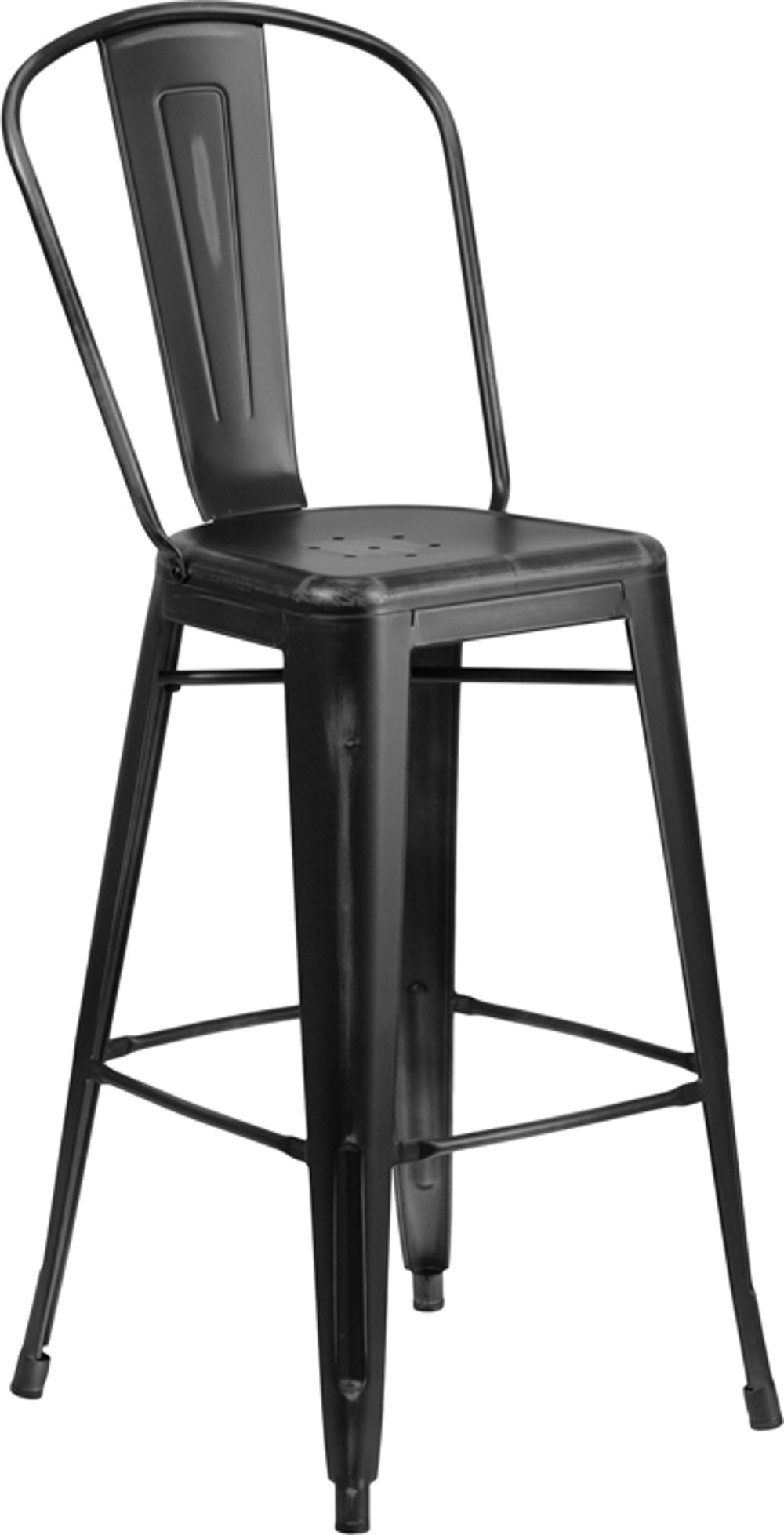
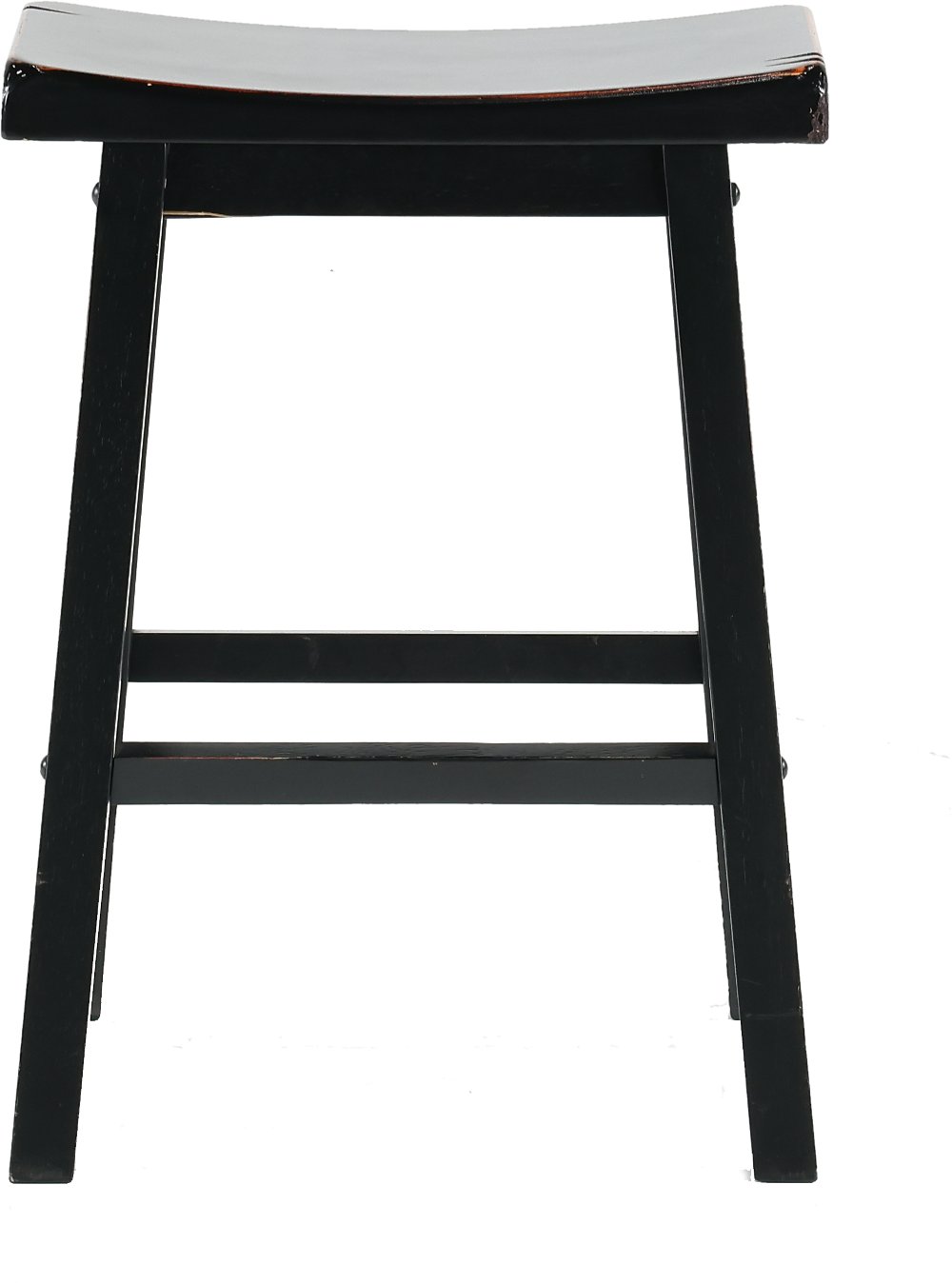
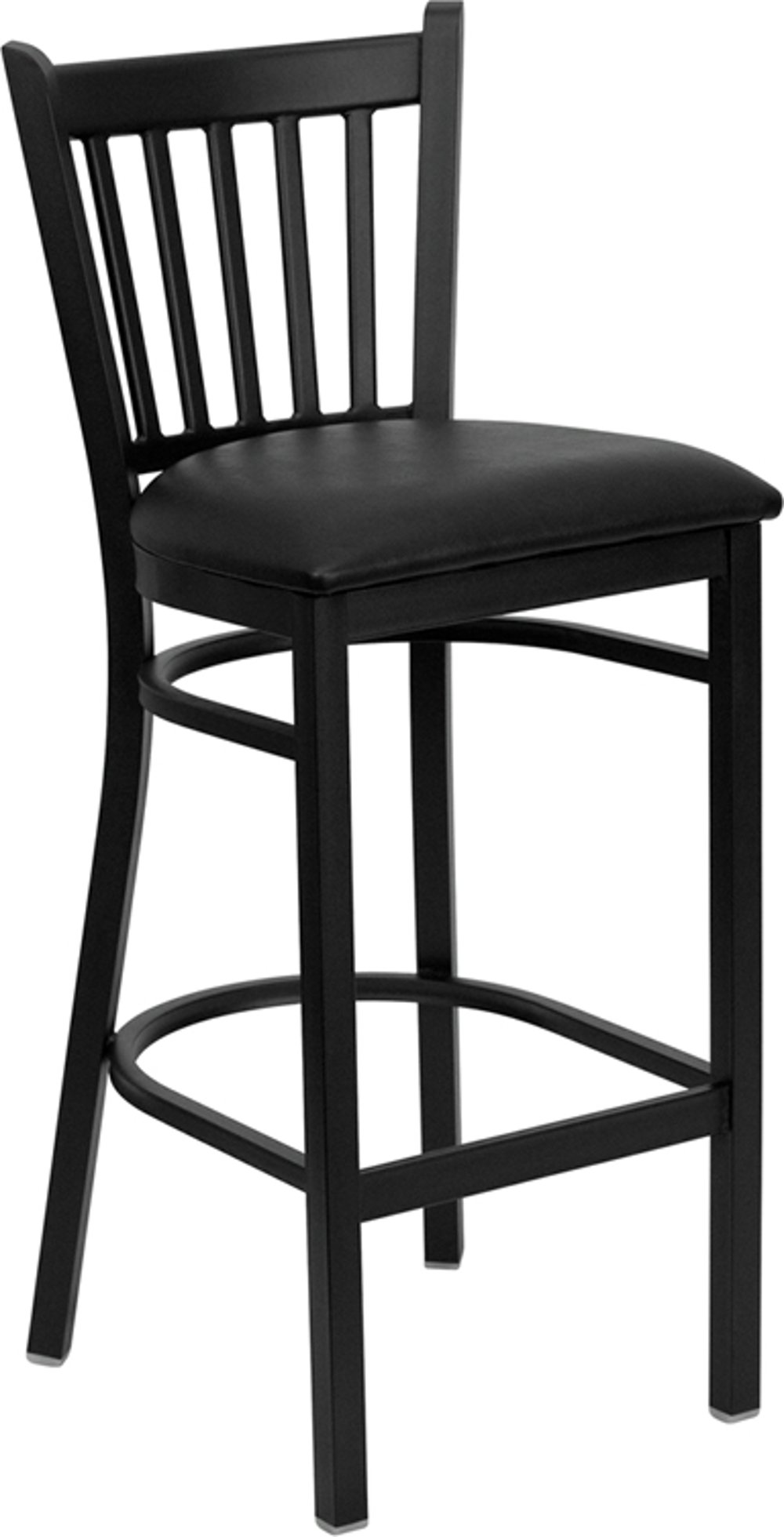
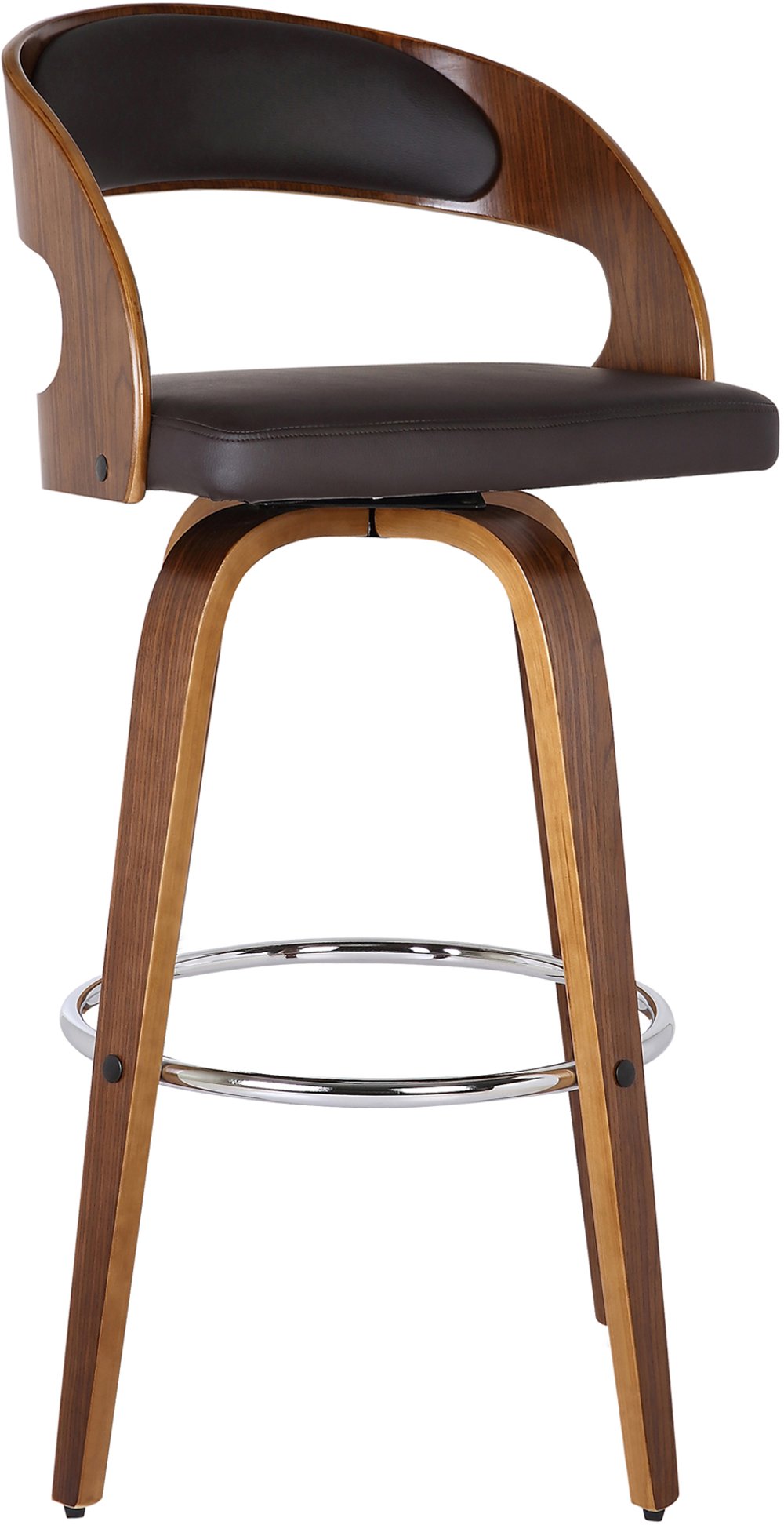
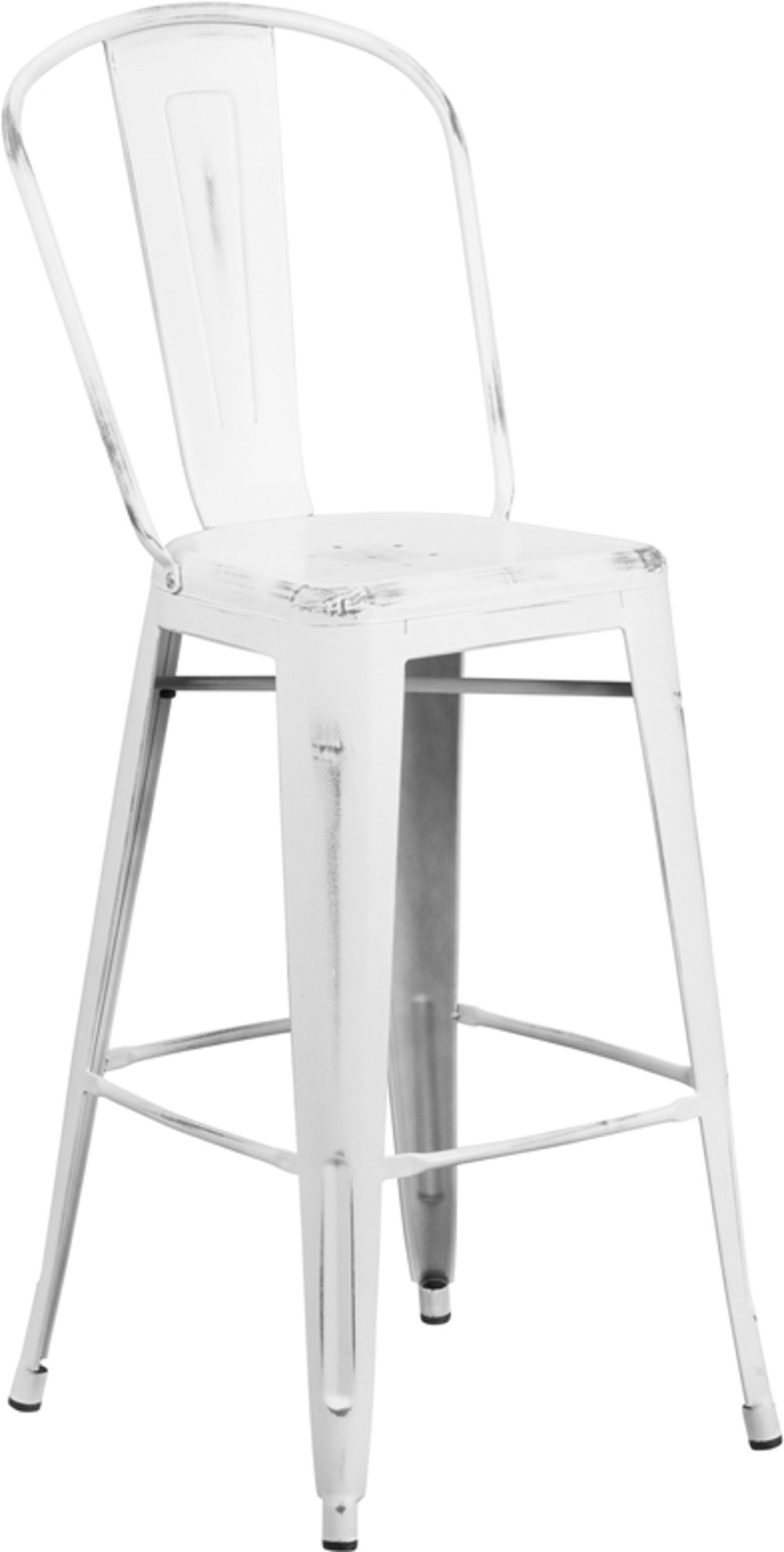
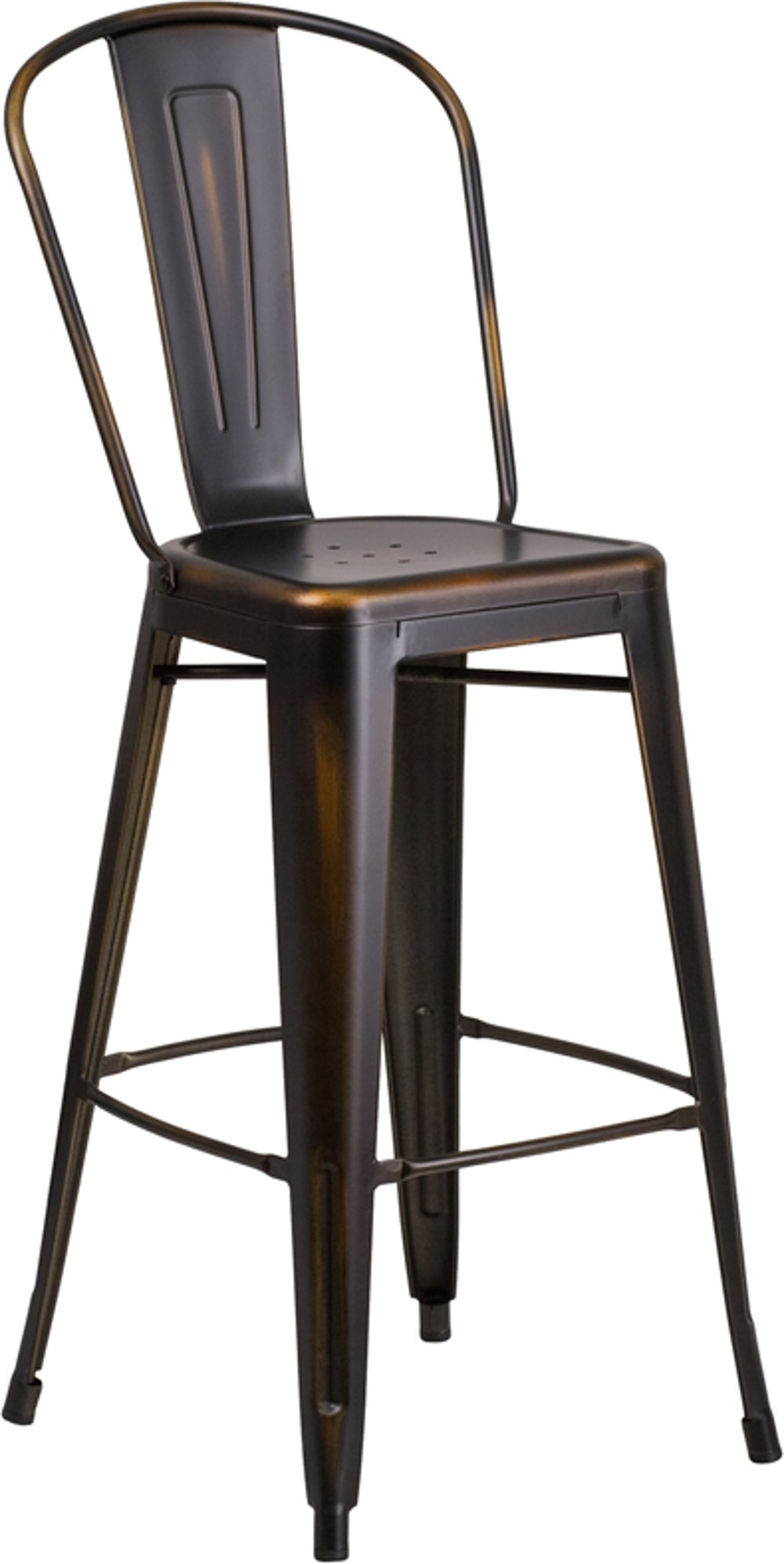
Black stools give a kitchen island, breakfast counter, or home bar a grounded look without asking the rest of the room to match. Their dark finish can echo cabinet hardware, frame a light countertop, or bring definition to a space filled with pale wood and soft upholstery. Black counter stools and black bar stools also work across a wide range of decorating styles, from simple metal frames in an industrial kitchen to curved wood seats in a more traditional setting. The shape and finish make a noticeable difference: a slim, matte frame tends to blend into the room, while a glossy finish or a broad upholstered back creates a stronger visual presence. If your kitchen opens into the living area, consider how the stools look from behind, since that may be the view you see most often. Open backs keep sightlines clear, while fully upholstered backs can make counter seating feel more like an extension of the dining room. A backless design can tuck beneath an overhang when dimensions allow, helping a busy walkway feel less crowded. For a lighter contrast, black and silver stools pair dark seats or frames with metallic details that can complement stainless steel appliances and chrome fixtures. Think about how the seating will earn its place in your home. A stool used for a quick cup of coffee has different comfort demands than one where someone settles in for homework, a long conversation, or meal prep alongside the cook. Cushioned seats, supportive backs, and conveniently positioned footrests can make longer stays more comfortable. Armless silhouettes often simplify getting in and out, while arms offer a place to rest when there’s enough room beneath the counter. Matching every finish isn’t necessary; repeating one or two details, such as a curved profile or brushed metal accent, can help the seating feel connected to its surroundings without making the room look overly coordinated.
Getting the height and spacing right makes black stools easier to enjoy every day. Counter-height seats commonly measure about 24 to 26 inches from the floor, while bar-height seats often measure about 28 to 30 inches. Those ranges generally suit counters around 34 to 36 inches tall and bars around 40 to 42 inches tall, respectively, but measuring your own surface is more useful than relying on a label alone. Start with the distance from the floor to the top of the counter, then check the underside for support brackets, drawers, or a deep apron that could limit knee room. Roughly 10 to 12 inches between the seat and the countertop is a helpful starting point, with the actual fit depending on the user, seat cushion, and counter construction. Check arm height separately if you want the stool to slide underneath. Width matters just as much when several people will sit together. Allowing around 26 to 30 inches from the center of one seat to the next can provide a useful planning range, though broad seats and arms may need more space. Painter’s tape on the floor can help you picture the footprint before choosing a size. Leave room behind occupied stools so someone can pass without squeezing between a seated guest and the wall. Swivel stools can make conversation and getting seated easier, especially beside a long island, but their turning radius needs clearance from nearby cabinetry and neighboring seats. Adjustable-height designs offer flexibility for different users or surfaces; check the full height range, weight capacity, and adjustment instructions rather than assuming every position will suit your counter. For households with children, a stable base and age-appropriate seating deserve particular attention. A footrest helps support feet, but it isn’t a step for climbing. Adults who spend longer periods seated may prefer a wider seat and back support, while compact, backless stools can suit occasional seating where keeping the floor area open is the priority.
Materials and construction shape how black stools feel, wear, and fit into your routine. Solid wood brings visible grain and a warmer character, even beneath a dark stain, while painted wood can offer a more uniform appearance. Wood seating benefits from secure joints, an even stance, and a finish suited to everyday contact. Metal frames can create a clean, narrow silhouette, and a well-applied powder-coated finish can help resist ordinary wear, although impacts and scraping can still damage the surface. A black finish doesn’t automatically hide every mark: dust, crumbs, and pale scuffs may stand out, and glossy surfaces can show fingerprints more readily than textured finishes. Upholstered seats add softness, with fabric offering texture and leather or synthetic upholstery providing a different feel and care routine. For a breakfast counter that sees cereal spills and sticky hands, look closely at cleaning instructions, seam placement, and whether the upholstery has documented stain-resistant properties. No upholstery is completely spill-proof, so blot accidents promptly rather than rubbing them farther into the material. Use a soft cloth for routine dusting, and follow the manufacturer’s directions before applying soap, conditioner, disinfectant, or a specialty cleaner. Avoid soaking wood joints or leaving moisture on metal parts, and test approved cleaning products in an inconspicuous spot when recommended. Floor protection matters, too. Glides should suit your flooring, stay free of trapped grit, and be replaced when worn; felt pads may help protect hard floors when appropriate for the stool’s design. Periodically check fasteners and tighten them according to the assembly instructions, especially on seating that gets moved frequently. Choose stools rated for outdoor use if they’ll sit on a patio, since indoor finishes and upholstery may not tolerate moisture or sun exposure. With the right measurements, supportive features, and manageable care requirements, black stools can serve as everyday seats for shared meals, a comfortable perch for visiting friends, or a practical finishing touch in a first apartment. The strongest choice is the one that suits the way people actually gather in your home.
Read More