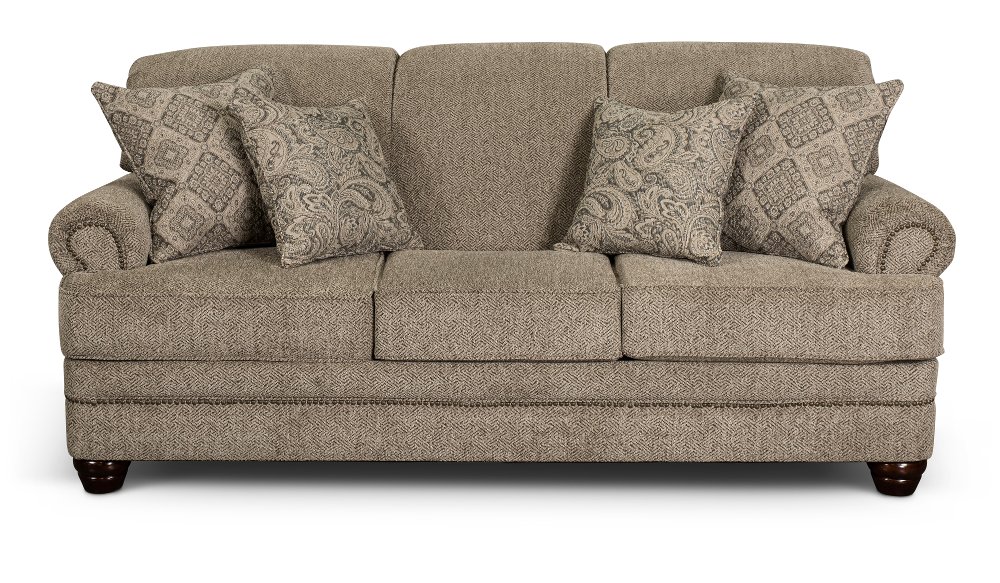
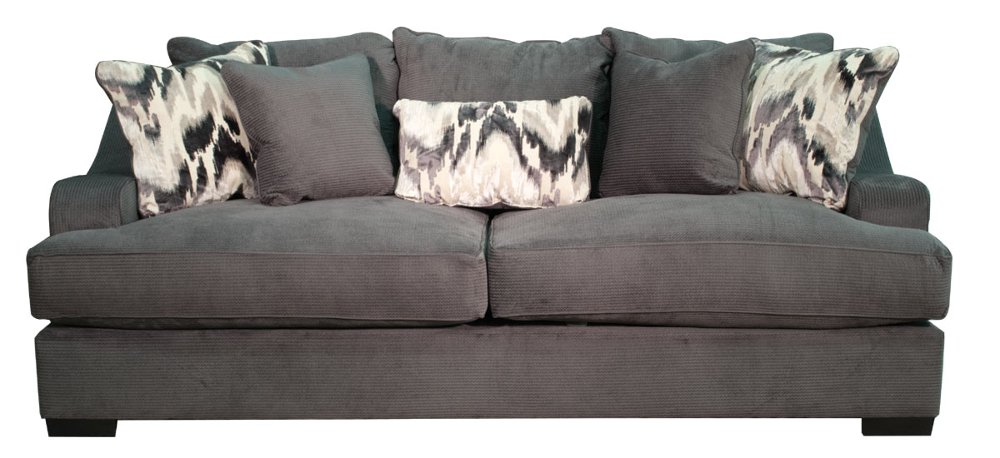
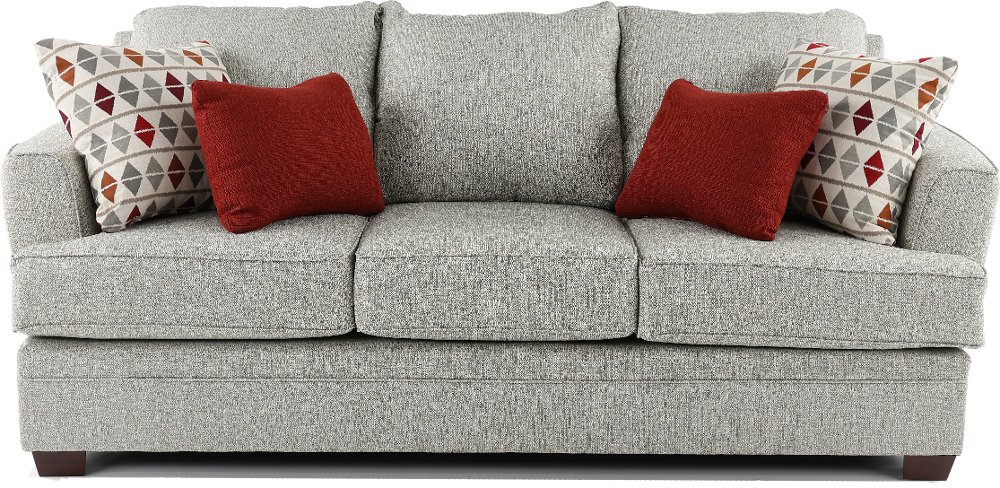
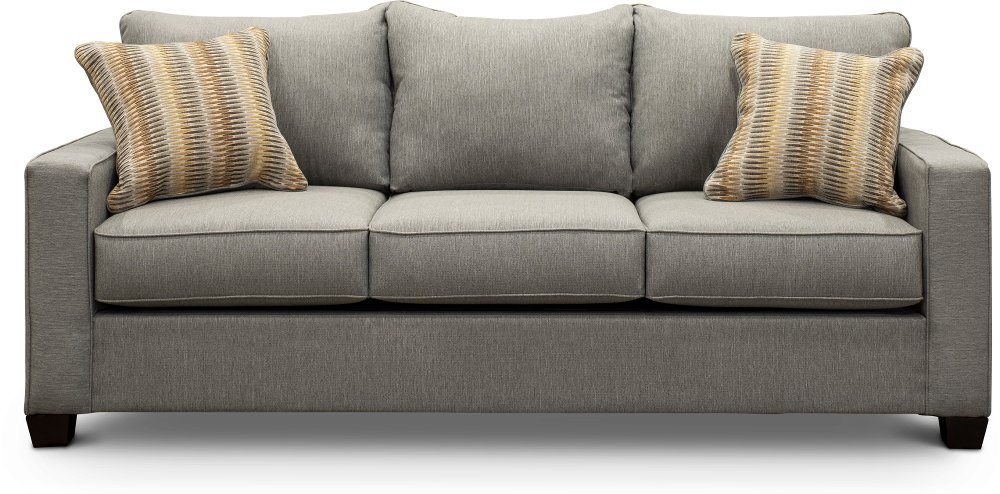
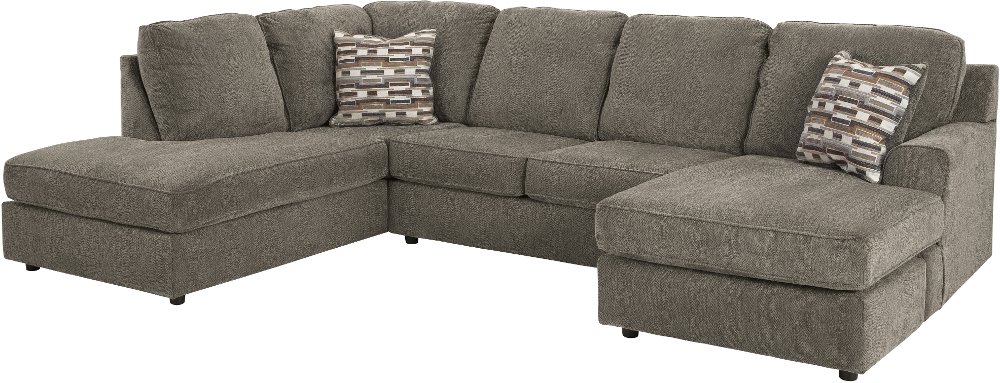
Brown fabric sofas bring comfortable, easy-to-coordinate seating to living rooms, family rooms, and conversation spaces. Their upholstered surfaces range from smooth and tailored to plush and textured, while the color family stretches from light caramel and earthy taupe to rich chocolate and deep espresso. That variety makes a brown fabric couch useful in more than one decorating style. A sofa with slim arms and raised legs can feel at home beside a clean-lined coffee table, while rolled arms and generous cushions create a more traditional look. Brown also gives colorful accents room to stand out: blue pillows, a rust-colored throw, or an olive accent chair can add personality without competing with the sofa. For a quieter palette, cream, oatmeal, and muted gray offer contrast through texture rather than strong color. The upholstery itself makes a noticeable difference. Chenille has a soft pile that can give brown added depth, while a woven fabric with mixed yarn colors creates a more varied surface. Microfiber often has a smooth, suede-like feel, and cotton or linen blends can bring a more visibly woven texture. Fiber content alone doesn’t determine how a sofa will perform; weave, backing, finishing, and construction matter, too. Brown can lean golden, reddish, or gray, so it helps to consider the flooring and nearby wood furniture. A chocolate sofa against a dark wood floor usually benefits from a lighter rug that separates the two surfaces visually. In a room with pale flooring and white walls, that same sofa can provide a grounded focal point. Fabric samples, when possible, give a better sense of undertones in the room’s lighting than a screen image alone. Exploring Brown Sofas can also help you compare how different upholstery textures and silhouettes change the character of this versatile color.
The right fit depends on both the space a sofa occupies and the way people settle into it. Overall width includes the arms, so two brown fabric sofas with similar outside measurements may offer noticeably different amounts of usable seating. Broad pillow arms provide a comfortable place to lean, but narrower track arms can leave more room for sitting within a smaller footprint. Seat depth matters just as much. A deeper seat suits someone who likes to curl up with a book or stretch out during a movie, while a shallower seat can make it easier to sit upright with feet resting on the floor. Seat height, cushion firmness, and back support work together, especially for anyone who prefers getting up without sinking deeply into the cushions. A soft first impression doesn’t always mean better everyday comfort; supportive cushions can feel more comfortable over a long conversation than cushions that compress too far. In an apartment, a compact sofa with exposed legs can preserve a sense of openness. In a larger family room, a wider sofa or a chaise configuration may better support shared lounging, provided the layout leaves clear paths to doorways and neighboring furniture. Reclining designs need room to extend, and some also need clearance behind the back. Delivery access deserves the same attention as the final placement. Narrow halls, stair turns, elevator dimensions, and door openings can affect whether a sofa reaches its intended room. Removable legs or backs may help with certain designs, but those details should be confirmed rather than assumed. Daily routines help narrow the choices further: a household that gathers for movies may value deep cushions and wide lounging space, while a sitting room used for visiting may benefit from a more upright profile. Families with children, people sharing an apartment, and anyone furnishing a first home can all make good use of brown upholstery, with the most suitable shape depending on how the room gets used.
Long-term satisfaction with a brown fabric sofa comes from the combination of upholstery, internal construction, and manageable care. A tightly woven performance fabric may offer useful resistance to everyday wear or spills, but performance claims vary, and no fabric should be assumed to resist every stain or pet scratch. In homes with pets, a close weave without prominent loops may be less likely to catch claws than a loose, heavily textured surface. Brown can make some everyday marks less noticeable, although pale pet hair and light-colored crumbs may show clearly on dark chocolate upholstery. Color helps with appearance, not cleanliness, so routine maintenance still matters. Beneath the fabric, well-joined frames made with suitable hardwood or furniture-grade plywood can provide a sturdy foundation. Suspension systems and cushion construction affect how evenly the sofa supports weight. Higher-density foam generally offers better resistance to breakdown than lower-density foam, but density and firmness are different qualities; a dense cushion can still have a soft feel. Fiber wrapping can soften cushion edges, while loose-fill cushions may need more frequent fluffing to maintain their shape. Reversible seat cushions can help distribute wear when the design allows regular turning and rotation. For upholstery care, the manufacturer’s cleaning code is more reliable than assumptions based on the fabric’s appearance. A W code generally permits water-based upholstery cleaners, S calls for solvent-based cleaners, W/S permits either type, and X indicates vacuuming or light brushing only. Specific product directions still apply, and any approved cleaner should be tested in a hidden area first. Removable cushion covers aren’t necessarily machine washable. Regular vacuuming with an appropriate upholstery attachment helps lift dust from seams and cushion edges, while prompt blotting can keep a small spill from spreading farther into the fabric. Avoid rubbing or saturating the upholstery, and limit prolonged direct sunlight to help reduce fading. With a comfortable seat, proportions that suit the room, and a care routine that fits everyday life, a brown fabric sofa can become a dependable place for reading, catching up, and relaxing at home.
Read More