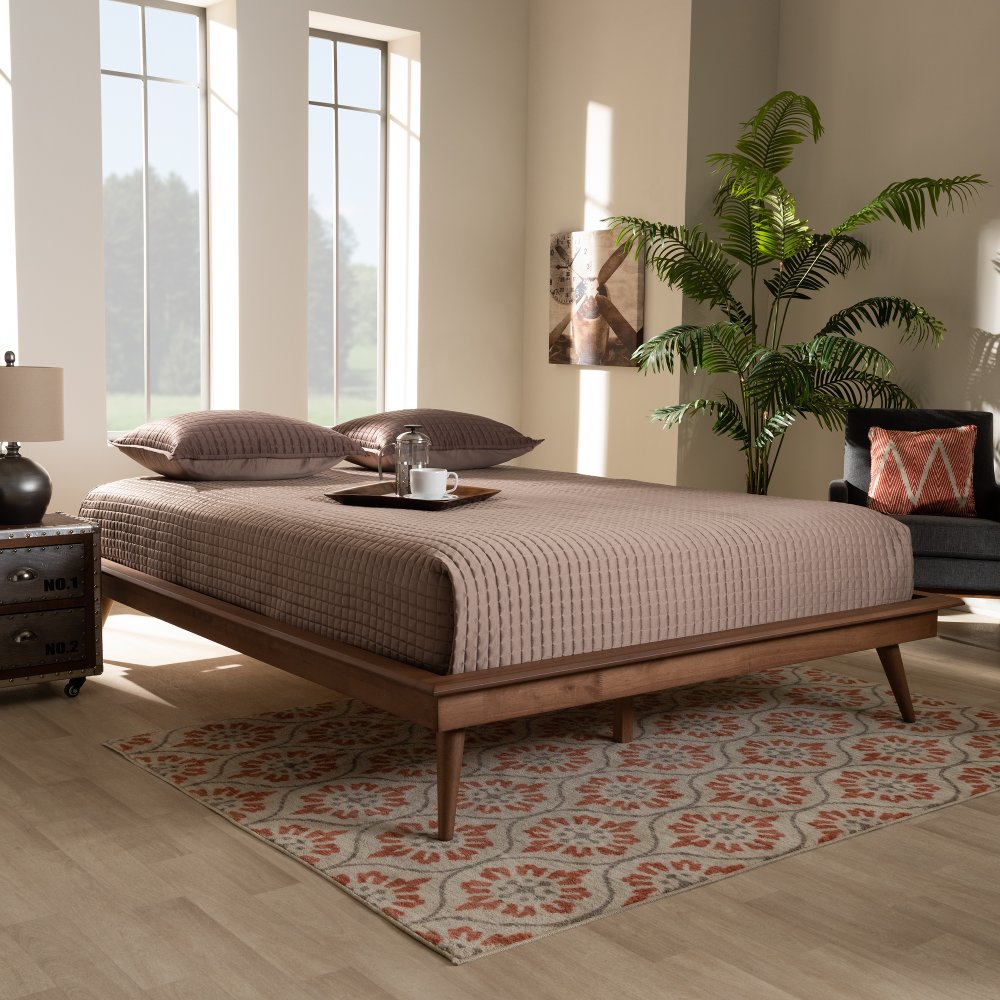
Brown platform beds pair a brown frame or upholstered finish with a built-in foundation that supports a mattress, typically without a separate box spring. That foundation may use closely spaced slats or a solid deck, creating a streamlined profile with fewer layers beneath the mattress. Brown brings a grounded, welcoming feel to a bedroom, whether it appears as light oak-inspired grain, a medium walnut tone, or a deep espresso finish. Lighter shades sit comfortably beside cream bedding and woven accents, while darker browns create definition against pale walls and crisp white sheets. The finish matters as much as the color: a smooth, even surface feels more tailored, while visible grain, knots, and wire-brushed texture add character. Brown wood platform beds can suit contemporary, rustic, traditional, and mid-century-inspired spaces, depending on the shape of the headboard and legs. A broad panel headboard makes a substantial focal point; an open slatted design leaves more of the wall visible. Upholstered brown platform beds offer a different effect, bringing softness through fabric, leather, or leather-look coverings. A padded headboard can make sitting up with a book more comfortable, though its height and cushioning affect how much support it provides. Construction also shapes the look and everyday performance. Solid wood offers natural grain variation, wood veneer places a thin layer of real wood over a supporting core, and decorative laminate can reproduce a consistent wood-grain appearance. Engineered wood can provide smooth, uniform panels, while metal components may reinforce joints or the mattress foundation. No single material tells the whole durability story; joinery, center supports, hardware, and surface protection all contribute. Matching every brown finish in the room isn’t necessary. A shared warm or cool undertone can connect a bed with existing nightstands, and a little contrast helps each piece stand out. For a bedroom that already has patterned rugs or colorful artwork, a simple brown bed frame gives those details room to shine without making the space feel unfinished.
The right fit starts with both the mattress size and the bed’s complete outside dimensions. A platform frame may extend beyond the mattress along the sides or foot, and a thick headboard can take up several additional inches of floor space. Standard queen mattresses measure approximately 60 by 80 inches, while standard king mattresses measure approximately 76 by 80 inches; the finished bed frame will generally be larger. For a spacious shared bedroom, Brown King Size Platform Beds provide a generous sleeping area, but the layout still needs comfortable access to nightstands, closets, and the bedroom door. In a smaller primary bedroom or guest room, a less bulky frame can preserve walking space without giving up the finished look of a headboard. Low-profile designs keep the overall silhouette visually open, although a low mattress surface may be less comfortable for someone who finds standing from a seated position difficult. The final sleeping height depends on both the platform height and mattress thickness. A thick mattress can also cover decorative headboard details, so the visible headboard height deserves attention. Mattress compatibility is equally important. Foam, latex, and hybrid mattresses often require a particular foundation type, maximum slat spacing, or center support arrangement to meet their manufacturers’ requirements. A platform design doesn’t automatically make every mattress compatible, and adding a box spring can create unnecessary height unless the bed’s instructions call for one. Weight limits should account for the mattress and everyone using the bed, following the manufacturer’s stated capacity. Adjustable bases need their own compatibility check; some frames can surround an independent base, while others have support components that cannot be removed. Under-bed clearance also affects everyday use. Open space beneath a raised frame can accommodate storage bins and allow easier cleaning, while a frame that sits close to the floor creates a more enclosed appearance. Built-in drawers need enough room to open fully, especially beside a dresser or wall.
Everyday details help a brown platform bed stay comfortable, attractive, and dependable. In a shared bedroom, a secure center rail and correctly installed support legs help distribute weight across the foundation. Tight connections can reduce movement and noise, but careful assembly matters just as much as the frame material. Hardware should be checked according to the manufacturer’s instructions, particularly after moving the bed, and support feet should make proper contact with the floor. When rearranging a room, lifting the frame rather than dragging it helps protect joints, legs, and flooring. Surface care depends on the finish or upholstery. A soft cloth removes dust from wood and wood-look surfaces; spills are best wiped up promptly before moisture reaches seams or unfinished edges. Harsh cleaners, abrasive pads, and excess water can damage protective finishes, so cleaning products should match the manufacturer’s recommendations. Upholstered headboards benefit from regular gentle vacuuming with an appropriate attachment, especially along seams where dust collects. Fabric cleaning codes determine whether water-based or solvent-based treatments are suitable, and leather and leather-look materials require different care routines. Keeping direct sunlight off the headboard can help limit uneven fading across wood and upholstery. These practical considerations matter whether the bed anchors a primary suite, furnishes a teenager’s room, or gives overnight guests a comfortable place to settle in. A brown finish is especially easy to build around as bedding and wall colors change: soft blue sheets bring out its warmth, olive accents complement natural grain, and ivory layers keep a darker frame from feeling too heavy. For someone furnishing a first apartment or refreshing a long-used bedroom, that flexibility makes the bed a useful foundation for the rest of the room. Thoughtful proportions, compatible mattress support, and manageable care requirements turn a good-looking frame into furniture that suits the way the bedroom is actually used, from quiet reading before sleep to making the bed each morning.
Read More