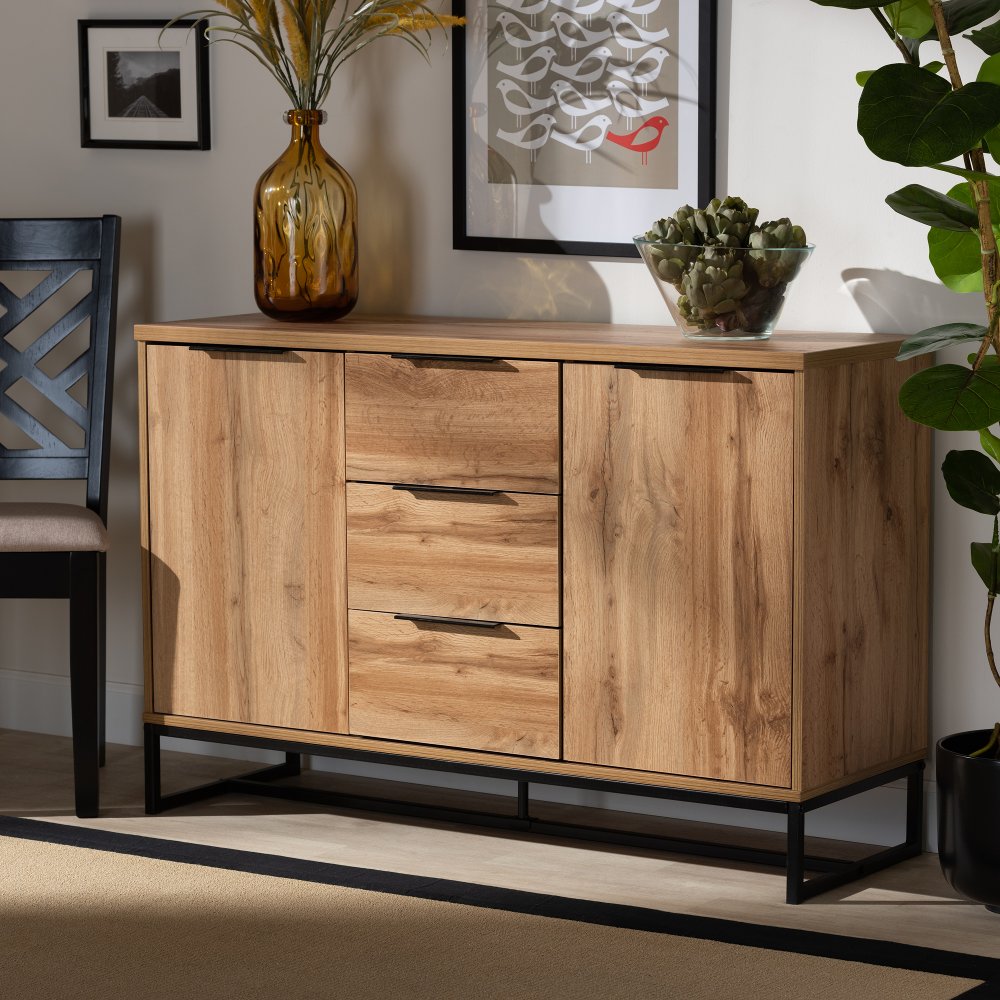
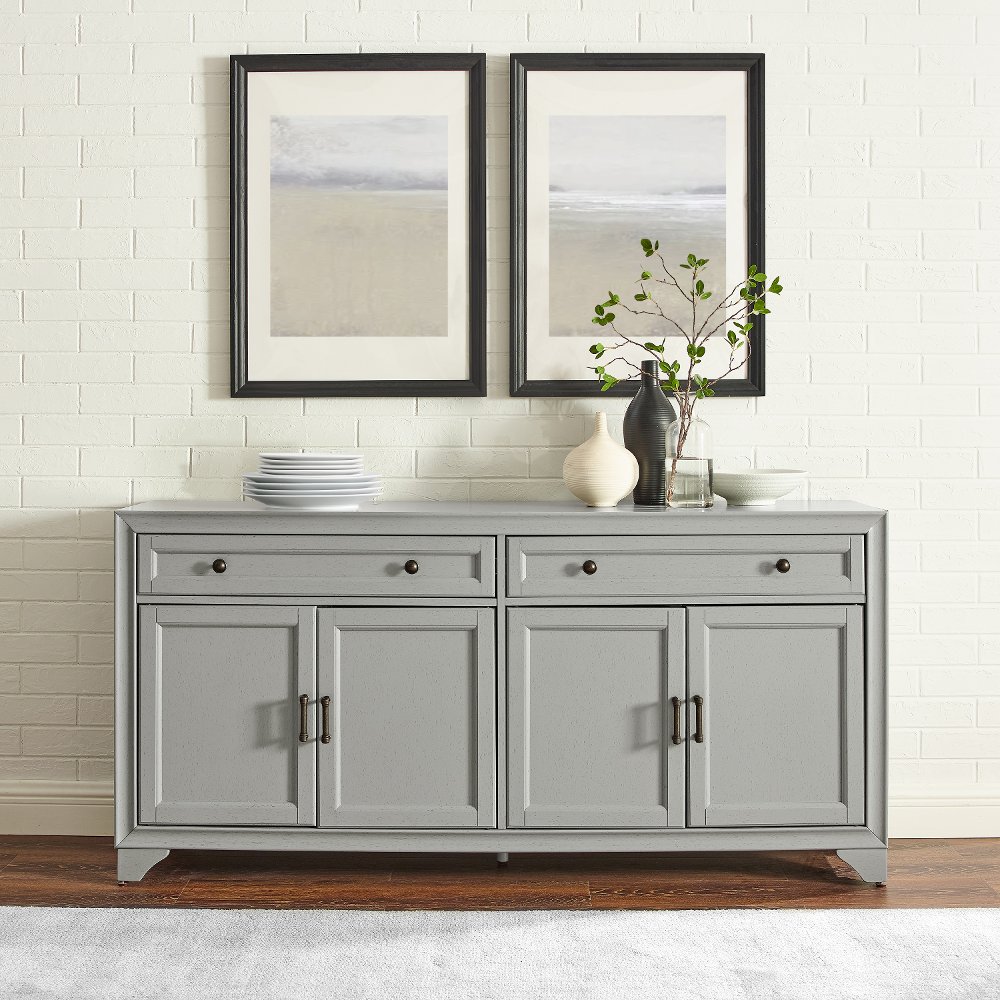
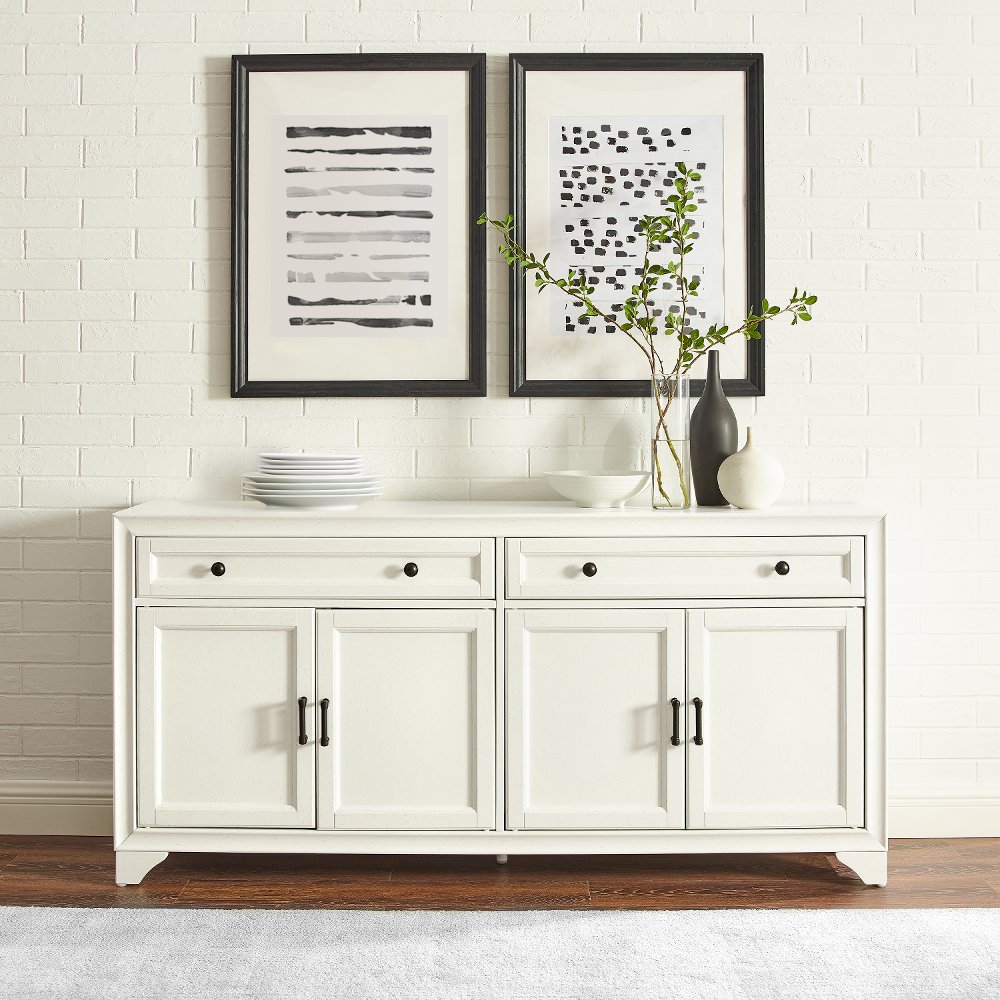
A buffet table is a storage and serving piece that keeps dishes, linens, and dining essentials close to the table while providing an extra surface for meals and display. Often called a sideboard, it typically combines a broad top with drawers, cabinets, open shelves, or a mix of all three. The terms buffet and sideboard overlap, so the layout and dimensions matter more than the name. In a dining room, a buffet gives serving bowls and platters a place to land without crowding the dinner table. In an open living area, it can create a home for entertaining supplies while helping define the dining space. Explore Serving Buffets for a related category centered on this combination of storage and serving space. The most useful arrangement depends on what needs a home: shallow drawers suit flatware and napkins, deeper cabinets accommodate pitchers and large bowls, and adjustable shelves make room for pieces of different heights. Closed doors keep everyday odds and ends out of sight, while glass-front doors allow favorite dishes to become part of the room. Open shelves work well for frequently used pieces or baskets, though their contents remain visible and need regular dusting. For a household that hosts dinners, a clear top can hold a row of serving dishes so guests can help themselves. For a smaller household, that same surface might hold a lamp and a ceramic bowl between meals, then clear easily when company arrives. A buffet can also support a coffee station, with mugs and supplies stored below, provided the finish is protected from moisture and appliance heat. Its appeal is practical rather than limited to entertaining: keeping the things used together in one place makes setting the table, clearing dishes, and putting linens away feel less scattered. Even a dining area without room for a china cabinet can benefit from low, enclosed storage that leaves the wall above open for artwork or a mirror.
The right fit starts with the room’s everyday traffic, not just the empty stretch of wall. A buffet needs enough space for people to walk past it, pull out dining chairs, and open its drawers or doors comfortably. About 36 inches of clear walking space is a useful starting point, with more room often needed where seating and serving overlap. Measurements should account for baseboards, nearby doorways, projecting hardware, and any cabinet doors that swing into the path. Depth deserves particular attention in a narrow dining room; a few inches can change whether the space feels easy to move through once everyone sits down. Height matters, too. Many buffet tables stand around 30 to 36 inches tall, but dimensions vary, and a comfortable serving surface should suit the people using it. A longer top can separate drinks from food, while a compact cabinet may offer enough room for a pitcher, a stack of plates, and one serving dish. Inside, usable shelf depth and door openings determine whether large platters actually fit. Shelves should support stored dishes within the manufacturer’s stated weight limits, especially when several stacks of stoneware share one compartment. Style can follow the dining table without matching every detail. A simple cabinet with flat fronts can balance an ornate table, while paneled doors and warm wood tones can soften a room with straight-lined chairs. Light finishes may blend into pale walls, dark finishes can add contrast, and visible wood grain introduces variation that makes a piece feel less uniform. Hardware, leg shape, and the amount of open space beneath the cabinet also influence its appearance. A raised base often looks lighter, while a fuller base gives the piece a more substantial presence. The goal is furniture that feels comfortable alongside the pieces already in the room, with storage that supports how the space is used.
Materials and construction shape how a buffet looks, feels, and holds up to daily use. Solid wood brings natural grain variation and can be durable with appropriate care, though it responds to changes in indoor humidity. Wood veneer provides a real-wood surface over a supporting core and can offer a consistent look across broad doors and panels; it still needs protection from scratches, standing water, and excessive heat. Engineered wood can provide a smooth foundation for painted finishes, laminates, or veneers, with durability depending on its construction, finish, and intended use. Metal frames and accents add structure and contrast, while glass doors offer visibility without leaving dishes fully exposed. No material makes a buffet maintenance-free. The details that affect everyday satisfaction include a stable base, securely attached hardware, smoothly operating drawers, and hinges that allow doors to close evenly. Drawer interiors deserve a look as well: dividers can organize utensils, and removable liners can help protect both the drawer bottom and delicate serving pieces. Surface care should follow the manufacturer’s instructions, with spills wiped up promptly and cleaning products chosen for the specific finish. Coasters, trays, and heat-resistant protection help separate the furniture from condensation, hot dishes, and drips around a beverage station. A runner adds decoration, but fabric alone may not provide enough protection beneath hot cookware. Heavy serving pieces are best lifted rather than slid, and frequently used items are easier to reach when stored without crowded stacks. For households with children, the manufacturer’s anchoring instructions are an important part of setup; a buffet isn’t designed for climbing or sitting. Adjustable feet, when included, can help steady a cabinet on an uneven floor, but they don’t replace required anchoring. With thoughtful placement and routine care, a buffet table becomes a dependable part of the room: a place to keep dishes ready, give serving pieces breathing room, and make everyday meals and gatherings easier to enjoy.
Read More