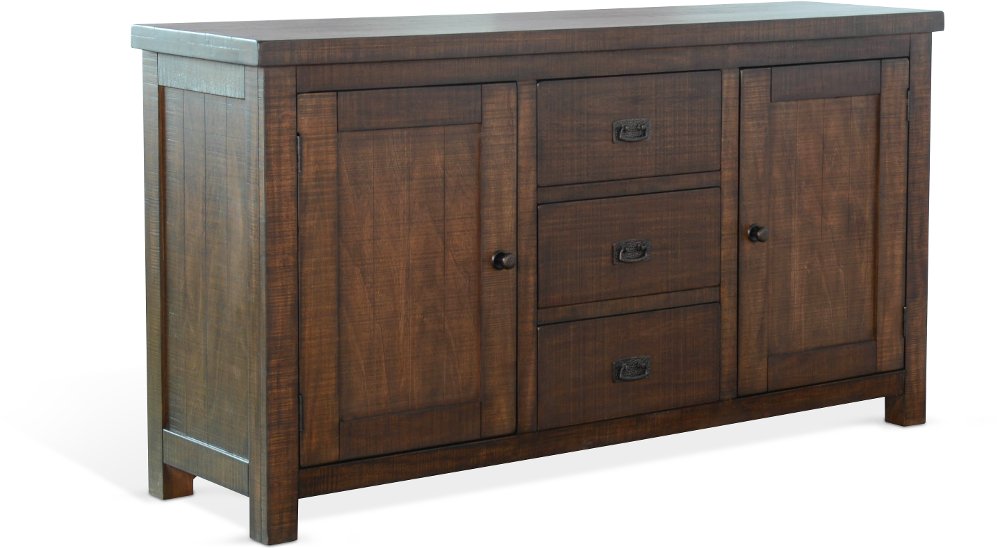
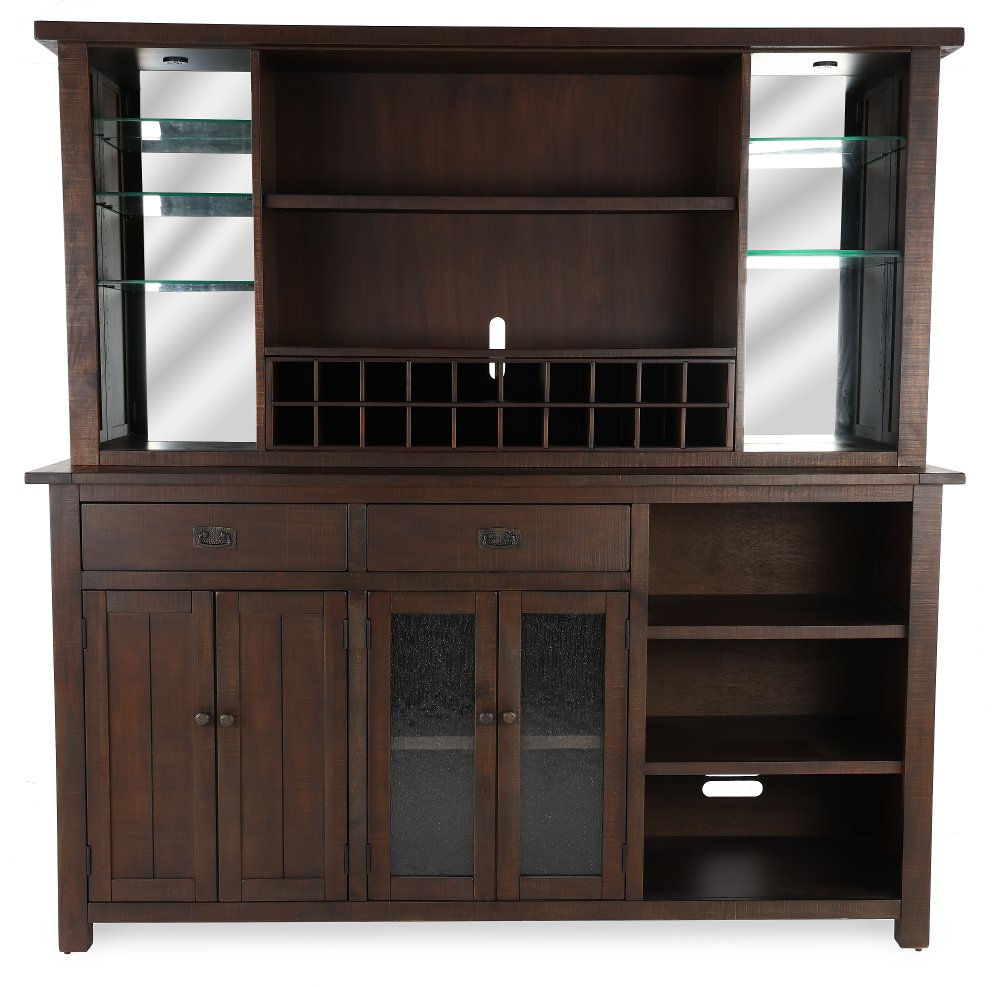
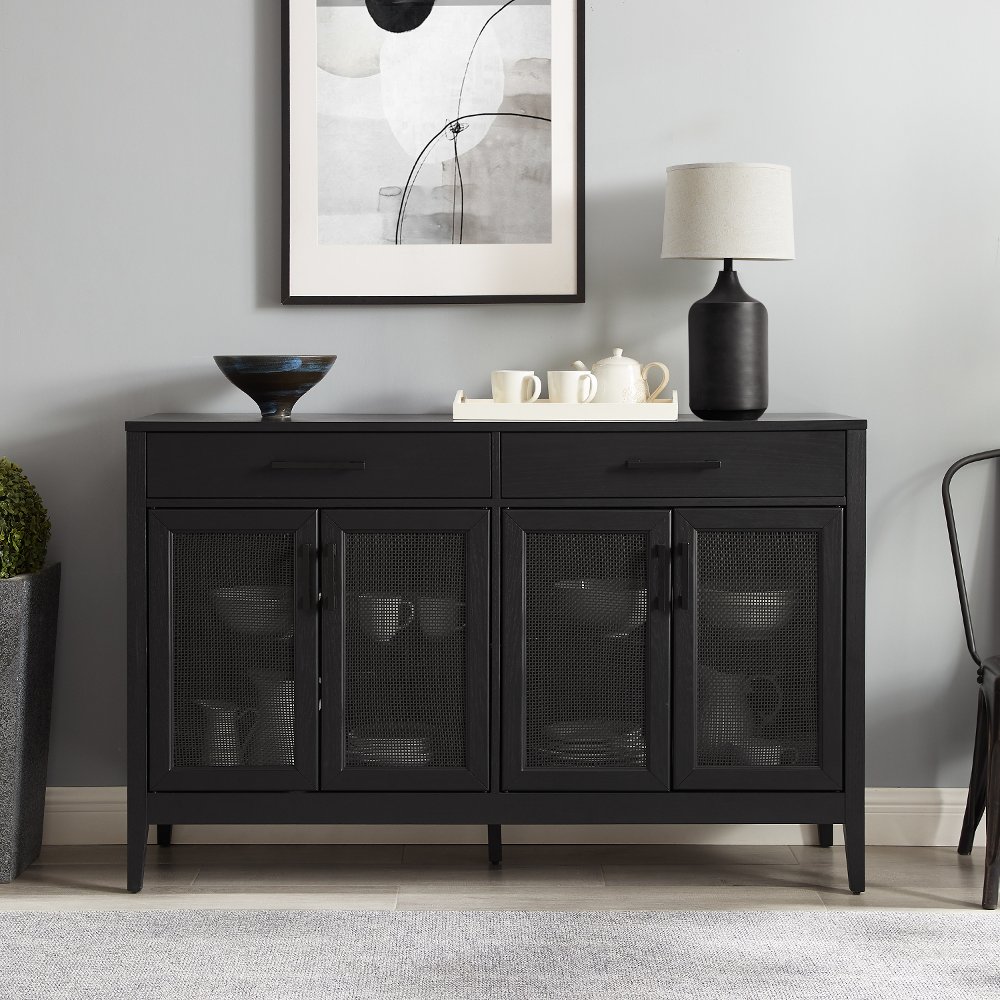
Dining room buffet cabinets combine enclosed storage with a flat top that can serve as a serving station, a drink station, or a place to display favorite pieces. Also commonly called sideboards or servers, these cabinets keep dishes, table linens, and entertaining essentials close to the dining table without taking up space on it. Their appeal is practical: a stack of dinner plates stays within reach, extra napkins have a dedicated drawer, and a serving platter has somewhere to land before everyone sits down. Many buffet cabinets measure roughly 30 to 36 inches tall and 16 to 20 inches deep, although dimensions vary by design. Width matters just as much as height and depth, especially when the cabinet sits behind dining chairs or near a doorway. A shallow profile can suit a narrow dining area, while a longer cabinet can balance a generous wall and offer more room for storage and serving. Allowing about 36 inches between the table and nearby furniture provides a useful starting point for chair movement; a busy walkway may need more space. The cabinet’s doors and drawers also need room to open without bumping chairs or blocking a path. In an open dining area, a buffet can help define the space while keeping everyday clutter behind closed doors. A low profile leaves room above for artwork or a mirror, while buffet cabinets with a hutch add upper storage or display space for dishes and decorative pieces. The best proportions relate to the whole room rather than the wall alone. A substantial dining table often works well with a cabinet that has enough visual weight to complement it, while a compact table may feel more comfortable beside a slimmer design with raised legs. Nearby windows, outlets, floor vents, and baseboards can also affect placement, making the cabinet’s footprint and back clearance worth checking before settling on a size.
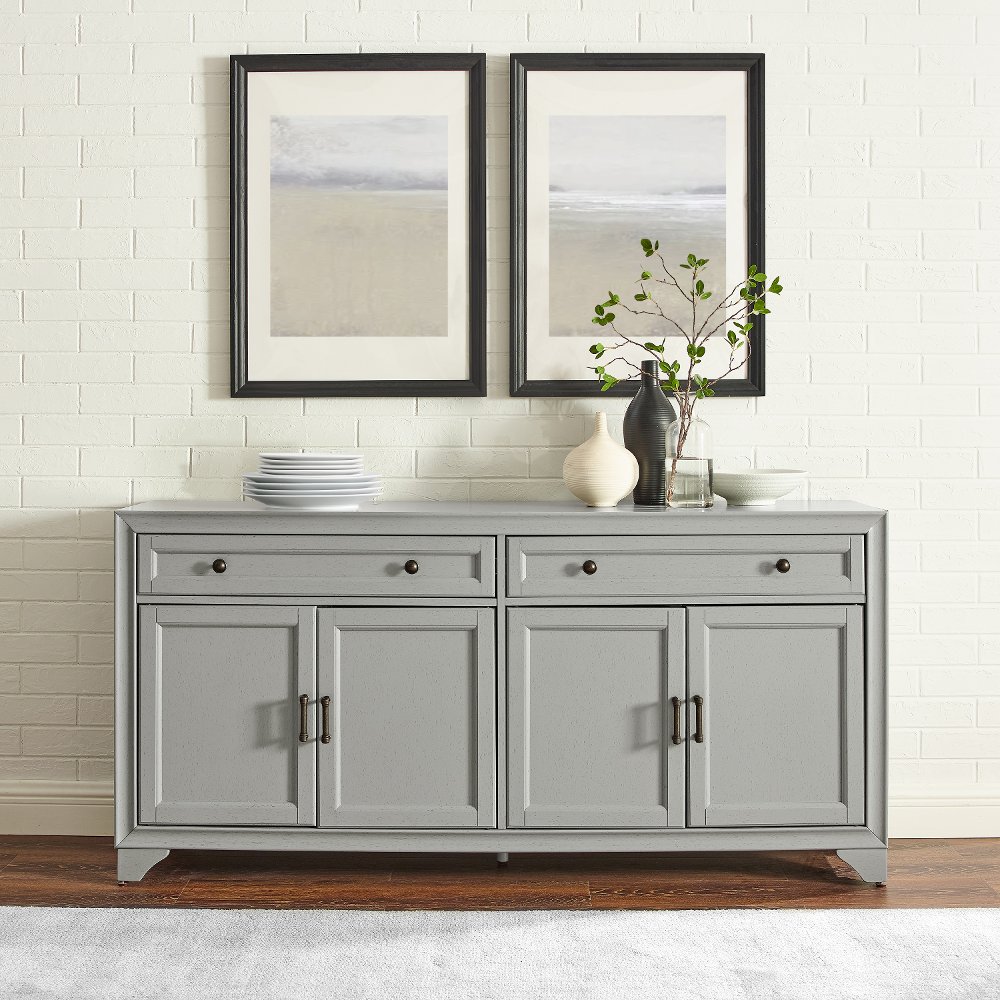
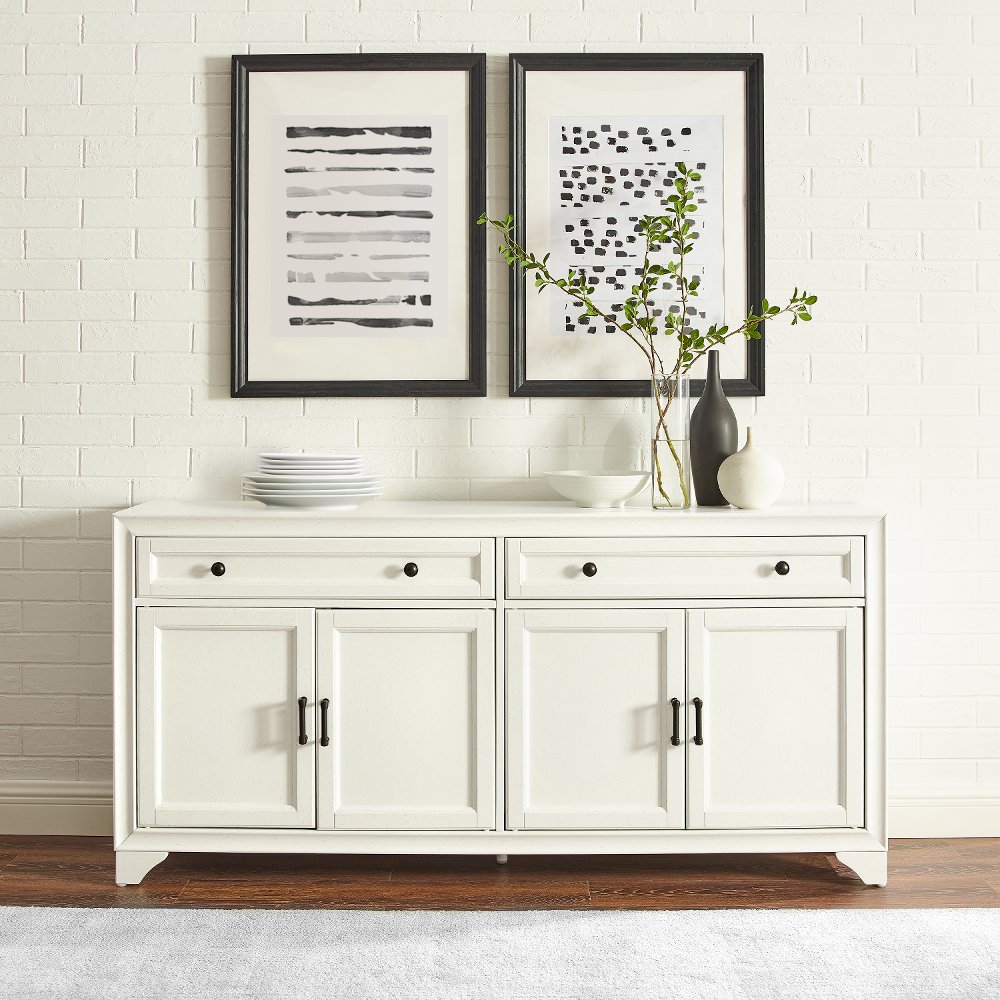
Materials and construction shape both the appearance of a buffet cabinet and how it handles daily use. Solid wood brings natural grain variation and can develop character over time, but it also responds to changes in indoor humidity. Wood veneer provides a real wood surface over a core material, often creating consistent grain patterns across broad doors and drawer fronts. Engineered wood can offer a smooth, stable foundation for painted, laminated, or veneered finishes; its performance depends on the quality of the core, edges, finish, and construction. Metal frames and accents add structure and contrast, while glass doors let favorite dishes become part of the room’s decor. Clear glass keeps contents visible, so neatly stacked plates and coordinated glassware tend to look especially inviting. Solid doors provide more visual calm when the cabinet holds mismatched serving bowls, folded tablecloths, or supplies for everyday meals. Construction details deserve attention alongside the finish. Drawers that glide smoothly, doors that align evenly, and shelves supported securely make a difference when the cabinet gets frequent use. Adjustable shelves help accommodate tall pitchers or larger bowls, though each shelf’s weight limit still matters, especially for heavy stoneware. A durable finish should suit the way the top will be used: setting down a mail tray places different demands on a surface than arranging drinks and serving dishes. Coasters, trays, and heat-resistant trivets help protect against moisture rings, spills, and hot cookware. Routine care usually starts with a soft cloth and prompt cleanup, followed by the manufacturer’s cleaning recommendations rather than a one-size-fits-all polish. Abrasive pads and harsh cleaners can damage many finishes. The look can be relaxed or tailored without sacrificing function: warm wood tones add texture, painted finishes create a defined accent, and simple hardware keeps the cabinet understated. Matching every finish in the room isn’t necessary; repeating one wood tone, metal detail, or shape can make different pieces feel connected.
The most useful dining room buffet cabinets organize the things that actually move through your meals. For a household that sets the table every day, shallow drawers can keep flatware, napkin rings, and placemats easy to find, while lower compartments hold dishes that would otherwise crowd kitchen cupboards. Someone who hosts larger gatherings may value a broad top for serving bowls, with storage underneath for extra glasses and rarely used platters. Families with young children may prefer enclosed storage over open shelving for fragile pieces, along with a stable design and properly installed anti-tip hardware where recommended. Heavier items belong on lower shelves, and frequently used dishes are easiest to manage at a comfortable reach. Wine storage, stemware racks, and divided drawers can be helpful when they match your habits, but flexible space may serve better if the cabinet needs to hold a changing mix of household essentials. A buffet can also support a coffee or tea setup, provided its surface can handle the intended use and small appliances have the clearance and electrical access their manufacturers require. Appliances that produce heat or steam shouldn’t operate inside an enclosed compartment unless the furniture and appliance are specifically designed for that arrangement. Beyond serving, the top can hold a lamp, a ceramic bowl, or a framed photograph, with enough open space left for a tray when company arrives. In a smaller home, that combination of display, storage, and occasional serving space makes a buffet especially versatile. In a dedicated dining room, it helps keep the table clear between meals and reduces trips back to the kitchen. A cabinet earns its place when its layout suits your dishes, its dimensions leave the room comfortable to move through, and its finish feels at home with the furniture around it. The result is a dining space that looks composed and works just as well for a quick dinner as it does for a full table of guests.
Read More