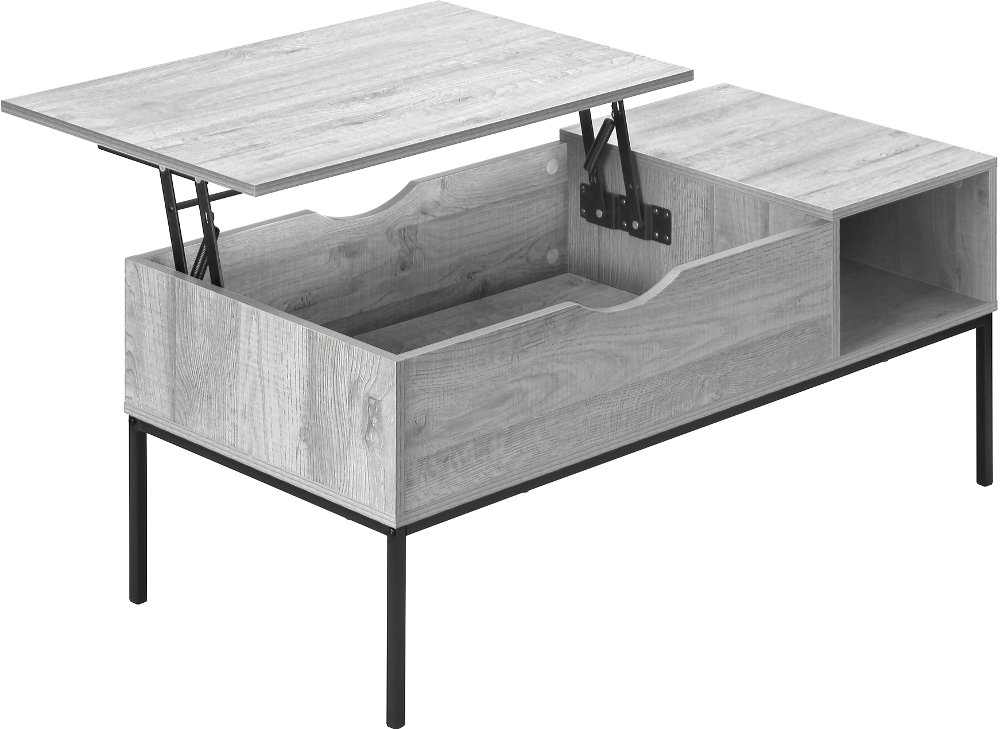
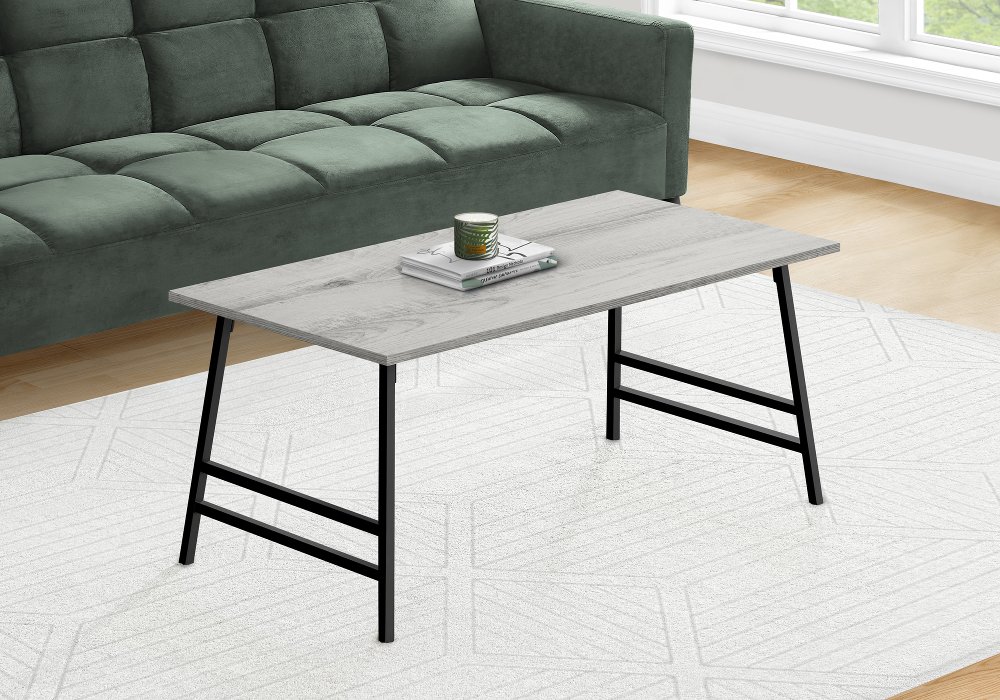
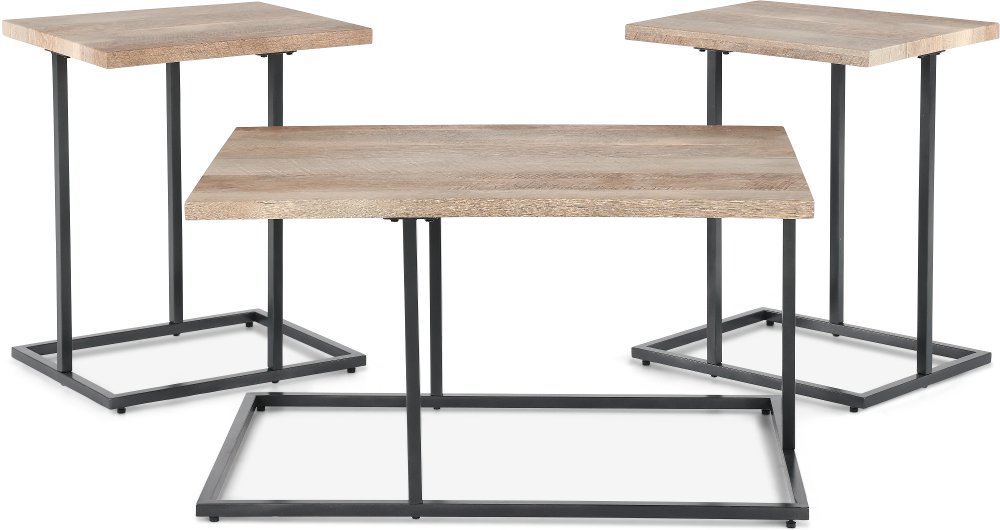
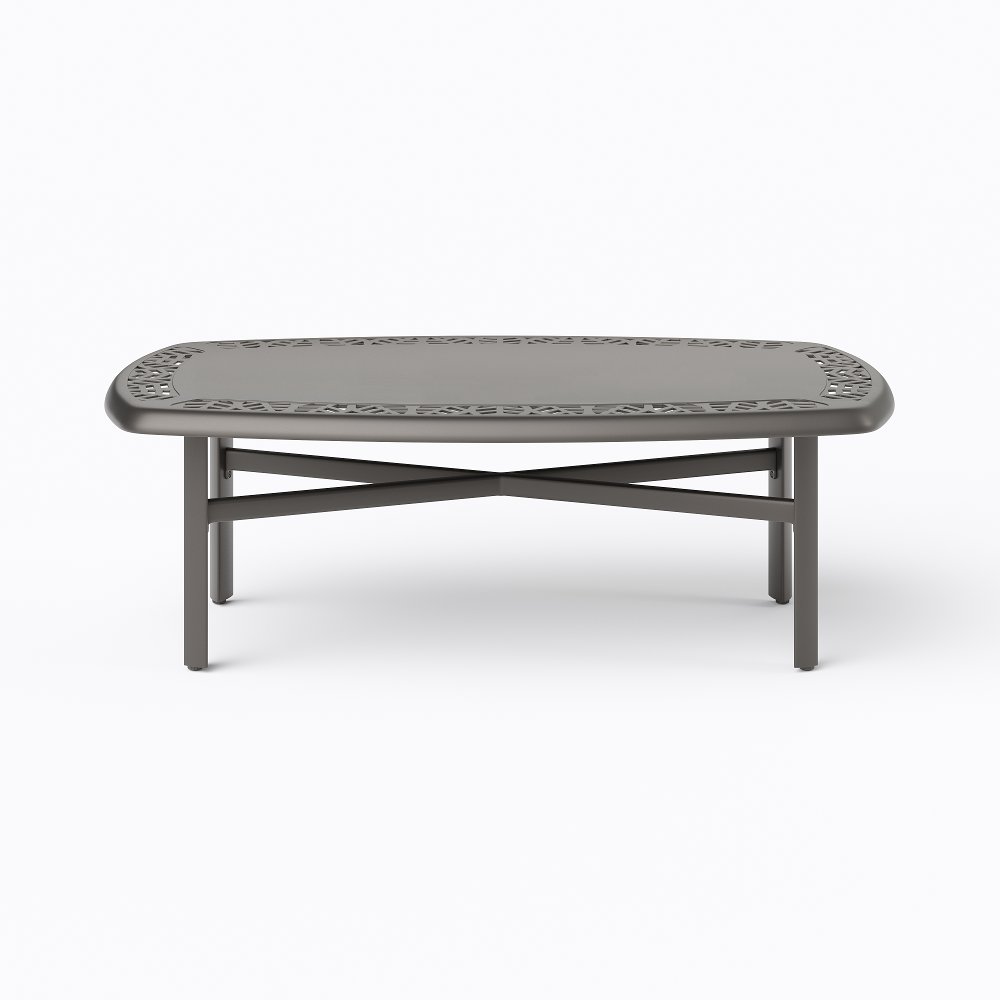
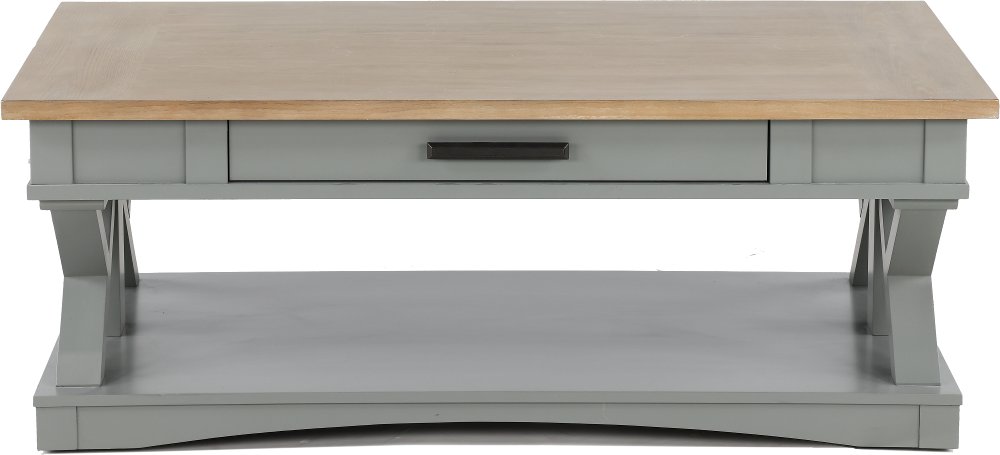
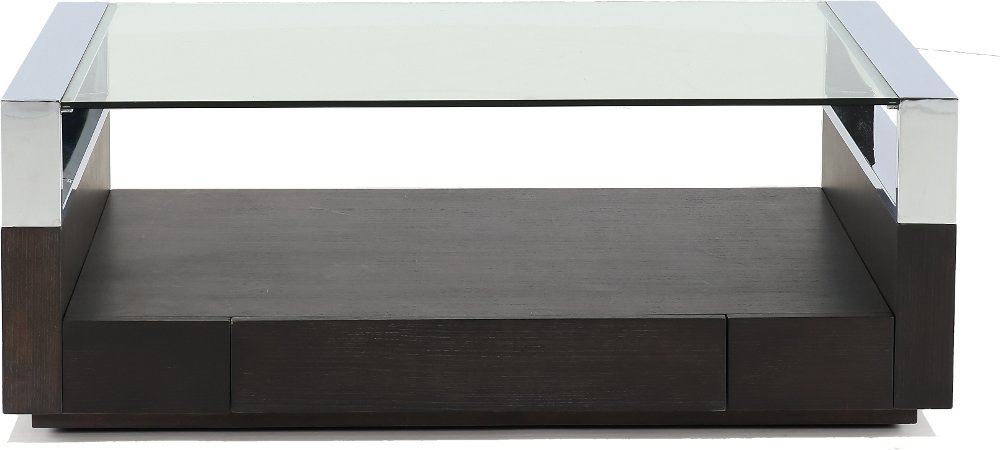
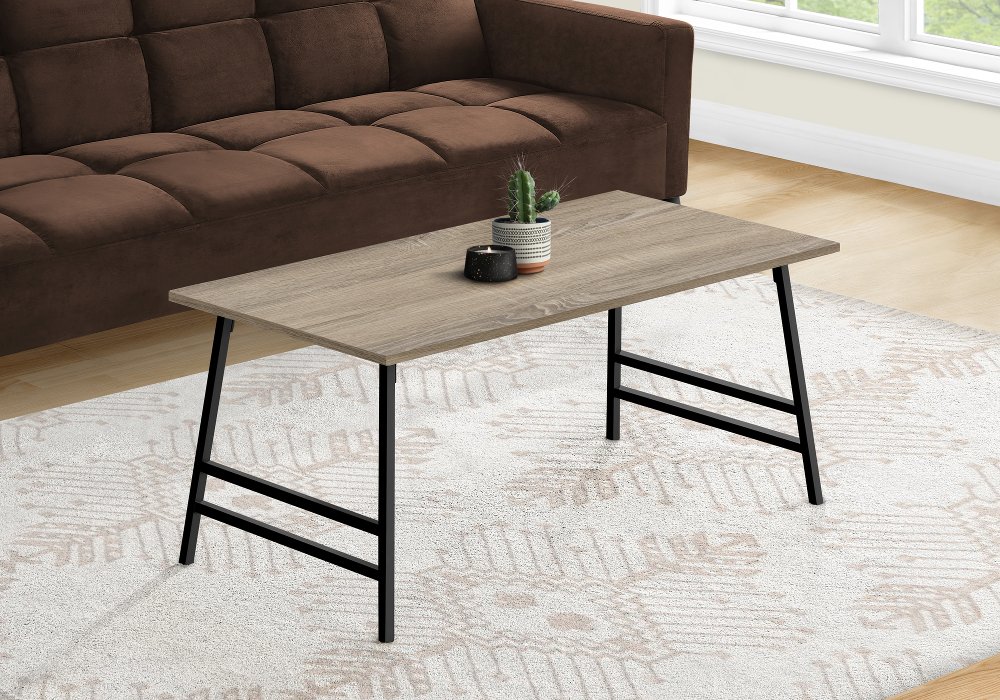
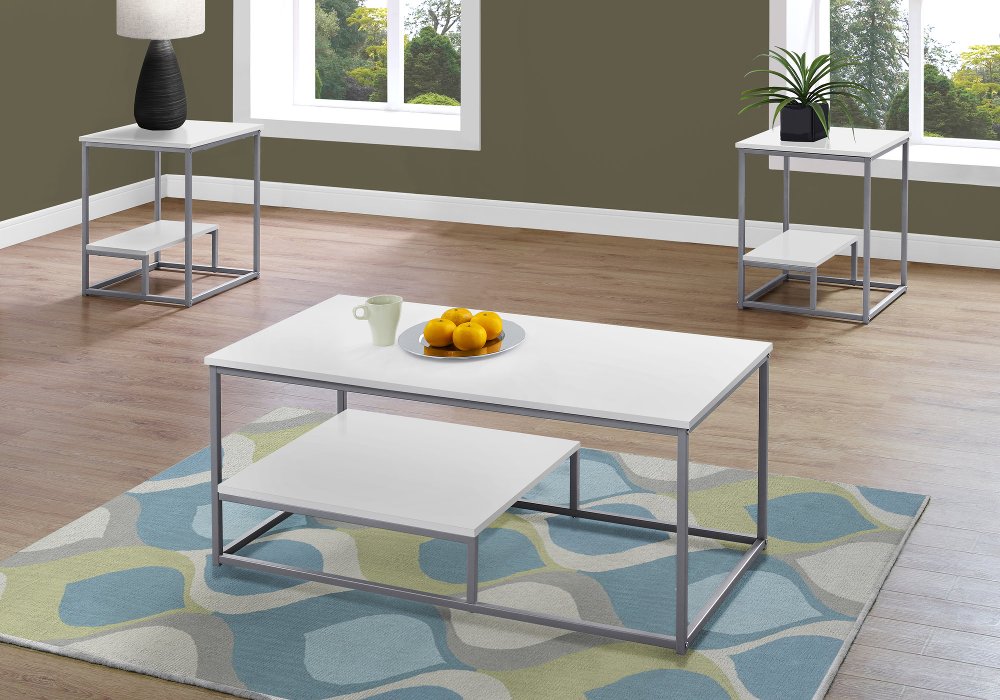
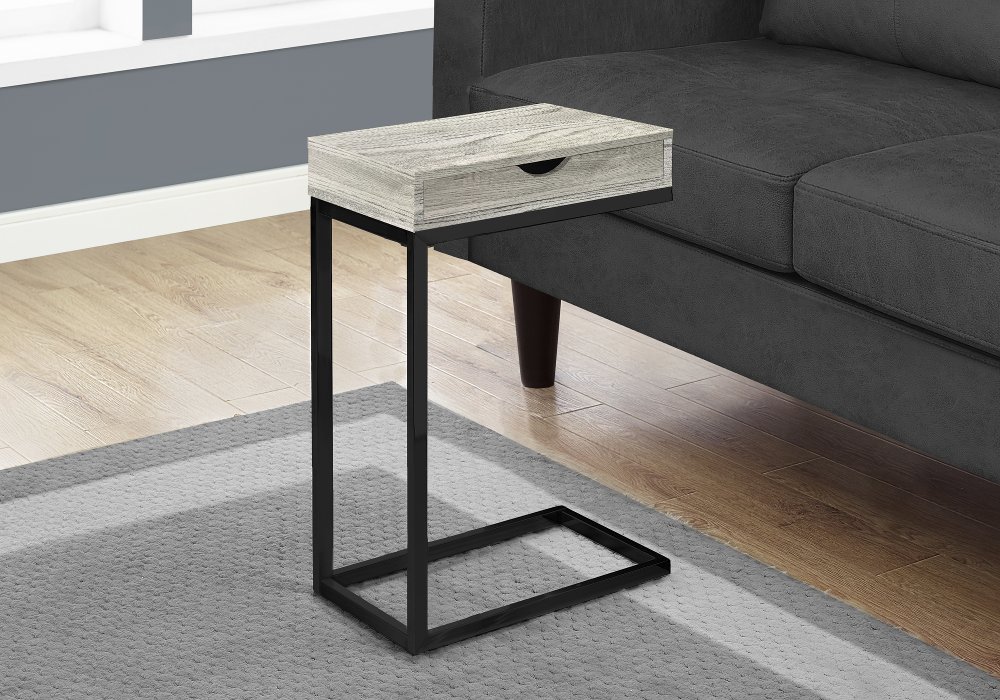
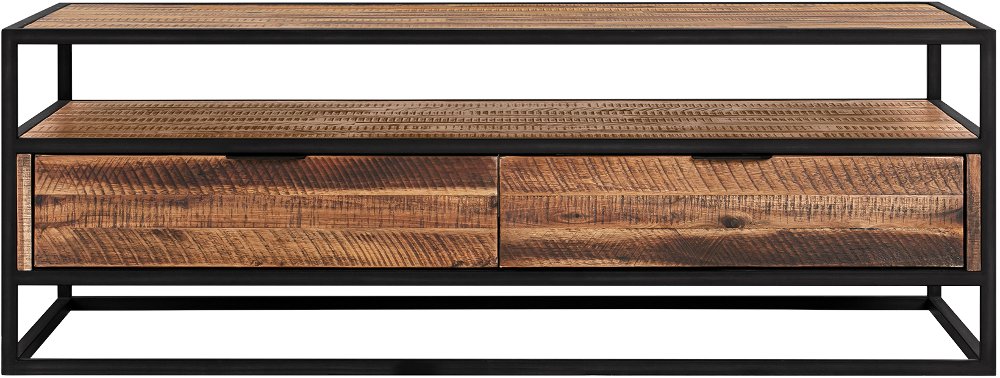
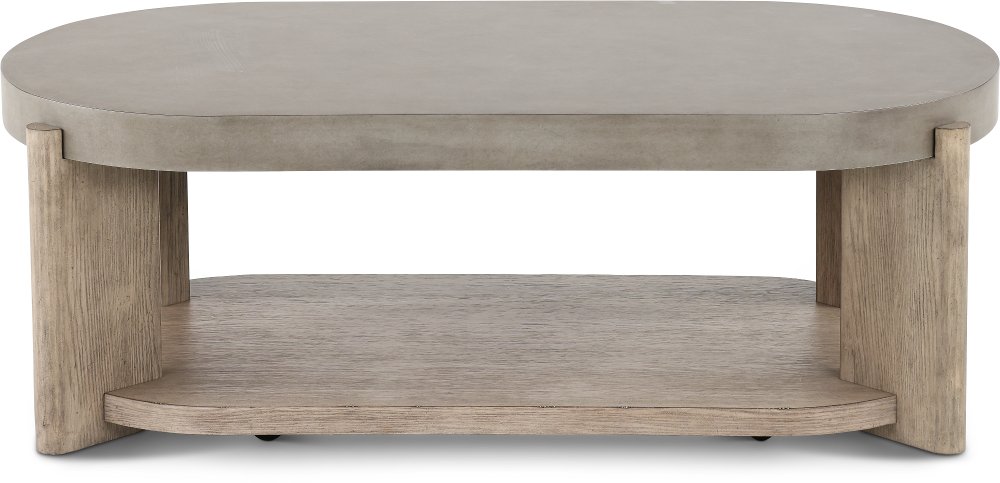
Gray rectangular coffee tables bring a versatile neutral color and a familiar, easy-to-place shape to living rooms, family rooms, and smaller sitting areas. Their elongated tops work naturally alongside sofas, providing space for drinks, books, and everyday essentials without requiring a large square footprint. The category spans wood and wood-look surfaces, metal frames, stone tops, and marble-look or concrete-look finishes, with designs ranging from rustic farmhouse to streamlined modern. Gray isn’t a single look, either. A pale gray wash lets wood grain show through and feels softer against linen upholstery, while charcoal creates a stronger contrast beside a cream sofa. Warm gray, sometimes called greige, pairs comfortably with tan leather, oak tones, and earthy textiles. Cooler gray shades complement blue upholstery, crisp white walls, and black accents. Looking at the undertone of the table alongside the flooring and largest upholstered piece helps make the room feel connected rather than strictly matched. A weathered gray rectangular coffee table with visible grain and cross-braced details can suit a relaxed, farmhouse-inspired space; a slim metal base and smooth gray top lean more industrial. Broad, simple legs and a low profile give modern rooms a grounded look, while a marble-patterned surface adds visual movement without introducing another bold color. Base design matters as much as the tabletop: open frames keep more of the rug visible, while solid plinth bases give the table a substantial presence. For a room that already has patterned pillows or a richly textured rug, a quieter gray finish gives the eye somewhere to rest. In a mostly neutral space, brushed texture, distinctive grain, or subtle veining can provide interest on its own. The result is a piece that can anchor a seating arrangement while leaving plenty of room for personal touches, whether that means a favorite photography book, a handmade bowl, or a small tray that keeps the remote from disappearing between cushions.
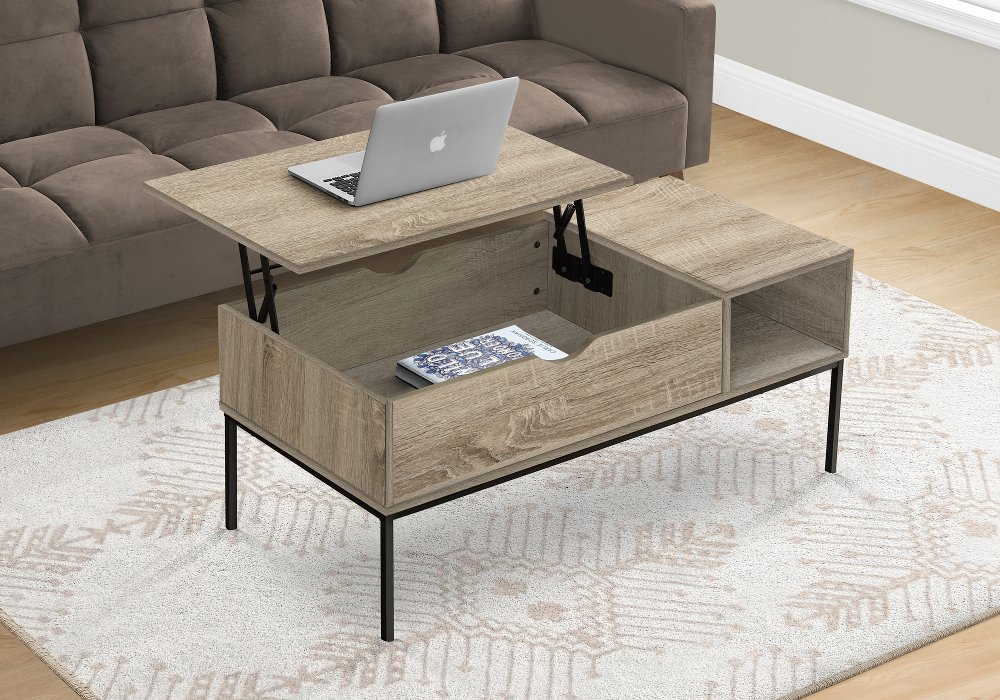
The best fit depends on how the seating area functions, not just how much floor space the table occupies. A useful starting point is a coffee table about two-thirds the length of the sofa, with its top roughly level with the seat cushions or an inch or two lower. Leaving approximately 14 to 18 inches between the sofa and table usually puts a mug within reach while allowing room for knees and feet. Main walking paths need more clearance, especially where people move between the seating area and a doorway. With a sectional, check the open space between the main seats and the chaise; a rectangular table should serve both without making the corner awkward to enter. Painter’s tape on the floor can help show the full footprint before a decision, including the space needed to open drawers or raise a lift-top. In a compact apartment, a narrower gray coffee table with an open base can provide a useful surface while keeping the arrangement visually light. In a busy family room, storage may matter more. Lower shelves hold reading material or baskets, while drawers tuck away charging cords, game controllers, and other small belongings. Open storage keeps things accessible, but enclosed storage gives the room a calmer appearance when everyday necessities are less decorative. Lift-top designs can bring the surface closer for an occasional laptop session or casual meal; check the raised height, operating clearance, and manufacturer’s weight limits for the intended use. A broad fixed top works well for board games or spreading out a puzzle, provided there’s still space around the edges for drinks. Households with young children may prefer softened corners and a stable base, although any table still calls for supervision and appropriate use. Coffee tables generally aren’t designed to serve as seats or step stools. For someone furnishing a first home, a table can be a thoughtful practical gift when the room measurements, preferred finish, and storage needs are already known.
Materials and construction determine how a gray rectangular coffee table feels in daily use and what care it needs over time. Solid wood offers natural variation and may allow refinishing, depending on its construction and finish, but it can still dent, scratch, or develop water marks. Wood veneer provides a real wood surface over a supporting core; its durability depends on the quality of the construction and protective finish, and the thin surface requires care if repairs become necessary. Engineered wood with a laminate surface can offer consistent color and straightforward upkeep, though spills should be wiped up promptly, particularly near seams and edges. Metal bases contribute a slim, structured look, but the table’s stability also depends on the joints, hardware, and overall design. Stone deserves a closer look at the material description: natural marble, manufactured stone, and marble-look laminate have different weights and care requirements. Marble can stain or etch from acidic spills, and some natural stone surfaces require sealing according to the manufacturer’s directions. A concrete-look finish doesn’t necessarily mean the table is made of concrete, either. Checking the actual surface material is more useful than judging durability by appearance alone. For everyday care, a soft cloth, prompt spill cleanup, coasters, and protection beneath hot dishes help preserve the finish. Follow the table’s cleaning instructions rather than assuming an all-purpose cleaner is suitable, and lift decorative objects instead of dragging them across the top. Felt pads beneath accessories can help limit scratches, while suitable floor protectors beneath the legs help protect the flooring. A textured or distressed gray finish may make small signs of use less noticeable, but no finish is damage-proof. Consider weight if the table will move frequently for exercise, playtime, or cleaning, and check that it can pass through the necessary doorways. For a patio or other outdoor seating area, gray outdoor coffee tables offer a more appropriate category to explore; an indoor table’s gray finish alone doesn’t make it suitable for outdoor exposure. Matching the material, proportions, and features to everyday habits helps make the table a lasting, useful part of the room.
Read More