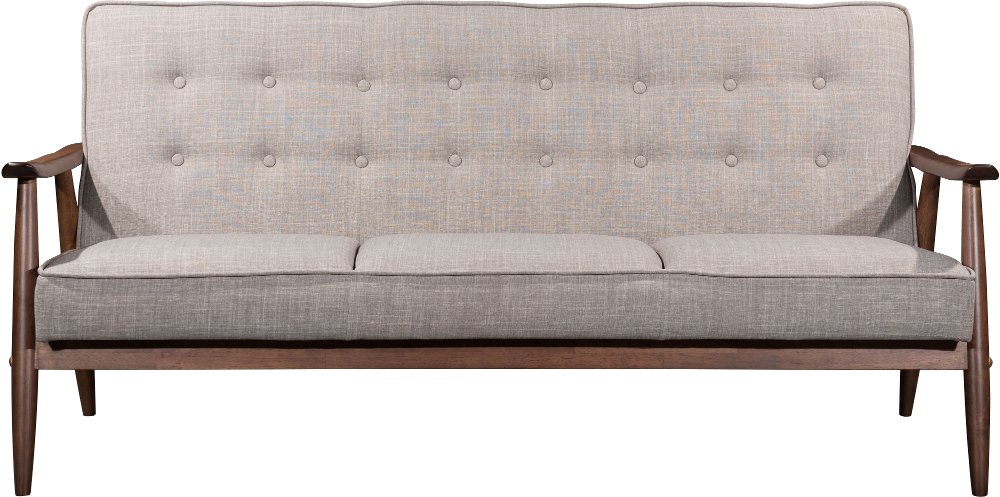
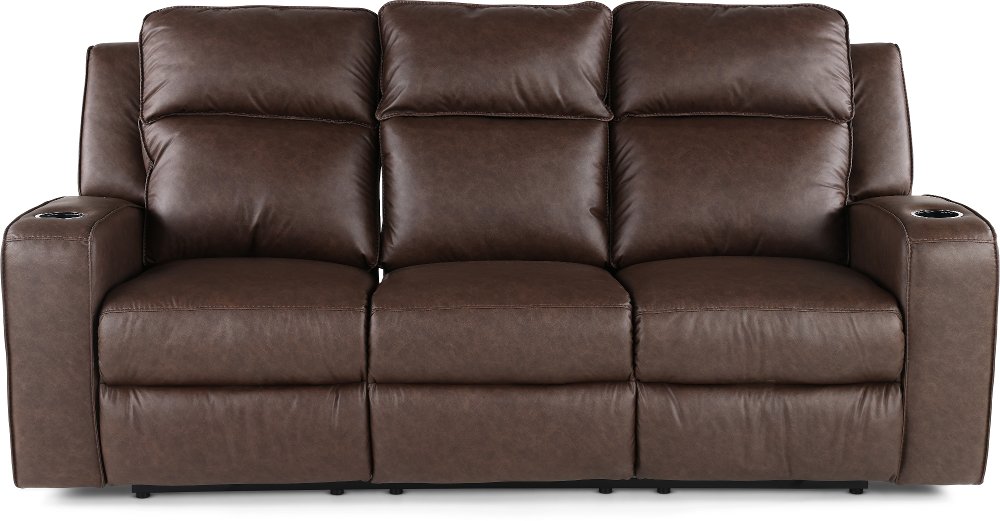
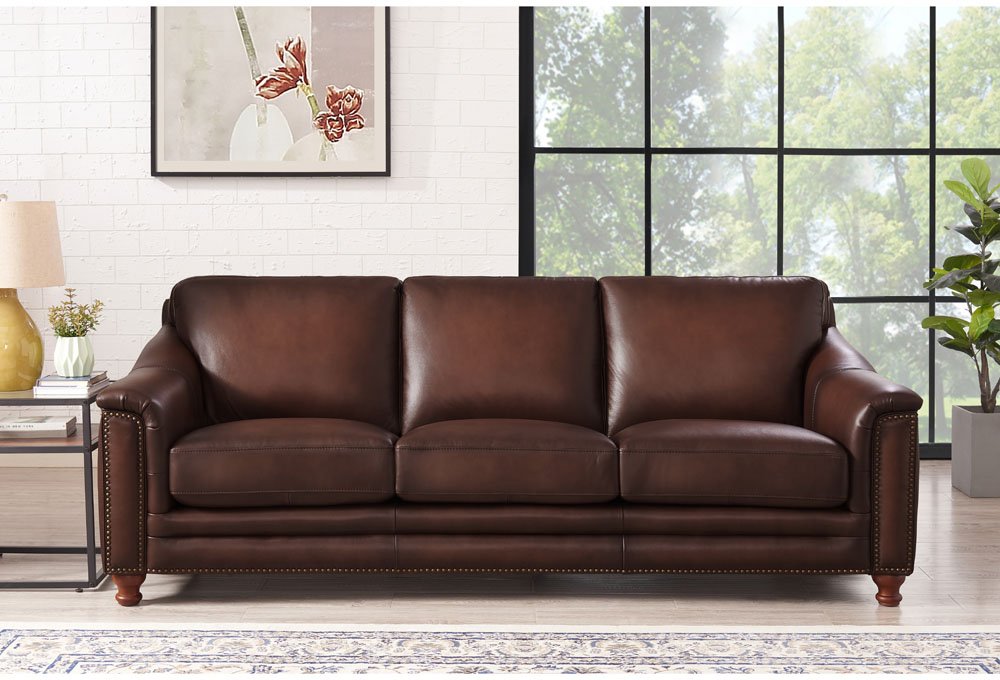
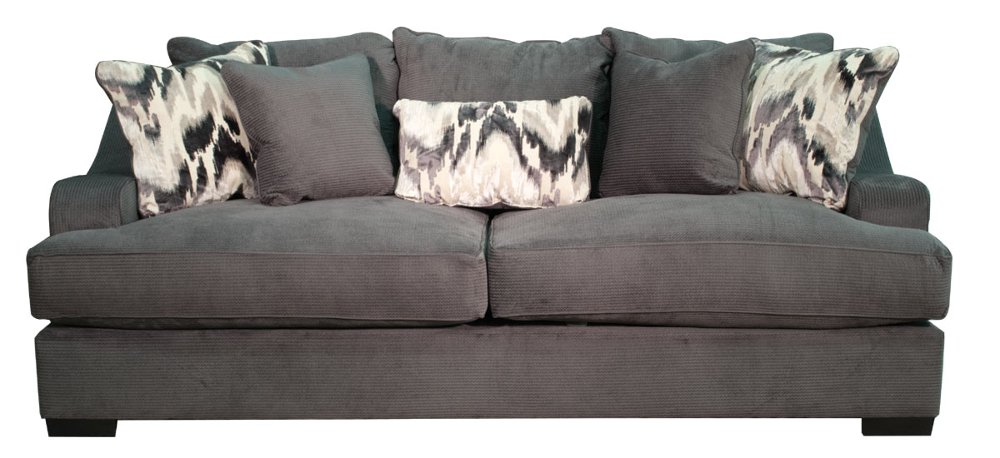
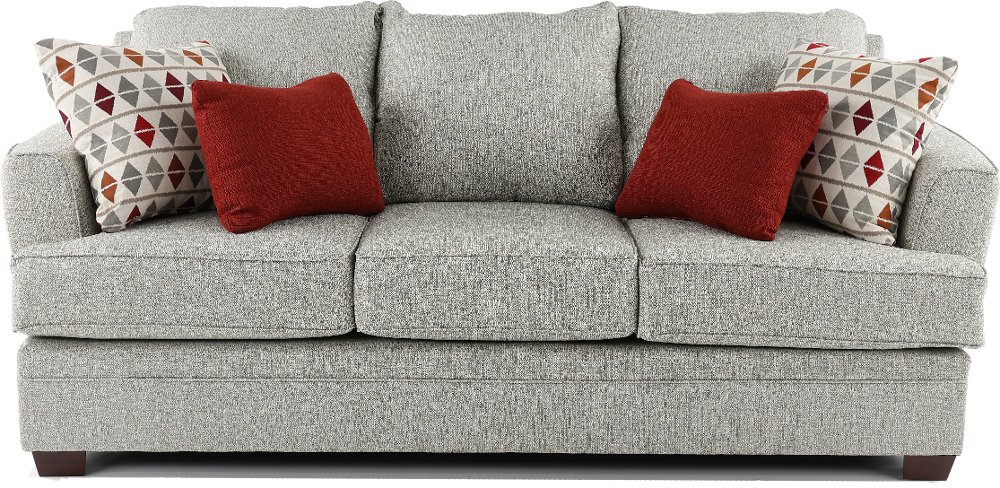
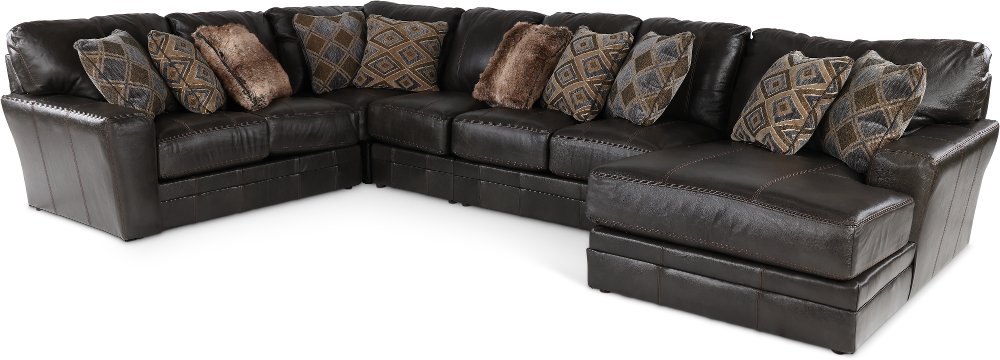
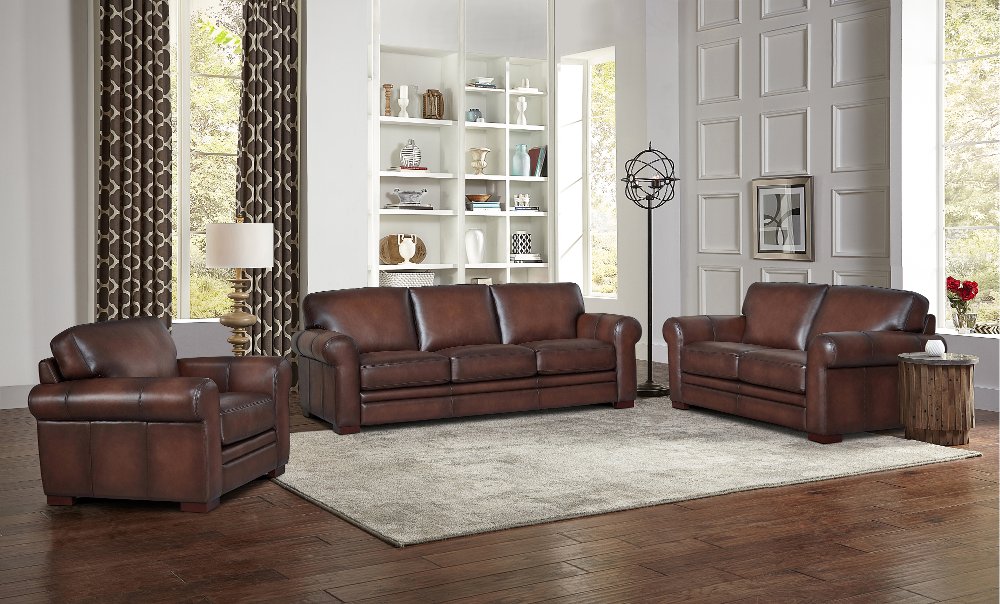
Leather-like sofas bring the smooth finish, rich color, and tailored appearance associated with leather to seating made with alternative upholstery materials. Often described as faux leather, imitation leather, or leatherette, these coverings typically pair a fabric backing with a synthetic surface designed to resemble leather’s grain. Polyurethane, commonly shortened to PU, and polyvinyl chloride, or PVC, are two materials used to create that surface. Their texture can range from sleek and lightly grained to softly pebbled, with finishes that suggest the variations of worn leather. Some leather-look upholstery is woven fabric rather than a coated material, so the upholstery description matters more than the appearance alone. Bonded leather is another distinct category: It contains leather fibers or scraps combined with binders and often a surface coating, making it different from fully synthetic faux leather. If avoiding animal-derived materials is important to your household, check the stated composition rather than assuming every leather-like sofa is animal-free. The upholstery label also helps set realistic expectations for feel and everyday performance. A coated surface may feel smoother and wipe clean differently than a woven leather-look fabric, while flexibility, softness, and breathability vary by construction. Visually, these sofas work well in spaces that need a substantial anchor without a busy pattern. A brown leather-look sofa pairs naturally with an oak coffee table and a textured cream rug; a black or charcoal finish gives colorful pillows and artwork a crisp backdrop. Straight arms and exposed legs create a lighter profile, while rolled arms, deep cushions, and fuller silhouettes give a room a more relaxed feel. Stitching, piping, and tufting add definition, but the overall shape should suit the way you want your room to look and function. For a first apartment, a shared living room, or a quiet reading space, the appeal is straightforward: leather-inspired style with material choices that deserve a close look before you decide. The best match combines the appearance you enjoy with a seat that feels comfortable during an ordinary evening at home.
Fit starts with the sofa’s outside dimensions, but comfortable seating depends just as much on what’s inside those measurements. Wide arms can take up space that might otherwise accommodate another person, and a deep frame can extend farther into a walkway than expected. Measure the intended location, then use painter’s tape to outline the footprint on the floor. Leave enough room to walk around the coffee table, reach side tables, and open nearby doors without squeezing past the furniture. Check the delivery route, too, including stair turns, elevator openings, and narrow hallways; removable legs or backs can help with access, but only when the sofa’s construction allows them to come off. Seat height and depth deserve equal attention. Someone who likes to sit upright with both feet on the floor may prefer a shallower seat with supportive cushions, while someone who stretches out to read may appreciate extra depth. For a household with different preferences, loose accent pillows can help adjust back support, though they won’t change the underlying seat height or firmness. A taller back can offer more upper-body support, while a low back keeps sightlines open in a combined living and dining area. If you’re considering reclining seating, account for the manufacturer’s required clearance and the space occupied by an extended footrest. Power features also need a suitable outlet and a cord placement that keeps walking paths clear. Think about the sofa’s main job before focusing on decorative details. A family room seat used for daily television watching needs comfortable support over longer stretches; a sofa in a front sitting room may serve shorter conversations and occasional visitors. Shared apartments benefit from a layout that lets several people sit comfortably without crowding an entryway. If you’re also exploring coordinated seating arrangements, Leather Couch Sets can offer another direction for creating a cohesive room, though upholstery composition should still be checked separately. Matching every piece isn’t necessary for a pulled-together space. A leather-like sofa alongside a fabric accent chair can balance smooth and textured surfaces while giving each person a different place to settle in.
Everyday durability comes from the whole sofa, not just the upholstery’s leather-like appearance. Frame construction, joint reinforcement, cushion materials, seat suspension, and seam placement all influence how well seating holds up to repeated use. Look for clear construction information and care instructions rather than treating “faux leather” as a single performance standard. Some coated upholstery stands up well to routine use, but its surface can eventually crack, peel, or wear through, especially where there’s repeated friction or unsuitable cleaning. Unlike genuine leather, it generally won’t develop the same patina, and damage to a surface coating can be difficult to repair inconspicuously. A durable-looking grain also doesn’t make upholstery scratchproof. Pet claws, sharp toy edges, and metal hardware on clothing can mark or puncture a finish, so households with active pets or children should weigh those habits alongside ease of cleaning. A washable throw over a favorite lounging spot may help limit direct wear, provided its backing won’t transfer color or damage the upholstery. For routine care, remove crumbs and dust with a soft cloth or a vacuum attachment approved for the material, paying attention to seams and cushion edges. Blot spills promptly instead of rubbing them across the surface. Many coated faux leather coverings allow gentle wiping with a lightly dampened cloth, but always follow the manufacturer’s directions for your particular upholstery, including any cleaning codes. Woven leather-look fabric may require a different method entirely. Avoid soaking seams, and test any permitted cleaner in a hidden area first. Leather conditioner isn’t automatically appropriate for synthetic upholstery, and harsh solvents, abrasive pads, or unapproved disinfectants can damage the finish. Positioning the sofa away from prolonged direct sunlight and heat sources can also help protect its surface. If cushions are removable and designed to be rotated, follow the recommended routine to distribute wear. With a sensible fit, transparent material information, and care that matches the covering, a leather-like sofa can provide an inviting place for conversation, reading, and everyday downtime without leaving you guessing about what its upholstery needs.
Read More