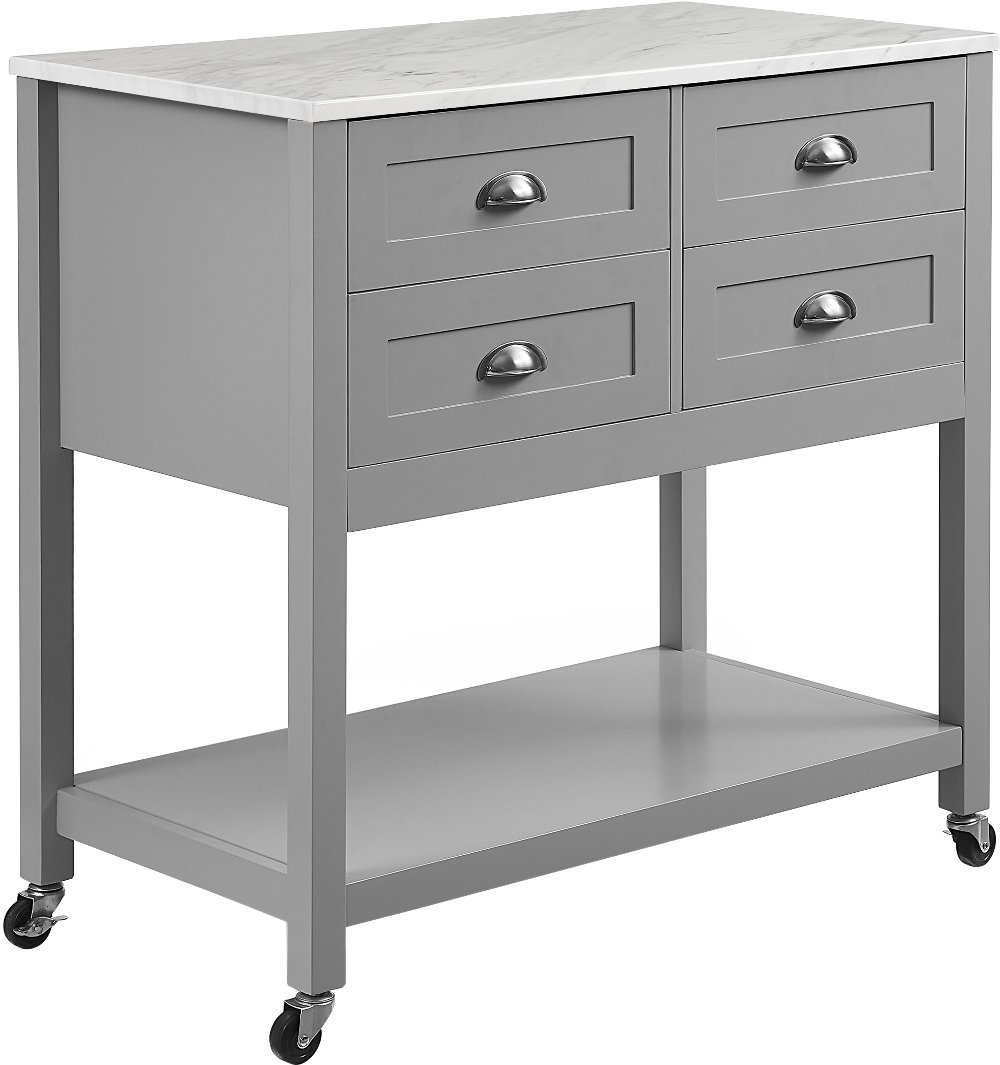
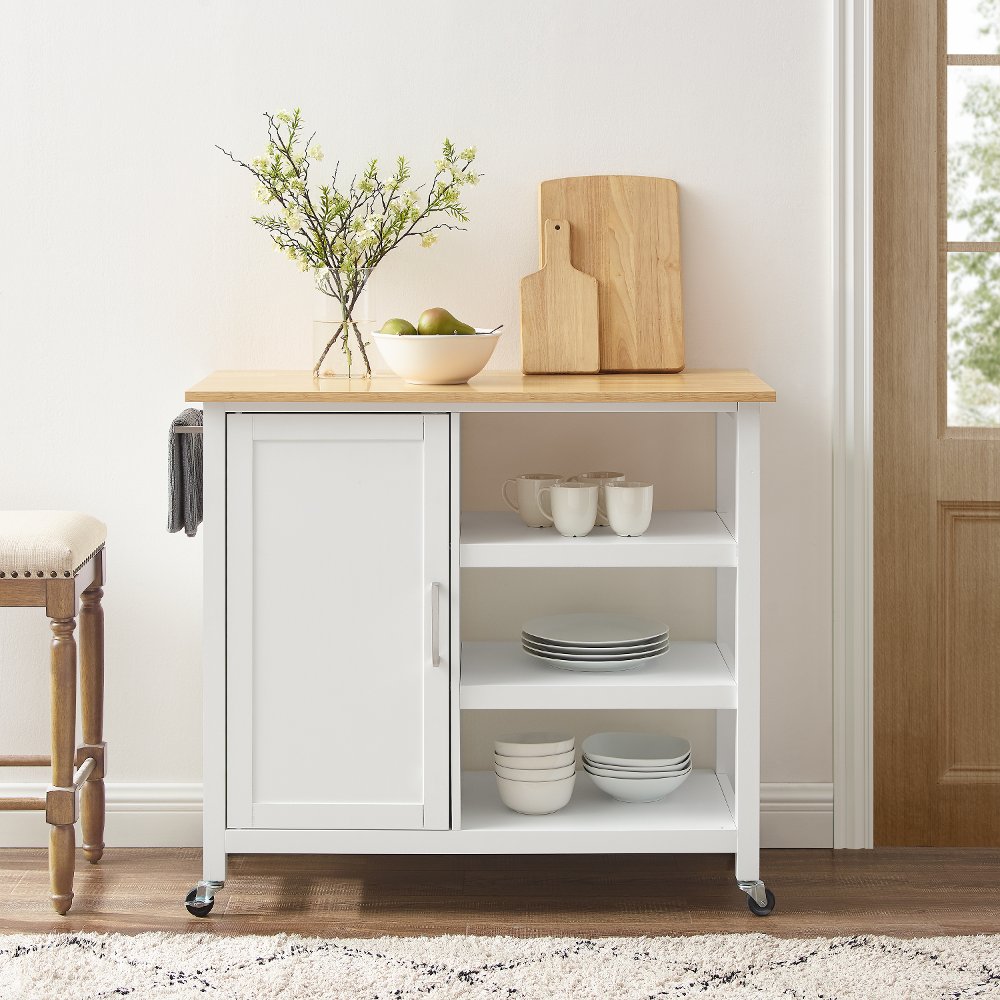
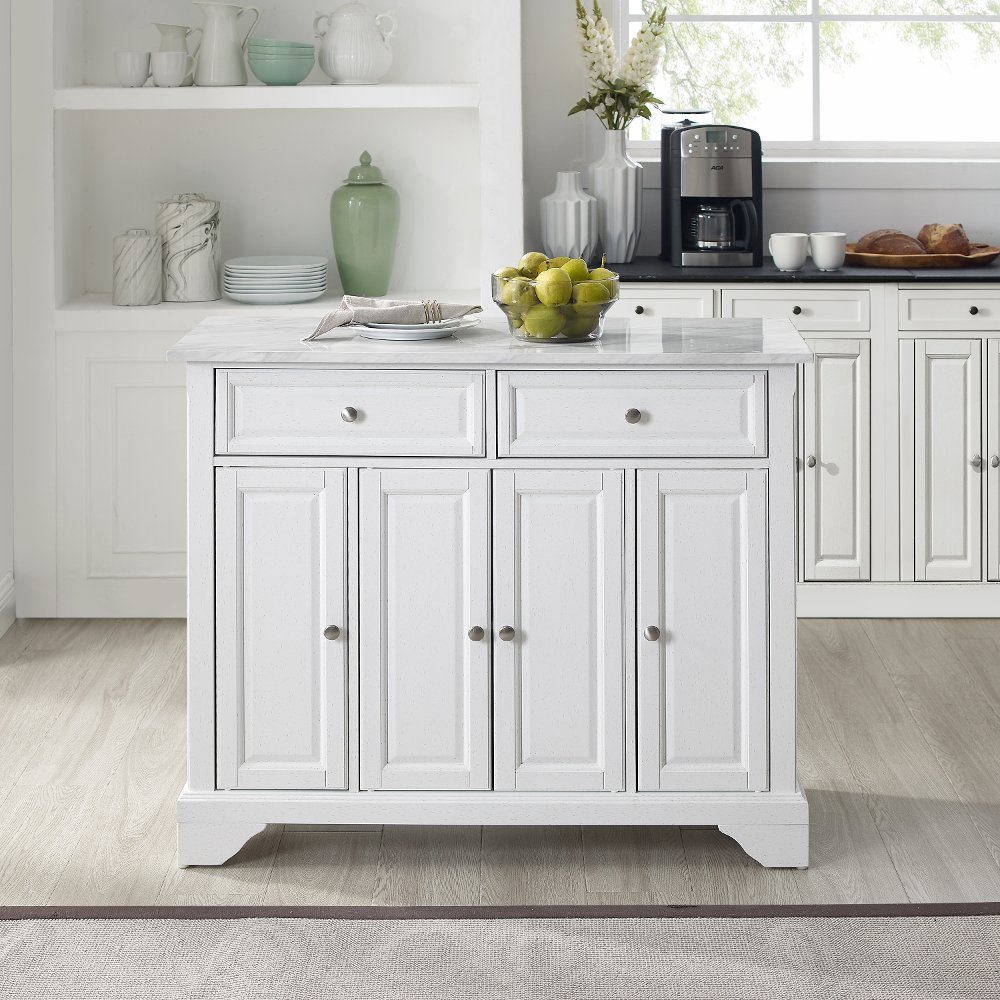
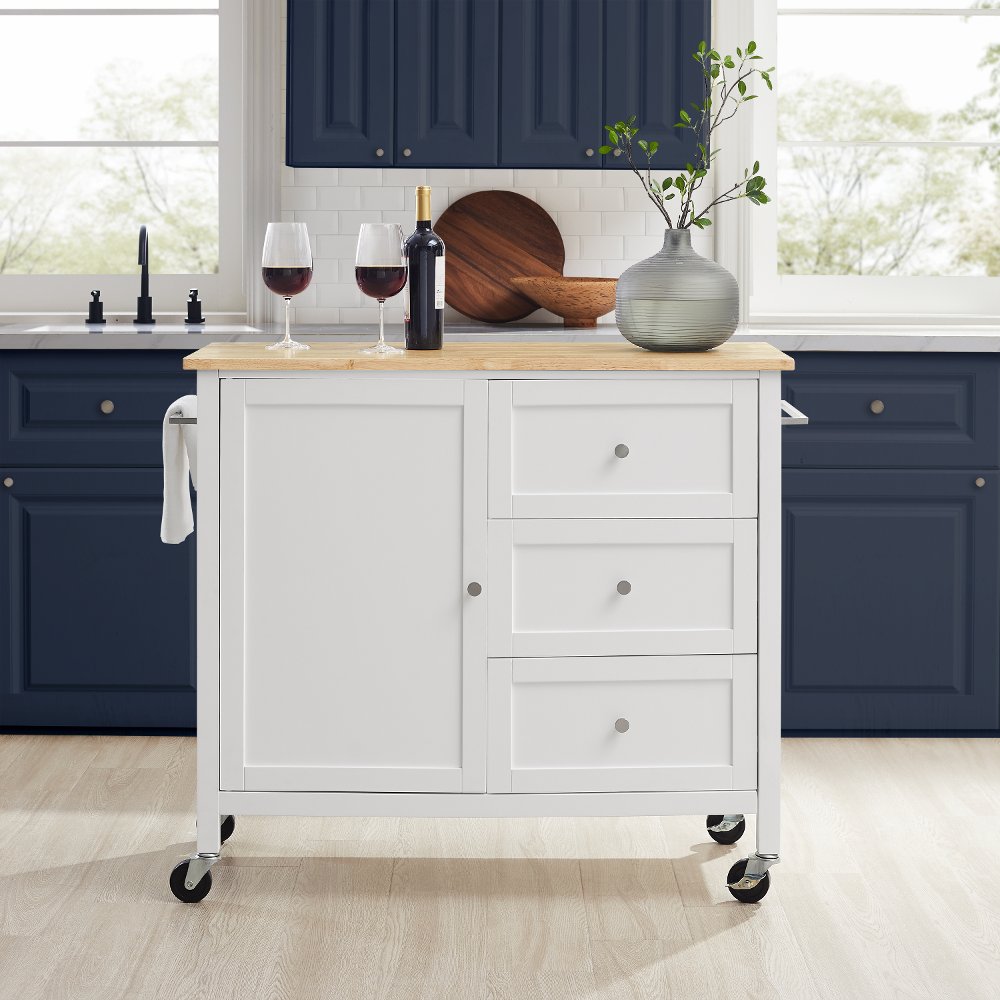
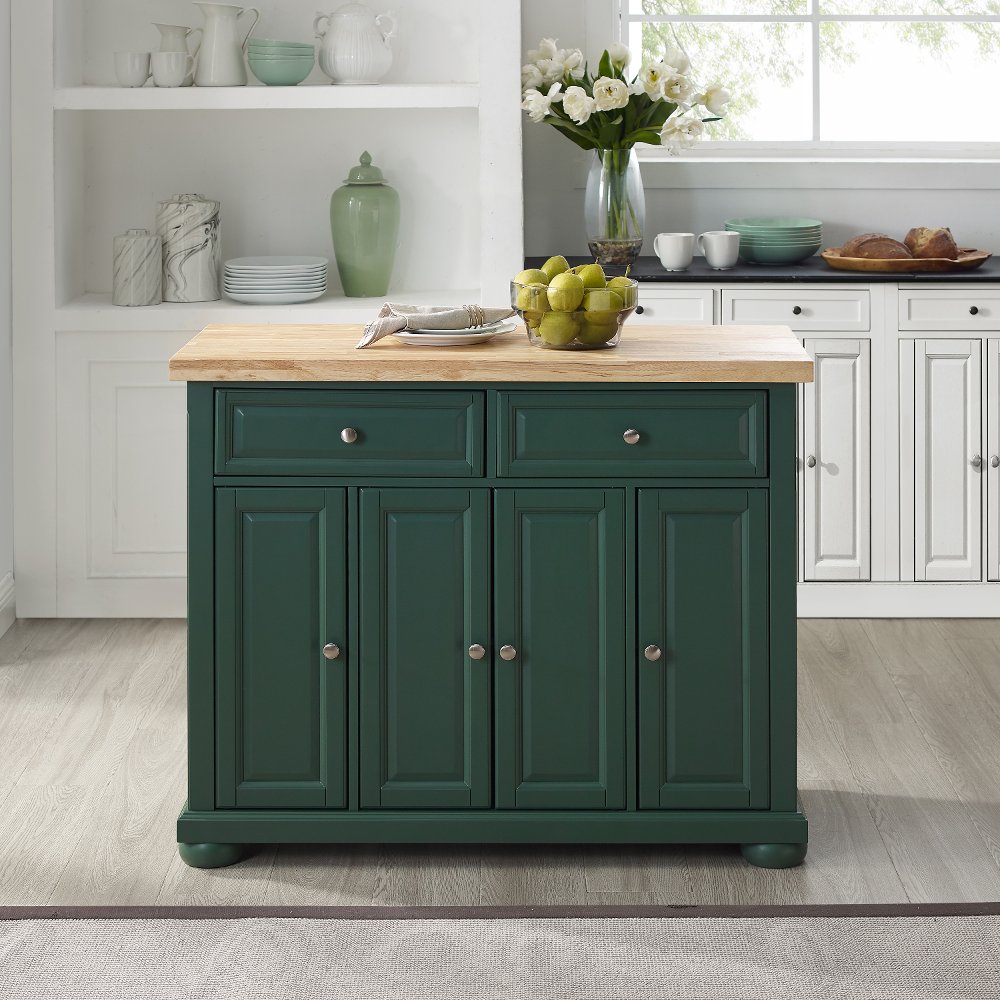
An open kitchen island is a freestanding kitchen workspace with exposed shelves or an open frame instead of a fully enclosed cabinet base. It brings an extra counter and accessible storage into the room while keeping the space beneath the top visible. That lighter look can be especially helpful in a compact kitchen, where a solid bank of cabinets might feel bulky, but it also works in larger layouts that need a central spot for everyday tasks. A wood top above a slim metal frame can give mixing bowls, cookware, and serving pieces a practical home without making the room feel crowded. Open shelves let you see and reach what you need, whether that’s a Dutch oven for dinner or a colander for rinsing vegetables. They also make it easier to return frequently used pieces to their places after cleanup. Baskets can gather smaller essentials, while stacks of plates and neatly folded kitchen towels keep storage useful without adding visual clutter. The best arrangement leaves the countertop ready for the next task rather than turning it into another permanent storage shelf. For someone who enjoys cooking, that might mean room to chop vegetables beside a cutting board and mixing bowl. For a busy household, it might mean a place to portion lunches, unpack groceries, or set out snacks without taking over the main counters. An open design can suit several decorating styles: natural wood and simple legs feel relaxed, darker metal adds an industrial touch, and painted frames can echo nearby cabinetry. Matching every finish isn’t necessary; repeating a wood tone or metal detail can help the island feel connected to the rest of the kitchen. Because the shelves remain in view, the pieces stored there become part of the room’s appearance. A few well-chosen everyday essentials usually look more settled than a shelf packed edge to edge. Open kitchen islands work best when their easy access and airy appearance support the way you actually use your kitchen.
The right footprint gives an open kitchen island room to be useful without interrupting the paths between the refrigerator, sink, range, and dining area. Common layout guidelines call for at least 36 inches along walkways, about 42 inches in a work aisle used by one cook, and 48 inches in a work aisle used by multiple cooks. These are planning benchmarks, not a substitute for local requirements or individual accessibility needs. Door swings matter, too: a dishwasher, oven, or refrigerator needs room to open without trapping someone against the island. Measuring the full footprint—including handles, towel bars, extended leaves, and seating—gives a more realistic sense of fit than considering the countertop alone. For tighter layouts, apartment kitchen islands offer a related option to explore when a compact workspace is the priority. A shallow island may provide enough room for a cutting board and ingredients while preserving a comfortable route through the kitchen. A longer surface can suit baking projects or serving several dishes, provided the surrounding aisles still work. Stationary designs are a good match for a workspace that stays in one place, while rolling kitchen islands add flexibility when the layout needs to change. Locking casters help hold a mobile island steady during use, though the manufacturer's instructions should determine how and where it can be moved safely. Adjustable feet can help some stationary designs sit level on an uneven floor. If seating is part of the plan, a clear knee space and an appropriate countertop overhang matter more than an open appearance alone; lower shelves or crossbars can interfere with comfortable seating. Stool height should suit the counter, with enough space for legs beneath it. Shelves deserve the same attention as the top. Their depth, spacing, and weight limits determine whether they can comfortably hold a stockpot, a countertop appliance, or a basket of linens. Heavier pieces generally belong lower down, within the stated capacity, to help keep the island stable and everyday storage manageable.
Materials influence both the character of an open kitchen island and how it holds up to daily use. Solid wood brings visible grain and a substantial feel, with natural variation that makes each surface a little different. Its care needs depend on whether the top is sealed, painted, or intended as a food-contact work surface. A cutting board protects most finished wood tops from knife marks, and prompt cleanup helps prevent moisture from lingering around seams or edges. Butcher-block surfaces may need periodic oiling or another treatment specified by the manufacturer; a finish suitable for one wood top may not be appropriate for another. Engineered wood can provide a consistent appearance, but exposed edges and joints often need particular protection from standing water. Laminate surfaces are generally straightforward to wipe down, though hot cookware and abrasive cleaners can damage them. Stainless steel offers a practical work surface with a clean-lined appearance, but fingerprints and scratches may show, so gentle cleaning and drying help maintain its finish. Stone tops add weight and may require sealing or precautions around acidic spills, depending on the material. Whatever the surface, trivets and cutting boards are useful safeguards unless the manufacturer expressly allows direct heat or cutting. Durability also comes from the base: secure joints, a rigid frame, sturdy shelf supports, and properly rated casters all contribute to a dependable workspace. An open base makes shelves easy to reach for cleaning, but it also leaves stored pieces exposed to dust and cooking splashes. Keeping frequently used cookware there is often more practical than displaying delicate pieces that rarely leave the shelf. A quick wipe beneath baskets and around shelf edges helps keep the storage area ready for food preparation nearby. For renters, home cooks, couples sharing meal prep, and families who need another landing spot, an open island can fill a useful gap between existing counters and dining furniture. Its value comes from that everyday fit: a steady surface, reachable storage, and enough breathing room to make preparing and sharing food feel easier.
Read More