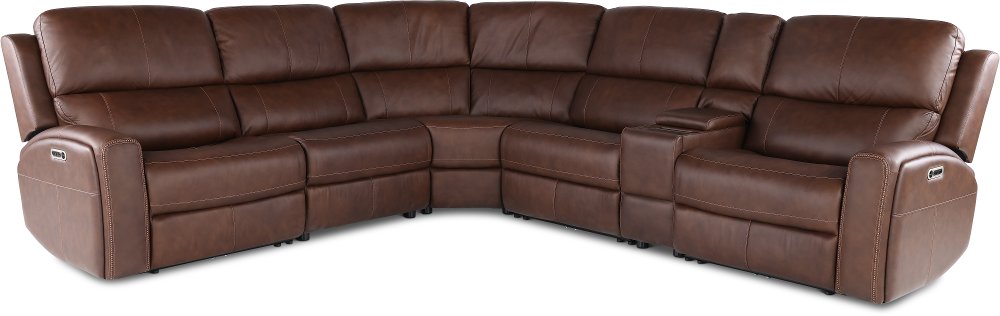
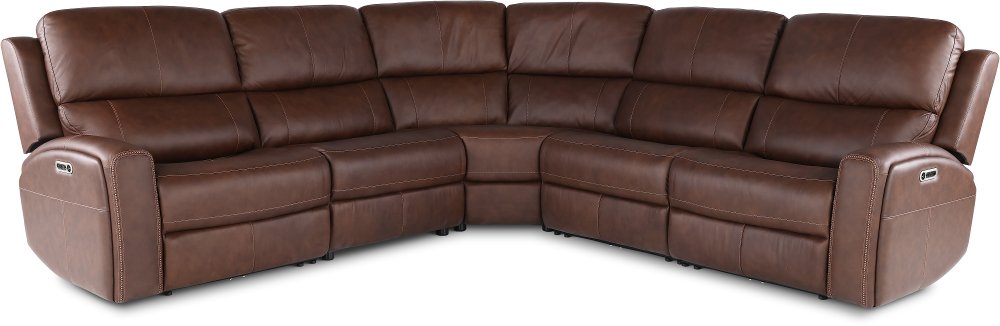
Reclining leather sectionals combine connected living room seating with built-in reclining seats, giving you space to gather and room to stretch out without adding separate recliners. Depending on the configuration, a sectional may include reclining end seats, reclining armless seats, a stationary corner wedge, a chaise, or a storage console. Not every seat necessarily reclines, so the arrangement matters as much as the overall seat count. A household that watches movies together may appreciate several reclining positions, while a room used mainly for conversation may work well with two reclining ends and stationary seats between them. Manual reclining mechanisms typically operate with a lever, release handle, or body movement, depending on the design. Power reclining mechanisms use electric motors and controls to adjust the seat position, often allowing you to stop at different points rather than settle into a single reclined angle. Some designs also offer independently adjustable headrests or lumbar support. An adjustable headrest can help maintain a comfortable viewing angle when the backrest is tilted, while lumbar adjustment lets you change the support behind your lower back. Seat depth, back height, arm shape, and cushion firmness all affect how the sectional feels before the footrest ever opens. A deeper seat may suit someone who likes to curl up, while a shallower seat can make upright sitting more comfortable for someone with shorter legs. Broad, padded arms provide a relaxed place to rest an elbow; slimmer arms leave more of the sectional’s width for seating. Optional consoles, cupholders, and charging ports can keep everyday essentials close, although those features vary by design. Whether the room hosts movie nights, video games, long conversations, or a quiet hour with a book, the best fit balances supportive sitting with comfortable reclining. Leather upholstery brings another dimension to that comfort, with a surface that can feel smooth and structured or soft and gently textured, depending on the hide and finish.
The right sectional configuration makes the room easier to use, not just more comfortable to sit in. L-shaped arrangements can define a seating area along two walls or separate a living space from an adjacent dining area without a full-height divider. For that kind of layout, L-shaped leather reclining sectionals bring connected seating and reclining comfort into one arrangement. Larger configurations may extend seating along three sides, while some modular designs let individual pieces connect in more than one approved layout. Modular construction doesn’t automatically mean every piece can go anywhere; reclining mechanisms, connecting brackets, corner sections, and electrical connections can limit the arrangement. Left-facing and right-facing descriptions also deserve attention because they identify the orientation of particular components, usually when you face the furniture. Confirming the layout shown in the dimensions or diagram helps prevent a chaise or extended section from landing on the wrong side of the room. Overall width and depth tell only part of the fit story. Reclining seats need room for the footrests to extend, and some backs need clearance from the wall. Wall-hugging mechanisms may reduce the space required behind the sectional, but they still need the clearance specified for that design. A footrest that opens into the main walkway can interrupt traffic between the kitchen and living room, even when the closed sectional fits neatly against a wall. Coffee tables and ottomans also need enough separation to accommodate the reclining motion. Power seating requires access to an electrical outlet, with cords positioned away from walkways and moving mechanisms. Delivery access matters, too: doorways, stair landings, elevator openings, and tight hallway turns can determine whether each section reaches its destination. In an open floor plan, a finished upholstered back allows the sectional to face away from a wall. In a dedicated TV room, keeping the most-used seats oriented toward the screen helps everyone settle in without twisting sideways. The goal is a layout that leaves comfortable paths through the room while giving each reclining seat space to operate.
Leather type, upholstery coverage, and construction all influence how a reclining sectional looks and wears over time. Top-grain leather comes from the outer portion of the hide and may receive surface treatments for a more consistent appearance. Full-grain leather retains the hide’s natural grain surface, including variations that make each piece distinctive. These terms describe leather differently from finish terms such as aniline or protected leather. Aniline leather often shows more natural character and can be more sensitive to spills, while protected leather typically has a surface coating that helps with everyday cleanup. Leather-match upholstery generally pairs genuine leather on designated areas with a matching nonleather material elsewhere, often on the sides or back. Exact coverage varies, so the upholstery description matters, especially if the back of the sectional will be visible. Bonded leather contains leather fibers combined with other materials and isn’t the same as a hide-based leather upholstery. Color and finish also shape the room: darker shades can create a grounded, cozy seating area, while lighter neutrals give a large sectional a softer visual presence. Natural creases, grain differences, and gradual changes in appearance can be part of genuine leather’s character, but durability also depends on the upholstery finish, frame, seat support, stitching, and reclining hardware. Leather isn’t scratchproof, and pet claws, sharp objects, and abrasive clothing details can mark the surface. A washable throw in a pet’s favorite spot can provide a practical layer of protection without covering the whole sectional. Routine care starts with the manufacturer’s instructions, since different finishes tolerate different cleaning products. Gentle dusting and prompt blotting of spills help keep daily messes manageable; rubbing can spread a spill or work it into the surface. Use leather cleaners or conditioners only when they’re recommended for the upholstery, and test approved products in an inconspicuous spot. Direct sunlight and nearby heat sources can contribute to fading or drying. Keeping crumbs, toys, and cords clear of reclining mechanisms helps the moving parts operate as intended. With a thoughtful match between materials, room layout, and everyday habits, a reclining leather sectional can become a comfortable gathering place that serves both shared time and individual downtime.
Read More