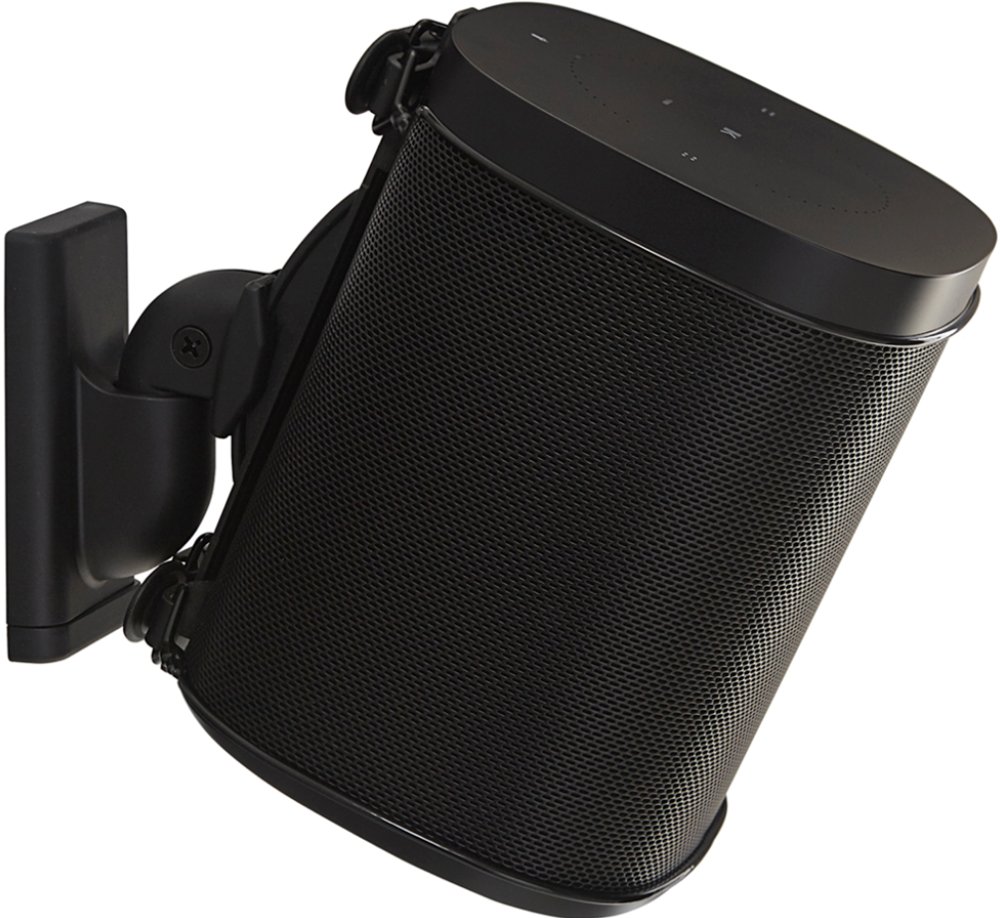
Speaker stands give compatible speakers a dedicated, stable place to sit while helping position sound where you’ll hear it best. For many bookshelf speakers and home stereo setups, that means placing the tweeter—the driver that produces higher frequencies—near ear level when you’re seated. The right height depends on your speakers, seating, and room layout, so a low lounge chair and a taller desk chair may call for different stand designs. Floor speaker stands support compact speakers without taking up space on a media console, while desktop speaker stands elevate or angle speakers for listening at a computer or workstation. Both can help create a more intentional setup, with clearer sightlines and fewer objects crowding the speakers. Placement still matters: a stand provides flexibility, but sound quality also depends on the speaker, room acoustics, and distance from nearby walls. In a living room, a pair of stands can position stereo speakers on either side of the entertainment area, with enough separation to give music a sense of width. In a home theater, stands can support surround speakers near the seating area when wall mounting isn’t practical. At a desk, compact platforms or angled supports can bring sound closer to your listening position while leaving room for a keyboard, notebook, and other everyday essentials. Some desktop designs also provide isolation between the speaker and work surface, helping limit vibration transferred into the desk. Fixed-height stands offer a straightforward setup with fewer moving parts, while adjustable-height models give you more flexibility when furniture or listening positions change. Portable tripod speaker stands serve a different purpose, supporting compatible public-address speakers for presentations, performances, and other events. Those designs rely on the correct mounting interface, load rating, and leg placement rather than a bookshelf-style top platform. Whether you’re building a dedicated listening corner or making movie dialogue easier to follow from the sofa, speaker stands help organize the system around the way you actually use the room.
A good fit starts with the speaker’s weight, dimensions, and mounting requirements. The stand’s rated weight capacity needs to support the speaker safely, and its top plate or attachment system needs to suit that speaker’s design. Some speakers rest on a platform with protective pads; others require a compatible bracket, threaded insert, or other mounting hardware. A broad top plate alone doesn’t establish compatibility, and a speaker that extends beyond the platform should only be used that way when the manufacturers’ specifications allow it. The base matters just as much as the top: its footprint needs enough clear floor space to remain stable without crowding a doorway or becoming an obstacle beside the sofa. Steel speaker stands often provide substantial weight and rigidity, qualities that can be useful for a permanent stereo or theater setup. Aluminum designs can offer a lighter structure that’s easier to reposition, while wood and engineered-wood stands bring furniture-like finishes into the room. Durability depends on construction as well as material, including secure joints, a well-supported base, and a finish suited to regular handling. Some hollow-column stands are designed to accept ballast for additional mass, but filling is appropriate only when the manufacturer specifically allows it. Vibration control also varies by design. Rubber pads, foam, and purpose-built isolation components can help reduce vibration transfer between the speaker, stand, and supporting surface, though they won’t eliminate every resonance or correct room acoustics. Floor spikes are commonly used to improve footing on carpet; they aren’t a universal isolation solution, and hard floors may need compatible protective cups or a different foot style. A level base and properly tightened hardware help keep the assembly steady. In a home shared with children or pets, placement deserves extra attention, especially around play areas, busy walkways, and accessible cords. A stand is a support, not a guarantee against tipping, so any recommended restraints or mounting provisions remain important. These details make the difference between a stand that simply holds a speaker and one that fits comfortably into everyday life.
Speaker stands also contribute to the look and livability of an audio setup. A slim column can keep a small room feeling open, while a wider pedestal may complement substantial furniture and larger speakers. Matte metal finishes often blend with entertainment equipment, and wood-look finishes can connect the listening area to a bookcase, desk, or media cabinet. The most comfortable arrangement leaves space for daily routines: opening a cabinet door, walking behind a chair, or reaching an outlet without moving the whole system. Integrated cable channels can conceal part of the wiring for a cleaner appearance, while clips or rear guides help keep cords close to the stand. Cable routing works best when there’s enough length to reach the speaker connection without tension, especially on height-adjustable models. Cable openings also need room for the cable and any attached connectors. Complementary Speaker Accessories, such as compatible isolation pads, connectors, and cable-management pieces, can help finish the setup when their specifications match your equipment. Everyday care is usually simple: dust surfaces with a soft cloth, use cleaning methods approved for the finish, and keep moisture away from joints, hardware, and electronics. Protective pads should stay clean and properly positioned, and adjustable fittings or fasteners may need periodic inspection, particularly after a move. Lift stands when repositioning them rather than dragging their feet across the floor, and follow the manufacturer’s instructions for removing speakers before moving the assembly. For music lovers, movie fans, gamers, and people who spend long hours at a desktop workstation, a well-matched stand can make the listening area feel more settled and purposeful. Speaker stands can also make a thoughtful gift for someone refining a stereo system, provided the speaker dimensions, weight, and mounting needs are known. The best match brings together practical support, suitable listening height, and a style that feels at home beside the furniture you already enjoy.
Read More