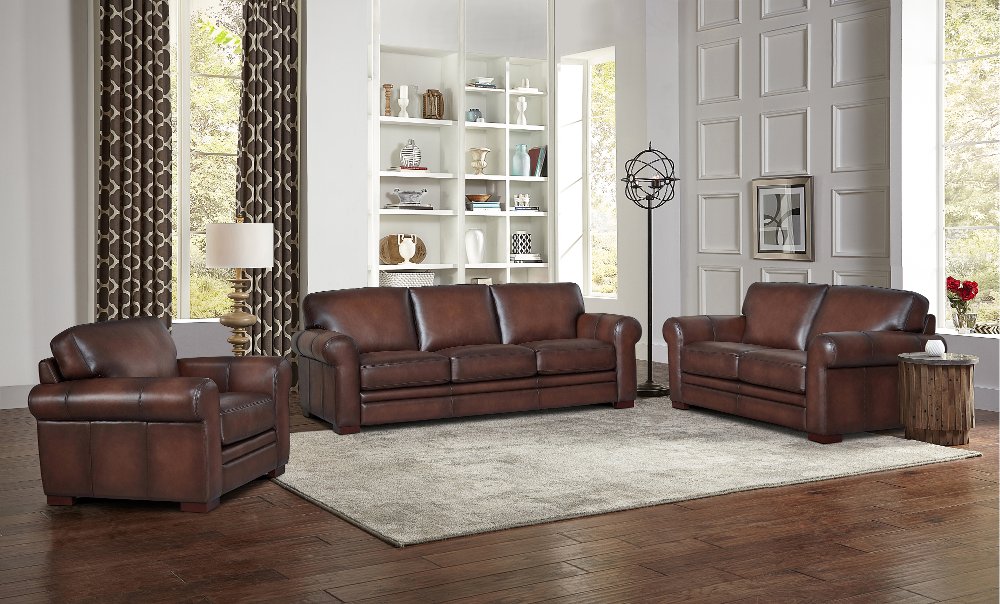
Striped sofas and loveseats bring pattern into a living room without asking every other piece to compete for attention. A fine pinstripe can read almost like a solid from across the room, then reveal its detail when someone settles in. Wider bands create a stronger focal point, giving a simple sofa silhouette a more defined presence. The colors make just as much difference as the stripe itself. Cream and taupe feel understated, navy and ivory lean classic, and muted green or blue stripes can introduce color while staying easy to coordinate with wood finishes and neutral rugs. These patterns work across more than one decorating style. A tailored striped sofa with slim arms can feel at home in a traditional sitting room, while a relaxed shape with textured upholstery suits a casual family space. Direction matters, too: vertical stripes emphasize the lines of a back or skirt, while horizontal stripes draw attention across the cushions. Neither changes the actual dimensions, but each affects how the piece looks alongside nearby furniture. For a balanced room, let the stripe establish a few colors that repeat elsewhere in smaller amounts. A pillow can pick up the darker line in the upholstery, and a rug can echo the lighter background without matching it exactly. Solid curtains and a simple coffee table give a bolder pattern some breathing room. If the space already includes a patterned rug, stripes often sit comfortably alongside it when the patterns differ in scale and share a color. A broad stripe paired with a small, low-contrast print usually feels more intentional than several equally bold patterns competing in one seating area. For another way to carry that detail through the room, striped accent chairs can complement solid seating or create a connection with a striped sofa when their colors and proportions work together.
The right fit starts with how the seating will serve the room. A sofa offers room to spread out with a book, gather for a movie, or sit beside family and friends, while a loveseat brings the same upholstered comfort to a smaller footprint. A striped loveseat can anchor an apartment living room, fill a separate conversation area, or sit opposite a larger sofa without making the arrangement feel crowded. Overall width tells only part of the story. Wide, padded arms take up space that slimmer arms leave for sitting, and a deep frame can project farther into a walkway than expected. Seat depth also affects comfort: a deeper cushion gives someone room to curl up, while a shallower seat may suit a person who prefers to sit upright with feet resting on the floor. Seat height and cushion firmness matter for anyone who wants an easier transition between sitting and standing. Before committing to a size, account for doorways, hallway turns, stairs, and the clearance around nearby tables. Painter’s tape on the floor can help show whether a sofa leaves enough room to walk through the space without turning sideways. Construction deserves the same attention as dimensions, especially for seating that gets used every day. A well-joined frame, dependable suspension, and cushions that recover after use contribute to lasting support. Foam cores often provide a more defined seat, while fiber or feather blends can create a softer feel and may need more frequent fluffing. Neither feel suits everyone, so comfort depends on personal preference as well as construction. Upholstery should match the household’s routine, too. Cotton and linen can offer appealing texture, while polyester and blended fabrics may provide different balances of softness, wrinkle resistance, and everyday care. Fiber content alone doesn’t establish durability; weave, backing, construction, and the manufacturer’s testing all play a role. For homes with children, pets, or frequent visitors, those details help distinguish an attractive occasional-use piece from seating suited to a busy gathering space.
Living with striped upholstery is easier when the fabric and care requirements fit the way the room gets used. A close, even weave may be a practical consideration around pet claws, while a pronounced texture can add depth but may need more attention to keep crumbs and lint from settling into it. Narrow stripes and subtle color variation can make small signs of daily use less noticeable, although no pattern prevents stains or wear. Performance treatments can help with certain spills, but their protection varies, and prompt cleanup still matters. Follow the upholstery care label rather than assuming every fabric accepts water or a household cleaning spray. Blot spills gently with a clean cloth instead of rubbing them across the stripe, and test any approved cleaner in an inconspicuous spot first. A zippered cushion cover isn’t automatically machine washable; removing or washing it against the manufacturer’s directions can change its fit or appearance. Regular vacuuming with an appropriate upholstery attachment helps lift dust from seams and cushion edges. Rotating and flipping cushions, when their design allows it, can also help distribute wear. In a room with strong direct sunlight, window coverings can reduce prolonged exposure that may fade upholstery unevenly. These small habits help preserve both the fabric’s feel and the clear lines that make striped seating appealing. For the finishing touches, consider how the sofa or loveseat looks during ordinary use, not just when every pillow sits perfectly in place. A solid throw folded over one arm softens the pattern without hiding it, and a pair of comfortable pillows leaves room to sit. In a compact space, exposed legs and a restrained stripe can keep the arrangement visually lighter; in a larger room, a broader pattern can give the seating more presence. The most satisfying striped sofas and loveseats combine that visual character with a comfortable seat, manageable care, and proportions that make everyday life feel easy.
Read More