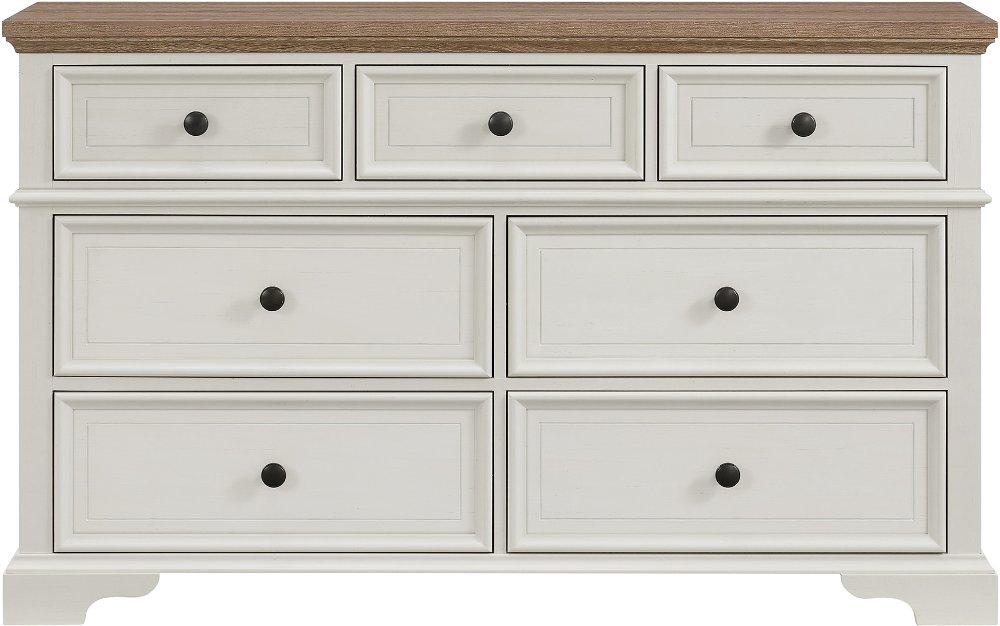
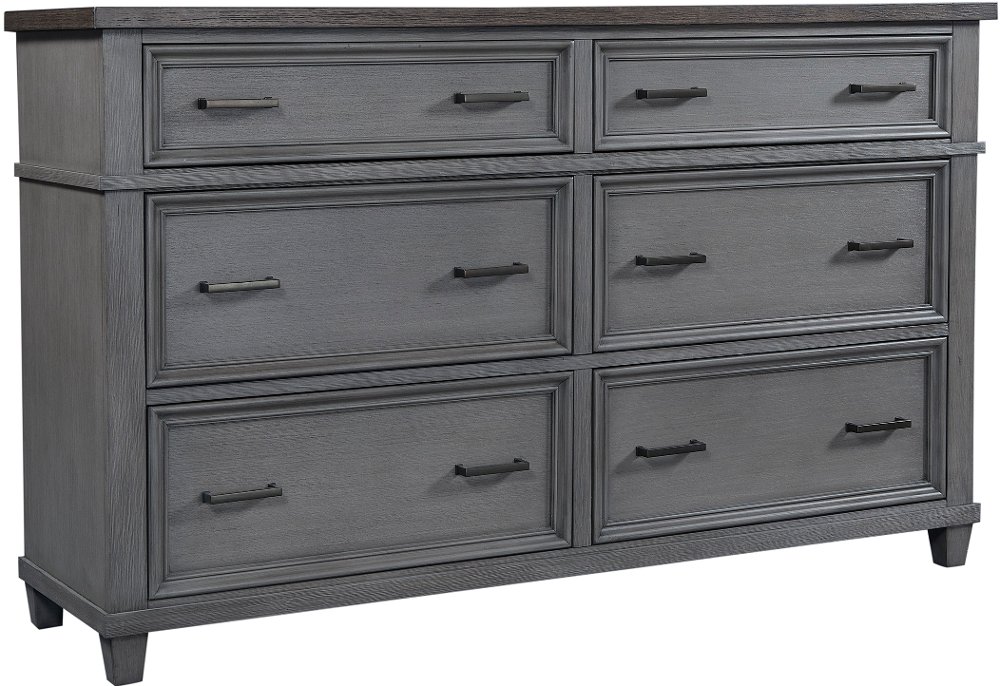
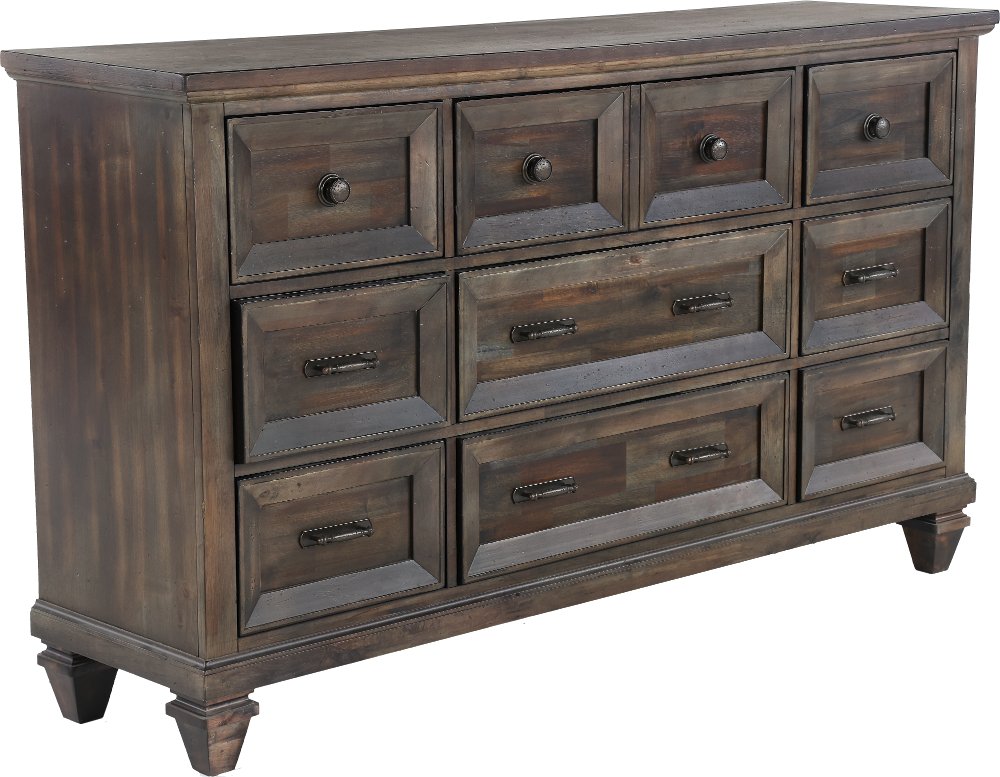
Transitional dressers combine the warmth and familiar details of traditional furniture with the cleaner lines of contemporary design. The result is bedroom storage that feels comfortable without looking ornate and streamlined without feeling stark. A typical transitional dresser might pair a simple rectangular frame with gently shaped feet, recessed drawer fronts, or understated metal pulls. Those details create a balanced look that works alongside an upholstered bed, a wood headboard, or a mix of furniture collected over time. Unlike a dresser with elaborate carving or an especially minimalist silhouette, a transitional design leaves room for your bedding, artwork, and personal belongings to shape the space. Finishes play a big part in that flexibility. Natural wood tones highlight grain and bring visual warmth, while painted white, cream, or gray can give a bedroom a lighter, quieter appearance. Deep brown finishes add richness, especially against pale walls or textured linens. When combining a dresser with existing furniture, matching every wood tone isn’t necessary. Similar undertones, repeated hardware finishes, or a shared design detail can make different pieces feel connected. For example, a dresser with warm wood grain and dark pulls can sit comfortably beside a simple upholstered bed and a nightstand with dark metal accents. A broad dresser top also creates a useful surface for a jewelry tray, a framed photograph, or a lamp, with enough open space to keep everyday belongings within reach. If a coordinated look is the goal, Transitional Bedroom Sets provide a starting point for bringing the bed, dresser, and bedside storage together. Either approach can feel personal: a matching arrangement offers visual consistency, while thoughtfully mixed pieces give the room a more collected character. The defining feature is balance, with enough detail to feel welcoming and enough simplicity to work with changing tastes.
Materials and construction influence how a transitional dresser looks, feels, and holds up to everyday use. Solid wood brings natural variation in grain and color, so individual panels may have subtle differences that add character. Depending on the finish and extent of wear, some solid wood surfaces can be repaired or refinished, though care requirements vary. Wood veneer is a thin layer of real wood applied over a supporting core; it delivers genuine grain and can create a consistent appearance across wide drawer fronts and tops. Engineered wood, including plywood and medium-density fiberboard, may appear in drawer bottoms, back panels, or the dresser’s main structure. These materials serve different purposes, and the material name alone doesn’t tell the full story of durability. Panel thickness, secure connections, drawer support, and a well-applied finish all matter. Drawers should move smoothly, sit evenly when closed, and feel steady during normal use. Dovetail joinery can strengthen drawer-box connections, while other well-executed construction methods can also provide dependable performance. Drawer slides affect the daily experience just as much as the exterior design. Full-extension slides make it easier to reach clothing at the back, and soft-close mechanisms, when included, reduce abrupt closing. Felt-lined compartments can offer a softer place for jewelry or watches, while dividers help keep socks and smaller accessories from becoming tangled together. Hardware deserves attention, too: knobs and pulls should feel comfortable in your hand and remain easy to grasp when a drawer is full. For routine care, follow the manufacturer’s instructions and use a soft cloth to remove dust. Wipe spills promptly, avoid abrasive cleaners, and protect the top from damp containers, hot styling tools, and products that could affect the finish. A tray beneath perfume or lotion bottles provides a practical buffer. Keeping the dresser away from prolonged direct sunlight and sources of excessive moisture can also help preserve its appearance over time.
The best fit depends on both the room’s layout and the belongings the dresser needs to hold. Wide, low dressers provide a generous top surface and often divide storage into two or more columns of drawers, making them useful for shared bedrooms. A tall, narrow chest uses more vertical space and may suit a room with limited wall width, though its proportions and accessibility differ from a lower dresser. Drawer count is only part of the storage picture. Deep drawers accommodate folded sweaters, jeans, and bulkier clothing, while shallow drawers can make smaller essentials easier to separate and see. For two people sharing one dresser, separate drawer columns can give each person a clear place for daily clothing. In a teenager’s bedroom, a flexible layout can hold school clothes, athletic wear, and accessories without requiring a separate organizer for every category. A guest bedroom may need fewer drawers but benefit from a clear top where visitors can set personal belongings. Before choosing a size, measure the available wall, the dresser’s overall depth, and the space needed to extend its drawers fully. Leave comfortable walking room between the open drawers and the bed, and account for nearby doors, closet access, baseboards, and outlets. Delivery access matters as well, especially along narrow hallways or around tight stair landings. If a mirror will hang above the dresser, consider its width and placement so the arrangement feels balanced and remains practical to use. Secure the dresser to the wall with the manufacturer-recommended anti-tip restraint, even in an adult bedroom, and follow all installation instructions. Store heavier belongings in lower drawers and keep tempting objects away from the top where children might try to climb. With thoughtful proportions, useful drawer space, and straightforward care, a transitional dresser can support daily routines while giving the bedroom a comfortable, finished look.
Read More