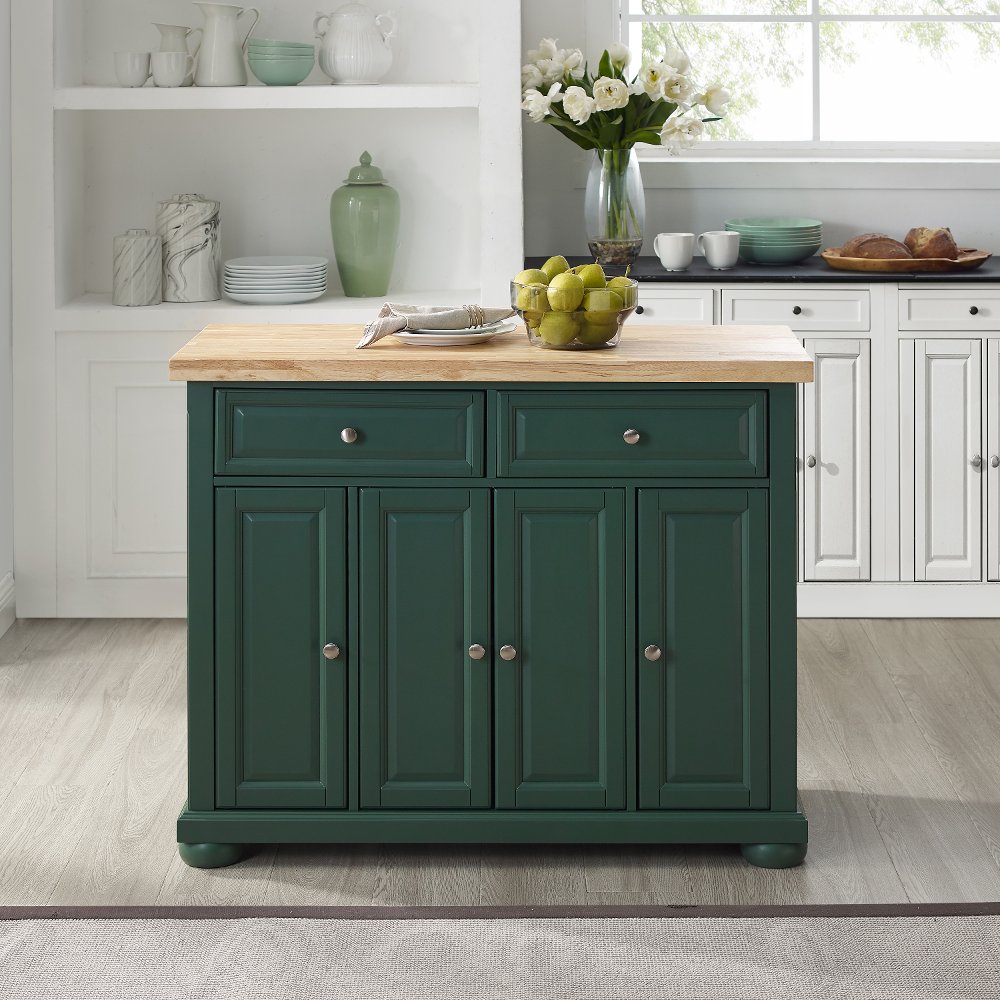
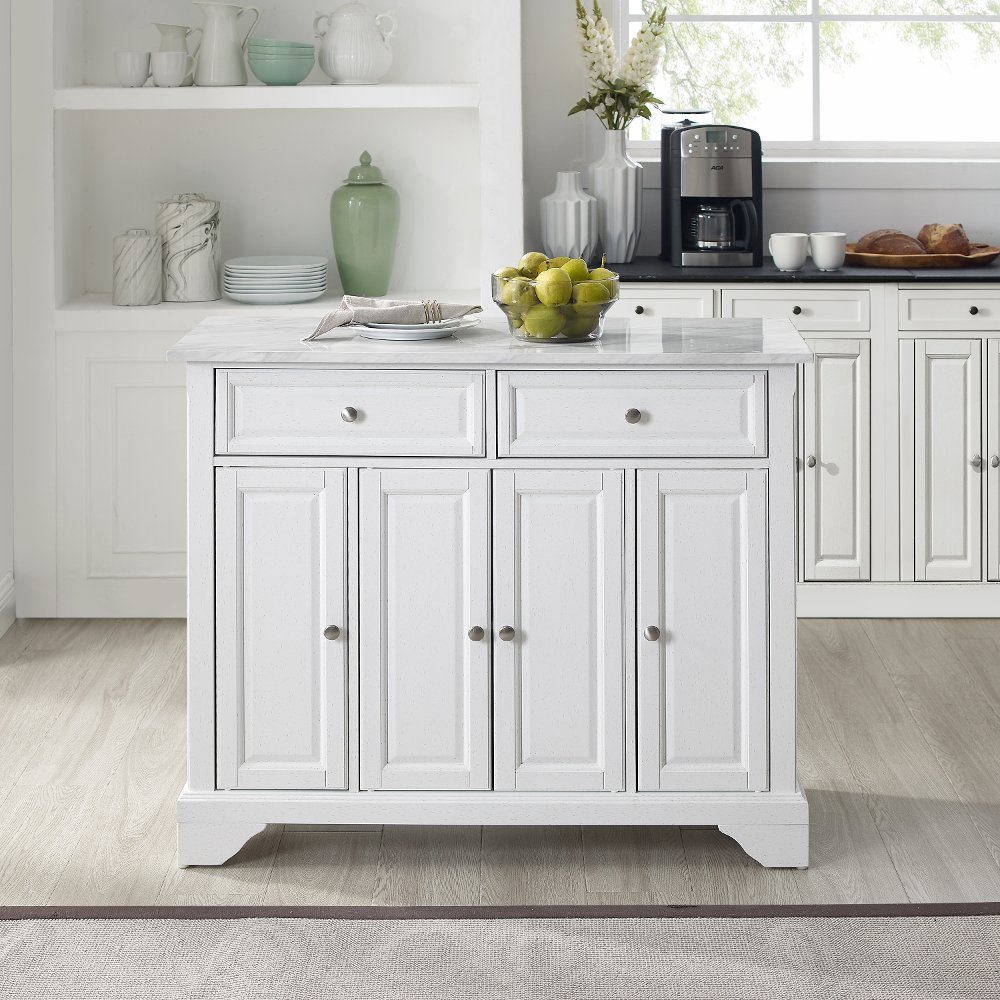
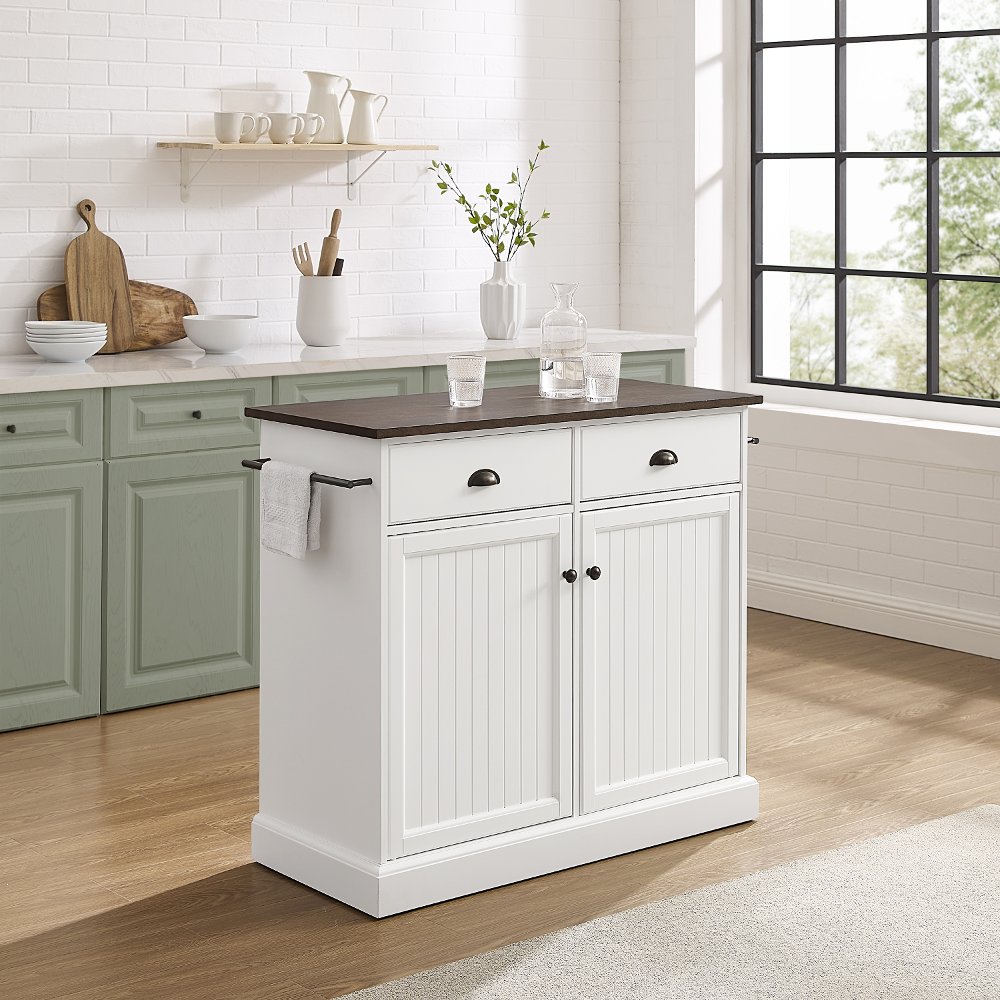
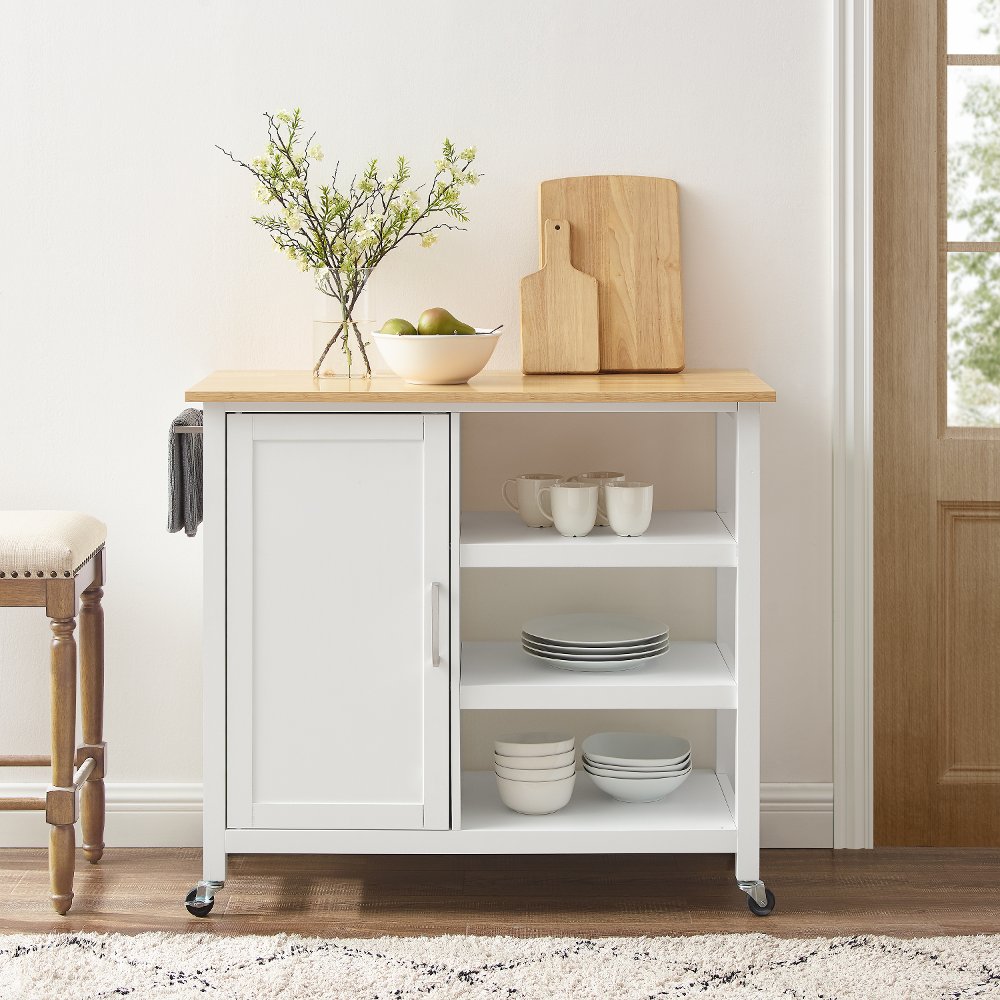
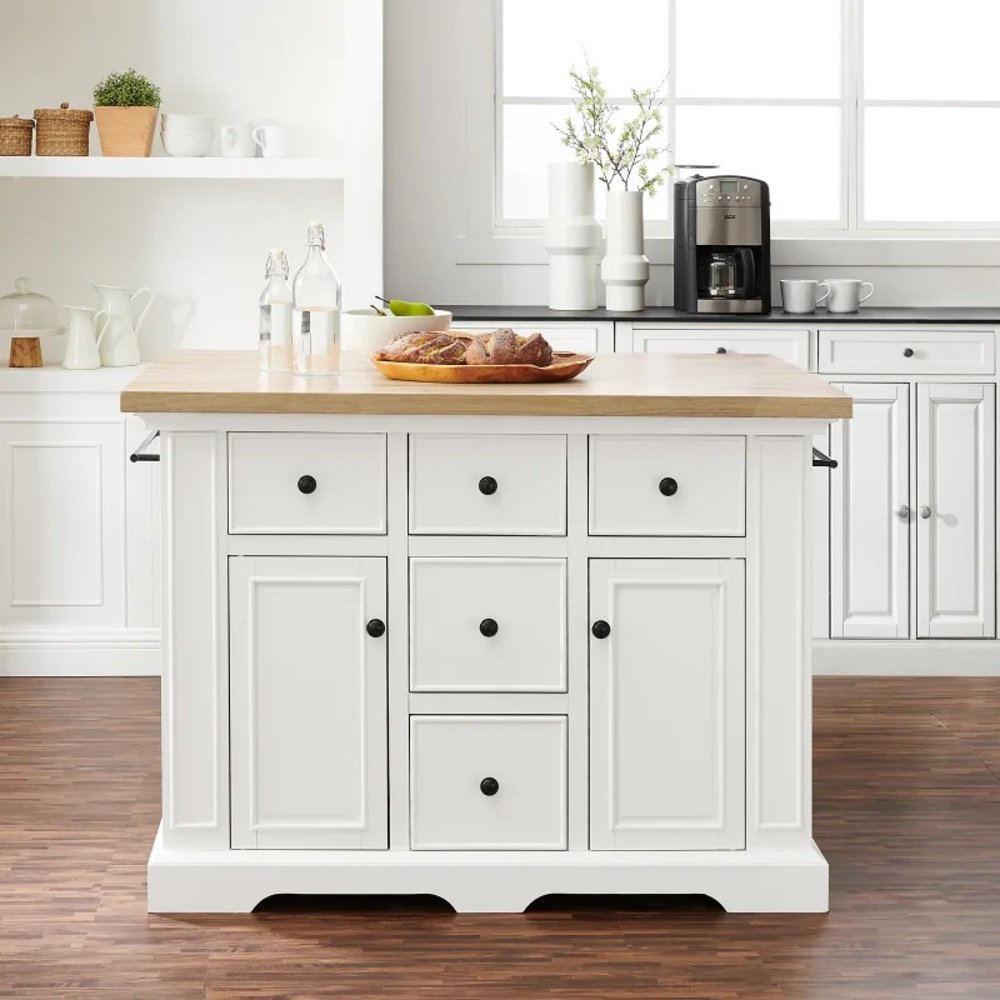
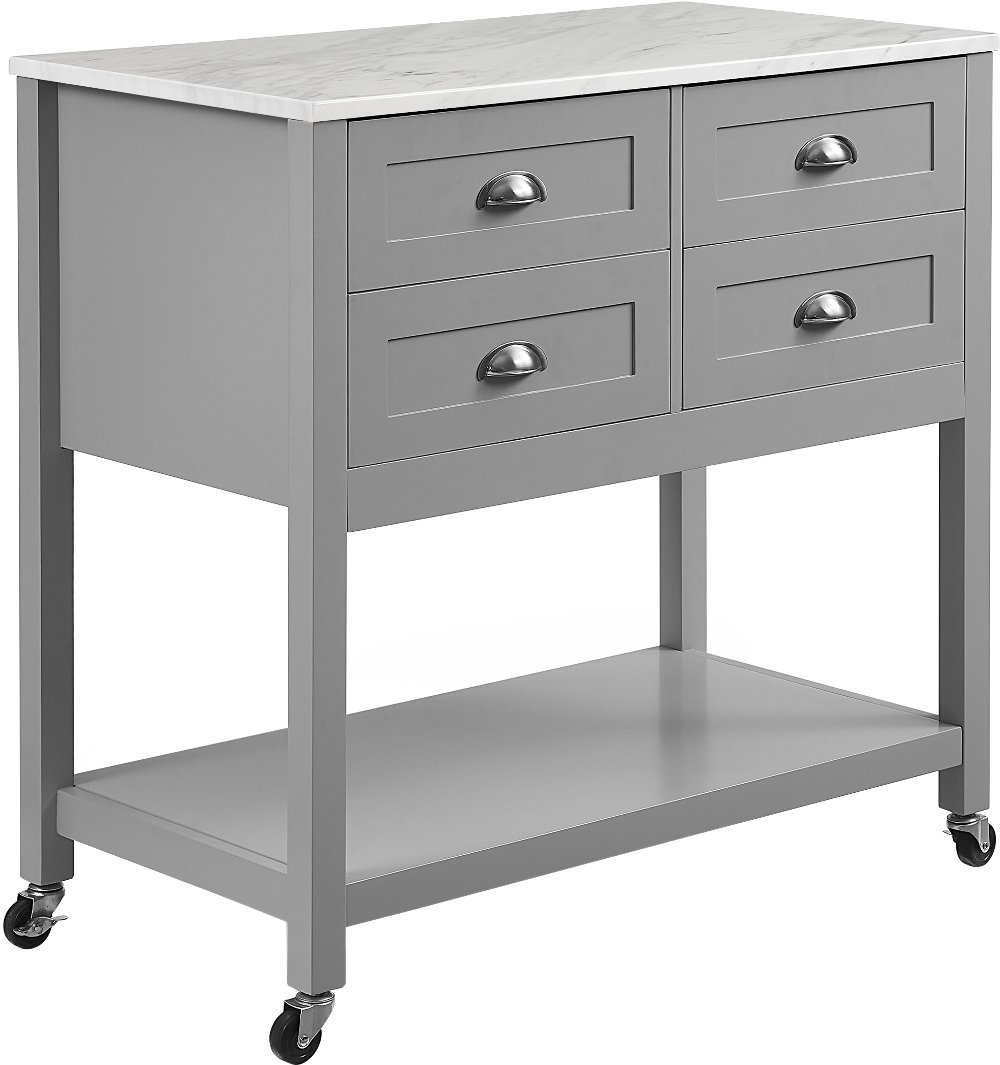
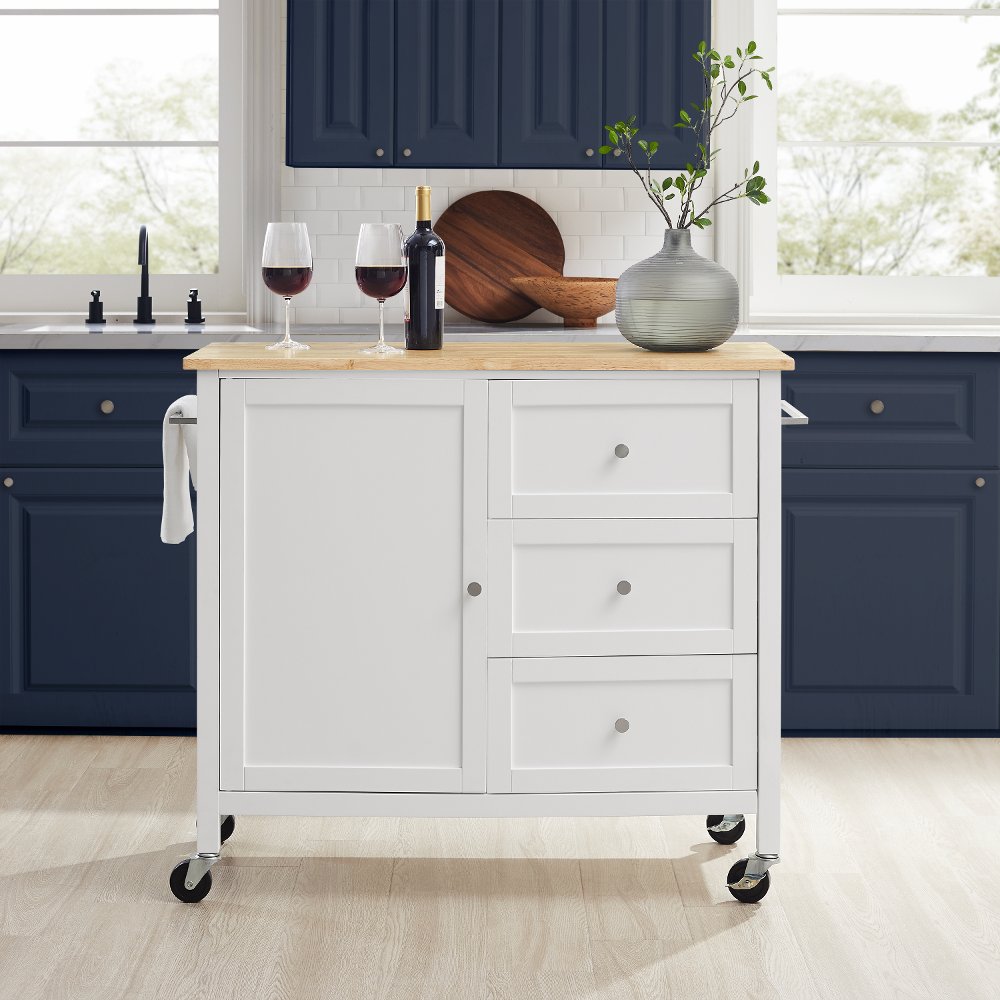
Transitional kitchen islands bring together the welcoming character of traditional kitchens and the straightforward look of contemporary design. They can become the visual anchor of your kitchen while adding practical workspace, storage, and a comfortable place to gather. Look for details that feel familiar without appearing overly ornate, such as shaker-inspired doors, softly beveled edges, simple paneling, and hardware in finishes like brushed nickel, matte black, or muted brass. A warm wood tone or a deeper painted finish can give the island a sense of furniture-like character, while a light neutral finish keeps the room feeling open and relaxed. This balanced style works especially well in homes where classic architectural details meet updated appliances, clean-lined seating, or modern lighting. It also gives you room to change accents over time without replacing the island. During the cooler months, an island often becomes the busiest surface in the home, holding a bowl of fruit, a baking project, or a stack of serving dishes while dinner comes together nearby. Before choosing one, consider how your kitchen already functions. Measure the available floor area carefully, including the space needed for cabinet doors, drawers, appliance doors, and comfortable movement around every side. A beautiful island can feel difficult to use when walkways are tight, so leave enough clearance for more than one person to cook, pass through, and open storage at the same time. If you are updating an existing kitchen, compare the island’s height and depth with the surrounding counters to create a cohesive appearance. A freestanding design may offer flexibility for renters, growing households, or anyone who wants to rearrange the room later, while a built-in-style option can provide a more finished, tailored look.
Storage is one of the most valuable reasons to add a transitional kitchen island. Depending on the layout, drawers can keep utensils, linens, and everyday tools close to the prep area, while cabinets can hold mixing bowls, cookware, small appliances, or pantry items. Open shelving may display cookbooks and serving pieces, but enclosed storage can help the kitchen look calm when the day gets busy. Think about the habits of the people who will use the space: a home baker may appreciate wide drawers for baking sheets, while a family might prefer easy-access compartments for snacks, lunch containers, and frequently used dishes. An island can also extend your countertop workspace for chopping, plating, or setting out food when friends visit. Durable surfaces such as quartz, quartzite, or marble can complement the transitional look, with a clean edge profile keeping the overall appearance polished rather than fussy. Each material has its own care needs, so consider how much maintenance fits your routine before making a decision. A surface that looks beautiful but requires more attention may not be the best match for a household that cooks several meals a day. Color is another useful design tool. A contrasting island in deep blue, forest green, charcoal, or warm wood can add depth against lighter perimeter cabinets, while a coordinating neutral creates a quieter, seamless effect. Simple pendant lights or a streamlined linear fixture above the island can define the work area and add a soft glow when the kitchen becomes a gathering place in the evening. For comfortable seating, pair the island with Transitional Kitchen Bar Stools that match its height and support the way you plan to use the space.
Transitional kitchen islands suit a wide range of homes and routines, from compact kitchens that need every inch of storage to spacious rooms designed for entertaining. They can give a newly remodeled kitchen a finished focal point, help an older layout feel more functional, or add a welcoming surface to an open-concept living area. Families often use the island for quick breakfasts, homework, and conversations between errands, while couples may enjoy it as a relaxed spot for morning coffee or preparing meals together. If you are furnishing a first home, moving into a larger space, or helping someone settle into a new kitchen, an island can be a thoughtful practical addition because it supports everyday life rather than serving as decoration alone. Pay attention to the details that make it comfortable: seating overhang for legroom, smooth drawer operation, sturdy construction, and storage placed where it will be easiest to reach. If the island will serve as a primary prep station, keep frequently used tools nearby and consider how the sink, cooktop, refrigerator, and main work surfaces relate to one another. If it will be used mostly for gathering, prioritize seating, room for serving, and a finish that complements the surrounding cabinetry. Transitional design is forgiving, which makes it easier to blend the island with existing floors, backsplashes, lighting, and dining furniture. Choose a look that feels natural in your home today and flexible enough to grow with your household. With the right proportions, storage, finish, and seating, a transitional kitchen island can make cooking feel more organized, meals feel more connected, and the entire room feel ready for both quiet mornings and lively evenings.
Read More