Two-tone beds combine two distinct colors, finishes, or upholstery tones in one bed frame, creating contrast between features such as the headboard, footboard, rails, and trim. Natural wood grain paired with matte black, warm brown framed in white, and soft gray upholstery set against a darker wood finish are common examples. That contrast gives a bedroom a focal point without requiring elaborate bedding or a room full of matching furniture. A light wood headboard with dark edging can bring definition to pale walls, while a white frame with a warm wood accent helps a bright bedroom feel more grounded. The effect depends on where the colors appear and how strongly they differ. Broad, contrasting panels tend to look bold and graphic; narrow trim and closely related shades create a quieter, more blended look. Two-tone bed frames suit a range of styles, from clean-lined contemporary rooms to relaxed farmhouse spaces and bedrooms with a mix of older and newer furniture. For a modern setting, straight edges and a restrained combination of charcoal and natural wood can keep the room feeling uncluttered. For a softer look, cream-colored upholstery alongside a medium brown finish adds warmth and texture. Materials matter as much as color. Solid wood can show natural variation in grain and tone, while wood veneer brings a real wood surface to a supporting core. Engineered wood with a decorative laminate or replicated wood finish can provide a consistent appearance, though its care requirements and repair options differ from those of solid wood. Metal accents add another texture, and upholstered panels can give a headboard a softer surface for sitting up with a book. Construction, joinery, support design, and finish quality all contribute to durability; color contrast alone doesn’t tell the whole story. Look closely at how each material meets the next, especially along headboard borders, corners, and frequently touched edges.
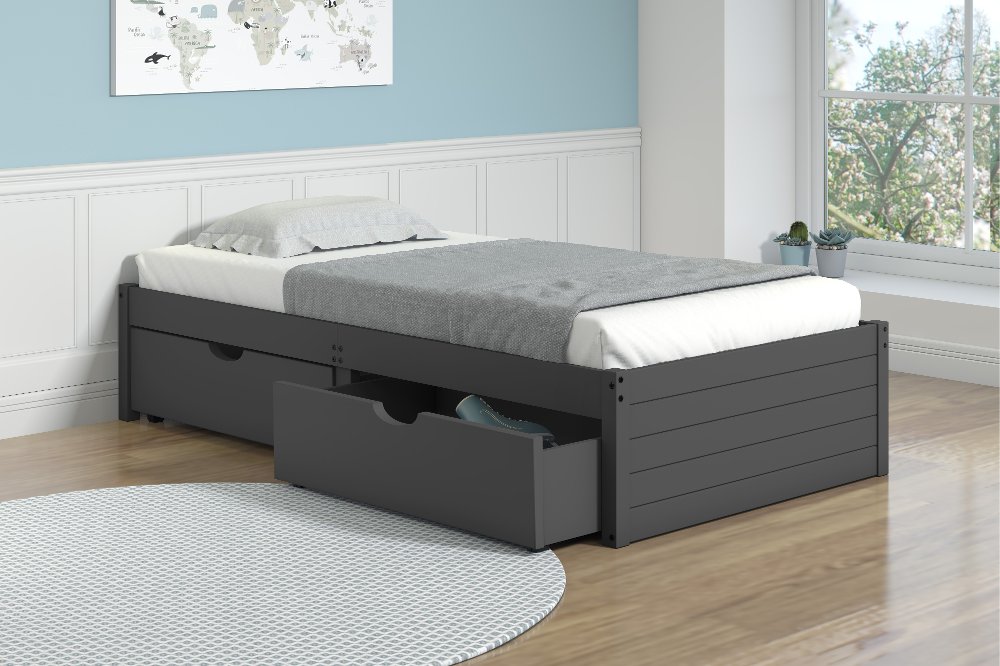
The right two-tone bed should fit both the room and the way you use it. Twin and full sizes often make sense for children’s rooms, teen bedrooms, and compact guest spaces, while queen and king sizes give adults more room to spread out when the floor plan allows. Standard U.S. mattresses measure approximately 38 by 75 inches for a twin, 54 by 75 inches for a full, 60 by 80 inches for a queen, and 76 by 80 inches for a king, but a bed frame’s outside dimensions can extend well beyond those measurements. A thick upholstered headboard, projecting footboard, or wide side rails can take up more space than expected. Measure the entire footprint and leave comfortable paths to closets, windows, and both sides of the bed where possible. In a narrow room, a low-profile footboard can make movement easier and preserve an open sightline. A tall headboard can work well against an uninterrupted wall, but it deserves a closer check beneath sloped ceilings or near windows. Mattress support is another important distinction: platform beds generally support a mattress without a separate box spring when their support system meets the mattress manufacturer’s requirements, while panel beds may require a compatible foundation. Confirm the individual frame’s instructions, slat spacing, center support, and weight limits rather than relying on appearance. Mattress thickness also affects the finished look and everyday comfort. A deep mattress can hide much of a contrasting headboard panel, and a tall foundation can make getting into bed harder for someone who prefers a lower seat height. Storage drawers can be useful for extra sheets or folded blankets, provided there’s enough clearance to open them beside a nightstand or wall. For a smaller bedroom where a darker frame is part of the plan, Twin Black Beds offer another direction to consider alongside a two-tone design. Whether the bed is for a growing teenager, a couple furnishing a shared room, or overnight guests, practical proportions help the space feel comfortable long after the initial decorating is done.
Two-tone beds are especially useful when a bedroom already contains furniture in different finishes. Instead of trying to match every piece exactly, a bed with two complementary tones can connect a light dresser with dark bedside tables or bring a wood accent into a room with painted furniture. Pay attention to undertones: honey-colored wood often feels warmer beside cream, while gray-washed wood tends to sit more comfortably with cooler whites and charcoal. Finish samples, when accessible, and photos viewed in the room’s daytime and evening light can help you judge how those combinations will feel at home. Bedding gives the contrast room to stand out. A simple ivory quilt can highlight a dark frame and wood-grain headboard, while muted blue, clay, or olive textiles can add color without competing with the bed’s design. During the cooler months, a textured throw adds warmth without covering the details that make the frame distinctive. For daily care, follow the manufacturer’s directions for each surface rather than treating the whole bed with one cleaner. A soft cloth removes dust from many finished wood and laminate surfaces; if a lightly damp cloth is permitted, dry the surface promptly and avoid leaving moisture along seams. Use only approved cleaning products, since harsh solvents and abrasive pads can dull finishes or damage decorative layers. Vacuum upholstered sections with a suitable attachment and check the fabric’s cleaning code before treating spills. Blot rather than rub, and test any approved treatment in an inconspicuous spot. Direct sunlight can gradually change the appearance of wood and fabric, sometimes at different rates, so window coverings can help limit uneven fading. Check hardware periodically and tighten it according to the assembly instructions, particularly after a move. Lift frame sections rather than dragging them when repositioning the bed, and keep support legs properly seated on the floor. With thoughtful sizing, compatible mattress support, and care suited to its materials, a two-tone bed can provide a dependable foundation for the room while leaving plenty of freedom to change bedding, wall colors, and accessories over time.
Read More