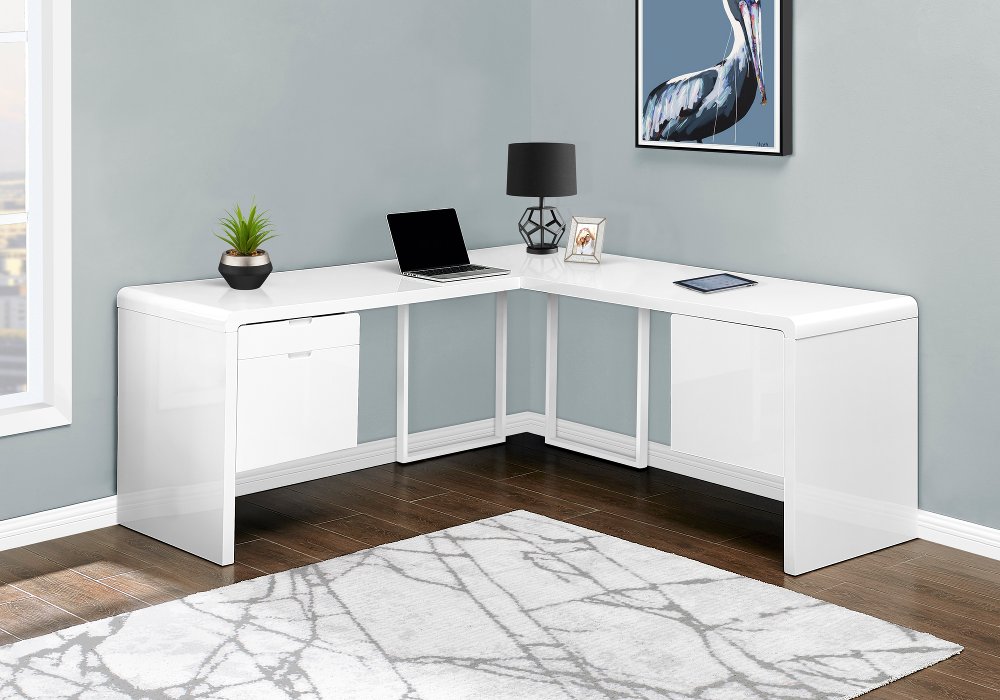
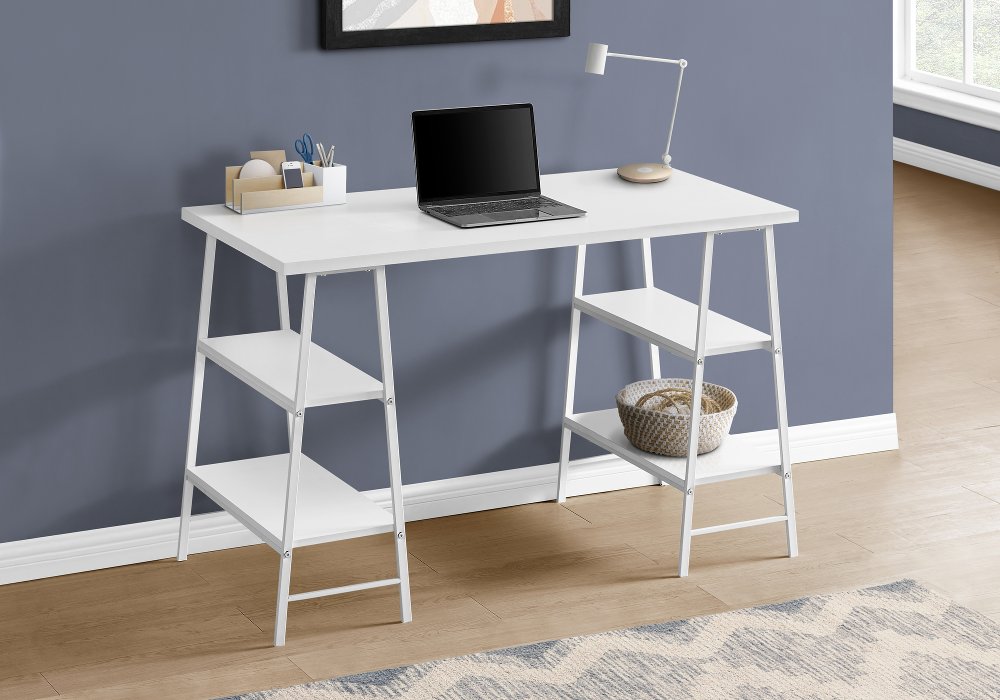
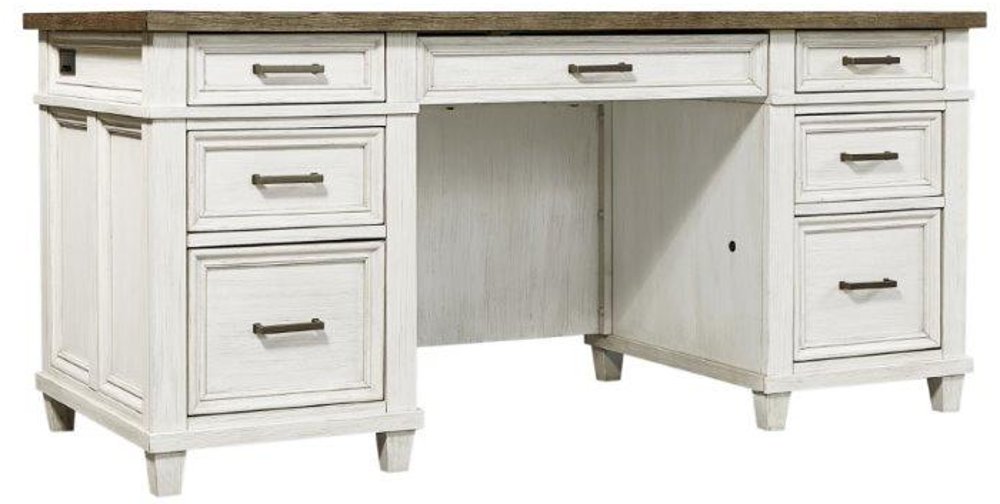
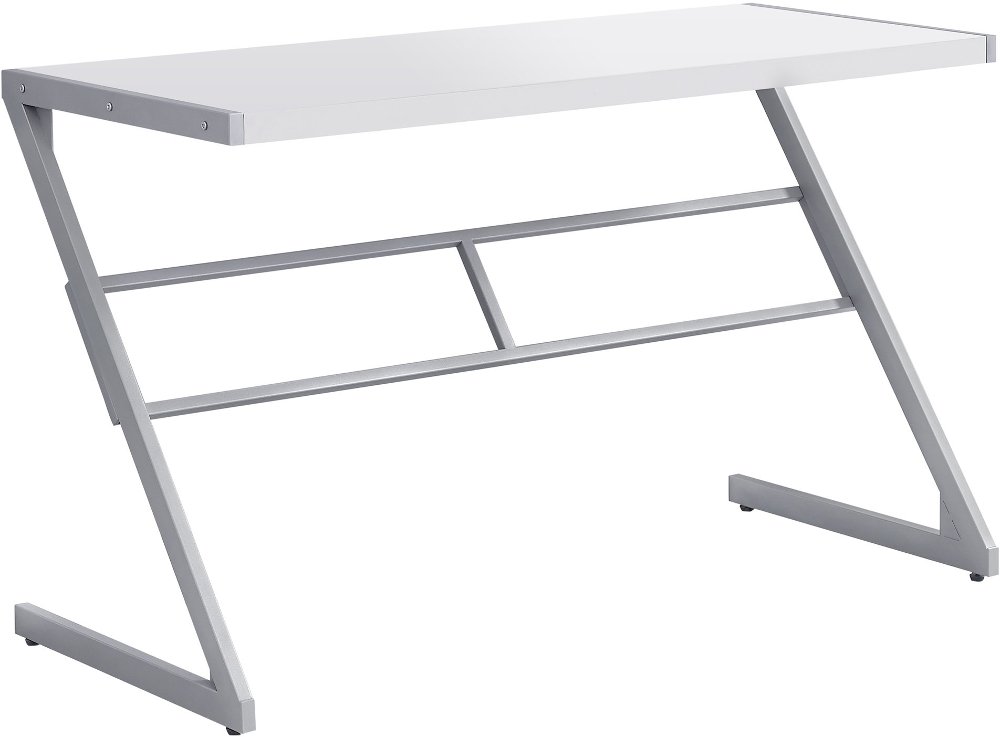
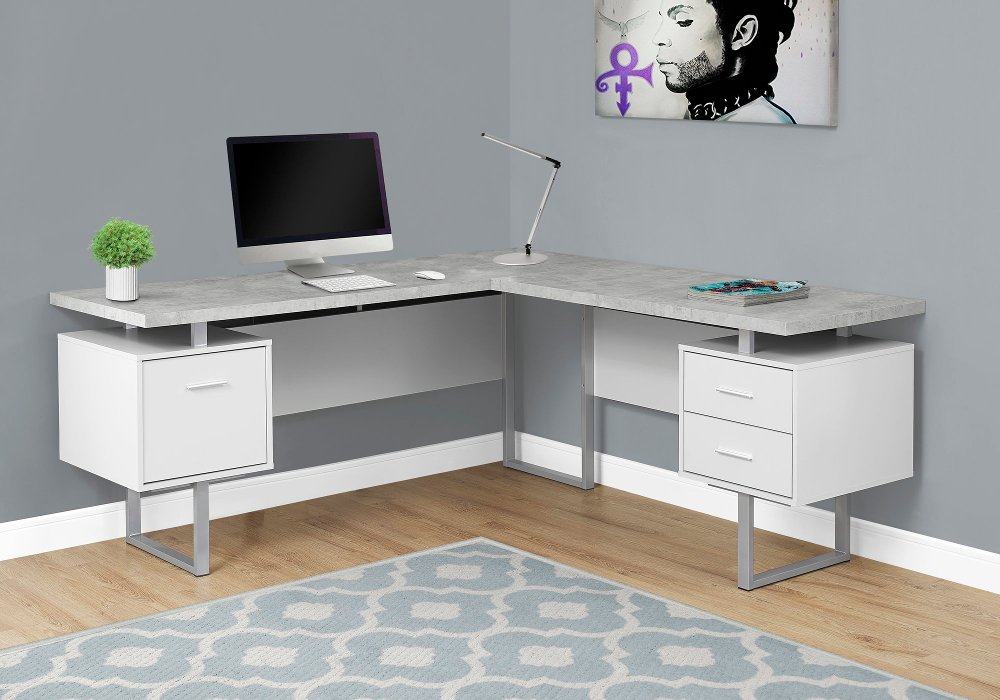
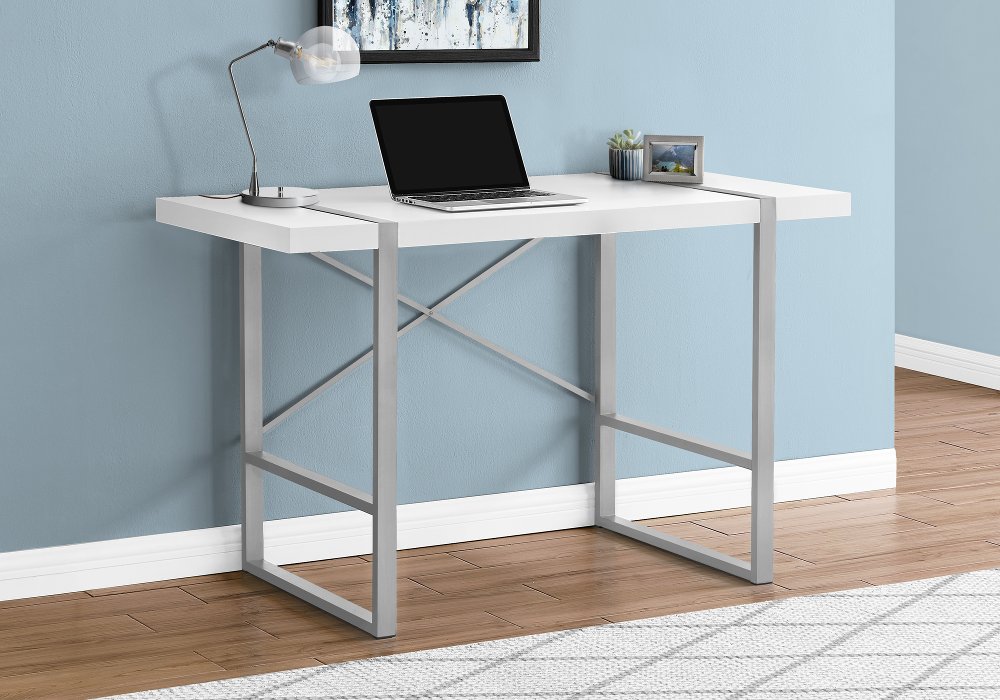
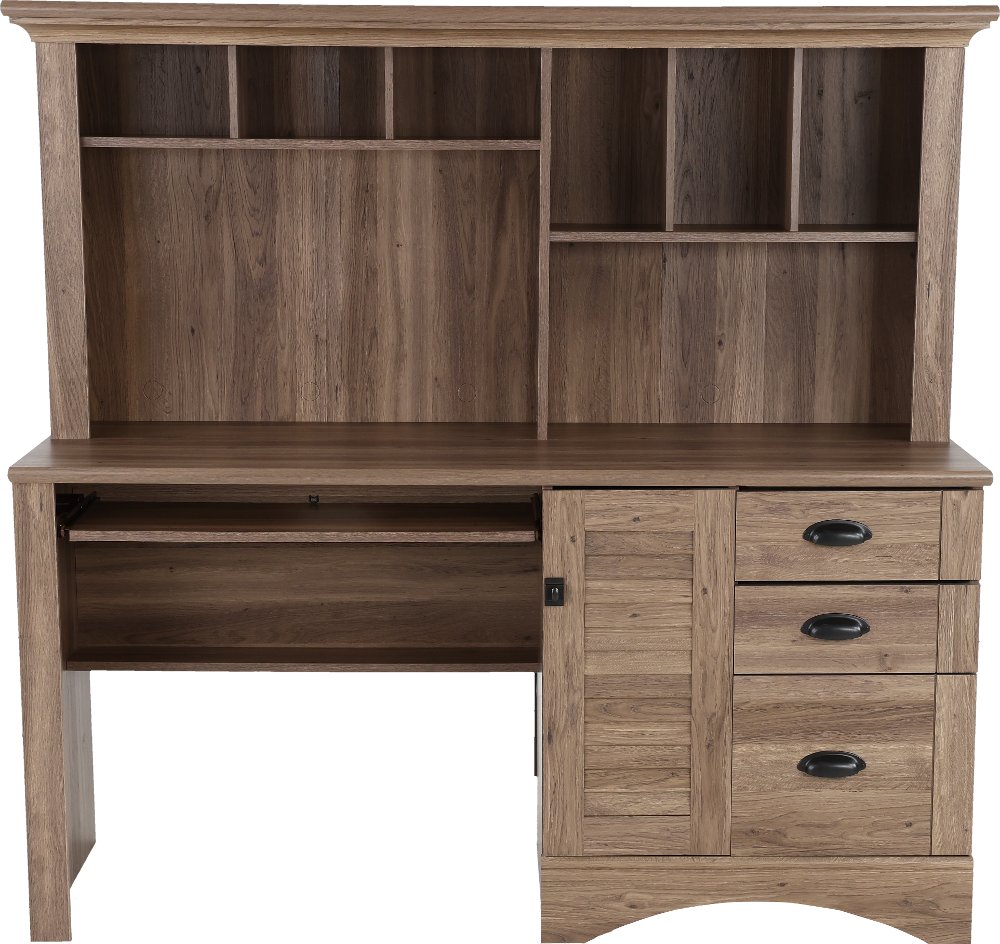
A white desk gives your workspace a fresh, settled look, whether it’s the center of a dedicated home office or a quiet spot tucked beside a bedroom window. The light finish can help a substantial piece feel less visually heavy, especially against pale walls, while offering a crisp contrast to wood floors, colorful artwork, or a dark office chair. White desks also work across a wide range of decorating styles. A simple rectangular top with slim legs feels right at home in a modern apartment, while framed drawers, turned legs, or paneled sides bring a more traditional character. For a softer look, warm white and ivory tones pair comfortably with natural wood, woven baskets, and linen curtains. Brighter whites tend to complement chrome, black metal, and clear glass, though the way a finish looks will change with your room’s lighting. That distinction matters when a desk sits near existing white furniture: complementary shades often feel more intentional than finishes that almost match. Beyond appearance, the best fit depends on what a normal day looks like at your desk. A laptop, notebook, and cup of coffee need much less surface area than two monitors, a keyboard, and a stack of reference books. A white writing desk can give a student room to spread out homework without overwhelming a small bedroom, while a deeper computer desk makes more sense for someone who spends full workdays at a screen. In a shared living area, a clean-lined desk can serve as a place to pay bills, organize the family calendar, or finish an evening project, then blend back into the room when everything is put away. For someone setting up a first apartment or heading into a new chapter of school or work, a desk can also be a thoughtful gift, especially when its size and storage suit the space they actually have.
The proportions and layout of a white desk affect everyday comfort just as much as its style. Width determines how much you can arrange side by side, but depth is what allows a monitor to sit comfortably away from your eyes while leaving space for your hands and keyboard. A narrow desk may fit neatly along a hallway wall or behind a sofa, yet feel crowded once a full-size monitor stand enters the picture. A deeper desktop gives paperwork and equipment room to coexist without constant shuffling. If your routine involves multiple screens, frequent video calls, or reviewing documents while typing, large white executive desks offer a substantial workspace with a furniture-like presence suited to a dedicated office. For smaller rooms, an open base can preserve a lighter look and leave more flexibility for chair placement. Drawer pedestals put supplies close at hand, although they also reduce the open space underneath. Check the clearance between them, particularly if you like a wider chair or tend to shift positions throughout the day. Your chair should pull in far enough for comfortable typing, with room for your knees beneath any center drawer or support rail. Leave space behind the chair to roll back and stand up without bumping a bed, cabinet, or wall. Storage deserves the same practical attention. Shallow drawers help contain pens, charging cables, and sticky notes, while deeper drawers accommodate bulkier supplies; file storage should match the paper size and hanging-file format you use. Open shelves keep books and baskets accessible but leave their contents in view. A cable opening or an accessible path behind the desk helps cords reach an outlet without stretching across your work surface. For shared workspaces, separate drawers or designated storage baskets make it easier for each person to settle in without moving someone else’s essentials. These details turn an attractive desk into a place that supports your routine.
Materials and construction help determine how a white desk feels, wears, and responds to daily care. Painted solid wood can bring a substantial feel and traditional furniture details, though wood naturally responds to changes in temperature and humidity. Wood veneer uses a thin layer of real wood over a supporting core, while engineered wood provides a consistent base for many painted, laminated, and wrapped finishes. The surface treatment matters as much as the material underneath. A laminate desktop is often practical for everyday writing and computer use, while a painted finish may need a little more protection from scraping accessories or spills. Neither the color nor the material name alone tells the whole durability story; secure joints, appropriate supports, smoothly operating drawers, and the stated weight capacity all deserve attention. Metal legs can lend a slim, open profile, but stability still depends on the desk’s overall design and assembly. If your setup includes a monitor arm, confirm that the desktop’s thickness, edge shape, and construction can accommodate the clamp and its load. A desk that works beautifully with a laptop may not be designed for concentrated pressure from mounted equipment. White finishes make dust and everyday marks easy to spot, so simple, consistent care helps preserve their appearance. Follow the manufacturer’s cleaning directions, wipe up spills promptly, and use a soft cloth rather than an abrasive pad. A coaster beneath your drink and a desk mat under writing materials can help protect against moisture rings, pen marks, and surface scratches. Avoid assuming that a strong household cleaner is safe for every white finish, and test any approved cleaner in an inconspicuous area first. Matte surfaces have a subdued look, while glossy ones reflect more light and may show fingerprints more readily. With the right proportions, comfortable seating, and a surface suited to your daily tasks, a white desk can feel equally at home during a busy workday, an afternoon of studying, or a quiet hour spent planning what comes next.
Read More