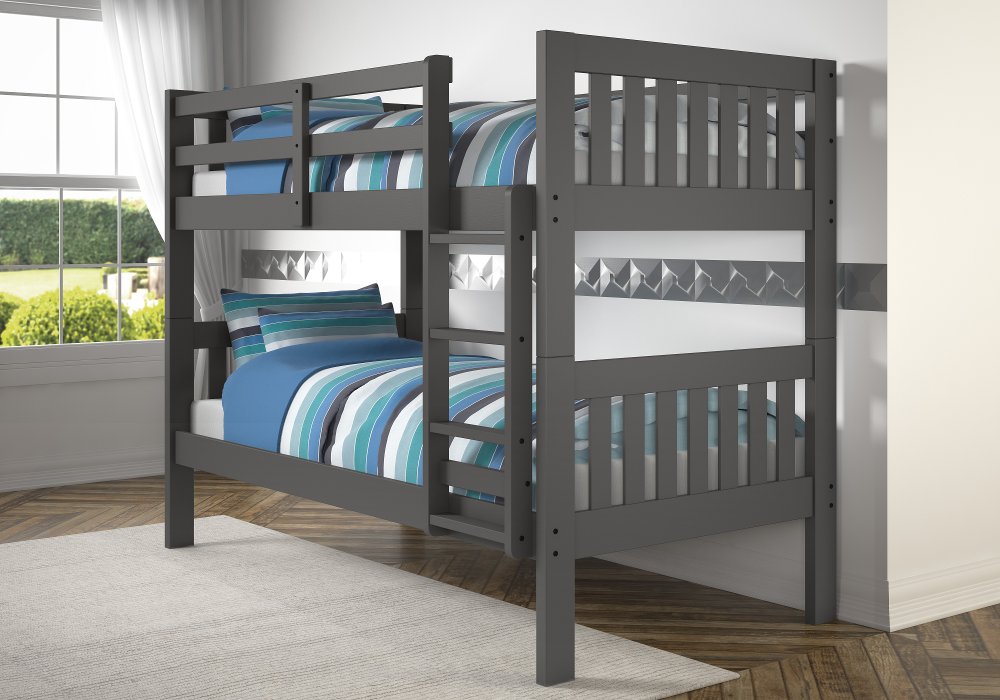
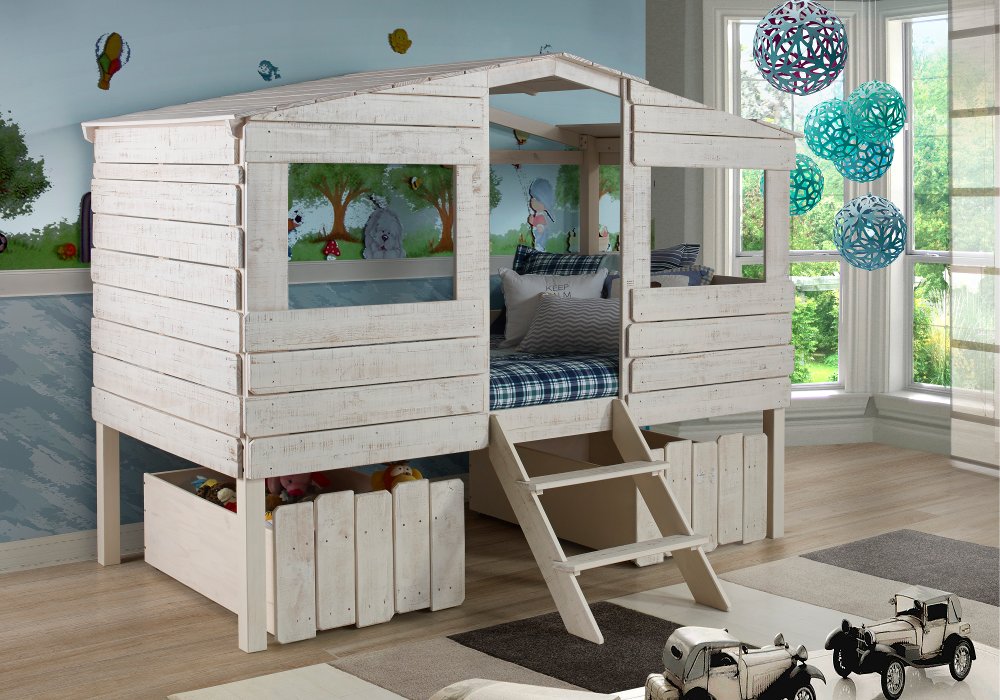
Bedroom bunk beds place one sleeping surface above another, creating two places to sleep while using less floor space than two separate beds. That vertical layout can make a shared bedroom feel more open, leaving room for a dresser, a reading chair, or a clear stretch of floor for building blocks and board games. Twin-over-twin bunk beds suit many shared children’s rooms, while twin-over-full designs offer a wider lower bed for a sleeper who likes more room to spread out. Full-over-full layouts provide larger sleeping surfaces on both levels, though their overall dimensions still need to work with the room. The right arrangement depends on who’ll sleep there, how they use the space, and whether their needs are likely to change. Siblings may appreciate having separate sleep spaces within the same room, while a guest bedroom can benefit from an additional bed without requiring another full bed footprint. For rooms used by older teens or adults, choose a bunk bed specifically designed and rated for those sleepers rather than assuming a larger mattress size means a higher weight capacity. When comparing bunk beds for kids, think about everyday routines as much as sleeping arrangements: where school clothes will go, which child can safely use the upper bunk, and how easily each sleeper can get in and out. Some designs incorporate drawers beneath the lower bed, stairway storage, or a trundle that creates another sleeping surface when extended. Each feature serves a different purpose, so consider whether extra storage or occasional guest sleeping matters more. Bunk beds designed to separate into individual beds can also accommodate changing room arrangements, but that capability should always be confirmed in the manufacturer’s specifications. A setup that works for two children sharing today may serve separate bedrooms later, provided the frame is made for that conversion.
Materials and construction influence how bedroom bunk beds look, feel, and hold up to daily use. Wood frames bring visible grain, substantial shapes, and finishes that can coordinate with traditional, farmhouse, or contemporary bedroom furniture. Depending on the design, a wood bunk bed may combine solid wood with veneers or engineered wood components, so look at the construction details rather than judging by appearance alone. Metal bunk beds often have slimmer profiles and clean lines that work well in simple or modern rooms. Neither material automatically guarantees better durability; secure joints, properly supported mattress platforms, sound hardware, and construction suited to the intended sleeper all matter. A painted finish can brighten a room or blend with existing furniture, while a stained finish highlights the character of the wood. Before choosing a layout, measure the bed’s full assembled width, length, and height, including any ladder, stairway, or projecting trim. A mattress measurement alone won’t tell you how much floor space the complete frame needs. Leave enough room to open nearby doors and drawers, extend a trundle if included, and approach the ladder without stepping around furniture. Ceiling height deserves particular attention because the person on the upper bunk needs comfortable clearance above the mattress; follow the manufacturer’s requirements and account for ceiling fans, sloped ceilings, and overhead fixtures. A bunk that fits neatly along one wall can still feel cramped if the upper sleeper can’t sit comfortably. Mattress selection matters just as much as frame size. Use the exact mattress dimensions and thickness specified for each bunk, especially the upper one, where an overly thick mattress reduces the effective height of the guardrail. Check whether the frame requires a bunkie board, slats, or another approved support system, and don’t add a box spring unless the manufacturer permits it. These details help turn a space-saving layout into a comfortable place to sleep.
Safe use and straightforward upkeep help a bunk bed remain a dependable part of the bedroom. Children younger than 6 should not use the upper bunk, and older children still need the coordination and maturity to climb safely and follow the bed’s instructions. Use the required upper guardrails on both sides, including the side facing a wall, and keep the specified mattress surface at least 5 inches below the top of the guardrails. Follow the manufacturer’s instructions for assembly, guardrail placement, ladder attachment, and weight limits for each sleeping level, including how mattress weight factors into those limits. Keep access to the ladder clear, use a nearby night-light for visibility, and teach children to use the ladder rather than climb the frame. Bunk beds are for sleeping, not jumping or rough play, and belts, ropes, scarves, and similar items should never hang from the frame. If the bed has stairs, make sure the steps stay free of toys, books, and clothing. Day-to-day care is usually manageable: dust the frame with a soft cloth, clean spills promptly, and use only cleaning products approved for the finish. Excess moisture and abrasive cleaners can damage surfaces, while loose hardware can affect stability. Periodically inspect bolts, slats, guardrails, and ladder connections, tightening or replacing components as the manufacturer directs. Stop using the bed if a structural part becomes damaged or a connection won’t stay secure. Easy-care bedding can simplify the routine, too. A fitted sheet that matches the approved mattress depth stays neater, and lightweight layers are easier to straighten on the upper bunk than bulky bedding that spills over the edges. Give each sleeper a practical spot nearby for everyday belongings without attaching unapproved shelves or accessories to the frame. With the right dimensions, suitable construction, and a layout that respects how the room is used, a bedroom bunk bed can give every sleeper a comfortable place to settle in while preserving space for the rest of daily life.
Read More